I was at the farmers’ market last fall, trying to balance three bags of apples and a winter squash that was frankly too heavy for my canvas tote, when the woman at the pretzel stand watched me struggle. She didn’t say anything at first. Then she just reached under her table, pulled out a paper bag, and handed me a warm, salted soft pretzel—no charge, no fuss. Her name was Greta, and she had this quiet way of moving that made you think she’d been making pretzels her whole life. We got to talking about how her grandmother used to bake them every Sunday, and I mentioned I was trying to figure out a way to use crushed pretzels as a coating for chicken. She tilted her head, considered it for a moment, and said, “You know, my Oma would have approved. Just don’t forget the mustard.” I mean, that stuck with me. Honestly, I almost forgot to ask her for tips before she got busy with another customer.
That conversation turned into this recipe for Cozy Bavarian Pretzel Chicken Tenders. It’s not some fancy chef creation—it’s a warm, crunchy, soul-soothing dish that came from a chat with a stranger who turned out to be a kindred spirit. The first time I made these, I got the salt balance all wrong (way too salty, let me tell you), but Greta’s advice echoed in my head: “Trust the pretzel, it already brings the flavor.” So I dialed back the extra salt, added a touch of honey mustard for dipping, and suddenly, these chicken tenders became my go-to for those cold, quiet evenings when you need something that feels like a hug. Maybe you’ve been there—standing in your kitchen, craving something familiar but with a little twist. That’s exactly what this is.
The beauty of these pretzel-crusted tenders is how they bridge two worlds: the cozy, salty crunch of a Bavarian soft pretzel and the tender, juicy comfort of homemade chicken tenders. It’s the kind of recipe that makes you close your eyes after the first bite, and honestly, I keep making it because it reminds me that the best ideas come from unexpected conversations. You know that feeling when a recipe just feels right? This is it.
Why You’ll Love This Recipe
Let me tell you why these Cozy Bavarian Pretzel Chicken Tenders have earned a permanent spot in my weekly rotation. I’ve tested this recipe at least seven times—yes, seven—to get that perfect balance of crunchy coating and tender meat, and I can confidently say this is my best version yet.
- Quick & Easy: These come together in under 30 minutes, making them perfect for busy weeknights when you need comfort food fast. No complicated steps, just simple prep and bake or fry.
- Simple Ingredients: You likely already have most of these in your kitchen. The star ingredient? Crushed Bavarian-style pretzels, which add that signature salty, malty crunch without any fancy seasonings.
- Perfect for Cozy Evenings: Whether it’s a cold winter night, a rainy afternoon, or just one of those days that needs fixing, these chicken tenders deliver warmth and satisfaction every time.
- Crowd-Pleaser: I’ve served these at family dinners and game-day gatherings, and they always disappear first. Kids love the crunch, adults appreciate the twist on a classic.
- Unbelievably Delicious: The texture is next-level—crunchy on the outside, juicy on the inside. The pretzel coating adds a subtle maltiness that pairs perfectly with honey mustard or beer cheese dip.
What makes this recipe different from the rest? It’s the technique. Instead of using breadcrumbs or panko, I crush whole Bavarian pretzels to different sizes—some fine, some chunky—for a coating that has actual texture and character. The secret is to toast the crushed pretzels lightly before coating the chicken, which intensifies their flavor and ensures they stay crispy even after baking. I’ve tried this with regular pretzels, but trust me, the Bavarian style (thicker, slightly darker, with that distinctive malt flavor) makes all the difference.
This recipe isn’t just good—it’s the kind that makes you close your eyes after the first bite. It’s comfort food reimagined: familiar enough to feel like home, but surprising enough to make you feel like you’ve discovered something new. Perfect for impressing guests without stress, or turning a simple Tuesday dinner into something memorable.
What Ingredients You Will Need
This recipe uses simple, wholesome ingredients that come together to create something truly special. Most of these are pantry staples, and the hero ingredient—Bavarian pretzels—adds all the flavor you need without complicated seasonings.
- Chicken tenders: 1.5 pounds (about 680g) fresh chicken tenders, or you can cut boneless skinless chicken breasts into strips. Look for tenders that are similar in size for even cooking. (I prefer organic, free-range chicken for better flavor and texture.)
- Bavarian-style soft pretzels: 4 large pretzels (about 8 ounces or 225g total). These are the key ingredient—they’re thicker, chewier, and have a deeper malt flavor than standard pretzels. You can find them at German bakeries, specialty stores, or in the bakery section of many grocery stores. If you can’t find Bavarian pretzels, use 6 cups of thick, salted pretzel twists.
- All-purpose flour: 1/2 cup (60g) for the dredging station. This helps the egg wash stick to the chicken.
- Large eggs: 2 large eggs, beaten. They act as the glue that holds the pretzel coating in place.
- Buttermilk: 1/4 cup (60ml). Adds tanginess and helps tenderize the chicken. No buttermilk? Use regular milk mixed with 1 teaspoon of lemon juice and let it sit for 5 minutes.
- Dijon mustard: 2 tablespoons. This is my secret ingredient—it adds a subtle tang that cuts through the richness and complements the pretzel flavor beautifully. Greta would approve.
- Garlic powder: 1 teaspoon. For that savory depth without overpowering the pretzel taste.
- Paprika: 1 teaspoon. I use smoked paprika for a hint of warmth, but sweet paprika works too.
- Salt: 1/2 teaspoon. Be careful here—the pretzels are already salty, so you don’t need much extra. I learned this the hard way!
- Black pepper: 1/2 teaspoon, freshly ground.
- Cooking spray or oil: For baking, use avocado oil spray (it has a high smoke point) or brush with melted butter for extra richness. For frying, use vegetable or canola oil with a high smoke point.
- Optional for dipping: Honey mustard sauce (1/4 cup honey + 1/4 cup Dijon mustard + 1 tablespoon mayonnaise) or beer cheese dip. I always make both because, honestly, why choose?
Ingredient Selection Tips: For the best texture, choose pretzels that are still soft and pliable—stale pretzels won’t crush evenly and can result in a powdery coating. If you’re using packaged pretzel twists, look for thicker, darker ones (like Snyder’s of Hanover Bavarian-style twists) for that authentic malt flavor. I recommend using pretzels from a local bakery if possible—the freshness makes a noticeable difference in the final crunch.
Substitution Guidance: For a gluten-free version, use gluten-free pretzels and substitute the all-purpose flour with almond flour or a gluten-free blend. For dairy-free, use plant-based milk mixed with lemon juice instead of buttermilk, and skip the butter in favor of oil. You can also swap the Dijon mustard with whole-grain mustard for a different texture and flavor profile.
Equipment Needed
You don’t need a fancy kitchen to pull these off, but having the right tools makes the process smoother. Here’s what you’ll need:
- Baking sheet: A rimmed baking sheet works best for oven-baking. Line it with parchment paper or a silicone baking mat for easy cleanup. I’ve used both, and silicone mats give a slightly crispier bottom crust.
- Wire rack: Placing a wire rack on your baking sheet allows air to circulate around the chicken tenders, keeping them crispy on all sides. If you don’t have one, flip the tenders halfway through baking.
- Food processor or rolling pin: To crush the pretzels. A food processor gives you more control over the texture (pulse for coarse crumbs), but a rolling pin and a zip-top bag works just fine—and honestly, it’s kind of therapeutic.
- Three shallow bowls: For the dredging station: one for flour, one for the egg wash, and one for the crushed pretzels. Pie plates or wide soup bowls work perfectly.
- Tongs: For moving the chicken through the dredging station without making a mess. I use silicone-tipped tongs to avoid scratching my bowls.
- Meat thermometer: Essential for checking doneness without guessing. Chicken is safe at 165°F (74°C), but I pull it at 160°F (71°C) and let carryover cooking finish the job—keeps the meat juicier.
- Large skillet (optional): If you’re frying instead of baking, a heavy-bottomed skillet like cast iron works best for even heat distribution. I love my cast iron for this—it gives the tenders that golden-brown crust that’s hard to beat.
Budget-Friendly Options: No food processor? No problem. Place the pretzels in a sturdy zip-top bag, remove the air, and crush them with a rolling pin or even the bottom of a heavy skillet. It takes a few extra minutes, but the uneven texture actually adds more crunch. I’ve done it both ways, and honestly, the hand-crushed version feels more rustic and satisfying.
Preparation Method
Let’s get cooking! I’ve broken this down into clear steps with all the little details I’ve learned from making these tenders more times than I can count.
- Preheat your oven to 400°F (200°C). If you’re frying, skip this step and heat 2 inches of oil in a heavy skillet to 350°F (175°C). Getting the temperature right is crucial—too hot, and the coating burns before the chicken cooks; too cool, and you get greasy tenders.
- Crush the pretzels. If using soft Bavarian pretzels, let them sit out for an hour to dry slightly—they crush more easily this way. Break them into pieces and pulse in a food processor until you have a mix of fine crumbs and small chunks. You want texture here, not dust. Aim for about 2 cups of crushed pretzels. If you’re using a rolling pin, place the pretzels in a zip-top bag and crush them to your desired consistency. (Pro tip: leave some slightly larger pieces for extra crunch.)
- Toast the pretzel crumbs (optional but recommended). Spread the crushed pretzels on a baking sheet and toast in the preheated oven for 3-4 minutes, until fragrant. This step intensifies their flavor and helps them stay crispier during baking. Watch them closely—they burn fast! Let them cool completely before using.
- Set up your dredging station. In the first shallow bowl, combine the flour, garlic powder, paprika, salt, and pepper. In the second bowl, whisk together the eggs, buttermilk, and Dijon mustard until smooth. In the third bowl, place the cooled, crushed pretzels. Arrange them in a line: flour, egg wash, pretzels.
- Prepare the chicken. Pat the chicken tenders dry with paper towels. This is important—excess moisture prevents the coating from sticking. If your tenders are uneven in thickness, place them between two sheets of plastic wrap and gently pound them to an even 1/2-inch thickness with a rolling pin or meat mallet.
- Coat the chicken. Working with one tender at a time, dredge it in the flour mixture, shaking off any excess. Dip it into the egg wash, letting the excess drip off. Finally, press it into the crushed pretzels, making sure every surface is coated. I use one hand for the dry ingredients and one hand for the wet to keep things clean—learned that trick from a chef friend, and it’s a game-changer. Place the coated tenders on a plate or baking sheet while you finish the rest.
- Bake or fry:
- For baking: Place the coated tenders on a wire rack set over a baking sheet. Lightly spray or brush them with oil. Bake for 12-15 minutes, flipping halfway through, until golden brown and the internal temperature reaches 165°F (74°C). The coating should be deeply golden and crunchy.
- For frying: Carefully place the tenders in the hot oil, working in batches to avoid crowding. Fry for 3-4 minutes per side, until golden brown and cooked through. Drain on a paper towel-lined plate. The crust will be slightly more indulgent and shatteringly crisp.
- Rest and serve. Let the cooked tenders rest on a wire rack for 2-3 minutes. This allows the coating to set and the juices to redistribute. Don’t skip this step—I’ve made the mistake of serving them immediately, and the coating slid right off. Serve warm with your choice of dipping sauce.
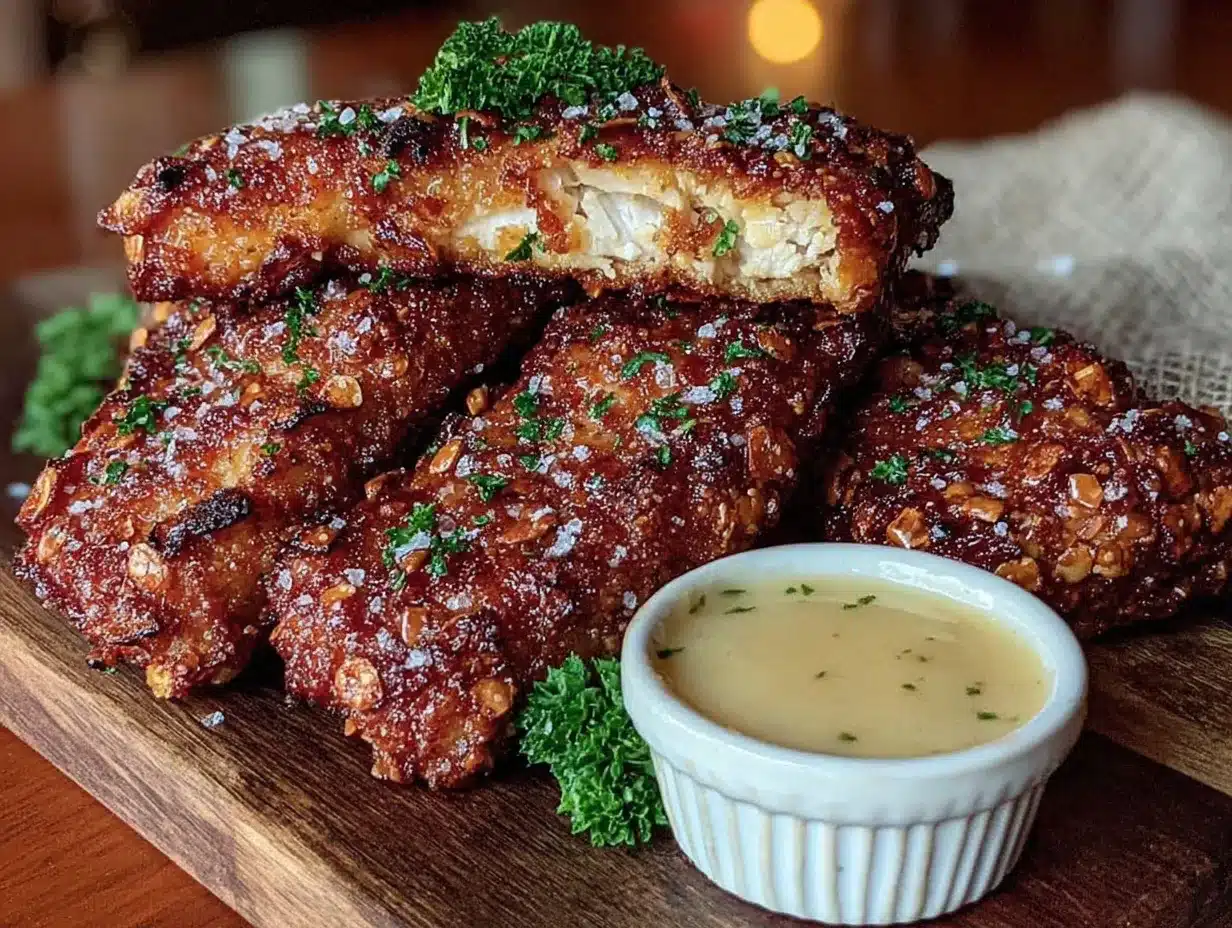
Sensory Cues: When you’re crushing the pretzels, you should hear that satisfying crackle. The flour-coated chicken should feel dry to the touch, not sticky. When the tenders are baking, your kitchen will fill with a warm, malty, toasty aroma that smells like a German bakery. The finished tenders should be deeply golden with visible chunks of pretzel, and when you bite into one, you should hear a distinct crunch before giving way to tender, juicy chicken.
Cooking Tips & Techniques
After several batches of trial and error (and one particularly salty disaster), I’ve gathered some tips that will help you nail these every time.
Don’t over-crush the pretzels. I learned this the hard way. If you turn the pretzels into fine powder, the coating becomes dense and doesn’t crisp up properly. You want a mix of textures—some fine crumbs that adhere well, and some small chunks that create those irresistible crunchy bits. Think of it like coarse sand with pebbles.
Season the flour, not the pretzels. Since pretzels are already salted, adding extra salt to the coating can lead to over-seasoned chicken. I season the flour mixture lightly and let the pretzels do the heavy lifting. This also gives you more control over the final saltiness.
Let the coated tenders rest. After coating, let the tenders sit on a wire rack for 5-10 minutes before cooking. This helps the coating adhere better and prevents it from sliding off during cooking. I know it’s tempting to rush, but this little pause makes a big difference in the final texture.
Use a thermometer. I cannot stress this enough. Chicken tenders are thin and cook quickly, so it’s easy to overcook them into dry, sad strips. A meat thermometer takes the guesswork out. For baking, I check the temperature at the 10-minute mark and adjust from there. For frying, the oil temperature is just as important—keep it steady at 350°F (175°C) using a candy or deep-fry thermometer.
Work in batches. Whether baking or frying, crowding the pan or baking sheet lowers the temperature and leads to soggy coating. Give each tender some breathing room. On a standard baking sheet, I fit about 6-8 tenders comfortably. For frying, cook 3-4 at a time depending on the size of your skillet.
Double-coat for extra crunch. If you’re feeling indulgent, you can double-coat the tenders: after the first round of flour-egg-pretzel, dip them back in the egg wash and then in the pretzels again. This creates an extra-thick, extra-crunchy crust that’s absolutely decadent. I do this when I’m serving guests or just want something truly special.
One mistake I made: The first time I made these, I used stale pretzels that had been sitting in my pantry for weeks. The coating came out powdery and bland. Fresh pretzels are non-negotiable—they have that distinctive malt flavor and the right texture for crushing. If your pretzels are a day or two old, toast them before crushing to revive their flavor.
Variations & Adaptations
One of the best things about this recipe is how versatile it is. Here are some variations I’ve tried and loved:
- Spicy Pretzel Chicken Tenders: Add 1 teaspoon of cayenne pepper and 1/2 teaspoon of chipotle powder to the flour mixture. For extra heat, mix 2 tablespoons of hot sauce into the egg wash. The spicy kick pairs surprisingly well with the malty pretzel flavor. I serve these with a cool ranch or blue cheese dip to balance the heat.
- Herb and Parmesan Version: Mix 1/4 cup of grated Parmesan cheese and 2 tablespoons of dried Italian herbs (oregano, thyme, rosemary) into the crushed pretzels. The cheese adds a savory umami note that complements the pretzel crunch beautifully. This version is especially good with marinara sauce for dipping.
- Gluten-Free Adaptation: Use gluten-free pretzels (many brands make them now) and substitute the all-purpose flour with almond flour or a gluten-free all-purpose blend. The texture will be slightly different—almond flour gives a more delicate crust—but still delicious. I’ve tested this with my gluten-sensitive friends, and they couldn’t tell the difference.
- Air Fryer Method: This is my go-to for weeknights. Preheat your air fryer to 375°F (190°C). Spray the basket with oil, arrange the tenders in a single layer (work in batches if needed), and spray the tops with oil. Cook for 8-10 minutes, flipping halfway through, until golden and cooked through. The air fryer gives an incredibly crispy coating with less oil than frying.
- Sweet and Smoky Variation: Add 1 tablespoon of brown sugar and 1 teaspoon of smoked paprika to the pretzel crumbs. The sweetness caramelizes slightly during cooking, creating a beautiful mahogany color and a subtle sweet-savory flavor. This version is amazing with a honey-chipotle dipping sauce.
My personal favorite twist: I once made these with crushed everything bagel pretzels (the ones with sesame seeds, poppy seeds, garlic, and onion flakes on top). The extra seasoning took the flavor to a whole new level. If you can find them, give them a try—they’re absolutely addictive.
Serving & Storage Suggestions
These Cozy Bavarian Pretzel Chicken Tenders are best served warm, fresh from the oven or fryer. The contrast between the hot, crunchy coating and the tender, juicy chicken is at its peak within the first 15 minutes of cooking.
Serving temperature and presentation: Serve the tenders on a wooden board or platter lined with parchment paper for a rustic look. Garnish with fresh parsley or chives for a pop of color, and serve with small bowls of dipping sauces. I like to offer at least two sauces: a classic honey mustard (mix equal parts honey and Dijon mustard with a dollop of mayonnaise) and a warm beer cheese dip for dipping. For a complete meal, serve alongside a simple German-style potato salad, a crisp cucumber salad, or oven-roasted vegetables like Brussels sprouts or asparagus.
Complementary dishes: These tenders pair beautifully with:
- German potato salad (warm, tangy, with bacon and vinegar)
- Braised red cabbage with apples (sweet and sour contrast)
- A simple green salad with a tangy vinaigrette
- Soft pretzel bites (for the ultimate pretzel-themed meal!)
- Cold beer (a lager or hefeweizen is perfect) or a crisp apple cider
Storage instructions: Leftover tenders can be stored in an airtight container in the refrigerator for up to 3 days. To maintain crispiness, place a paper towel in the container to absorb excess moisture. I don’t recommend freezing these, as the coating can become soggy upon thawing and reheating.
Reheating methods: The best way to reheat these is in the oven or air fryer. Preheat your oven to 375°F (190°C), place the tenders on a wire rack over a baking sheet, and heat for 5-7 minutes until warmed through and crispy. In an air fryer, reheat at 350°F (175°C) for 3-4 minutes. Avoid the microwave—it will turn the coating soft and rubbery. I speak from sad experience.
How flavors develop over time: Interestingly, the pretzel flavor becomes more pronounced after a day in the fridge. The maltiness deepens, and the spices meld together. While the texture won’t be as crisp as fresh, the flavor is still wonderful. I’ve been known to chop up leftover tenders and toss them into a salad or wrap for lunch the next day.
Nutritional Information & Benefits
These chicken tenders are a satisfying meal that balances indulgence with wholesome ingredients. Here’s the estimated nutritional breakdown per serving (based on 4 servings, baked version):
- Calories: Approximately 380-420 per serving
- Protein: 32-35g (excellent source of lean protein)
- Carbohydrates: 28-32g (from pretzels and flour)
- Fat: 14-18g (varies based on cooking method and oil used)
- Fiber: 2-3g
- Sodium: 650-750mg (most from pretzels; can be reduced by using low-sodium pretzels)
Health benefits of key ingredients: Chicken breast is a lean protein source that supports muscle health and keeps you feeling full. Pretzels provide carbohydrates for energy, and the small amount of butter or oil adds healthy fats for satiety. The Dijon mustard in the coating contains turmeric (a natural anti-inflammatory) and has minimal calories. If you use smoked paprika, you’re getting a dose of antioxidants called capsaicinoids.
Dietary considerations: This recipe can be adapted for gluten-free diets (using gluten-free pretzels and flour) and dairy-free diets (using plant-based milk and oil instead of butter). It’s naturally nut-free and egg-free if you use a flax egg substitute (1 tablespoon ground flaxseed mixed with 3 tablespoons water per egg). For a lower-sodium version, use unsalted pretzels and reduce the added salt in the flour mixture.
Potential allergens: This recipe contains gluten (pretzels, flour), dairy (buttermilk, butter if used), and eggs. Always check your pretzel packaging for potential cross-contamination if serving to someone with severe allergies.
My wellness perspective: I believe in balance. These tenders aren’t health food, but they’re made with real, recognizable ingredients and cooked at home—which already puts them ahead of most takeout options. Pair them with a generous portion of vegetables, and you’ve got a satisfying meal that nourishes both body and soul.
Conclusion
These Cozy Bavarian Pretzel Chicken Tenders have become a staple in my kitchen because they deliver exactly what comfort food should: warmth, crunch, and a sense of being cared for. Every time I make them, I think of Greta at the farmers’ market and that simple exchange that turned into something so delicious. That’s the thing about cooking—sometimes the best recipes come from the most unexpected places.
I encourage you to make this recipe your own. Adjust the spices, try different dipping sauces, or experiment with the variations I’ve shared. The beauty of home cooking is that there are no rules—just delicious possibilities. Whether you’re serving these for a cozy family dinner, a game-day snack, or just because you need a little comfort on a cold evening, I hope they bring you as much joy as they’ve brought me.
I’d love to hear how yours turn out! Leave a comment below with your favorite dipping sauce combination or any twists you’ve tried. Don’t forget to share this recipe with someone who needs a little cozy crunch in their life. Happy cooking, friends!
Frequently Asked Questions
Can I use regular pretzels instead of Bavarian-style?
Yes, you absolutely can! Regular salted pretzel twists work well, though the flavor will be slightly different. Bavarian pretzels have a deeper malt flavor and a chewier texture, but standard pretzels still create a delicious crunchy coating. Just reduce the added salt in the flour mixture since regular pretzels can be quite salty.
How do I keep the coating from falling off?
This is a common issue, but easily fixed. First, make sure your chicken is patted completely dry before coating. Second, let the coated tenders rest on a wire rack for 5-10 minutes before cooking—this helps the coating set. Third, avoid overcrowding the pan or baking sheet, which can cause steam to loosen the coating. Finally, use a wire rack when baking to allow air circulation around the tenders.
Can I make these ahead of time for a party?
You can prepare the coated tenders up to 4 hours ahead and refrigerate them on a baking sheet covered with plastic wrap. When you’re ready to cook, bake or fry them straight from the fridge—just add a minute or two to the cooking time. I don’t recommend cooking them completely ahead of time, as the coating loses its crunch.
What’s the best dipping sauce for these tenders?
Honey mustard is the classic choice and pairs beautifully with the malty pretzel flavor. For something different, try a warm beer cheese dip, spicy sriracha mayo, or a tangy German-style mustard sauce. I personally love a mix of Dijon mustard and honey with a splash of apple cider vinegar—it cuts through the richness perfectly.
Can I use chicken thighs instead of tenders?
Absolutely! Boneless, skinless chicken thighs work wonderfully. They’re more forgiving than breasts (harder to overcook) and have a richer flavor. Just adjust the cooking time slightly—thighs may need an extra 2-3 minutes in the oven. Use a meat thermometer to ensure they reach 165°F (74°C) for safety, though thighs are still juicy even at slightly higher temperatures.
Pin This Recipe!
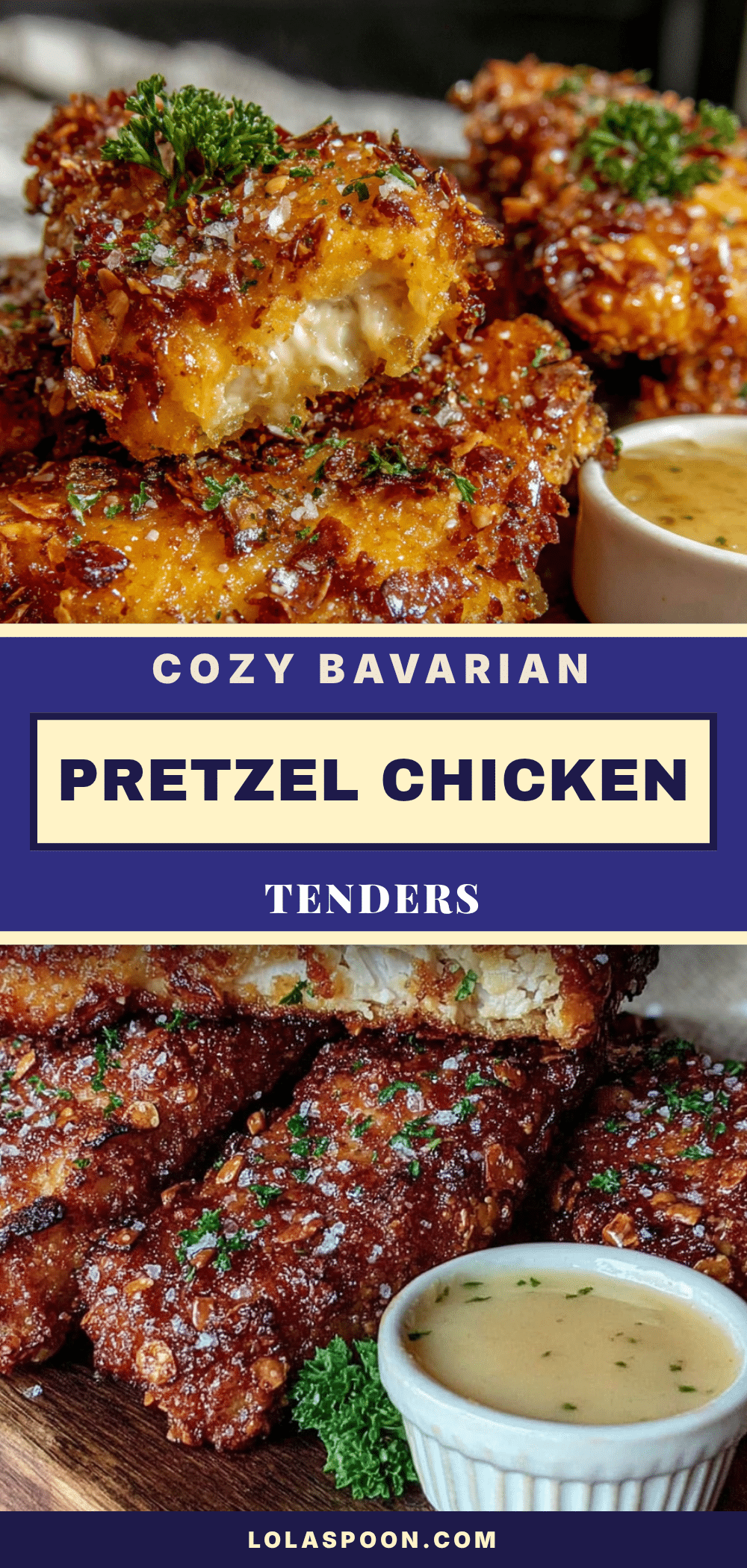
Easy Bavarian Pretzel Chicken Tenders: Best Cozy Recipe

These crunchy, juicy chicken tenders are coated with crushed Bavarian-style pretzels for a unique, malty flavor. Perfect for cozy evenings, they come together in under 30 minutes and pair wonderfully with honey mustard or beer cheese dip.
- Prep Time: 15 minutes
- Cook Time: 15 minutes
- Total Time: 30 minutes
- Yield: 4 servings 1x
- Category: Main Course
- Cuisine: German
Ingredients
- 1.5 pounds (about 680g) fresh chicken tenders
- 4 large Bavarian-style soft pretzels (about 8 ounces or 225g total)
- 1/2 cup (60g) all-purpose flour
- 2 large eggs, beaten
- 1/4 cup (60ml) buttermilk
- 2 tablespoons Dijon mustard
- 1 teaspoon garlic powder
- 1 teaspoon paprika (smoked or sweet)
- 1/2 teaspoon salt
- 1/2 teaspoon black pepper, freshly ground
- Cooking spray or oil (avocado oil for baking, vegetable or canola for frying)
- Optional for dipping: honey mustard sauce (1/4 cup honey + 1/4 cup Dijon mustard + 1 tablespoon mayonnaise) or beer cheese dip
Instructions
- Preheat your oven to 400°F (200°C). If frying, heat 2 inches of oil in a heavy skillet to 350°F (175°C).
- Crush the pretzels: If using soft Bavarian pretzels, let them dry for an hour. Break into pieces and pulse in a food processor until you have a mix of fine crumbs and small chunks (about 2 cups). Alternatively, crush in a zip-top bag with a rolling pin.
- Toast the pretzel crumbs (optional but recommended): Spread on a baking sheet and toast in the preheated oven for 3-4 minutes until fragrant. Let cool completely.
- Set up dredging station: In bowl 1, combine flour, garlic powder, paprika, salt, and pepper. In bowl 2, whisk eggs, buttermilk, and Dijon mustard. In bowl 3, place cooled crushed pretzels.
- Prepare chicken: Pat chicken tenders dry with paper towels. If uneven, pound to 1/2-inch thickness.
- Coat chicken: Dredge each tender in flour (shake off excess), dip in egg wash (let excess drip), then press into pretzel crumbs until fully coated. Use one hand for dry, one for wet. Place on a plate or baking sheet.
- Cook: For baking, place on a wire rack over a baking sheet, spray or brush with oil, and bake 12-15 minutes, flipping halfway, until golden and internal temp reaches 165°F (74°C). For frying, fry in batches 3-4 minutes per side until golden and cooked through; drain on paper towels.
- Rest and serve: Let cooked tenders rest on a wire rack for 2-3 minutes. Serve warm with dipping sauce.
Notes
Don’t over-crush the pretzels—leave some chunks for crunch. Season the flour, not the pretzels, to avoid over-salting. Let coated tenders rest 5-10 minutes before cooking to help coating adhere. Use a meat thermometer to avoid overcooking. For extra crunch, double-coat by repeating the egg wash and pretzel step.
Nutrition
- Serving Size: 4 servings
- Calories: 400
- Sugar: 3
- Sodium: 700
- Fat: 16
- Saturated Fat: 4
- Carbohydrates: 30
- Fiber: 2
- Protein: 33
Keywords: pretzel chicken tenders, Bavarian pretzel chicken, easy chicken tenders, cozy chicken recipe, pretzel crusted chicken