My neighbor across the hall, this guy named Leo who always smells like sawdust and coffee, asked me why I couldn’t just throw everything in one pan and call it dinner. I was in the middle of explaining my elaborate three-dish plan for a little get-together we were hosting — you know, the kind where you try too hard and end up with a mountain of dishes and a stressed-out host. I started to explain why that wouldn’t work, why German sausage and sauerkraut needed to be handled with more respect. Then I stopped. Honestly, I was tired. The thought of scrubbing three pans after everyone left sounded miserable.
So I tried it his way. One skillet. All the ingredients. A little bit of faith and a whole lot of “what’s the worst that could happen?” The result? A dish that had my guests scraping the pan with pieces of bread, asking for the recipe before they even finished their first helping. I mean, I was supposed to be the one teaching him something about cooking, and instead, he handed me the best party trick I’ve ever learned. It was humbling, let me tell you. That night, I learned that sometimes the simplest approach is the one that steals the show. And this quick German sausage and sauerkraut skillet has been my go-to for every gathering since — from last-minute potlucks to planned-out dinner parties. It’s the dish that makes you look like you spent hours in the kitchen when really, you just trusted a neighbor’s good idea.
Why You’ll Love This Recipe
This isn’t just another sausage recipe. This is the one that disappears first at every party, the one people hover around while pretending to have a conversation. Here’s why you’ll keep coming back to it:
- Ready in Under 30 Minutes: From fridge to table in about 25 minutes flat. Perfect for those nights when guests are on their way and you need something impressive, fast.
- Simple, Pantry-Friendly Ingredients: You probably already have most of this stuff. Sausage, sauerkraut, a few spices — no fancy grocery trips required.
- Perfect for Entertaining: This dish was made for parties. It scales up beautifully, stays warm for ages, and everyone loves it. Seriously, I’ve never had leftovers.
- One-Pan Wonder: Less cleanup means more time with your guests. That’s a win in my book.
- Bold, Satisfying Flavor: The tangy sauerkraut, the juicy sausage, the subtle sweetness from a bit of apple or brown sugar — it’s comfort food that feels a little special.
What makes this version different? It’s the balance. So many sauerkraut skillets end up either too sour or too bland. I’ve tweaked this one over the years, adding a touch of apple and a whisper of caraway to round everything out. It’s not just another recipe — it’s the version I’ve tested for every kind of crowd, from my picky in-laws to my foodie friends. And it works every single time.
This is the kind of dish that makes you close your eyes after the first bite. It’s hearty, it’s tangy, it’s a little bit sweet — and it’s exactly what you want to serve when you want to impress without the stress.
What Ingredients You Will Need
This recipe uses simple, hearty ingredients to deliver big, crowd-pleasing flavor. Most of these are pantry staples or easy to find at any grocery store.
- 1 ½ pounds (680g) smoked German sausage or bratwurst: I prefer using a mix of beef and pork sausages for the best flavor. Johnsonville or a local butcher’s brats work beautifully. Slice them into 1-inch rounds so they brown nicely and are easy to eat with a fork.
- 1 tablespoon (15ml) olive oil or avocado oil: Just enough to get a good sear on the sausage. Avocado oil has a higher smoke point, but olive oil adds a nice flavor.
- 1 large yellow onion, thinly sliced: The onion melts down and adds a natural sweetness that balances the tangy sauerkraut. Yellow onions are my go-to, but a sweet Vidalia would work too.
- 2 cloves garlic, minced: Fresh garlic is key here. Don’t use the jarred stuff — it just doesn’t have the same punch.
- 1 large apple, peeled and diced (about 1 cup): This is my secret ingredient. A Granny Smith apple adds a gentle sweetness and a touch of acidity that brightens the whole dish. It also helps cut through the richness of the sausage.
- 1 (32-ounce / 900g) jar or bag of sauerkraut, drained but not rinsed: Rinsing removes too much of that tangy flavor we want. I like Bubbies or Wildbrine for a really good, fermented kraut. If you’re using a bag, just squeeze out the excess liquid.
- 1 teaspoon caraway seeds: This is the classic German flavor. It adds a slightly anise-like, earthy note that pairs perfectly with the sausage and kraut. Toast them for a minute in the pan first if you want to really wake them up.
- ½ teaspoon black pepper: Freshly ground is always best. It adds a gentle warmth.
- ½ cup (120ml) low-sodium chicken broth or dry white wine: The broth keeps everything moist and helps create a lovely, slightly saucy finish. A dry Riesling or a Sauvignon Blanc would be fantastic here — use what you’re planning to serve with dinner.
- 1 tablespoon brown sugar (optional): Just a touch to round out the acidity if your sauerkraut is particularly tangy. I add it about half the time, depending on the brand of kraut I’m using.
- Fresh parsley, chopped, for garnish: A sprinkle of green makes it look finished and adds a fresh pop of flavor.
Substitution Tips: For a gluten-free version, simply use gluten-free sausages and ensure your broth is certified gluten-free. If you’re avoiding pork, use all-beef smoked sausages. Don’t have an apple? A pear works surprisingly well, or just skip it and add an extra tablespoon of brown sugar. No caraway seeds? A pinch of fennel seeds or even a little bit of dried dill can work in a pinch, though the flavor will shift.
Equipment Needed
You don’t need a fancy kitchen to pull this off. Here’s what you’ll need:
- A large, heavy-bottomed skillet or Dutch oven: A 12-inch cast iron skillet is my absolute favorite for this. It holds heat beautifully and gives the sausage a gorgeous sear. A stainless steel or non-stick skillet works perfectly too. Just make sure it’s big enough to hold everything without crowding.
- A sharp chef’s knife and cutting board: For slicing the sausage, onion, and apple. A good knife makes prep feel effortless.
- A wooden spoon or silicone spatula: For stirring and scraping up all those delicious browned bits from the bottom of the pan.
- A colander: For draining the sauerkraut.
- A measuring cup and measuring spoons: For accuracy, especially with the broth and spices.
If you don’t have a cast iron skillet, don’t worry. I’ve made this in a regular non-stick pan more times than I can count. The key is just making sure the pan is hot enough to get a good sear on the sausage. And if you’re using a Dutch oven, it works great for keeping everything warm on the table.
Preparation Method

This comes together in about 25 minutes. Here’s how to do it, step by step.
- Prep your ingredients first. Slice the sausage into 1-inch rounds. Thinly slice the onion. Mince the garlic. Peel and dice the apple. Drain the sauerkraut in a colander, pressing gently to remove excess liquid, but don’t rinse it. Having everything ready before you start cooking makes the whole process smooth and stress-free.
- Heat your skillet over medium-high heat. Add the olive oil and let it shimmer for about 30 seconds. Add the sliced sausage in a single layer — you might need to do this in two batches if your pan isn’t huge. Let it cook without moving for 3-4 minutes, until the bottom is deeply browned and crispy. Flip and cook for another 2-3 minutes. Browning the sausage well is the most important step — it builds so much flavor. Transfer the browned sausage to a plate and set aside.
- Reduce the heat to medium. Add the sliced onion to the same pan. There should be enough fat left from the sausage, but if the pan looks dry, add another teaspoon of oil. Cook the onion, stirring occasionally, for about 5 minutes, until it’s soft and starting to turn golden at the edges. Scrape up any browned bits from the bottom of the pan as you stir — that’s pure flavor.
- Add the minced garlic and diced apple. Stir and cook for 1 minute until fragrant. The apple will start to soften and release some of its juice. It smells incredible at this point — like the beginning of something really good.
- Add the drained sauerkraut, caraway seeds, and black pepper. Stir everything together until the sauerkraut is well combined with the onion and apple mixture. Let it cook for 2-3 minutes, stirring occasionally, to allow the flavors to meld.
- Pour in the chicken broth (or white wine) and the brown sugar if using. Stir to combine. Bring the mixture to a gentle simmer. Return the browned sausage to the pan, nestling it down into the sauerkraut. Let everything simmer together for 5-7 minutes, uncovered, until the liquid has reduced slightly and the flavors have come together. The sauerkraut should be tender and the sausage should be heated through.
- Taste and adjust. Give it a taste. Does it need a pinch more salt? A little more pepper? A tiny splash of apple cider vinegar if you want more tang? This is your moment to dial it in. Remember, the sauerkraut is already salty, so go easy on additional salt.
- Garnish and serve. Sprinkle the fresh parsley over the top and serve straight from the skillet. That’s the beauty of a one-pan meal — it goes right to the table.
Cooking Tips & Techniques
I’ve made this dish more times than I can count, and I’ve definitely had a few flops along the way. Here’s what I’ve learned so you don’t have to make the same mistakes.
Don’t overcrowd the pan when browning the sausage. If you pile the sausage in, it will steam instead of sear, and you’ll miss out on that deep, caramelized flavor. Cook it in batches if you need to. Trust me, those extra few minutes are worth it.
Toast the caraway seeds. Before you add the onion, toss the caraway seeds into the hot pan for about 30 seconds. They’ll become incredibly fragrant and their flavor will be much more pronounced. I forgot to do this once, and the dish tasted flat. It’s a small step that makes a big difference.
Use a good quality sauerkraut. This is not the time for the cheap, overly processed stuff that tastes like nothing but salt. Look for sauerkraut in the refrigerated section of the grocery store — it’s fermented, has a much better texture, and a more complex, tangy flavor. Bubbies and Wildbrine are my favorites, but any brand in a bag or jar in the refrigerated aisle will be a step up from the canned stuff.
Let it rest for a few minutes before serving. I know it’s tempting to dig in right away, but letting the skillet sit for about 5 minutes off the heat allows the flavors to meld together even more. The sausage will also absorb a bit of the sauerkraut’s tanginess, which is a good thing.
Scale it up for a crowd. This recipe doubles beautifully. Just use a larger Dutch oven or two skillets. The cooking time might increase by a few minutes, but the process is exactly the same. I’ve made this for a party of 20 and it was a hit.
Variations & Adaptations
This recipe is incredibly forgiving and easy to adapt. Here are a few ways to make it your own.
- Spicy Version: Add ½ teaspoon of red pepper flakes along with the garlic, or use spicy andouille or chorizo sausage instead of German sausage. The heat cuts through the richness beautifully.
- Beer-Infused: Swap the chicken broth for a dark German beer like a Dunkel or a Märzen. The beer adds a deep, malty flavor that’s absolutely fantastic. Just let it simmer for an extra minute or two to cook off some of the alcohol.
- Add Some Greens: Stir in a few handfuls of fresh spinach or chopped kale during the last 2 minutes of cooking. It wilts down and adds a pop of color and a boost of nutrients. I’ve done this when I wanted to pretend I was being healthy, and it worked great.
- Make It a Meal: Serve the skillet over mashed potatoes, egg noodles, or with a side of crusty rye bread to soak up all the juices. It’s also fantastic spooned into hollowed-out crusty rolls for a kind of German sausage sandwich.
- Dairy-Free Adaptation: This recipe is naturally dairy-free, so no changes needed! Just double-check that your sausages don’t contain any dairy.
Serving & Storage Suggestions
This skillet is a showstopper at any gathering. Serve it straight from the pan — it keeps everything warm and looks wonderfully rustic. I like to put it on a trivet in the center of the table with a stack of small plates and forks, and let everyone help themselves.
What to Serve Alongside: A dollop of whole-grain mustard or a spoonful of sour cream on top is a classic touch. For sides, a simple cucumber salad with dill, some warm German-style potato salad, or just a loaf of crusty bread and some butter. If you’re serving drinks, a cold German beer or a dry Riesling is perfect.
Storage: Leftovers keep beautifully in an airtight container in the refrigerator for up to 4 days. In fact, the flavors get even better overnight as they meld together. I’ve been known to make this a day ahead of a party on purpose.
Reheating: The best way to reheat is in a skillet over medium-low heat with a splash of broth or water to loosen it up. Stir occasionally until warmed through, about 5-7 minutes. You can also microwave individual portions, but the sausage won’t be as firm.
Freezing: This dish freezes well for up to 3 months. Let it cool completely, then transfer to a freezer-safe container. Thaw overnight in the refrigerator and reheat as directed above.
Nutritional Information & Benefits
While this is definitely a comfort food dish, it does have some surprising nutritional perks. Here’s an approximate breakdown per serving (based on 6 servings):
- Calories: ~380
- Protein: 18g
- Fat: 26g
- Carbohydrates: 14g
- Fiber: 4g
- Sugar: 8g
- Sodium: 1100mg
Health Benefits: Sauerkraut is a fermented food, which means it’s packed with probiotics that are great for gut health. It’s also a good source of vitamin C and fiber. The apple adds additional fiber and vitamins, while the onions and garlic provide antioxidants. The protein from the sausage helps keep you full and satisfied.
Dietary Considerations: This recipe is naturally gluten-free (check your sausages and broth) and dairy-free. It’s also low-carb if you skip the brown sugar and serve it without starchy sides. The main allergens are the sausage itself, which may contain soy or other fillers, so always check the label if you have sensitivities.
Conclusion
This quick German sausage and sauerkraut skillet has become my secret weapon for entertaining. It’s the dish that makes me look like I’ve been planning for hours when really, I just threw it together in the time it took my guests to finish their first drink. It’s forgiving, it’s flexible, and it always, always gets rave reviews.
I love this recipe because it reminds me that the best cooking advice often comes from unexpected places — like a neighbor who just wanted to simplify my life. It’s a lesson in trusting the process and not overcomplicating things. So go ahead, make this for your next gathering. Customize it with your favorite sausage, add a little extra heat, or serve it over noodles. Make it your own.
I’d love to hear how it turns out for you! Drop a comment below and let me know what variations you tried, or tag me in your photos on social media. Happy cooking, friends!
Frequently Asked Questions
Can I make this ahead of time for a party?
Absolutely! This dish actually tastes even better the next day as the flavors meld together. Make it a day ahead, let it cool, and store it in the refrigerator. Reheat gently on the stovetop with a splash of broth before serving.
What type of sausage works best for this recipe?
Smoked German sausages like bratwurst, knockwurst, or kielbasa work wonderfully. I like using a mix of beef and pork sausages for the best flavor. Avoid raw sausages for this quick version, as they require longer cooking.
Can I use fresh sauerkraut instead of jarred?
Yes, fresh sauerkraut from the refrigerated section is actually my preference! It has a much better texture and more complex flavor than the canned or jarred versions. Just drain it well before using.
How can I reduce the sodium in this recipe?
Look for low-sodium sausages and low-sodium chicken broth. You can also rinse the sauerkraut briefly in a colander to remove some of the salt, though you’ll lose a bit of the tangy flavor. Skip the added salt entirely and rely on the pepper and caraway for flavor.
Can I cook this in a slow cooker or Instant Pot?
For the slow cooker, brown the sausage and onion in a skillet first, then transfer everything to the slow cooker and cook on low for 4-6 hours. For the Instant Pot, use the sauté function to brown the sausage and onion, then add remaining ingredients and cook on high pressure for 5 minutes with a quick release.
Pin This Recipe!
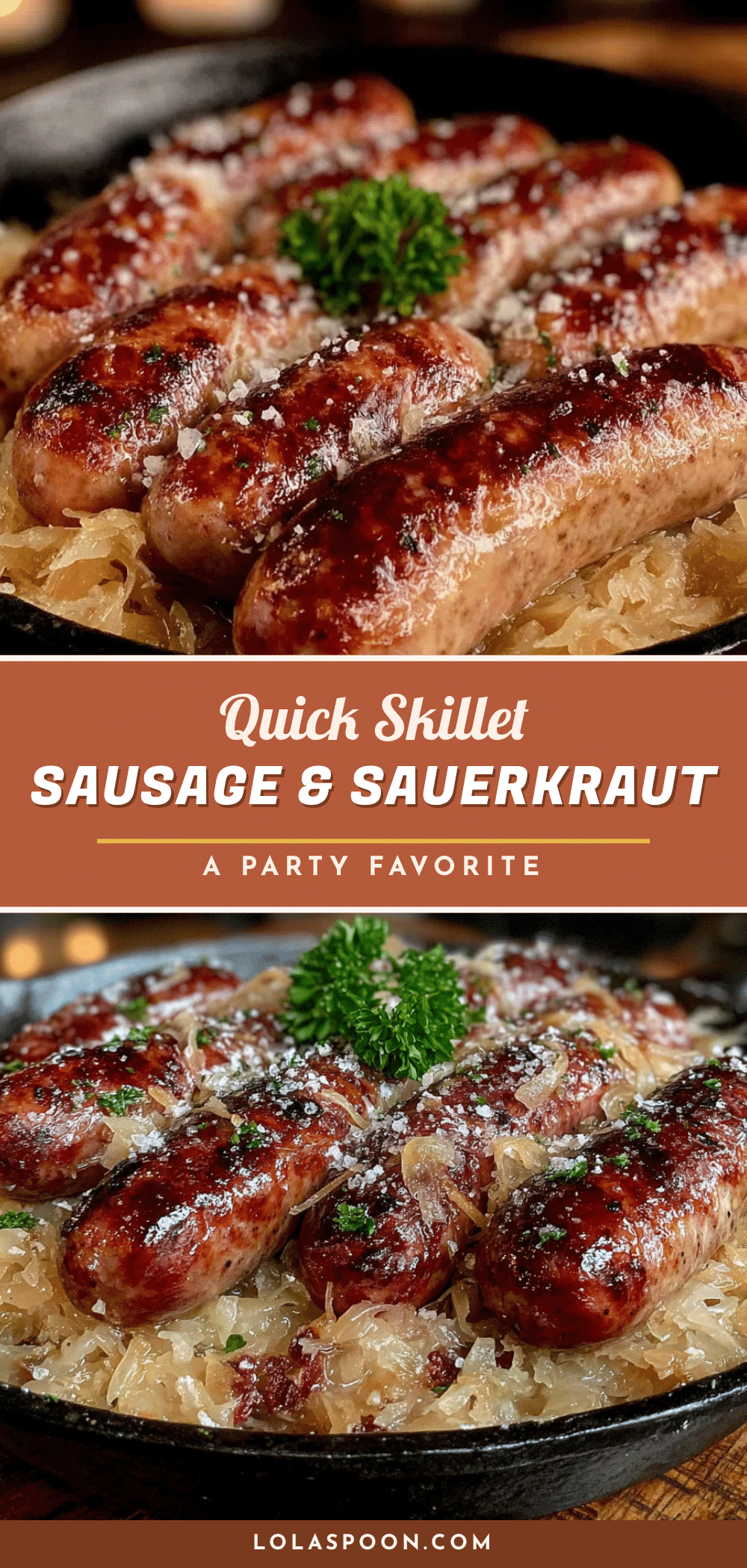
Easy German Sausage and Sauerkraut Skillet Recipe

A quick and easy one-pan German sausage and sauerkraut skillet that’s perfect for entertaining. Ready in under 30 minutes with simple, pantry-friendly ingredients, this dish delivers bold, satisfying flavor with minimal cleanup.
- Prep Time: 10 minutes
- Cook Time: 15 minutes
- Total Time: 25 minutes
- Yield: 6 servings 1x
- Category: Main Course
- Cuisine: German
Ingredients
- 1 ½ pounds (680g) smoked German sausage or bratwurst, sliced into 1-inch rounds
- 1 tablespoon (15ml) olive oil or avocado oil
- 1 large yellow onion, thinly sliced
- 2 cloves garlic, minced
- 1 large apple (Granny Smith), peeled and diced (about 1 cup)
- 1 (32-ounce / 900g) jar or bag of sauerkraut, drained but not rinsed
- 1 teaspoon caraway seeds
- ½ teaspoon black pepper, freshly ground
- ½ cup (120ml) low-sodium chicken broth or dry white wine
- 1 tablespoon brown sugar (optional)
- Fresh parsley, chopped, for garnish
Instructions
- Prep your ingredients first. Slice the sausage into 1-inch rounds. Thinly slice the onion. Mince the garlic. Peel and dice the apple. Drain the sauerkraut in a colander, pressing gently to remove excess liquid, but don’t rinse it.
- Heat your skillet over medium-high heat. Add the olive oil and let it shimmer for about 30 seconds. Add the sliced sausage in a single layer (cook in batches if needed). Let it cook without moving for 3-4 minutes until deeply browned and crispy. Flip and cook for another 2-3 minutes. Transfer browned sausage to a plate and set aside.
- Reduce the heat to medium. Add the sliced onion to the same pan. Cook, stirring occasionally, for about 5 minutes until soft and starting to turn golden at the edges. Scrape up any browned bits from the bottom of the pan.
- Add the minced garlic and diced apple. Stir and cook for 1 minute until fragrant.
- Add the drained sauerkraut, caraway seeds, and black pepper. Stir everything together and cook for 2-3 minutes, stirring occasionally.
- Pour in the chicken broth (or white wine) and the brown sugar if using. Stir to combine. Bring to a gentle simmer. Return the browned sausage to the pan, nestling it into the sauerkraut. Let everything simmer together for 5-7 minutes, uncovered, until the liquid has reduced slightly and flavors have melded.
- Taste and adjust seasoning as needed. Remember, sauerkraut is already salty, so go easy on additional salt.
- Garnish with fresh parsley and serve straight from the skillet.
Notes
For best flavor, don’t overcrowd the pan when browning sausage. Toast caraway seeds for 30 seconds before adding onion for more pronounced flavor. Use refrigerated sauerkraut for better texture and taste. Let the dish rest for 5 minutes before serving to allow flavors to meld. This recipe doubles easily for larger crowds.
Nutrition
- Serving Size: 1 serving (about 1/6
- Calories: 380
- Sugar: 8
- Sodium: 1100
- Fat: 26
- Saturated Fat: 9
- Carbohydrates: 14
- Fiber: 4
- Protein: 18
Keywords: German sausage, sauerkraut, one-pan, skillet, quick dinner, easy recipe, bratwurst, comfort food, party food