It was 11:47 PM on a drizzly Tuesday in late October, and I had a very specific, almost aggressive craving for mashed potatoes. Not just any mashed potatoes—I wanted the kind that felt like a weighted blanket for your insides. The kind that made you forget you had a deadline the next morning. I didn’t have any heavy cream (the usual suspect), and I was fresh out of the fancy Yukon Golds I normally hoard for special occasions. But I had a bag of humble Russets, a half-used stick of butter, and a wilting bunch of sage from a farmers market trip three days prior. The idea hit me while staring into the fridge’s lonely light: brown the butter. Make it nutty. Make it *weird* in that late-night, impulsive way. I tossed the sage leaves into the foaming butter, watched them crisp up like tiny, fragrant chips, and poured the whole glorious, brown-flecked mess over the steaming potatoes. Honestly, I almost cried when I took the first bite. It was a happy accident born from a Tuesday night craving, and I haven’t made mashed potatoes any other way since. Maybe you’ve had one of those nights where the universe hands you a perfect, unplanned combination? This is that recipe, captured on purpose.
Why You’ll Love This Recipe
Let me tell you, I’ve tested a lot of mashed potato recipes in my day—some that required a whole stick of cream cheese, others that demanded a potato ricer and a level of patience I simply do not possess. This one is different. This is the one I make for Thanksgiving when I want to impress my sister-in-law, and also for a random Wednesday when I need a hug in a bowl.
- Quick & Easy: Comes together in about 35 minutes, which is faster than delivery. Seriously. From pot to plate, this is a weeknight champion.
- Simple Ingredients: You likely have butter, potatoes, and sage in your kitchen right now. No trips to a specialty store required—just a little bit of patience for browning butter.
- Perfect for Cozy Nights: This is the side dish for a rainy Sunday, a snowy evening, or any time you need a little extra warmth. It pairs beautifully with roasted chicken, a seared steak, or even a simple fried egg.
- Crowd-Pleaser: I’ve brought these to potlucks and watched them disappear first. The nutty brown butter and crispy sage are a combination that feels fancy but is secretly simple to pull off.
- Unbelievably Delicious: The texture is creamy without being gluey, and the flavor is next-level comfort food. The sage adds an earthy, almost woodsy note that dances perfectly with the rich, toasty brown butter.
This isn’t just another version of mashed potatoes. It’s the version that makes you close your eyes after the first bite. It’s comfort food reimagined—a little bit fancier, a lot more flavorful, but with the same soul-soothing satisfaction that only a bowl of creamy potatoes can deliver.
What Ingredients You Will Need
This recipe uses simple, wholesome ingredients to deliver a flavor that tastes like you spent hours in the kitchen. The magic is all in the technique of browning the butter, so each component plays a specific role.
- 2 pounds (about 900g) Russet or Yukon Gold potatoes – Peeled and cut into 1-inch chunks. Yukon Golds give a naturally buttery, creamy texture, while Russets are fluffier and absorb the brown butter beautifully. I often use a mix of both. (I find Russets are more forgiving if you accidentally over-mix them.)
- 1/2 cup (1 stick / 113g) unsalted butter – This is the star of the show. Use a good quality unsalted butter so you can control the salt level. I personally love Kerrygold for its higher fat content, which browns more evenly.
- 10-12 fresh sage leaves – Plus a few extra for garnish. Look for leaves that are vibrant green and not wilted. The smaller leaves crisp up faster, so keep a mix of sizes.
- 1/2 cup (120ml) whole milk or half-and-half – Warm this up before adding it to the potatoes. Cold liquid will shock the starches and make your potatoes gluey. (Use a dairy-free milk like oat milk for a lighter version.)
- 1 teaspoon kosher salt – Plus more to taste. I start with 1 teaspoon in the cooking water and adjust at the end.
- 1/4 teaspoon freshly ground black pepper – Freshly ground is non-negotiable here. It adds a subtle warmth that pre-ground pepper just can’t match.
- 1/4 cup (60ml) sour cream or crème fraîche – This adds a gentle tang that cuts through the richness of the brown butter. (Greek yogurt works in a pinch, but it’s a little more tart.)
Equipment Needed
You don’t need a professional kitchen to pull this off, but a few specific tools make the process smoother and the results more consistent.
- Large pot (4-5 quart): For boiling the potatoes. Make sure it’s big enough that the potatoes have room to cook evenly.
- Medium skillet or saucepan: A light-colored skillet is ideal for browning butter—it lets you see the color change clearly. A stainless steel or enameled pan works best. (I burned my first batch using a dark non-stick pan. Learn from my mistake!)
- Potato masher or ricer: A ricer gives the smoothest, fluffiest texture, but a good old-fashioned masher works perfectly too. I actually prefer a masher for this recipe because it leaves a little bit of texture.
- Wooden spoon or silicone spatula: For stirring the butter as it browns. A wooden spoon is great for scraping up all those delicious brown bits.
- Measuring cups and spoons: Accuracy matters, especially with the butter and milk.
- Colander: For draining the potatoes after boiling.
A budget-friendly tip: if you don’t have a ricer, just mash the potatoes well and then give them a quick whisk with a hand mixer on low speed. Just be careful not to over-whip them, or they’ll turn into wallpaper paste.
Preparation Method
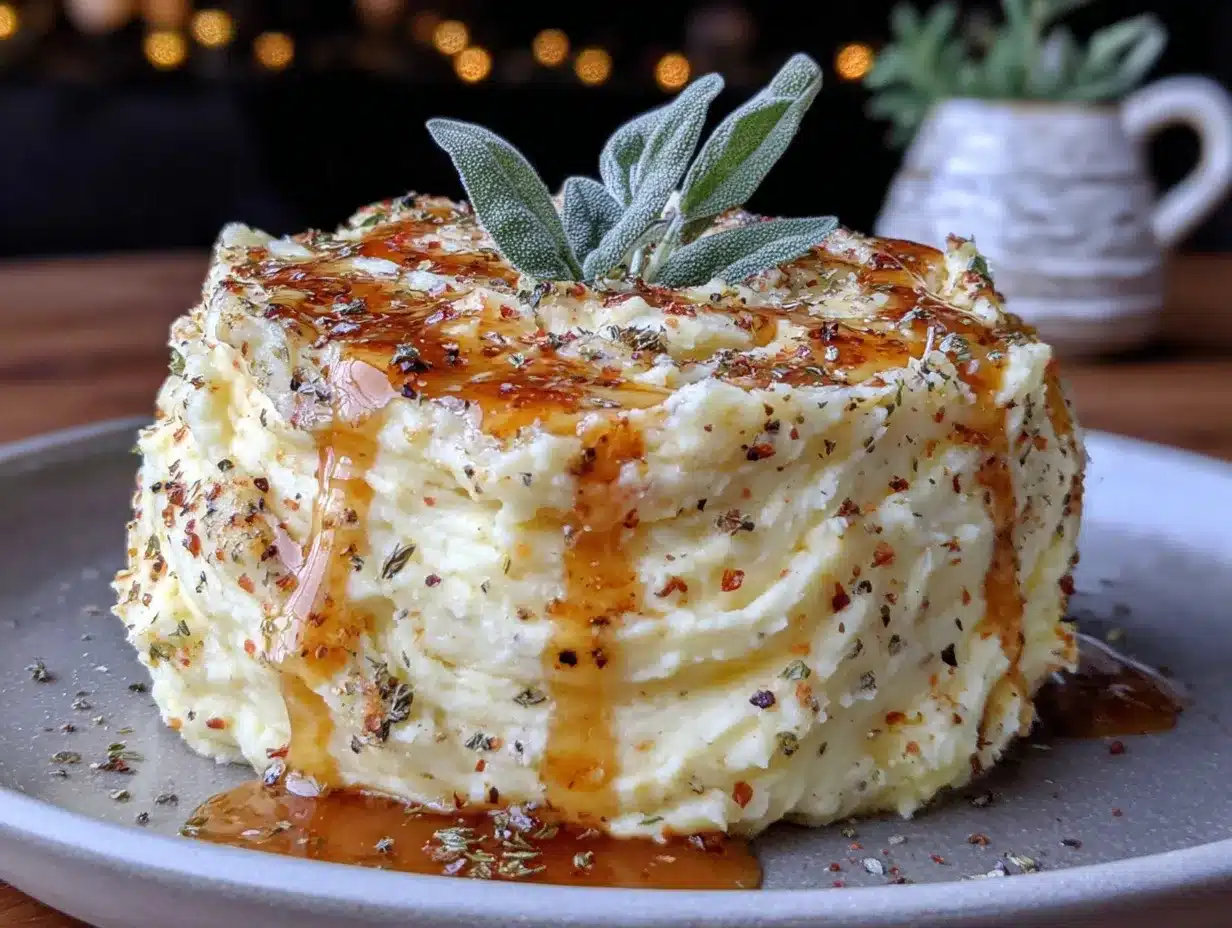
Follow these steps carefully, and you’ll have the creamiest, most flavorful mashed potatoes of your life. The key is to work in stages and not rush the butter.
- Prep the Potatoes: Peel your 2 pounds of potatoes and cut them into uniform 1-inch chunks. This ensures even cooking. Rinse the chunks in cold water to remove excess starch—this helps prevent them from becoming gluey later. Place them in a large pot and cover with cold water by about 2 inches.
- Boil the Potatoes: Add 1 teaspoon of kosher salt to the water. Bring the pot to a boil over high heat, then reduce to a simmer. Cook for 15-20 minutes, or until the potatoes are fork-tender. You should be able to slide a knife through a chunk with almost no resistance. Don’t overcook them, or they’ll become waterlogged. (I once forgot about them for 30 minutes—they were basically potato soup.)
- Drain and Steam Dry: Drain the potatoes in a colander. This is a crucial step: return the empty pot to the stove over low heat for about 1 minute to dry it out. Then, return the drained potatoes to the hot, dry pot and let them sit for 2-3 minutes, shaking occasionally. This evaporates any remaining moisture, which is the secret to fluffy, not watery, mashed potatoes.
- Brown the Butter: While the potatoes are drying, place your 1/2 cup of butter in a medium light-colored skillet over medium heat. Melt the butter, swirling the pan occasionally. It will foam up, then the foam will subside, and you’ll see little brown specks forming at the bottom. This takes about 5-7 minutes. Watch it carefully—it goes from browned to burnt very quickly. The moment it smells nutty and turns a warm amber color, add your 10-12 sage leaves. They’ll sizzle and crisp up in about 30 seconds. Immediately remove the pan from the heat. The sage will continue to crisp as it cools.
- Mash the Potatoes: Using your potato masher, mash the hot, dry potatoes until they’re broken down but still a little chunky. Don’t over-mash at this stage.
- Add the Warm Liquid: Warm your 1/2 cup of milk (or half-and-half) in a small saucepan or microwave until it’s hot but not boiling. Pour it over the mashed potatoes along with the 1/4 cup of sour cream. Season with the 1/4 teaspoon of black pepper. Mash and stir gently until everything is combined and creamy. Taste and adjust salt—you’ll likely need another 1/2 teaspoon, depending on your preference.
- Finish with Brown Butter: Pour the brown butter and sage mixture over the mashed potatoes. Reserve a few crispy sage leaves for garnish. Gently fold the butter into the potatoes with a spatula until it’s just incorporated. Don’t overmix—you want those ribbons of nutty butter throughout.
- Serve Immediately: Transfer the mashed potatoes to a serving bowl. Top with the reserved crispy sage leaves and a tiny pinch of flaky sea salt if you’re feeling fancy. Serve hot.
Cooking Tips & Techniques
I’ve made this recipe more times than I can count, and I’ve definitely made my share of mistakes along the way. Here’s what I’ve learned so you don’t have to repeat my errors.
Don’t Skip the Steam Dry Step. This is the single biggest difference between good mashed potatoes and great ones. If you add your butter and milk to wet potatoes, you’re essentially diluting the flavor. Taking those extra 2 minutes to let the steam escape is a game-changer.
Watch the Butter Like a Hawk. Browning butter is a beautiful, fleeting moment. Once it starts to turn amber, it can go from perfect to burnt in less than 30 seconds. I once looked away to answer a text, and my butter went from gorgeous to acrid in that time. Stay by the stove, swirl the pan, and trust your nose—when it smells like toasted hazelnuts, it’s done.
Warm Your Dairy. This is non-negotiable. Cold milk or cream will seize the starches in the hot potatoes, resulting in a gummy, paste-like texture. I pop my milk in the microwave for 45 seconds while the potatoes are draining. Easy.
Don’t Use a Food Processor or Blender. I know it’s tempting to just dump everything in and let the machine do the work, but you’ll end up with a gluey mess. The blades overwork the starches, turning your fluffy potatoes into something that would be better suited for making paper mache. Stick with a hand masher or a ricer.
Timing is Everything. This dish is best served immediately. If you need to hold it, keep it warm in a slow cooker on the “warm” setting for up to an hour. Stir in an extra splash of warm milk before serving to loosen it up.
Variations & Adaptations
One of the best things about this recipe is how adaptable it is. You can dress it up or down based on what you have on hand or who you’re feeding.
- Vegan Adaptation: Swap the butter for a high-quality vegan butter (I like Miyoko’s) and use unsweetened oat milk or full-fat coconut milk for the liquid. Omit the sour cream or use a vegan version. The brown butter effect won’t be exactly the same, but the sage and nutty flavor will still shine.
- Garlic Lover’s Version: Add 4-5 peeled garlic cloves to the pot with the potatoes during the last 5 minutes of boiling. Mash them right in with the potatoes. You can also add a clove of minced garlic to the butter during the last minute of browning for an extra punch.
- Herb Swap: Not a fan of sage? No problem. Try rosemary (use one small sprig instead of the leaves), fresh thyme (add a few sprigs to the butter), or even a bay leaf for a subtle, floral note. Each herb brings its own personality to the dish.
- Cheesy Twist: Stir in 1/2 cup of freshly grated Parmesan or sharp white cheddar after you add the milk. The cheese melts into the potatoes and adds a salty, savory depth that’s absolutely irresistible.
- Roasted Garlic Variation: For a sweeter, mellower garlic flavor, roast a whole head of garlic in the oven (400°F for 40 minutes) and squeeze the soft cloves into the potatoes before mashing. This takes a bit more time but is so worth it for a special occasion.
Serving & Storage Suggestions
These mashed potatoes are the ultimate comfort food side dish. They pair beautifully with a wide range of mains, from simple to show-stopping.
Serving: Serve hot, straight from the pot. I love to pile them into a warm serving bowl and garnish with the reserved crispy sage leaves and a final drizzle of brown butter. They’re perfect alongside a juicy roast chicken, a seared steak, or even a simple pan-seared salmon. For a truly cozy meal, serve them with my crispy garlic chicken—the garlicky pan juices meld with the creamy potatoes in a way that’s pure magic. They also make a fantastic base for a hearty bowl of stew or braised beef.
Storage: Leftover mashed potatoes can be stored in an airtight container in the refrigerator for up to 4 days. The flavor actually deepens overnight as the brown butter and sage meld together. To reheat, place them in a saucepan over low heat, adding a splash of warm milk or broth to loosen them up. Stir frequently until heated through. You can also reheat them in a microwave-safe bowl in 30-second bursts, stirring in between. Avoid high heat, which can make them dry.
Freezing: These freeze surprisingly well. Spoon cooled mashed potatoes into a freezer-safe bag or container, flatten them out (this helps them freeze and thaw evenly), and freeze for up to 3 months. Thaw overnight in the refrigerator, then reheat gently on the stovetop with a little extra milk. They won’t be quite as fluffy as fresh, but the flavor will still be fantastic.
Nutritional Information & Benefits
Let’s be real—these are indulgent mashed potatoes. But that doesn’t mean they don’t have some redeeming qualities. The key is balance and portion control.
Estimated Nutritional Values (per serving, about 1 cup):
- Calories: 320
- Fat: 18g
- Saturated Fat: 11g
- Carbohydrates: 35g
- Fiber: 3g
- Sugar: 2g
- Protein: 5g
- Sodium: 480mg
Health Benefits: Potatoes get a bad rap, but they’re actually a good source of vitamin C, potassium, and vitamin B6. The skin (if you leave it on) contains fiber. Sage is a powerhouse herb—it’s packed with antioxidants and has anti-inflammatory properties. Butter, in moderation, provides fat-soluble vitamins A, D, E, and K. This recipe is naturally gluten-free. For a lower-carb option, you can swap half the potatoes for cauliflower florets (boil them together), but honestly, I think the potatoes are worth the carbs for the texture alone.
Dietary Considerations: This recipe contains dairy (butter, milk, sour cream). It is naturally gluten-free and can be made vegan with the substitutions listed above. Always check your sour cream and milk labels if you’re serving someone with a severe dairy allergy.
Conclusion
Honestly, I think this is the mashed potato recipe I’ll be making for the rest of my life. It’s simple enough for a Tuesday night, but impressive enough for a holiday table. The nutty brown butter and crispy sage elevate a classic side dish into something truly special. It’s the kind of recipe that makes you feel like a genius in the kitchen, even though it only takes a few extra minutes of attention. I love how forgiving it is—you can tweak it, swap things out, and it still tastes incredible. That’s the mark of a great recipe, if you ask me.
I’d love to hear how yours turn out! Did you try a different herb? Add cheese? Make it vegan? Drop a comment below and tell me about your version. And if you’re looking for another cozy side dish, don’t miss my honey roasted carrots—they have that same sweet-savory thing going on that pairs perfectly with these potatoes. Until next time, happy cooking, and don’t forget to taste the butter before you pour it!
Frequently Asked Questions
Can I make brown butter sage mashed potatoes ahead of time?
Yes! You can make them up to 2 days in advance. Reheat them gently on the stovetop with a splash of warm milk, and add a fresh drizzle of brown butter and a few crispy sage leaves right before serving to revive the flavor.
Why did my brown butter burn?
Brown butter can go from perfect to burnt in seconds. The most common cause is using too high heat or walking away from the pan. Keep the heat on medium, swirl the pan constantly, and remove it from the heat the moment it turns a warm amber color and smells nutty. A light-colored pan helps you see the color change clearly.
Can I use dried sage instead of fresh?
You can, but the texture and flavor will be different. Dried sage is more concentrated and can be slightly bitter. If you use dried, add it to the butter at the very end and don’t try to crisp it—it will just burn. I strongly recommend fresh sage for the best results and those lovely crispy leaves.
How do I fix mashed potatoes that are too gluey?
If you’ve over-mixed your potatoes and they’ve turned gluey, don’t panic. Stir in a splash of warm milk or cream and a little extra melted butter. The added fat and liquid can help loosen the starches slightly. For future batches, remember to not over-mash and to avoid using a food processor or blender.
What’s the best potato for creamy mashed potatoes?
Yukon Golds are the gold standard (pun intended) for creamy mashed potatoes. They have a naturally buttery flavor and a lower starch content than Russets, which means they’re less likely to become gluey. Russets are fluffier and work well too, but you need to be more careful not to overwork them. A 50/50 mix of the two is my personal favorite.
Pin This Recipe!
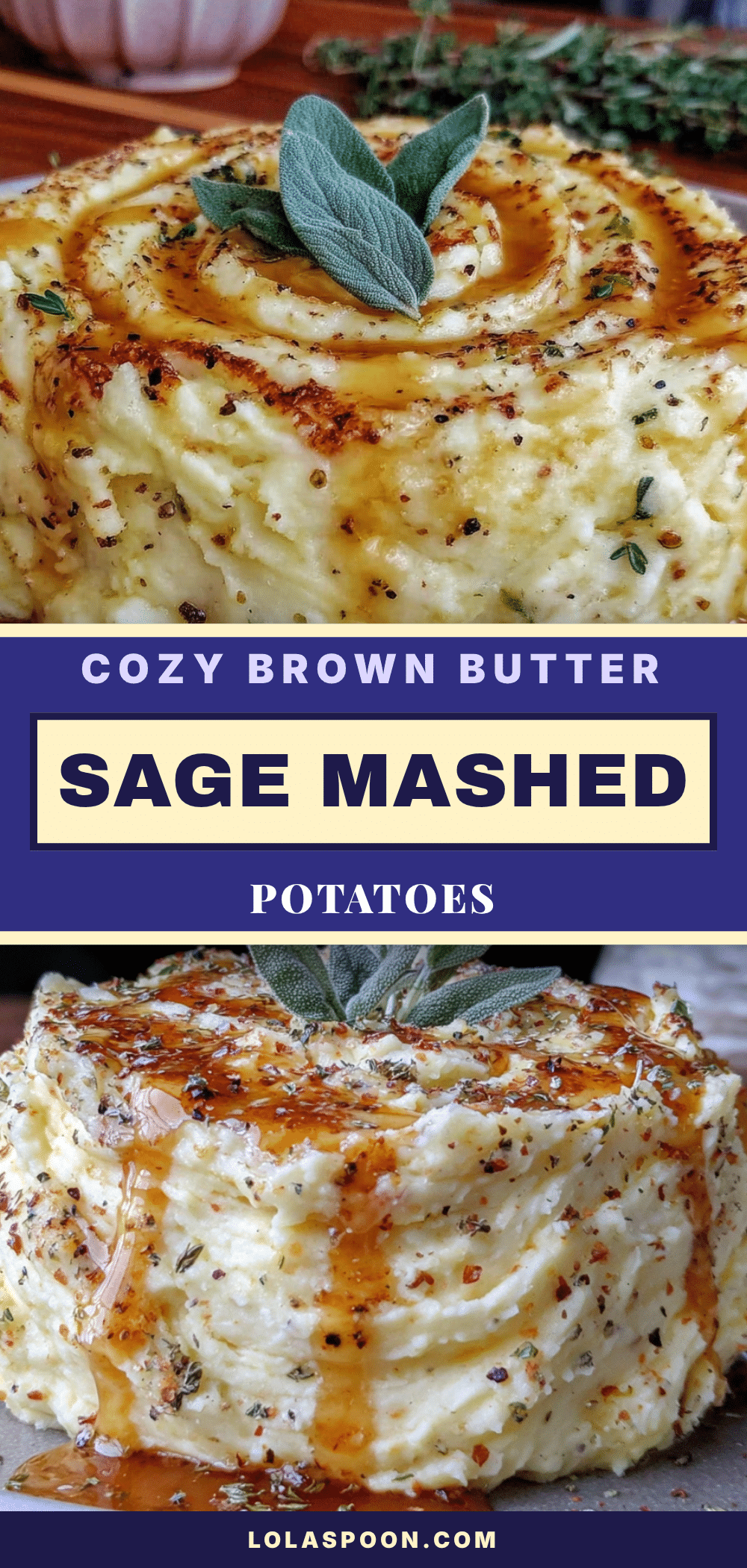
Cozy Brown Butter Sage Mashed Potatoes
These creamy mashed potatoes are elevated with nutty brown butter and crispy sage. An easy, comforting side dish perfect for weeknights or holiday feasts.
- Prep Time: 10 minutes
- Cook Time: 25 minutes
- Total Time: 35 minutes
- Yield: 4 servings 1x
- Category: Side Dish
- Cuisine: American
Ingredients
- 2 pounds (about 900g) Russet or Yukon Gold potatoes, peeled and cut into 1-inch chunks
- 1/2 cup (1 stick / 113g) unsalted butter
- 10–12 fresh sage leaves, plus extra for garnish
- 1/2 cup (120ml) whole milk or half-and-half, warmed
- 1 teaspoon kosher salt, plus more to taste
- 1/4 teaspoon freshly ground black pepper
- 1/4 cup (60ml) sour cream or crème fraîche
Instructions
- Prep the Potatoes: Peel the potatoes and cut into uniform 1-inch chunks. Rinse in cold water to remove excess starch. Place in a large pot and cover with cold water by about 2 inches.
- Boil the Potatoes: Add 1 teaspoon kosher salt to the water. Bring to a boil over high heat, then reduce to a simmer. Cook for 15-20 minutes, until fork-tender.
- Drain and Steam Dry: Drain the potatoes in a colander. Return the empty pot to the stove over low heat for 1 minute to dry. Return the drained potatoes to the hot pot and let sit for 2-3 minutes, shaking occasionally, to evaporate remaining moisture.
- Brown the Butter: In a medium light-colored skillet over medium heat, melt the butter. Swirl occasionally. It will foam, then subside, and brown specks will form (about 5-7 minutes). When it smells nutty and turns warm amber, add the sage leaves. They will sizzle and crisp in about 30 seconds. Remove from heat immediately.
- Mash the Potatoes: Using a potato masher, mash the hot, dry potatoes until broken down but still slightly chunky.
- Add the Warm Liquid: Pour the warmed milk (or half-and-half) over the potatoes along with the sour cream and black pepper. Mash and stir gently until combined and creamy. Taste and adjust salt.
- Finish with Brown Butter: Pour the brown butter and sage mixture over the potatoes, reserving a few crispy sage leaves for garnish. Gently fold the butter into the potatoes until just incorporated.
- Serve Immediately: Transfer to a serving bowl. Top with reserved crispy sage leaves and a pinch of flaky sea salt if desired. Serve hot.
Notes
Don’t skip the steam dry step for fluffiest potatoes. Watch the butter carefully as it can burn quickly. Always warm your dairy before adding to potatoes to avoid a gluey texture. Do not use a food processor or blender. Best served immediately; can be kept warm in a slow cooker for up to 1 hour.
Nutrition
- Serving Size: 1 cup
- Calories: 320
- Sugar: 2
- Sodium: 480
- Fat: 18
- Saturated Fat: 11
- Carbohydrates: 35
- Fiber: 3
- Protein: 5
Keywords: mashed potatoes, brown butter, sage, comfort food, Thanksgiving side, easy side dish, creamy potatoes