I was standing in the frozen foods aisle last January, staring at a bag of black-eyed peas like it held the answers to the universe. The cart needed a new wheel—that squeaky one that announces your location to the whole store—and my youngest was using the cart handle as a chin rest, sighing like a teenager who’d been wronged by the very concept of grocery shopping. Then the smell hit me. Not from the frozen peas, but from somewhere deep in my memory—that smoky, porky, earthy scent of black-eyed peas simmering all day in a slow cooker. And suddenly I was seven years old at my Aunt Carol’s kitchen table, the same red vinyl tablecloth with the little tear near the edge, watching her lift the lid off that Crock-Pot and letting the steam fog up her glasses. She passed away three years ago, and I haven’t had her peas since. But I remembered the way she’d say “Happy New Year” with a wink on January 2nd, because she never could get them done on time. So I grabbed the bag, threw it in the cart, and decided right there that I was going to figure it out. Maybe you’ve been there—standing in a grocery store, hit by a smell or a sound, and suddenly you’re not shopping anymore, you’re remembering. This is that recipe. The one I chased all the way home.
Why You’ll Love This Recipe
Let me tell you why this slow cooker black-eyed peas with ham recipe has become a permanent fixture in my kitchen. And I mean permanent—like, we’re talking every single New Year’s Day and about a dozen random Tuesdays in between.
- Budget-Friendly Magic: A bag of dried black-eyed peas costs about a dollar. A ham hock or leftover ham bone? Maybe two or three bucks. You’re feeding a family of six for under ten dollars, and everyone walks away full and happy. That’s not cooking—that’s a superpower.
- Set It and Forget It: This is the beauty of slow cooker cooking. Fifteen minutes of prep in the morning, and by dinner time your house smells like someone’s been slaving away all day. No stirring, no watching, no stress.
- Picky Eater Approved: My kids eat these peas like they’re candy. I’m not kidding. My youngest, who once declared that beans are “the devil’s food,” asked for seconds. The trick is the ham—it adds this savory, meaty depth that makes the peas feel more like a hearty stew than a side dish.
- Leftovers That Get Better: These peas are even better the next day. The flavors meld together overnight, and the texture gets creamier. We usually double the batch just so we have leftovers for lunch.
- Tradition Without the Stress: Whether you’re making them for New Year’s luck or just because you’re craving comfort food, this recipe delivers that soul-satisfying feeling without any fuss. It’s the kind of meal that makes you close your eyes after the first bite.
What makes this recipe different from all the others? It’s the perfect balance of smoky ham, tender peas, and just the right amount of seasoning. I’ve tested this about a dozen times—too much salt, not enough liquid, cooking too long on high—and this version is the one that finally felt like Aunt Carol’s. It’s not fancy. It’s just right.
What Ingredients You Will Need
This recipe uses simple, pantry-friendly ingredients to deliver that deep, comforting flavor without any complicated shopping trips. Most of these are probably in your kitchen right now, which is exactly how I like it.
- 1 pound dried black-eyed peas (about 2 cups) – Look for bags that feel heavy for their size, with no visible cracks or debris. I usually grab the store brand—no need for fancy here. Rinse them well and pick out any shriveled ones or tiny stones. Trust me on the stones part. I learned that one the hard way.
- 1 meaty ham hock or ham bone (about 1 to 1.5 pounds) – This is where the magic happens. The ham adds that smoky, savory depth that makes the peas taste like they’ve been simmering for days. If you don’t have a ham bone, a smoked turkey leg works beautifully too. I’ve even used leftover ham steak in a pinch.
- 1 medium yellow onion, diced – About 1 cup. Don’t skip this—it adds a sweet, savory base that the peas need. I’ve tried this with red onion and it works, but yellow is best.
- 3 cloves garlic, minced – Fresh is best here. The jarred stuff works in a pinch, but fresh garlic gives that punchy aroma that makes the whole house smell amazing.
- 2 celery stalks, diced – About 1 cup. Celery adds that subtle earthy flavor that rounds everything out. Plus it makes you feel like a real cook, chopping celery.
- 1 large carrot, diced – About 1 cup. Adds a touch of sweetness and color. My kids don’t even notice it’s in there.
- 4 cups low-sodium chicken broth – I use Swanson’s because it’s consistent and not too salty. You can use vegetable broth if you’re avoiding meat, but the flavor won’t be as rich.
- 2 cups water – Just enough to keep everything swimming happily.
- 1 bay leaf – Adds that subtle herbal note that you can’t quite identify but would miss if it weren’t there.
- 1 teaspoon dried thyme – I’ve used fresh before, and honestly? The dried stuff works just as well here.
- 1/2 teaspoon smoked paprika – This is my secret weapon. It gives the peas that subtle smoky flavor that makes people ask “What did you put in this?”
- 1/2 teaspoon black pepper – Freshly ground if you have it, but pre-ground works fine.
- Salt to taste – Wait until the end to add salt. The ham and broth already have plenty of sodium, and you don’t want to overdo it.
- Optional: 1 tablespoon apple cider vinegar – Add this at the end for a tiny brightness that cuts through the richness. I always forget this step, but when I remember, it’s lovely.
Ingredient Selection Tip: For the best texture, look for black-eyed peas that are uniform in size. Smaller peas tend to cook faster and get creamier, while larger ones hold their shape better. I personally prefer the smaller ones for slow cooking because they break down just enough to thicken the broth naturally.
Equipment Needed
You don’t need a fancy kitchen for this recipe. Honestly, if you have a slow cooker and a cutting board, you’re basically there.
- 6-quart slow cooker – This is the sweet spot. A 4-quart will work but you’ll have to watch the liquid levels. I use a Crock-Pot brand one that my mom gave me when I moved out, and it’s still going strong after twelve years.
- Cutting board – Any size works. I use a big wooden one because it makes me feel like I know what I’m doing.
- Chef’s knife – A sharp one. Please. I learned this lesson after a nasty onion-related incident.
- Measuring cups and spoons – For the broth and seasonings. I eyeball the vegetables, but the liquid matters.
- Wooden spoon or spatula – For stirring and scraping.
- Large bowl – For rinsing and sorting the peas.
- Colander – For draining the peas after rinsing.
- Tongs – For removing the ham hock at the end. You could use a fork, but tongs are easier.
Budget-Friendly Tip: If you don’t have a slow cooker, you can absolutely make this in a Dutch oven on the stovetop. Just simmer on low for 2-3 hours, checking occasionally and adding more liquid if needed. I’ve done it both ways, and the slow cooker version is more forgiving—you can’t really overcook it.
Preparation Method
Alright, let’s get to it. This is the part where I walk you through everything, including the mistakes I’ve made so you don’t have to repeat them.
Step 1: Rinse and Sort the Peas
Pour the dried black-eyed peas into a large bowl and cover them with cold water. Swish them around with your hand, then drain them in a colander. Spread them out on a clean kitchen towel or paper towel and pick through them. I know it’s tedious, but you’re looking for tiny stones, shriveled peas, or any debris. I once found a pebble that looked exactly like a pea. My husband bit into it. We don’t talk about it.
Step 2: Soak the Peas (Optional but Recommended)
Here’s the thing about black-eyed peas—they don’t technically need to be soaked overnight like other beans. But I’ve found that a quick soak makes them creamier and reduces cooking time. If you’re planning ahead, cover the rinsed peas with water and let them soak for 4-8 hours. If you forgot (which I do about half the time), use the quick-soak method: bring the peas to a boil in a pot of water, turn off the heat, cover, and let them sit for an hour. Drain and rinse before using.
Step 3: Prep the Vegetables
While the peas are soaking, dice your onion, celery, and carrot into small, uniform pieces. I’m not saying they have to be perfect—mine never are—but try to keep them roughly the same size so they cook evenly. Mince the garlic and set everything aside. I usually do this while drinking my morning coffee, which means there’s usually a little coffee in the vegetables. Adds character.
Step 4: Layer Everything in the Slow Cooker
This is important: the order matters. Start with the diced vegetables on the bottom of the slow cooker. This prevents the peas from sticking and gives the veggies a chance to soften. Add the drained peas on top. Nestle the ham hock or ham bone into the center. Toss in the bay leaf, dried thyme, smoked paprika, and black pepper. Pour in the chicken broth and water. The liquid should cover the peas by about an inch. If it doesn’t, add a little more water.
Step 5: Cook Low and Slow
Cover the slow cooker and set it to low. Let it cook for 7-8 hours. I know it’s tempting to crank it to high, but trust me—low is better. The peas break down more slowly, the flavors meld together, and the ham gets so tender it practically falls off the bone. If you’re in a hurry, you can cook on high for 4-5 hours, but the texture won’t be as creamy.
Step 6: Remove the Ham and Shred
After 7-8 hours, use tongs to carefully lift the ham hock out of the slow cooker. It will be hot and falling apart, so be gentle. Place it on a cutting board and let it cool for a few minutes. Once it’s cool enough to handle, pull the meat off the bone, discarding any fat, skin, or gristle. Shred the meat with two forks or your fingers. I usually sneak a piece at this point—quality control, you know.
Step 7: Season and Finish
Return the shredded ham to the slow cooker and stir everything together. Taste the broth and add salt if needed. Remember, the ham and broth are already salty, so go easy. If you’re using the apple cider vinegar, stir it in now. It adds a little brightness that wakes everything up. Let it cook for another 15-20 minutes on low to let the flavors come together.
Step 8: Serve
Remove the bay leaf (I always forget this and someone finds it in their bowl—don’t be like me). Ladle the black-eyed peas into bowls and serve hot. Garnish with fresh parsley or green onions if you’re feeling fancy, but honestly, they’re perfect as is.
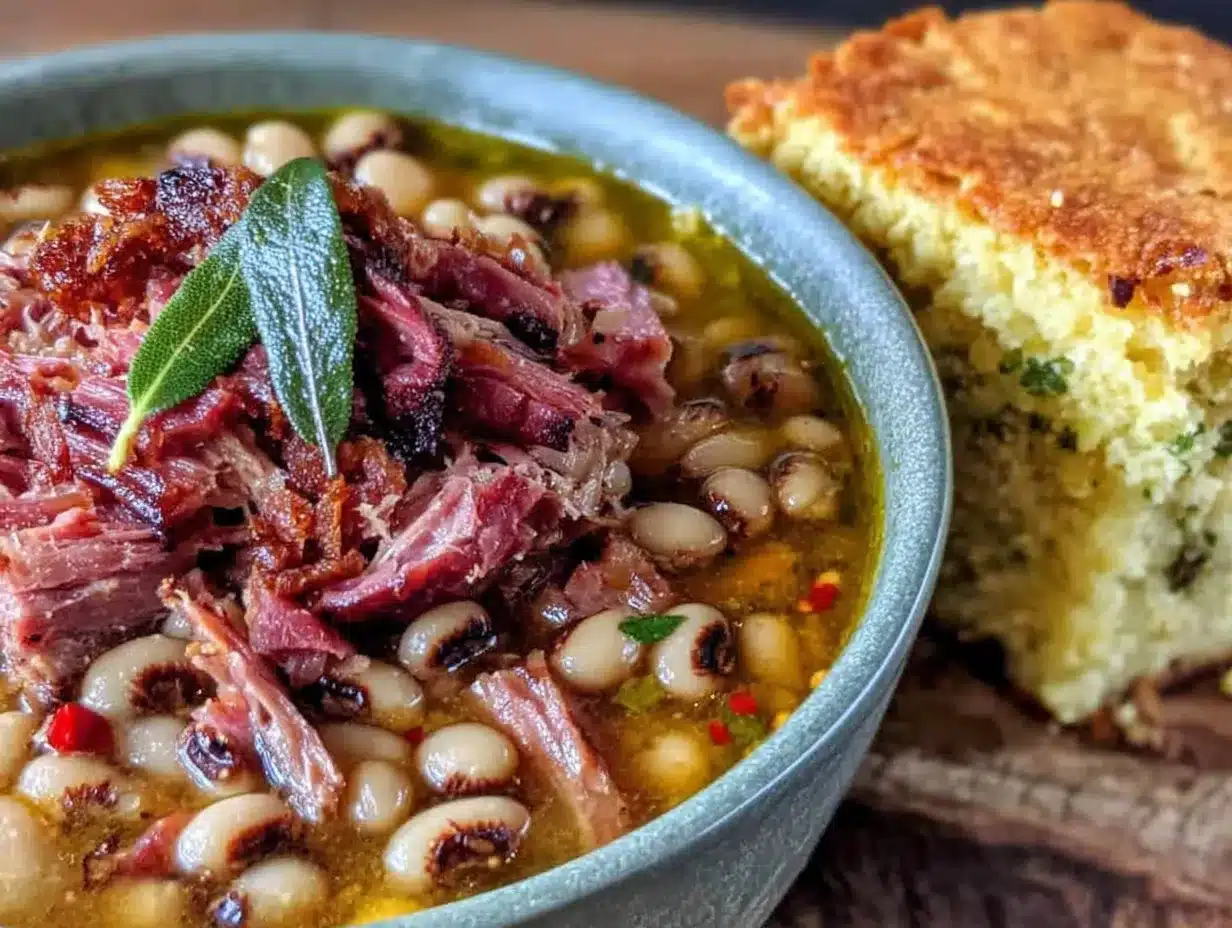
Sensory Cue: At the end of cooking, the peas should be tender but not mushy. They should hold their shape when you stir them, but break apart easily when you press one against the side of the slow cooker with a spoon. The broth should be thick and creamy, not watery. If it’s too thin, leave the lid off for 30 minutes and let it reduce.
Cooking Tips & Techniques
I’ve made this recipe more times than I can count, and I’ve learned a few things along the way. Here are the tips that actually matter.
Don’t Skip the Soak
I know I said it was optional, but honestly? Soaking makes a difference. The peas cook more evenly, the texture is creamier, and you’re less likely to end up with hard peas in the middle of your bowl. If you forget to soak overnight, the quick-soak method works great—just don’t skip it entirely.
Watch Your Salt
This is the mistake I made the first three times. Ham and chicken broth are already salty, so if you add salt at the beginning, you’ll end up with a pot of soup that tastes like the ocean. Always wait until the end to season. And even then, add salt gradually and taste as you go.
Use Low Heat
I get it—slow cookers are supposed to be convenient, and cooking on high seems faster. But for black-eyed peas, low heat is non-negotiable. High heat can cause the peas to burst and turn mushy, and the flavors won’t have time to develop properly. Set it on low in the morning and forget about it until dinner.
Don’t Peek
Every time you lift that lid, you lose heat and add cooking time. I know it’s tempting to check on things, but resist the urge. If you absolutely have to stir, do it quickly and put the lid back on.
Add Acid at the End
A splash of apple cider vinegar or lemon juice at the end brightens up the whole dish. I learned this from a friend who’s a professional chef, and it really does make a difference. The acidity cuts through the richness of the ham and brings out the earthy flavor of the peas.
Variations & Adaptations
This recipe is incredibly versatile. Here are a few ways to make it your own.
Vegetarian Version: Skip the ham and use vegetable broth instead of chicken broth. Add a smoked paprika and liquid smoke combo to get that smoky flavor without the meat. I’ve also added a can of diced tomatoes for extra depth, and it works beautifully.
Spicy Kick: If your family likes heat, add a diced jalapeño or a teaspoon of red pepper flakes with the other seasonings. I did this once when I was craving something with a little more punch, and my husband loved it. The kids not so much, but hey—can’t win ’em all.
Southern Style: For a more traditional Southern version, add a tablespoon of bacon grease or butter at the end. It adds richness and a silky texture that’s hard to beat. I do this on special occasions, like when I’m trying to impress my mother-in-law.
Herb Swap: Don’t have thyme? Use rosemary or oregano instead. I’ve tried all three, and each gives the peas a slightly different character. Rosemary is my favorite for a more rustic, earthy flavor.
Slow Cooker Alternative: If you don’t have a slow cooker, make this in a Dutch oven on the stovetop. Bring everything to a boil, then reduce to a simmer and cook for 2-3 hours, stirring occasionally. Add more liquid as needed to keep the peas covered.
Serving & Storage Suggestions
These black-eyed peas are perfect on their own, but they also pair beautifully with other dishes. Here’s how I like to serve them.
Serving Suggestions: Serve hot in bowls with a side of cornbread or crusty bread for dipping. I usually make a batch of my honey cornbread to go alongside—the sweetness of the cornbread balances the savory peas perfectly. For a complete meal, add a simple green salad or some steamed collard greens. And if you’re feeling indulgent, top each bowl with a pat of butter and a sprinkle of fresh parsley.
Storage: Leftovers can be stored in an airtight container in the refrigerator for up to 5 days. The flavors actually get better after a day or two, so don’t be afraid to make a big batch. I usually double the recipe just for leftovers.
Freezing: This recipe freezes beautifully. Let the peas cool completely, then transfer to freezer-safe containers or bags. They’ll keep for up to 3 months. To reheat, thaw in the refrigerator overnight and warm on the stovetop or in the microwave. You may need to add a splash of water or broth to loosen them up.
Reheating: The best way to reheat these is on the stovetop over medium-low heat, stirring occasionally. Add a little water or broth if they seem too thick. The microwave works too, but the texture won’t be as nice.
Nutritional Information & Benefits
Black-eyed peas are a nutritional powerhouse, and this recipe lets you enjoy them in the most delicious way possible.
Estimated Nutritional Values (per serving, based on 8 servings):
- Calories: 280
- Protein: 18g
- Carbohydrates: 35g
- Fiber: 10g
- Fat: 7g
- Sodium: 600mg (varies based on ham and broth)
Health Benefits: Black-eyed peas are packed with fiber, which supports digestive health and keeps you feeling full longer. They’re also a great source of plant-based protein, iron, and folate. The ham adds protein and B vitamins, while the vegetables provide antioxidants and vitamins. This is comfort food that actually does your body some good.
Dietary Considerations: This recipe is naturally gluten-free and dairy-free. For a lower-sodium version, use unsalted broth and a low-sodium ham or turkey leg. For a vegetarian version, see the variations section above.
Potential Allergens: None of the common allergens are present in this recipe, but if you’re using a ham hock, be aware that some processed hams may contain trace amounts of soy or wheat. Always check labels if you have severe allergies.
Conclusion
This slow cooker black-eyed peas with ham recipe is more than just a meal—it’s a warm hug on a cold day, a tradition that brings the family together, and a reminder that the best things in life are often the simplest. Whether you’re making them for New Year’s luck, a cozy Sunday dinner, or just because you’re craving something comforting, I promise you’ll love them.
Don’t be afraid to make this recipe your own. Add more vegetables, swap the ham for bacon, or throw in some hot sauce if that’s your thing. The beauty of this dish is that it’s forgiving and adaptable. It’s meant to be shared, tweaked, and passed down.
I’d love to hear how yours turn out! Drop a comment below and let me know if your family loved them as much as mine does. And if you have a favorite variation, please share it—I’m always looking for new ideas. Happy cooking, friends!
Frequently Asked Questions
Do I have to soak black-eyed peas before cooking them in a slow cooker?
Not strictly, but I highly recommend it. Soaking helps the peas cook more evenly and gives them a creamier texture. If you’re short on time, use the quick-soak method: boil the peas for 2 minutes, then let them sit covered for an hour. Drain and rinse before adding to the slow cooker.
Can I use frozen black-eyed peas instead of dried?
Yes, you can! Frozen black-eyed peas are already blanched, so they’ll cook faster. Add them directly to the slow cooker without thawing, and reduce the cooking time by about 2-3 hours on low. Keep an eye on them so they don’t get mushy.
Can I make this recipe without a slow cooker?
Absolutely. Use a Dutch oven or a heavy-bottomed pot on the stovetop. Bring everything to a boil, then reduce to a simmer and cook for 2-3 hours, stirring occasionally. Add more liquid as needed to keep the peas covered. The flavor will be just as good.
How do I thicken the broth if it’s too thin?
If the broth is thinner than you’d like, remove the lid for the last 30 minutes of cooking to let some of the liquid evaporate. You can also mash a few of the peas against the side of the slow cooker to release their natural starches, which will thicken the broth naturally.
Can I add other vegetables to this recipe?
Definitely! Diced bell peppers, chopped kale, or even a can of diced tomatoes work beautifully. Just add them at the beginning with the other vegetables so they have time to soften and meld with the flavors. I’ve also added a handful of frozen okra in the last hour for a Southern twist.
Pin This Recipe!
Cozy Slow Cooker Black-Eyed Peas with Ham – 5 Best Tips

A comforting, budget-friendly slow cooker recipe featuring tender black-eyed peas and smoky ham, perfect for New Year’s luck or any cozy dinner. This set-it-and-forget-it meal delivers rich, soul-satisfying flavor with minimal effort.
- Prep Time: 15 minutes
- Cook Time: 7 hours 30 minutes
- Total Time: 7 hours 45 minutes
- Yield: 8 servings 1x
- Category: Main Course
- Cuisine: Southern
Ingredients
- 1 pound dried black-eyed peas (about 2 cups)
- 1 meaty ham hock or ham bone (about 1 to 1.5 pounds)
- 1 medium yellow onion, diced (about 1 cup)
- 3 cloves garlic, minced
- 2 celery stalks, diced (about 1 cup)
- 1 large carrot, diced (about 1 cup)
- 4 cups low-sodium chicken broth
- 2 cups water
- 1 bay leaf
- 1 teaspoon dried thyme
- 1/2 teaspoon smoked paprika
- 1/2 teaspoon black pepper
- Salt to taste
- 1 tablespoon apple cider vinegar (optional)
Instructions
- Rinse and sort the peas: Pour dried black-eyed peas into a large bowl, cover with cold water, swish, and drain in a colander. Spread on a towel and pick out any stones or shriveled peas.
- Soak the peas (optional but recommended): For best texture, soak peas in water for 4-8 hours. For quick soak, bring peas to a boil in water, turn off heat, cover, and let sit for 1 hour. Drain and rinse.
- Prep the vegetables: Dice onion, celery, and carrot into small uniform pieces. Mince garlic.
- Layer in slow cooker: Place diced vegetables on bottom of a 6-quart slow cooker. Add drained peas on top. Nestle ham hock in center. Add bay leaf, thyme, smoked paprika, and black pepper. Pour in chicken broth and water, ensuring liquid covers peas by about 1 inch.
- Cook low and slow: Cover and cook on low for 7-8 hours (or on high for 4-5 hours, though low is preferred for creamier texture).
- Remove and shred ham: Use tongs to carefully lift ham hock from slow cooker. Let cool slightly, then pull meat off bone, discarding fat, skin, and gristle. Shred with forks.
- Season and finish: Return shredded ham to slow cooker and stir. Taste broth and add salt if needed. Stir in apple cider vinegar if using. Cook for another 15-20 minutes on low.
- Serve: Remove bay leaf. Ladle into bowls and serve hot. Garnish with fresh parsley or green onions if desired.
Notes
For best texture, soak peas before cooking. Wait until end to add salt as ham and broth are already salty. Don’t lift lid during cooking to maintain heat. Add apple cider vinegar at end for brightness. Leftovers keep for up to 5 days in refrigerator or freeze for up to 3 months.
Nutrition
- Serving Size: 1 serving (about 1 c
- Calories: 280
- Sugar: 5
- Sodium: 600
- Fat: 7
- Saturated Fat: 2
- Carbohydrates: 35
- Fiber: 10
- Protein: 18
Keywords: slow cooker black-eyed peas, black-eyed peas with ham, Southern black-eyed peas, New Year's black-eyed peas, comfort food, budget-friendly meal, slow cooker recipe