My neighbor Sarah wasn’t trying to impress anyone. I’d stopped by to borrow a ladder—my gutters were clogged and I was in full procrastination mode—and the smell hit me before I even got through the side gate. It was warm, almost nutty, with this earthy sweetness that wrapped around me like a blanket on a cold afternoon.
“What is that?” I asked, probably drooling a little.
She just shrugged. “Oh, just some mac and cheese I threw together. Butternut squash and sage. Nothing fancy.”
Nothing fancy. She said it like she hadn’t just created the most comforting, soul-soothing dish I’d ever smelled. I mean, honestly, I’d been planning to grab the ladder, say thanks, and get back to my weekend chores. Instead, I ended up sitting at her kitchen counter, watching her pull a bubbling dish out of the oven, completely unfazed by the magic she’d just made.
That’s the thing about recipes like this cozy butternut squash mac and cheese with crispy sage. They don’t announce themselves with a lot of fuss. They just show up, quietly, and change the way you think about comfort food. Maybe you’ve been there—you taste something at someone’s house and suddenly your own go-to recipes feel a little boring in comparison.
I asked for the recipe before I even took a bite. And let me tell you, after that first forkful, I knew I’d be making it for years.
Why You’ll Love This Recipe
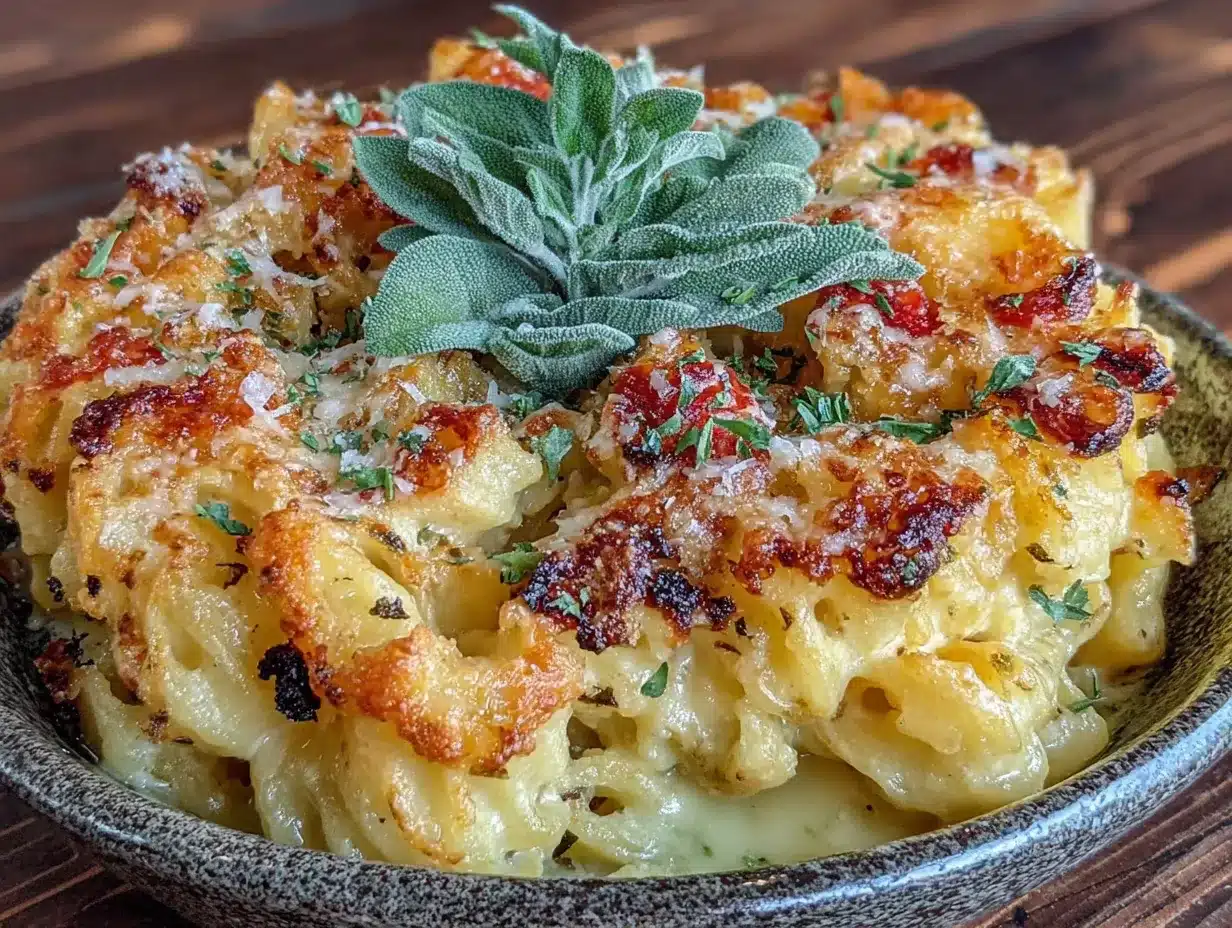
This isn’t your average mac and cheese. It’s creamy, it’s cozy, and it’s got this subtle sweetness from the butternut squash that pairs perfectly with the crispy, earthy sage on top. Here’s why this recipe stands out:
- Quick & Easy: Comes together in about 45 minutes, most of which is hands-off roasting time. Perfect for a weeknight when you need something comforting without a ton of effort.
- Simple Ingredients: No fancy grocery trips here. Butternut squash, pasta, cheese, sage—you probably have most of this in your kitchen already.
- Perfect for Cozy Evenings: Cold weather, rough day, or just one of those nights when you need a hug in a bowl. This is it.
- Crowd-Pleaser: I’ve served this to kids, picky eaters, and serious foodies. Everyone goes back for seconds.
- Unbelievably Delicious: The roasted squash blends into the cheese sauce so smoothly, you get all the creaminess without any of the heaviness. And that crispy sage on top? Absolute game-changer.
What makes this recipe different from the rest is the technique. Instead of just mashing the squash into the sauce, I roast it first to concentrate the flavor and deepen the sweetness. Then I blend it with the cheese sauce until it’s silky smooth. The result is a mac and cheese that feels indulgent but has a little something extra—a subtle complexity that keeps you coming back for more.
This is comfort food reimagined. Healthier, yes, but with the same soul-soothing satisfaction that makes you close your eyes after the first bite.
What Ingredients You Will Need
This recipe uses simple, wholesome ingredients to deliver bold flavor and satisfying texture without the fuss. Most of these are pantry staples or easy to find at any grocery store. Grouping them by function makes prep a breeze.
For the Roasted Butternut Squash
- 1 medium butternut squash (about 2-3 pounds), peeled, seeded, and cubed into 1-inch pieces
- 2 tablespoons olive oil (I prefer extra virgin for flavor)
- 1/2 teaspoon salt
- 1/4 teaspoon black pepper
- 1/4 teaspoon smoked paprika (adds a subtle warmth)
For the Cheese Sauce
- 2 tablespoons unsalted butter
- 2 tablespoons all-purpose flour
- 2 cups whole milk (warm—helps prevent lumps)
- 1 cup roasted butternut squash puree (from above)
- 2 cups shredded sharp cheddar cheese (I recommend Tillamook or Cabot for best melt)
- 1/2 cup grated Parmesan cheese
- 1/2 teaspoon Dijon mustard (cuts through the richness)
- 1/4 teaspoon nutmeg (freshly grated if you have it)
- Salt and pepper to taste
For the Pasta
- 12 ounces elbow macaroni (or any short pasta like cavatappi or shells)
- Salt for the pasta water
For the Crispy Sage Topping
- 2 tablespoons unsalted butter
- 12-15 fresh sage leaves
- 1/4 cup panko breadcrumbs (optional, for extra crunch)
- Flaky sea salt for finishing
Ingredient Tips: Look for a butternut squash that feels heavy for its size—that means it’s fresh and moist. If you’re short on time, you can use pre-cut squash from the store, but roasting it yourself really does make a difference in flavor. For the cheese, avoid pre-shredded bags if you can; they have anti-caking agents that affect the smoothness of your sauce.
Substitutions: Use gluten-free pasta and a 1:1 gluten-free flour blend for a gluten-free version. Swap the cheddar with a dairy-free cheese alternative if needed, though the texture will be slightly different. For a lighter option, use half-and-half instead of whole milk.
Equipment Needed
You don’t need a professional kitchen to make this cozy butternut squash mac and cheese. Here’s what you’ll need:
- Baking sheet: For roasting the squash. A rimmed sheet works best to catch any juices.
- Large pot: For boiling the pasta. Go for a 5-6 quart pot.
- Medium saucepan: For making the cheese sauce.
- Blender or immersion blender: To puree the roasted squash into a smooth sauce. An immersion blender is easier to clean, but a regular blender works fine too.
- Whisk: For stirring the cheese sauce and preventing lumps.
- Wooden spoon or spatula: For mixing everything together.
- 9×13 inch baking dish: If you want to bake the mac and cheese for a crispy top. You can also skip this step and serve it stovetop style.
- Small skillet: For frying the sage leaves and toasting the breadcrumbs.
Personal Note: I’ve made this recipe with both a regular blender and an immersion blender. Honestly, the immersion blender is a game-changer—you can puree the squash right in the pot and save yourself an extra dish to wash. Worth the investment if you make a lot of soups and sauces.
If you don’t have a blender at all, you can mash the roasted squash with a potato masher or fork. It won’t be as smooth, but it’ll still taste amazing.
Preparation Method
Let’s get cooking. This cozy butternut squash mac and cheese comes together in a few simple steps. Take your time with each one—the results are worth it.
Step 1: Roast the Butternut Squash
Preheat your oven to 400°F (200°C). Line a baking sheet with parchment paper for easy cleanup. Toss the cubed butternut squash with olive oil, salt, pepper, and smoked paprika until evenly coated. Spread the squash in a single layer on the baking sheet—don’t overcrowd it, or it’ll steam instead of roast. Roast for 25-30 minutes, flipping halfway through, until the squash is tender and lightly caramelized around the edges. You’ll know it’s done when a fork slides in easily. Let it cool slightly, then transfer to a blender and puree until smooth. Set aside 1 cup for the sauce; you can freeze any extra for another use.
Step 2: Cook the Pasta
While the squash roasts, bring a large pot of salted water to a boil. Add the pasta and cook according to the package directions until al dente—usually about 8-10 minutes. Drain the pasta, reserving about 1/2 cup of the pasta water. Don’t rinse the pasta; the residual starch helps the sauce stick.
Step 3: Make the Cheese Sauce
In a medium saucepan, melt the butter over medium heat. Whisk in the flour and cook for 1-2 minutes, stirring constantly, until the mixture turns golden and smells nutty. This is your roux, and it’s the foundation of a smooth, creamy sauce. Slowly pour in the warm milk while whisking continuously to prevent lumps. Keep whisking until the sauce thickens, about 3-4 minutes. It should coat the back of a spoon. Reduce the heat to low and stir in the butternut squash puree, shredded cheddar, Parmesan, Dijon mustard, and nutmeg. Stir until the cheese is fully melted and the sauce is smooth. Season with salt and pepper to taste. If the sauce seems too thick, add a splash of the reserved pasta water to thin it out.
Step 4: Combine Pasta and Sauce
Add the cooked pasta to the saucepan with the cheese sauce. Stir gently until every piece of pasta is coated in that gorgeous, golden sauce. If you’re serving it stovetop style, you’re almost done. If you want a baked version with a crispy top, transfer the mixture to a greased 9×13 inch baking dish and spread it evenly.
Step 5: Make the Crispy Sage Topping
In a small skillet, melt the butter over medium heat. Add the sage leaves in a single layer and cook for 30-60 seconds per side, until they turn crisp and the butter starts to brown. Be careful not to burn them—sage can go from perfect to bitter in seconds. Remove the sage leaves with a slotted spoon and set them on a paper towel. If you’re using breadcrumbs, add them to the browned butter in the skillet and toast for 2-3 minutes, stirring frequently, until golden and fragrant.
Step 6: Finish and Serve
If baking, sprinkle the toasted breadcrumbs over the mac and cheese and bake at 375°F (190°C) for 15-20 minutes, until bubbly and golden on top. If serving stovetop style, simply top with the crispy sage leaves and a sprinkle of flaky sea salt. Serve hot and watch it disappear.
Cooking Tips & Techniques
Over the years, I’ve made this cozy butternut squash mac and cheese more times than I can count. Here are the lessons I’ve learned—some the hard way.
- Don’t skip roasting the squash. I tried boiling it once to save time, and the sauce was watery and bland. Roasting concentrates the natural sugars and gives you that deep, caramelized flavor that makes this dish special.
- Warm your milk before adding it to the roux. Cold milk can cause the roux to seize up and create lumps. I microwave mine for about 45 seconds, but you can also warm it in a separate saucepan.
- Grate your own cheese. I know it’s tempting to buy the pre-shredded bags, but they’re coated with cellulose and starch that prevent smooth melting. Your sauce will be noticeably creamier with freshly grated cheese.
- Watch the sage like a hawk. The first time I made crispy sage, I walked away for “just a second” and came back to black, bitter leaves. They cook fast—stay at the stove and flip them as soon as they start to crisp.
- Season your pasta water. It should taste like the sea. This is your only chance to season the pasta itself, and it makes a huge difference in the final dish.
- Multitasking tip: While the squash roasts, you can cook the pasta and start the sauce. Just keep an eye on the timing so everything comes together at once.
Variations & Adaptations
This recipe is incredibly flexible. Here are some ways to make it your own:
- Make it vegetarian (it already is!) or add protein: Stir in cooked, crumbled bacon or pancetta for a smoky, salty contrast to the sweet squash. Or add shredded rotisserie chicken for a heartier meal.
- Try different cheeses: Swap half the cheddar for Gruyère or fontina for an even creamier, more sophisticated sauce. Smoked gouda adds a lovely smoky depth.
- Go gluten-free: Use gluten-free pasta and a 1:1 gluten-free flour blend in the roux. The rest of the ingredients are naturally gluten-free.
- Add some heat: Stir in a pinch of cayenne pepper or red pepper flakes with the nutmeg for a subtle kick that cuts through the richness.
- Seasonal swap: In the summer, try roasted sweet potatoes instead of butternut squash. The flavor is slightly different but just as comforting.
- Make it vegan: Use plant-based butter, unsweetened almond or oat milk, and a high-quality vegan cheddar shred. The sauce won’t be as creamy, but it’s still delicious.
Personal Variation: I once added a handful of chopped, toasted walnuts to the breadcrumb topping. The crunch was incredible, and the nuttiness played perfectly with the sage and squash. Highly recommend.
Serving & Storage Suggestions
This cozy butternut squash mac and cheese is best served hot, straight from the oven or stovetop. The crispy sage leaves on top are a beautiful garnish—don’t skip them. I like to serve it in shallow bowls with a simple side salad dressed with lemon vinaigrette to cut through the richness.
What to serve with it: A crisp green salad with a tangy dressing, roasted broccoli or Brussels sprouts, or a simple side of steamed green beans. For drinks, a crisp white wine like Sauvignon Blanc or a light beer pairs beautifully.
Storage: Leftovers keep well in an airtight container in the refrigerator for up to 4 days. The sauce will thicken as it sits, so don’t be alarmed.
Reheating: The best way to reheat is in a skillet over medium-low heat with a splash of milk or cream to loosen the sauce. Stir gently until heated through. You can also microwave individual portions, but the texture won’t be as good. If you have leftovers with the crispy topping, the sage won’t stay crisp—just make fresh sage for a quick refresh.
Freezing: This dish freezes well for up to 3 months. Assemble the mac and cheese without the topping, let it cool completely, then wrap tightly in foil and freeze. To serve, thaw overnight in the refrigerator, add the topping, and bake at 375°F until bubbly.
Flavor note: The flavors actually deepen after a day in the fridge. Some of my best bowls have been the leftovers the next day.
Nutritional Information & Benefits
This cozy butternut squash mac and cheese is a more nutritious take on a classic comfort food. Here’s an estimated breakdown per serving (based on 6 servings):
| Nutrient | Amount per Serving |
|---|---|
| Calories | ~480 |
| Protein | 18g |
| Carbohydrates | 52g |
| Fiber | 6g |
| Fat | 22g |
| Saturated Fat | 12g |
| Calcium | 35% DV |
| Vitamin A | 180% DV |
| Vitamin C | 25% DV |
Health Benefits: Butternut squash is packed with vitamin A (great for eye health and immunity), fiber (keeps you full and supports digestion), and antioxidants. Using whole milk and real cheese provides calcium and protein, while the sage adds anti-inflammatory properties. This is comfort food that actually nourishes you.
Dietary Considerations: This recipe is vegetarian. For a gluten-free version, use gluten-free pasta and flour. For a lower-calorie option, use reduced-fat cheese and milk, though the texture will be slightly less creamy.
Allergens: Contains dairy and gluten. Not suitable for those with celiac disease unless modified as above.
Conclusion
This cozy butternut squash mac and cheese with crispy sage is more than just a recipe—it’s the kind of dish that makes you slow down and actually enjoy your evening. It’s warm, it’s comforting, and it’s surprisingly simple to make. The roasted squash adds a natural sweetness that pairs perfectly with the sharp cheddar, and that crispy sage on top? Honestly, it’s the part I look forward to most.
I love this recipe because it feels special without being fussy. It’s the dish I make when I need a little extra comfort, or when I want to impress someone without spending all day in the kitchen. It’s the recipe I keep coming back to, season after season.
I’d love to hear how yours turns out. Did you add your own twist? Swap in a different cheese? Let me know in the comments below—I read every single one. And if you share it on social media, tag me so I can see your beautiful creation. Happy cooking, friend.
Frequently Asked Questions
Can I use frozen butternut squash instead of fresh?
Yes, you can! Frozen butternut squash works in a pinch. Just thaw it first, pat it dry to remove excess moisture, and roast it as directed. The texture won’t be quite as caramelized, but the flavor will still be great.
Why did my cheese sauce turn out grainy?
Grainy cheese sauce usually happens when the heat is too high or the cheese is added too quickly. Always melt cheese over low heat, and add it gradually while stirring constantly. Using pre-shredded cheese can also cause graininess due to the anti-caking agents.
Can I make this ahead of time?
Absolutely. You can assemble the mac and cheese (without the topping) up to 24 hours in advance. Cover and refrigerate, then add the topping and bake when you’re ready to serve. You may need to add 5-10 minutes to the baking time since it’s starting from cold.
What can I use instead of sage?
If you don’t have fresh sage, you can use dried sage (about 1 teaspoon, crumbled) in the sauce, and top with toasted breadcrumbs or chopped fresh parsley for color. Thyme or rosemary also work well in place of sage, though the flavor profile will shift.
How do I make the sauce thinner or thicker?
For a thinner sauce, add more milk or reserved pasta water, a tablespoon at a time, until you reach your desired consistency. For a thicker sauce, let it simmer a few minutes longer to reduce, or stir in an extra 1/4 cup of shredded cheese.
Pin This Recipe!
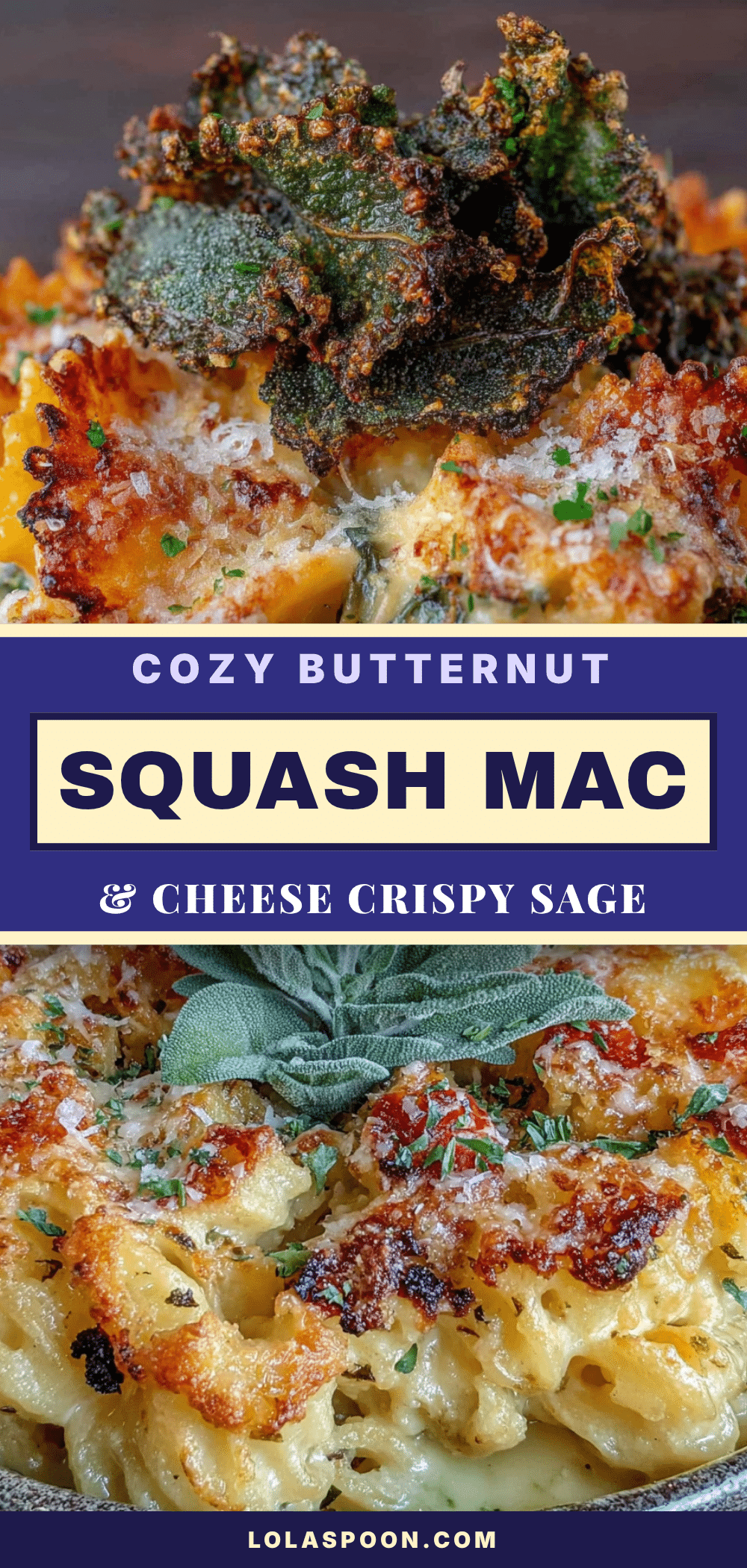
Cozy Butternut Squash Mac and Cheese

This creamy, cozy mac and cheese features roasted butternut squash blended into a smooth cheese sauce, topped with crispy sage. It’s a comforting, crowd-pleasing dish that comes together in about 45 minutes.
- Prep Time: 15 minutes
- Cook Time: 30 minutes
- Total Time: 45 minutes
- Yield: 6 servings 1x
- Category: Main Course
- Cuisine: American
Ingredients
- 1 medium butternut squash (about 2–3 pounds), peeled, seeded, and cubed into 1-inch pieces
- 2 tablespoons olive oil
- 1/2 teaspoon salt
- 1/4 teaspoon black pepper
- 1/4 teaspoon smoked paprika
- 2 tablespoons unsalted butter
- 2 tablespoons all-purpose flour
- 2 cups whole milk, warm
- 1 cup roasted butternut squash puree
- 2 cups shredded sharp cheddar cheese
- 1/2 cup grated Parmesan cheese
- 1/2 teaspoon Dijon mustard
- 1/4 teaspoon nutmeg, freshly grated if possible
- Salt and pepper to taste
- 12 ounces elbow macaroni or short pasta
- Salt for pasta water
- 2 tablespoons unsalted butter (for topping)
- 12–15 fresh sage leaves
- 1/4 cup panko breadcrumbs (optional)
- Flaky sea salt for finishing
Instructions
- Preheat oven to 400°F (200°C). Line a baking sheet with parchment paper.
- Toss cubed butternut squash with olive oil, salt, pepper, and smoked paprika. Spread in a single layer on the baking sheet. Roast for 25-30 minutes, flipping halfway, until tender and caramelized.
- Let squash cool slightly, then transfer to a blender and puree until smooth. Set aside 1 cup for the sauce.
- While squash roasts, bring a large pot of salted water to a boil. Cook pasta according to package directions until al dente. Drain, reserving 1/2 cup pasta water. Do not rinse.
- In a medium saucepan, melt 2 tablespoons butter over medium heat. Whisk in flour and cook for 1-2 minutes until golden and nutty.
- Slowly pour in warm milk while whisking continuously. Cook until sauce thickens, about 3-4 minutes.
- Reduce heat to low. Stir in butternut squash puree, cheddar, Parmesan, Dijon mustard, and nutmeg. Stir until cheese is melted and sauce is smooth. Season with salt and pepper. Thin with reserved pasta water if needed.
- Add cooked pasta to the sauce and stir until well coated.
- For stovetop version, proceed to step 9. For baked version, transfer to a greased 9×13 inch baking dish.
- In a small skillet, melt 2 tablespoons butter over medium heat. Add sage leaves and cook 30-60 seconds per side until crisp. Remove with slotted spoon and set aside.
- If using breadcrumbs, add to the browned butter and toast for 2-3 minutes until golden.
- If baking, sprinkle breadcrumbs over mac and cheese and bake at 375°F (190°C) for 15-20 minutes until bubbly and golden.
- Top with crispy sage leaves and flaky sea salt. Serve hot.
Notes
Roasting the squash is key for flavor—don’t skip it. Warm the milk before adding to the roux to prevent lumps. Grate your own cheese for a smoother sauce. Watch the sage closely as it can burn quickly. Leftovers keep for up to 4 days in the refrigerator. Freezes well for up to 3 months.
Nutrition
- Serving Size: 1 serving
- Calories: 480
- Sugar: 8
- Sodium: 680
- Fat: 22
- Saturated Fat: 12
- Carbohydrates: 52
- Fiber: 6
- Protein: 18
Keywords: butternut squash mac and cheese, creamy mac and cheese, comfort food, fall recipe, vegetarian mac and cheese, easy mac and cheese