My neighbor, Mrs. Gable, watched me fumbling with a bag of ground beef at the community garden harvest party last fall. She didn’t say anything at first, just tilted her head and smiled. Then she walked over to her car, pulled out a stained index card from her glove compartment, and handed it to me. “This is the one,” she said. “For nights when you need something that feels like a hug.” That card had her Easy Classic Meatloaf with Brown Sugar Glaze written in faded blue ink, complete with a little star next to the glaze ingredients.
Honestly, I almost didn’t try it. Meatloaf always felt like one of those dishes that could go so wrong—dry, bland, or just sad on a plate. But Mrs. Gable is the kind of cook who never misses, and her garden tomatoes were legendary. So on a Tuesday night when I had exactly zero energy left, I gave it a shot. Let me tell you, the smell alone changed my mind about everything. That brown sugar glaze bubbling on top, catching the edges of the pan? Pure magic.
The recipe wasn’t a formal lesson or anything. She just handed me the card and said, “Don’t overthink it. Mix it with your hands, trust your instincts, and let the glaze do the work.” I’ve made it maybe a dozen times since then, tweaking little things here and there—adding a splash of Worcestershire, swapping in panko when I ran out of breadcrumbs. But the heart of it, that sweet and savory balance, stays exactly the same. You know that feeling when a recipe just clicks? This is that. For nights when you’re tired, hungry, and need dinner to feel like a win.
Why You’ll Love This Recipe
This Easy Classic Meatloaf with Brown Sugar Glaze isn’t just another recipe to file away. It’s the kind of dish that makes you look forward to leftovers. I’ve tested it more times than I can count, and every single time, it delivers. Here’s why it stands out:
- Quick & Easy: From start to finish, you’re looking at about 15 minutes of active prep. The oven does the rest. Perfect for those weeknights when you walk in the door and dinner needs to happen now.
- Simple Ingredients: You probably have most of these in your pantry right now. No specialty stores, no obscure spices—just good old-fashioned staples that come together beautifully.
- Perfect for Busy Weeknights: This is the definition of set-it-and-forget-it comfort food. Mix it, shape it, glaze it, and let it bake while you tackle the rest of your evening.
- Crowd-Pleaser: Kids devour it. Adults ask for seconds. I’ve brought this to potlucks and watched the pan empty in minutes. It’s that universal.
- Unbelievably Delicious: That brown sugar glaze isn’t just decoration—it caramelizes into this sticky, slightly tangy crust that contrasts perfectly with the tender, juicy meatloaf underneath. Close-your-eyes good.
What makes this version different from all the others? It’s the balance. So many meatloaf recipes end up dry or heavy, but this one uses a combination of milk-soaked breadcrumbs and the right fat ratio to keep everything moist. And that glaze? It’s not too sweet, not too sharp—it’s just right. I’ve tried a dozen variations over the years, and this is the one I keep coming back to.
This recipe isn’t just good—it’s the kind that makes you close your eyes after the first bite. It’s comfort food reimagined for real life: faster, simpler, but with the same soul-soothing satisfaction. Perfect for impressing your family without any stress, or turning a regular Tuesday into something memorable.
What Ingredients You Will Need
This recipe uses simple, wholesome ingredients to deliver bold flavor and satisfying texture without the fuss. Most of these are pantry staples, so you likely won’t need a special trip to the store. Let’s break down what you’ll need and why each ingredient matters.
For the Meatloaf
- 2 pounds ground beef (80/20) – The 80/20 ratio is key here. The fat keeps the meatloaf moist and flavorful. If you go too lean, it will dry out. I prefer ground chuck for this.
- 1 cup plain breadcrumbs – These act as a binder and help hold the meatloaf together. Panko works great too if that’s what you have. I’ve used crushed saltines in a pinch, and it works fine.
- 1 cup whole milk – Soaking the breadcrumbs in milk creates a panade, which keeps the meatloaf tender. Whole milk adds richness, but 2% works too. Avoid skim—it’s just not enough fat.
- 1 medium yellow onion, finely diced – Onion adds moisture and flavor. Make sure to dice it small so it cooks through evenly. No one wants a crunchy onion chunk in their meatloaf.
- 2 large eggs – Eggs bind everything together. Room temperature eggs mix more evenly, but cold ones work in a pinch.
- 3 cloves garlic, minced – Fresh garlic is non-negotiable here. The jarred stuff just doesn’t have the same punch.
- 2 tablespoons Worcestershire sauce – This adds that deep umami flavor that makes meatloaf taste so satisfying. I use Lea & Perrins—it’s my go-to.
- 1 teaspoon salt – Don’t skimp. Salt brings out all the other flavors.
- 1/2 teaspoon black pepper – Freshly ground is always better.
- 1 teaspoon dried thyme – Thyme adds a subtle earthy note that complements the beef beautifully. You can use fresh if you have it—just double the amount.
For the Brown Sugar Glaze
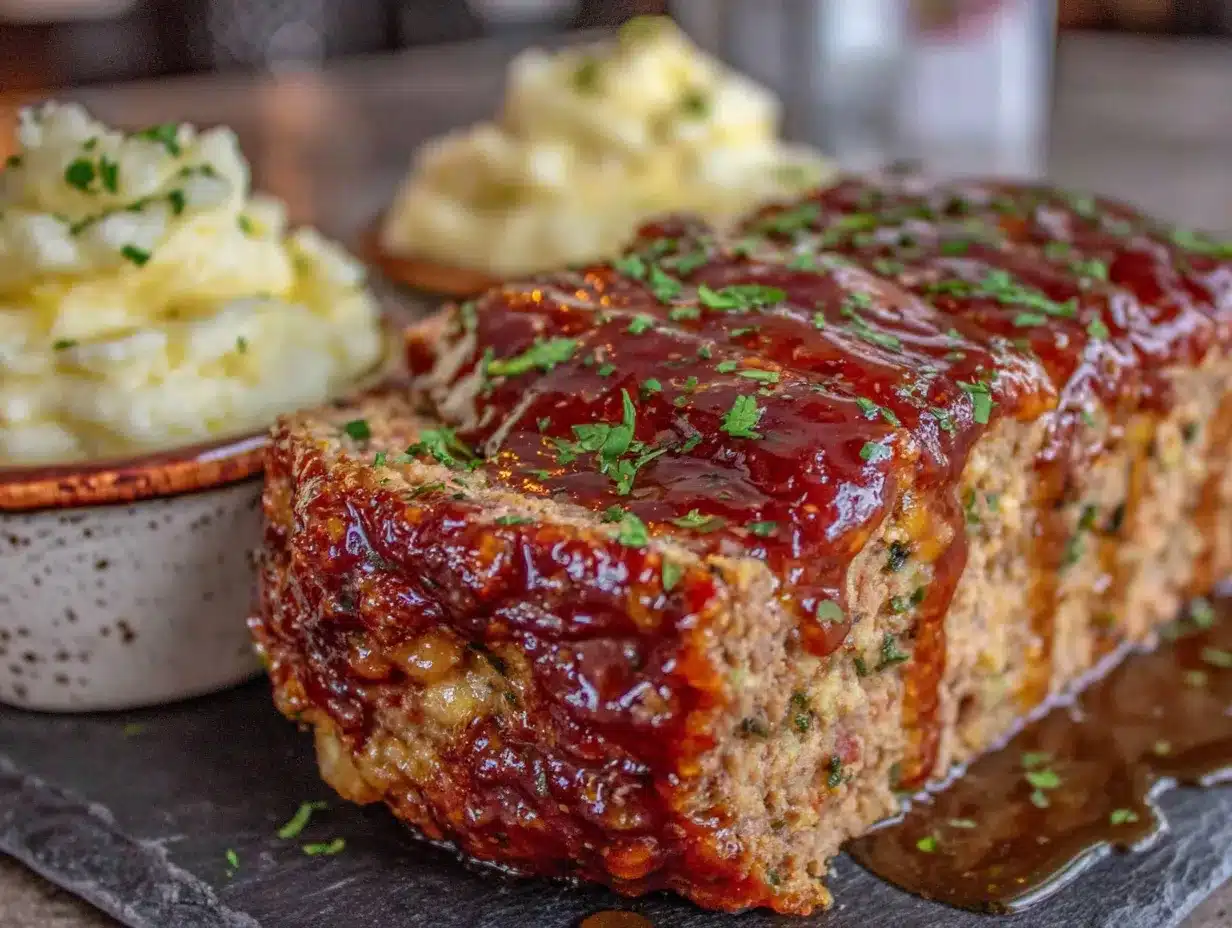
- 1/2 cup ketchup – This is the base of the glaze. I recommend Heinz for its balanced sweetness and tang.
- 1/4 cup brown sugar, packed – Light or dark both work. Dark brown sugar gives a deeper molasses flavor, while light keeps it a bit more mellow.
- 1 tablespoon apple cider vinegar – This cuts through the sweetness and adds a little tang. White vinegar works in a pinch, but apple cider is nicer.
- 1 teaspoon mustard powder – Adds a subtle warmth and depth. You can substitute 1 teaspoon Dijon mustard if that’s what you have.
Substitution Tips: If you’re out of breadcrumbs, crushed crackers or rolled oats work well. For a gluten-free option, use gluten-free breadcrumbs or almond flour. You can swap the whole milk with unsweetened almond milk, but the texture will be slightly less rich. And if you don’t have Worcestershire, a splash of soy sauce or balsamic vinegar can work in a pinch.
Equipment Needed
You don’t need a fancy kitchen to pull this off. Here’s what you’ll need:
- Large mixing bowl – You need room to get your hands in there and mix everything together. A glass or stainless steel bowl works great.
- 9×5-inch loaf pan – This is the classic shape for meatloaf. A standard loaf pan works perfectly. If you don’t have one, you can shape the loaf free-form on a rimmed baking sheet.
- Parchment paper or aluminum foil – Lining the pan makes cleanup a breeze. Trust me on this one.
- Small bowl – For mixing the glaze.
- Measuring cups and spoons – Precision matters, especially with the glaze.
- Chef’s knife and cutting board – For dicing the onion and mincing the garlic.
- Meat thermometer – This is the only way to guarantee your meatloaf is cooked through without drying it out. An instant-read thermometer is ideal.
Budget-Friendly Tip: If you don’t have a loaf pan, shape the meatloaf into a free-form loaf on a baking sheet lined with foil. It bakes faster and gets more of that delicious caramelized crust on the sides. I actually prefer this method sometimes.
Preparation Method
Let’s get cooking. This Easy Classic Meatloaf with Brown Sugar Glaze comes together in a few simple steps. Follow along, and you’ll have dinner on the table in about an hour.
- Preheat your oven to 350°F (175°C). Line a 9×5-inch loaf pan with parchment paper or aluminum foil, leaving some overhang for easy lifting later. This step saves you from scrubbing later—trust me.
- Soak the breadcrumbs in milk. In your large mixing bowl, combine 1 cup plain breadcrumbs and 1 cup whole milk. Let it sit for 5 minutes. The breadcrumbs will absorb the milk and form a paste. This is your panade, and it’s the secret to a tender meatloaf.
- Add the aromatics and seasonings. To the breadcrumb mixture, add 1 finely diced medium yellow onion, 3 minced garlic cloves, 2 large eggs, 2 tablespoons Worcestershire sauce, 1 teaspoon salt, 1/2 teaspoon black pepper, and 1 teaspoon dried thyme. Mix everything together until well combined. It should look like a thick, wet paste.
- Add the ground beef. Add 2 pounds of ground beef (80/20) to the bowl. Use your hands to gently mix everything together. Don’t overmix—you want to combine just until no streaks of breadcrumb mixture remain. Overworking the meat will make it tough. I learned this the hard way after making a few dense meatloaves.
- Shape the meatloaf. Transfer the mixture to your prepared loaf pan. Press it gently into an even shape, making sure there are no air pockets. If you’re going free-form, shape it into a loaf on a lined baking sheet, about 8 inches long and 4 inches wide.
- Make the glaze. In a small bowl, whisk together 1/2 cup ketchup, 1/4 cup packed brown sugar, 1 tablespoon apple cider vinegar, and 1 teaspoon mustard powder. Stir until the sugar is mostly dissolved. The glaze should be smooth and glossy.
- Apply the glaze. Spread about half of the glaze evenly over the top of the meatloaf. Reserve the rest for later. Use a spoon or pastry brush to coat the top completely.
- Bake for 45 minutes. Place the meatloaf in the preheated oven and bake for 45 minutes. The kitchen will start smelling amazing about 20 minutes in. At this point, the glaze will be bubbling and starting to caramelize.
- Apply the remaining glaze. After 45 minutes, carefully remove the meatloaf from the oven. Spread the remaining glaze over the top. Return to the oven and bake for another 15 minutes.
- Check for doneness. The meatloaf is done when it reaches an internal temperature of 160°F (71°C) at the center. Insert your meat thermometer into the thickest part. If it’s not there yet, give it another 5-10 minutes.
- Rest before slicing. Once done, remove the meatloaf from the oven and let it rest in the pan for 10-15 minutes. This is crucial—the juices need time to redistribute. If you slice too soon, it will fall apart. Use the parchment overhang to lift the meatloaf out of the pan, then transfer to a cutting board.
- Slice and serve. Slice into 1-inch thick pieces. Spoon any juices from the pan over the slices. Serve warm.
Pro Tip: The meatloaf will look a bit jiggly when you first take it out. Don’t panic. It firms up beautifully as it rests. The internal temperature is your best guide.
Cooking Tips & Techniques
Over the years, I’ve made plenty of mistakes with meatloaf. Let me save you some trouble with these tips.
Don’t overmix. This is the number one mistake. Mixing too much develops the protein in the meat, making it tough. Use a light hand and stop as soon as everything is combined. I once got distracted and kept mixing while talking on the phone—the result was a meatloaf that could have doubled as a doorstop.
Use a meat thermometer. Guessing doneness is a recipe for dry meatloaf. 160°F (71°C) is your target. The carryover cooking during resting will bring it up a few more degrees, so pull it out right at 160°F.
Let it rest. I know it’s tempting to slice right into it, but patience pays off. Resting allows the juices to settle, so each slice stays moist and holds together. Set a timer if you have to.
Line your pan. Parchment paper or foil with overhang makes cleanup a breeze. Plus, it helps you lift the meatloaf out cleanly without it breaking apart. This is one of those small steps that makes a big difference on a busy weeknight.
Toast your breadcrumbs first. If you have an extra 5 minutes, toast the breadcrumbs in a dry skillet before soaking them. It adds a subtle nutty flavor that elevates the whole dish. Not necessary, but nice.
Multitask wisely. While the meatloaf bakes, you can roast some vegetables or make a quick salad. The 45-minute bake time is perfect for getting sides ready. I usually toss some green beans with olive oil and salt, and pop them in the oven alongside the meatloaf for the last 20 minutes.
Variations & Adaptations
This Easy Classic Meatloaf with Brown Sugar Glaze is wonderfully adaptable. Here are some variations I’ve tried and loved.
Turkey Meatloaf: Swap the ground beef for ground turkey (93/7 works best). Add 2 tablespoons of olive oil to keep it moist, since turkey is leaner. The cooking time stays the same. My sister makes this version exclusively, and it’s always a hit.
Cheesy Stuffed Meatloaf: Before shaping the loaf, press half the meat mixture into the pan. Add a layer of shredded cheddar or mozzarella (about 1 cup), then top with the remaining meat mixture. Seal the edges well so the cheese doesn’t leak out. The melty center is pure comfort.
Gluten-Free Version: Use gluten-free breadcrumbs or rolled oats instead of regular breadcrumbs. Make sure your Worcestershire sauce is gluten-free (some brands contain malt vinegar). Everything else stays the same.
Spicy Kick: Add 1 tablespoon of sriracha or 1 teaspoon of red pepper flakes to the meat mixture. For the glaze, swap the mustard powder for 1 teaspoon of chipotle powder. The heat balances beautifully with the sweet glaze.
Veggie-Packed Meatloaf: Finely grate one carrot and one zucchini, squeeze out the excess moisture, and add them to the meat mixture. This adds moisture and nutrients without changing the flavor much. My kids have never noticed, and that’s a win.
Serving & Storage Suggestions
This meatloaf is versatile when it comes to serving. Here’s how to make the most of it.
Serving Temperature: Serve warm, straight from the oven. The glaze is at its best when it’s slightly sticky and caramelized. Leftover slices are also delicious cold—don’t judge until you’ve tried it.
What to Serve With: Mashed potatoes are the classic pairing—the gravy from the meatloaf is perfect over them. I also love it with roasted green beans, a simple side salad, or steamed broccoli. For a complete comfort meal, serve with buttery egg noodles or roasted sweet potatoes.
Storage Instructions: Store leftover meatloaf in an airtight container in the refrigerator for up to 4 days. Wrap individual slices in plastic wrap for easy grab-and-go lunches. The flavors actually deepen overnight, so leftovers might be even better the next day.
Freezing: You can freeze the whole meatloaf (baked or unbaked). For baked, let it cool completely, wrap tightly in plastic wrap and then foil, and freeze for up to 3 months. For unbaked, shape it in the pan, wrap well, and freeze. Thaw overnight in the refrigerator before baking. Add about 10 minutes to the baking time if baking from frozen.
Reheating: The best way to reheat is in a 350°F (175°C) oven for about 10-15 minutes, covered with foil to prevent drying. You can also microwave individual slices for 1-2 minutes, but the glaze won’t be as sticky. For a quick lunch, I sometimes slice it cold and pan-fry the slices until crispy—highly recommended.
Nutritional Information & Benefits
Here’s the approximate nutritional breakdown for one serving (based on 8 servings):
- Calories: 420
- Protein: 28g
- Fat: 22g
- Carbohydrates: 28g
- Fiber: 1g
- Sugar: 14g
- Sodium: 680mg
Health Benefits: This meatloaf is a good source of protein, iron, and B vitamins from the beef. The onions and garlic provide antioxidants and anti-inflammatory compounds. While it’s not a health food, it’s a balanced meal when paired with vegetables. I like to think of it as nourishing comfort food—satisfying and made with real ingredients.
Dietary Considerations: This recipe contains gluten (breadcrumbs) and dairy (milk). For a gluten-free version, use gluten-free breadcrumbs. For a dairy-free version, use unsweetened almond milk or oat milk. It’s naturally nut-free and can be made egg-free by using a flax egg (1 tablespoon ground flaxseed mixed with 3 tablespoons water, left to thicken for 5 minutes).
Conclusion
This Easy Classic Meatloaf with Brown Sugar Glaze has become a staple in my kitchen, and I think it will in yours too. It’s the kind of recipe that delivers every single time—comforting, flavorful, and surprisingly simple. Whether you’re feeding a family on a busy weeknight or just want something that feels like a warm hug, this meatloaf delivers.
Don’t be afraid to make it your own. Swap the herbs, add some cheese, or spice it up. The base recipe is forgiving and adaptable. That’s the beauty of a classic—it’s a starting point, not a rulebook.
I’d love to hear how yours turns out. Leave a comment below and let me know if you tried any variations. Share your photos on social media and tag me—I love seeing your creations. And if you have a favorite side dish that goes with this meatloaf, drop that in the comments too. Until next time, happy cooking!
Frequently Asked Questions
Can I make this meatloaf ahead of time?
Absolutely. You can assemble the meatloaf (without the glaze) up to 24 hours in advance. Cover and refrigerate. When you’re ready to bake, add the glaze and follow the baking instructions. You may need to add 5-10 minutes to the baking time since it’s starting from cold.
Why did my meatloaf fall apart when I sliced it?
This usually happens for two reasons: either you didn’t let it rest long enough, or the mixture was too wet. Make sure to let it rest for at least 10 minutes after baking. If it’s still falling apart, try adding an extra egg or a few more breadcrumbs next time to help bind it.
Can I use ground turkey instead of beef?
Yes, you can. Use ground turkey that’s at least 93% lean. Add 2 tablespoons of olive oil to the mixture to compensate for the lower fat content. The cooking time stays about the same, but check the internal temperature—turkey should reach 165°F (74°C).
How do I know when the meatloaf is done without a thermometer?
If you don’t have a meat thermometer, look for these signs: the meatloaf will pull away from the sides of the pan, the juices will run clear (not pink), and the internal temperature should feel hot when you insert a skewer for 10 seconds and test it on your wrist. But honestly, a thermometer is a worthwhile investment for perfect results every time.
Can I freeze the glaze separately?
Yes, you can make the glaze up to a week ahead and store it in an airtight container in the refrigerator. You can also freeze it for up to 3 months. Thaw in the refrigerator overnight, give it a good stir, and it’s ready to use. This is a great time-saver for busy weeks.
Pin This Recipe!
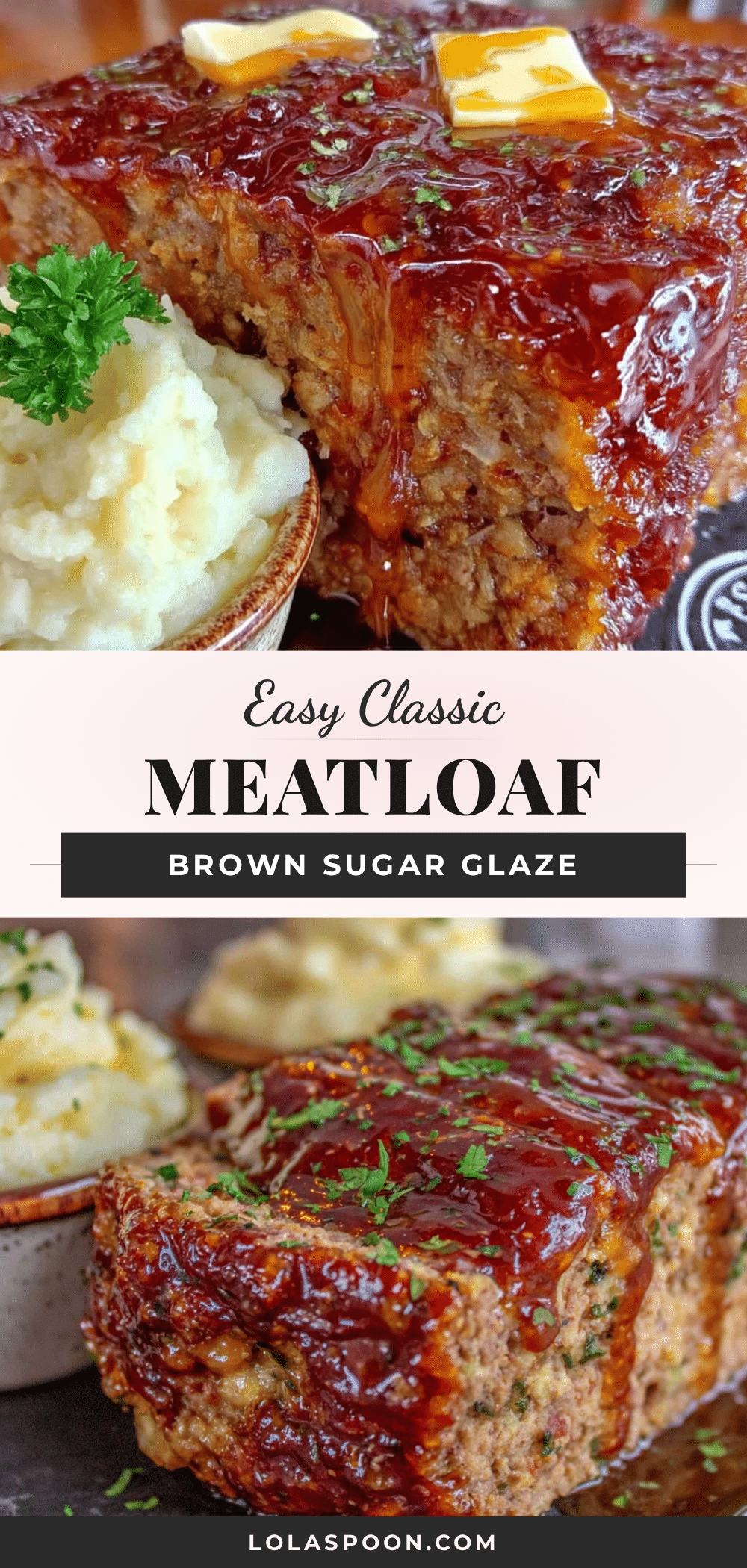
Easy Classic Meatloaf with Brown Sugar Glaze

This Easy Classic Meatloaf with Brown Sugar Glaze is the ultimate comfort food—tender, juicy, and topped with a sweet and tangy caramelized glaze. Perfect for busy weeknights, it comes together with simple pantry staples and delivers a soul-soothing meal every time.
- Prep Time: 15 minutes
- Cook Time: 1 hour
- Total Time: 1 hour 15 minutes
- Yield: 8 servings 1x
- Category: Main Course
- Cuisine: American
Ingredients
- 2 pounds ground beef (80/20)
- 1 cup plain breadcrumbs
- 1 cup whole milk
- 1 medium yellow onion, finely diced
- 2 large eggs
- 3 cloves garlic, minced
- 2 tablespoons Worcestershire sauce
- 1 teaspoon salt
- 1/2 teaspoon black pepper
- 1 teaspoon dried thyme
- 1/2 cup ketchup
- 1/4 cup brown sugar, packed
- 1 tablespoon apple cider vinegar
- 1 teaspoon mustard powder
Instructions
- Preheat your oven to 350°F (175°C). Line a 9×5-inch loaf pan with parchment paper or aluminum foil, leaving some overhang for easy lifting.
- In a large mixing bowl, combine 1 cup plain breadcrumbs and 1 cup whole milk. Let it sit for 5 minutes to form a panade.
- Add the finely diced onion, minced garlic, eggs, Worcestershire sauce, salt, black pepper, and dried thyme to the breadcrumb mixture. Mix until well combined.
- Add the ground beef to the bowl. Use your hands to gently mix everything together until just combined—do not overmix.
- Transfer the mixture to the prepared loaf pan and press gently into an even shape, removing any air pockets.
- In a small bowl, whisk together ketchup, brown sugar, apple cider vinegar, and mustard powder until smooth.
- Spread about half of the glaze evenly over the top of the meatloaf. Reserve the rest.
- Bake for 45 minutes. The glaze will be bubbling and starting to caramelize.
- Remove from the oven and spread the remaining glaze over the top. Return to the oven and bake for another 15 minutes.
- Check for doneness: the internal temperature should reach 160°F (71°C) at the center.
- Remove from the oven and let the meatloaf rest in the pan for 10-15 minutes. Use the parchment overhang to lift it out, then transfer to a cutting board.
- Slice into 1-inch thick pieces and serve warm.
Notes
Don’t overmix the meat mixture to avoid a tough meatloaf. Let the meatloaf rest before slicing to keep it moist. For a free-form loaf, shape on a lined baking sheet for more caramelized crust. Leftovers can be stored in the refrigerator for up to 4 days or frozen for up to 3 months.
Nutrition
- Serving Size: 1 slice (1/8 of meat
- Calories: 420
- Sugar: 14
- Sodium: 680
- Fat: 22
- Saturated Fat: 8
- Carbohydrates: 28
- Fiber: 1
- Protein: 28
Keywords: meatloaf, brown sugar glaze, classic meatloaf, easy meatloaf, comfort food, weeknight dinner