I was standing in the checkout line at the hardware store—of all places—when the plumber ahead of me started talking about beef stew. Not complaining about a job, not asking for directions to the PVC aisle. He was telling the cashier, a kid who looked like he survived on energy drinks, exactly how he makes red wine beef stew in half an hour.
I wasn’t trying to eavesdrop, honestly, but he had this way of talking about food that made you stop pretending to look at your phone. He was maybe sixty, hands permanently stained with grease, and he said, “Most people think stew has to bubble on the stove all day. That’s a lie they tell you so you buy the expensive slow cooker.” I almost laughed out loud. But I didn’t, because I wanted to hear the rest.
He described browning the meat in a hot pan—”hotter than you think, you want a crust, not a steam bath”—and then deglazing with a cheap red wine he called “table plonk.” The whole thing took him less time than it takes me to decide what to watch on Netflix. I scribbled his method on the back of a receipt while pretending to search for a lost screwdriver in my bag. By the time I got home, I had a full recipe scratched out in terrible handwriting, and honestly? It worked. It actually worked.
That was three years ago, and I’ve made this easy red wine beef stew at least twice a month since. It’s the recipe I turn to on Tuesday nights when I’m exhausted, when the fridge looks sad, and when I need something that tastes like I spent hours in the kitchen but actually took thirty minutes from start to bowl. Maybe you’ve been there—staring at a hunk of beef at 5:45 PM, wondering if you have time to make something real before everyone gets hangry. You do. Let me show you how.
Why You’ll Love This Recipe
This isn’t your grandmother’s all-day beef stew. It’s better for a Tuesday night because it actually fits into a Tuesday night. I’ve tested this method more times than I can count, tweaking heat levels, wine choices, and vegetable sizes until I found the sweet spot where speed meets deep, slow-cooked flavor. Here’s what makes this one special:
- Quick & Easy: From fridge to table in 30 minutes flat. No marinating, no long simmering, no fancy equipment. Just one pot and a little bit of hustle.
- Simple Ingredients: You probably have most of this in your kitchen right now. The wine is the only “special” item, and honestly, any red wine you’d drink will work.
- Perfect for Busy Weeknights: This stew was born from the chaos of a Tuesday evening. It’s designed for the nights when you need something hearty but don’t have two hours to babysit a pot.
- Crowd-Pleaser: My kids inhale this. My picky neighbor who “doesn’t like stew” asked for the recipe. It’s one of those rare dishes that satisfies everyone at the table.
- Unbelievably Delicious: The secret is in the technique—high heat for browning, a quick simmer with wine, and finishing with a touch of butter for richness. It tastes like it cooked all day, but it didn’t.
This easy red wine beef stew is the kind of recipe that makes you close your eyes after the first bite. It’s comfort food reimagined—faster, yes, but with the same soul-soothing satisfaction. Perfect for impressing guests without stress, or turning a simple Tuesday into something memorable.
What Ingredients You Will Need
This recipe uses simple, everyday ingredients to deliver bold flavor and satisfying texture without the fuss. Most items are pantry staples, and the wine is the only ingredient you might need to grab on the way home.
- 1 ½ pounds beef chuck stew meat, cut into 1 ½-inch cubes (look for well-marbled pieces—they stay tender)
- 2 tablespoons all-purpose flour (for dredging; use gluten-free all-purpose blend if needed)
- 1 teaspoon salt (plus more to taste)
- ½ teaspoon black pepper
- 2 tablespoons olive oil (or any neutral oil with a high smoke point)
- 1 medium yellow onion, diced (about 1 ½ cups)
- 3 cloves garlic, minced
- 2 medium carrots, peeled and sliced into ½-inch rounds
- 2 celery stalks, sliced into ½-inch pieces
- 1 cup dry red wine (I use Cabernet Sauvignon or Merlot—something you’d drink, not cook with)
- 2 cups beef broth (low-sodium preferred; I recommend Better Than Bouillon for deep flavor)
- 1 tablespoon tomato paste (adds richness and color)
- 1 teaspoon dried thyme (or 2 sprigs fresh)
- 1 bay leaf
- 1 cup frozen peas (no need to thaw)
- 1 tablespoon unsalted butter (for finishing—this is the secret to that glossy, restaurant-quality finish)
- Fresh parsley, chopped for garnish (optional but lovely)
Ingredient Tips: For the beef, look for meat labeled “stew meat” or “chuck roast” at the store. Avoid pre-cut “stir-fry strips”—they’re too lean and will get tough. If you’re out of red wine, you can substitute an extra cup of beef broth plus 1 tablespoon of balsamic vinegar for acidity. For a dairy-free version, skip the butter or use a vegan butter alternative.
Equipment Needed
You don’t need much for this one, which is part of the beauty. Here’s what you’ll want:
- Large heavy-bottomed pot or Dutch oven (a 5-quart size is perfect; cast iron or enameled cast iron works best for even browning)
- Sharp chef’s knife (dull knives make cutting beef a chore—trust me, I learned this the hard way)
- Cutting board
- Wooden spoon or spatula for stirring
- Measuring cups and spoons
- Small bowl for dredging flour
- Tongs (helpful for turning meat without splattering hot oil)
Budget-Friendly Tip: If you don’t own a Dutch oven, a deep stainless steel skillet or a heavy-bottomed soup pot works fine. Just make sure it’s wide enough to brown the meat in a single layer—crowding the pan is the enemy of a good crust.
Preparation Method
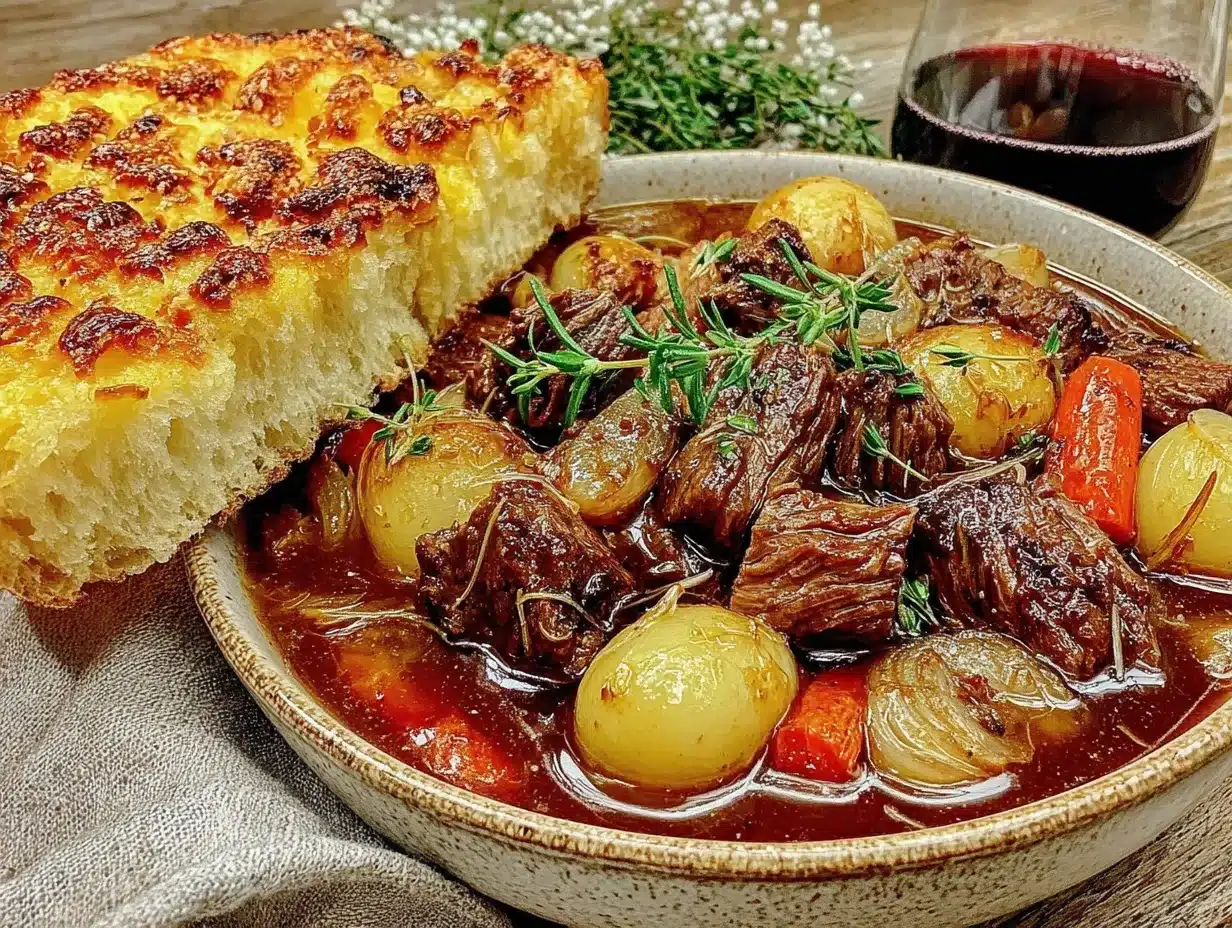
This is where the magic happens. Follow these steps, and you’ll have a rich, deeply flavored stew in exactly 30 minutes. I’ve included sensory cues so you know what to look for at each stage.
- Prep the beef (5 minutes): Pat the beef cubes dry with paper towels. This is non-negotiable—wet meat won’t brown, and browning is where all the flavor lives. In a small bowl, combine the flour, salt, and pepper. Toss the beef cubes in the flour mixture until evenly coated. Shake off any excess flour.
- Heat the pot (1 minute): Place your pot over medium-high heat and add the olive oil. Let it heat until it shimmers—about 60 seconds. You want it hot enough that a drop of water sizzles on contact.
- Brown the beef in batches (8 minutes): Add the beef cubes in a single layer, making sure not to crowd the pot. You’ll likely need to do this in two batches. Let the meat sear undisturbed for 2-3 minutes per side until deeply browned. Use tongs to turn each piece. Don’t rush this step—a good crust is the foundation of the stew’s flavor. Transfer browned beef to a plate and repeat with remaining meat.
- Sauté the aromatics (3 minutes): Reduce heat to medium. Add the diced onion to the pot and cook, scraping up any browned bits from the bottom with your wooden spoon. Cook for 2 minutes until softened and translucent. Add the minced garlic and cook for 30 seconds until fragrant. Your kitchen should smell incredible right now.
- Add the vegetables (2 minutes): Toss in the sliced carrots and celery. Cook for 2 minutes, stirring occasionally, until they start to soften slightly. They’ll finish cooking later in the broth.
- Deglaze with wine (2 minutes): Pour in the red wine, using your spoon to scrape up every last brown bit from the bottom of the pot. Let the wine bubble and reduce for about 2 minutes. The alcohol will cook off, leaving behind deep, fruity richness. The liquid should reduce by about half.
- Add broth and seasonings (1 minute): Stir in the beef broth, tomato paste, dried thyme, and bay leaf. Whisk the tomato paste into the liquid until fully dissolved. Return the browned beef (and any juices from the plate) to the pot.
- Simmer (10 minutes): Bring the stew to a gentle boil, then reduce heat to medium-low. Let it simmer uncovered for 10 minutes, stirring occasionally. The liquid should be bubbling gently, not furiously. The stew will thicken slightly as it cooks. Taste the broth—it should be rich and savory. Adjust salt and pepper if needed.
- Finish with peas and butter (2 minutes): Stir in the frozen peas and cook for 1-2 minutes until bright green and heated through. Remove the pot from heat. Stir in the tablespoon of butter until it melts into the stew, creating a glossy, velvety finish. Remove the bay leaf.
- Rest and serve (3 minutes): Let the stew sit off the heat for 2-3 minutes before serving. This allows the flavors to settle and the meat to relax. Ladle into bowls and garnish with fresh parsley if using.
Visual Cue: At the end of step 8, the broth should be a deep reddish-brown, slightly thickened, and the beef should be fork-tender. If it’s still tough, let it simmer another 5 minutes—sometimes meat needs a little extra time depending on the cut.
Cooking Tips & Techniques
I’ve made this easy red wine beef stew more times than I can count, and I’ve made every mistake in the book so you don’t have to. Here’s what I’ve learned:
Don’t skip the drying step. I once rushed through patting the beef dry because I was hungry and impatient. The meat steamed instead of seared, and the stew had none of that deep, caramelized flavor. Take the extra 30 seconds. Your taste buds will thank you.
Batch browning is your friend. If you crowd the pan, the temperature drops, and the meat releases its juices instead of browning. I learned this the hard way when I tried to brown all the beef at once and ended up with gray, sad meat. Do it in two batches. It adds maybe 3 extra minutes, and the payoff is enormous.
Use the wine you’d drink. I’m not saying you need a $50 bottle, but don’t use “cooking wine” from the grocery store. It’s loaded with salt and preservatives and tastes terrible. Grab a $8 bottle of Cabernet Sauvignon or Merlot—something fruity and dry. If you wouldn’t drink it, don’t cook with it.
Taste as you go. The broth will change dramatically between step 6 and step 8. Taste it at the beginning, middle, and end. You might need more salt, a pinch of sugar to balance acidity, or an extra splash of wine for depth. Trust your palate.
Multitask like a pro. While the beef is browning, dice your onion and mince your garlic. While the stew simmers, wash your cutting board and knife. Clean as you go, and you’ll have almost no dishes when dinner is done. That’s the real win on a weeknight.
Variations & Adaptations
This recipe is a fantastic base, and I’ve tried several variations depending on what’s in my fridge or who’s coming to dinner. Here are a few of my favorites:
Mushroom & Herb Version: Add 8 ounces of sliced cremini mushrooms with the onions in step 4. They’ll release their liquid and then brown beautifully, adding an earthy depth that pairs perfectly with the red wine. Swap the thyme for fresh rosemary sprigs.
Slow Cooker Adaptation: Brown the beef and sauté the aromatics on the stovetop as directed, then transfer everything (including the wine and broth) to a slow cooker. Cook on low for 6-8 hours or high for 3-4 hours. Stir in the peas and butter 10 minutes before serving. The flavor is even deeper, but it takes more time—perfect for a weekend.
Gluten-Free Option: Swap the all-purpose flour for a gluten-free all-purpose blend or use 1 tablespoon of cornstarch mixed with 2 tablespoons of cold water (slurry) added at the end of simmering to thicken. The texture will be slightly different but still delicious.
Dairy-Free Version: Omit the butter at the end or use a high-quality vegan butter. The stew will still be rich and flavorful—the butter just adds a glossy finish.
Add Potatoes: For a heartier stew, add 2 cups of peeled and cubed Yukon Gold potatoes with the carrots and celery. They’ll cook in the broth and absorb all that wonderful flavor. You might need an extra ½ cup of broth to compensate for the starch absorption.
Personal Favorite: I sometimes add a teaspoon of smoked paprika with the thyme. It gives the stew a subtle smokiness that’s absolutely addictive. My kids call it “campfire stew” and ask for it every time.
Serving & Storage Suggestions
This easy red wine beef stew is best served hot, straight from the pot, with something crusty to soak up every last drop of that glorious broth. Here’s how I like to serve and store it:
Serving Temperature: Serve piping hot in deep bowls. The butter finish gives it a beautiful sheen, and the steam carries all those aromatic notes right to your nose.
What to Serve With It: A thick slice of crusty sourdough or a warm baguette is my go-to. For something heartier, serve over egg noodles, mashed potatoes, or creamy polenta. A simple side salad with a tangy vinaigrette cuts through the richness beautifully. For drinks, pour the same red wine you used in the stew—it’s a perfect pairing.
Storage Instructions: Let the stew cool completely, then transfer to an airtight container. It will keep in the refrigerator for up to 4 days. The flavors actually deepen overnight, so leftovers are often even better the next day. I love making a double batch just for this reason.
Freezer Instructions: This stew freezes beautifully. Portion it into freezer-safe containers or zip-top bags, leaving a little room for expansion. It will keep for up to 3 months. Thaw overnight in the refrigerator before reheating.
Reheating Methods: Reheat gently on the stovetop over medium-low heat, stirring occasionally. Add a splash of beef broth or water if the stew has thickened too much. You can also reheat individual portions in the microwave—just cover the bowl and heat in 60-second intervals, stirring between each. The peas may lose a bit of their bright color, but the flavor will still be spot-on.
Flavor Development: One thing I love about this stew is how the flavors meld and deepen over time. The day you make it, it’s delicious. The next day, it’s even better. By day three, the beef is incredibly tender, and the broth has reached peak richness. If you can plan ahead, making this a day before you want to serve it is a fantastic strategy.
Nutritional Information & Benefits
This easy red wine beef stew is a hearty, balanced meal that delivers protein, vegetables, and deep comfort in every bowl. Here’s a rough nutritional breakdown per serving (based on 6 servings):
| Nutrient | Amount per Serving |
|---|---|
| Calories | 385 |
| Protein | 32g |
| Fat | 18g |
| Saturated Fat | 7g |
| Carbohydrates | 16g |
| Fiber | 4g |
| Sugar | 6g |
| Sodium | 720mg |
Health Benefits: Beef is an excellent source of high-quality protein, iron, and B vitamins, which support energy metabolism and red blood cell health. Carrots and celery provide fiber, vitamin A, and antioxidants. The red wine contributes resveratrol, a compound linked to heart health (in moderation, of course).
Dietary Considerations: This recipe is naturally low-carb (about 16g per serving) and can be made gluten-free and dairy-free with simple substitutions. It’s a satisfying option for those following a paleo or whole30 diet if you omit the flour and butter and use compliant broth. Always check labels for hidden additives if you have specific dietary needs.
Potential Allergens: This recipe contains wheat (flour) and dairy (butter). For allergen-free versions, see the variations section above.
Frequently Asked Questions
Can I use a different cut of beef?
Absolutely. Chuck roast is ideal because it has enough marbling to stay tender during quick cooking. You can also use bottom round or top sirloin, but slice them against the grain and keep the cooking time on the shorter side to avoid toughness. Avoid lean cuts like sirloin tip or eye of round—they’ll dry out.
What if I don’t have red wine?
No problem. Substitute an extra cup of beef broth plus 1 tablespoon of balsamic vinegar or red wine vinegar. The vinegar provides the acidity that the wine would normally contribute, and the broth makes up the volume. The flavor will be slightly different but still delicious.
Can I make this in an Instant Pot?
Yes! Use the sauté function to brown the beef and cook the aromatics. Add the wine, broth, and seasonings, then pressure cook on high for 15 minutes. Quick release the pressure, stir in the peas and butter, and serve. The timing is similar, but the pressure cooker tenderizes the meat even faster.
How do I thicken the stew if it’s too thin?
If your stew is thinner than you’d like after simmering, mix 1 tablespoon of cornstarch with 2 tablespoons of cold water to make a slurry. Stir it into the simmering stew and cook for 2-3 minutes until thickened. You can also mash a few of the cooked carrots or potatoes against the side of the pot to release their natural starches.
Can I add other vegetables?
Absolutely. This stew is very adaptable. Try adding diced potatoes, parsnips, turnips, or even green beans. Just adjust the cooking time slightly—root vegetables may need a few extra minutes, while quick-cooking vegetables like zucchini should be added in the last 5 minutes of simmering.
Conclusion
This easy red wine beef stew has become a staple in my kitchen for a reason. It delivers all the deep, comforting flavor of a slow-simmered stew in a fraction of the time, and it does it with ingredients you can find at any grocery store. The plumber who accidentally taught me this recipe probably has no idea how many Tuesday nights he’s saved, but I think about him every time I make it.
I hope you give this one a try, and I hope it becomes your go-to for those nights when you need something real on the table fast. Don’t be afraid to make it your own—swap in your favorite vegetables, adjust the herbs, or double the batch for leftovers. Cooking is about making a recipe work for your life, and this one is designed to be flexible.
When you make it, I’d love to hear how it turned out. Drop a comment below and let me know what variations you tried, or share a photo of your stew on social media. And if you have a friend who thinks they don’t have time for homemade stew, send them this recipe. They’ll thank you later.
Now go make some dinner. You’ve got this.
Pin This Recipe!
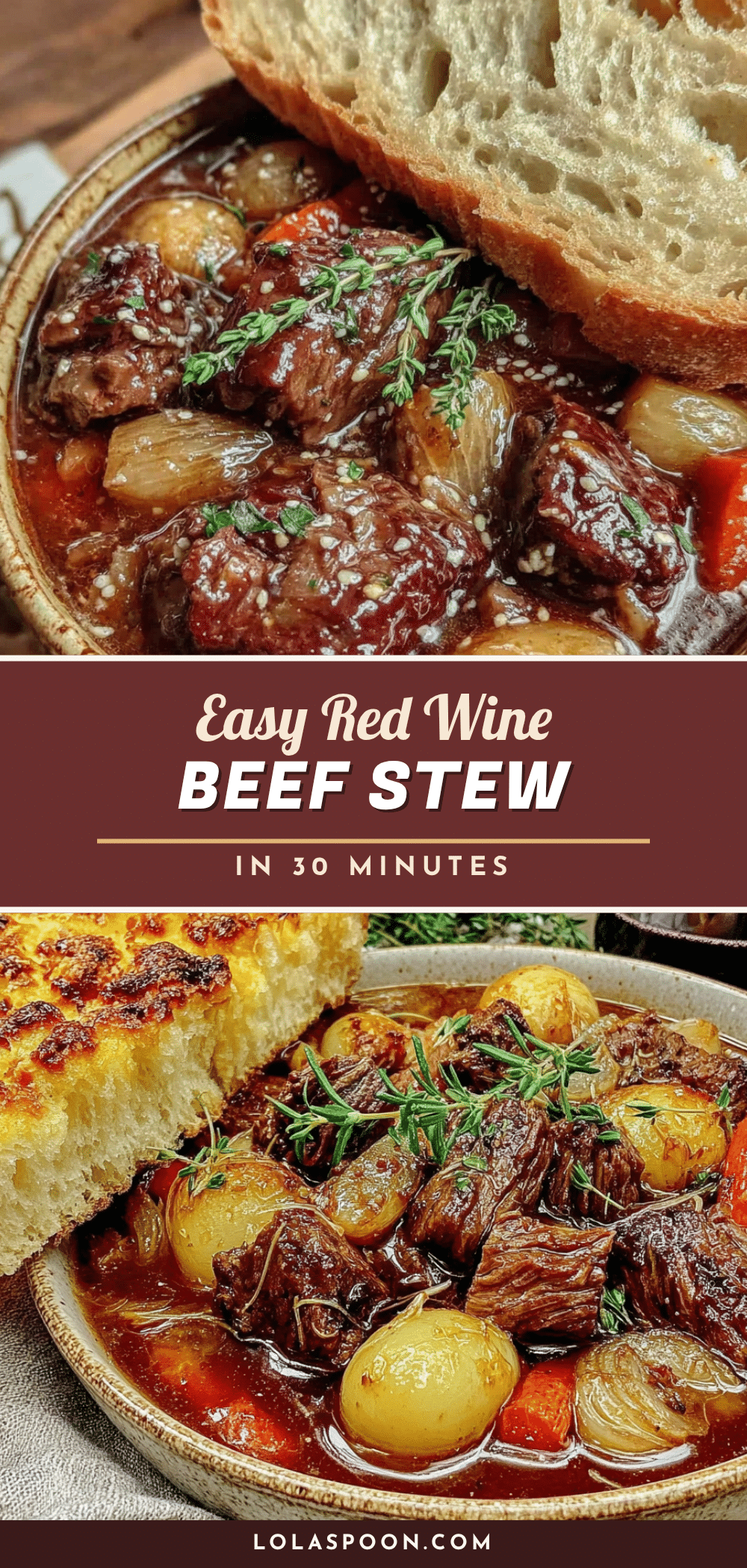
Easy 30-Minute Red Wine Beef Stew Recipe
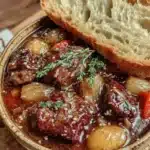
A quick and hearty beef stew made with red wine, ready in just 30 minutes. Perfect for busy weeknights, this one-pot meal delivers deep, slow-cooked flavor without the long simmering time.
- Prep Time: 10 minutes
- Cook Time: 20 minutes
- Total Time: 30 minutes
- Yield: 6 servings 1x
- Category: Main Course
- Cuisine: American
Ingredients
- 1 ½ pounds beef chuck stew meat, cut into 1 ½-inch cubes
- 2 tablespoons all-purpose flour
- 1 teaspoon salt
- ½ teaspoon black pepper
- 2 tablespoons olive oil
- 1 medium yellow onion, diced (about 1 ½ cups)
- 3 cloves garlic, minced
- 2 medium carrots, peeled and sliced into ½-inch rounds
- 2 celery stalks, sliced into ½-inch pieces
- 1 cup dry red wine (Cabernet Sauvignon or Merlot)
- 2 cups beef broth (low-sodium preferred)
- 1 tablespoon tomato paste
- 1 teaspoon dried thyme
- 1 bay leaf
- 1 cup frozen peas
- 1 tablespoon unsalted butter
- Fresh parsley, chopped for garnish (optional)
Instructions
- Prep the beef (5 minutes): Pat the beef cubes dry with paper towels. In a small bowl, combine the flour, salt, and pepper. Toss the beef cubes in the flour mixture until evenly coated. Shake off any excess flour.
- Heat the pot (1 minute): Place your pot over medium-high heat and add the olive oil. Let it heat until it shimmers—about 60 seconds.
- Brown the beef in batches (8 minutes): Add the beef cubes in a single layer, making sure not to crowd the pot. Let the meat sear undisturbed for 2-3 minutes per side until deeply browned. Use tongs to turn each piece. Transfer browned beef to a plate and repeat with remaining meat.
- Sauté the aromatics (3 minutes): Reduce heat to medium. Add the diced onion to the pot and cook, scraping up any browned bits from the bottom. Cook for 2 minutes until softened and translucent. Add the minced garlic and cook for 30 seconds until fragrant.
- Add the vegetables (2 minutes): Toss in the sliced carrots and celery. Cook for 2 minutes, stirring occasionally, until they start to soften slightly.
- Deglaze with wine (2 minutes): Pour in the red wine, using your spoon to scrape up every last brown bit from the bottom of the pot. Let the wine bubble and reduce for about 2 minutes until reduced by about half.
- Add broth and seasonings (1 minute): Stir in the beef broth, tomato paste, dried thyme, and bay leaf. Whisk the tomato paste into the liquid until fully dissolved. Return the browned beef (and any juices from the plate) to the pot.
- Simmer (10 minutes): Bring the stew to a gentle boil, then reduce heat to medium-low. Let it simmer uncovered for 10 minutes, stirring occasionally. Taste the broth and adjust salt and pepper if needed.
- Finish with peas and butter (2 minutes): Stir in the frozen peas and cook for 1-2 minutes until bright green and heated through. Remove the pot from heat. Stir in the tablespoon of butter until it melts into the stew. Remove the bay leaf.
- Rest and serve (3 minutes): Let the stew sit off the heat for 2-3 minutes before serving. Ladle into bowls and garnish with fresh parsley if using.
Notes
For the beef, look for well-marbled chuck stew meat. Avoid pre-cut stir-fry strips as they are too lean. If you don’t have red wine, substitute an extra cup of beef broth plus 1 tablespoon of balsamic vinegar. For a dairy-free version, omit the butter or use a vegan butter alternative. The stew can be made gluten-free by using a gluten-free all-purpose flour blend or a cornstarch slurry. Leftovers keep in the refrigerator for up to 4 days and freeze for up to 3 months.
Nutrition
- Serving Size: 1 serving (about 1 ½
- Calories: 385
- Sugar: 6
- Sodium: 720
- Fat: 18
- Saturated Fat: 7
- Carbohydrates: 16
- Fiber: 4
- Protein: 32
Keywords: beef stew, red wine beef stew, easy beef stew, 30-minute stew, quick beef stew, one-pot meal, weeknight dinner