This was supposed to be roasted carrots with a honey glaze. I had the carrots washed, the honey measured, and the oven preheating. But somewhere between chopping and seasoning, I grabbed the wrong vegetable from the fridge—a hefty butternut squash I’d bought on a whim at the farmers’ market last Saturday. By the time I realized my mistake, the squash was already cubed and tossed in oil. I stood there, staring at the golden-orange cubes, feeling that familiar panic rise. You know that feeling when a recipe goes off the rails before it even starts? Yeah, that was me.
I almost scraped the whole thing into a bag for soup later. But honestly, I was hungry, and the oven was hot. So I threw the squash in anyway, figuring I’d salvage it with some random toppings from the pantry. I found pomegranate seeds left over from a salad I’d made days before, a handful of pecans from a baking project, and some crumbly feta that was nearing its expiration. I tossed them all together, drizzled a little maple syrup over the top, and crossed my fingers.
What came out of the oven was nothing like the plan—and better. The squash got all caramelized and tender, the pomegranate seeds burst with tartness, and the feta got all melty and salty. I ate the entire pan standing at the counter, not even bothering with a plate. That’s when I knew this accidental dish had to become a real thing. It’s now my go-to for fall dinners, holiday sides, and those crisp evenings when you want something warm, colorful, and a little bit fancy without trying so hard. Honestly, sometimes the best recipes come from our biggest kitchen blunders.
Why You’ll Love This Recipe
Let me tell you why this fall harvest roasted butternut squash with pomegranate seeds has become a staple in my kitchen. I’ve tested it a dozen times—for family dinners, Thanksgiving potlucks, and even a fancy brunch—and it never fails to impress.
- Quick & Easy: Comes together in under 45 minutes, with just 10 minutes of active prep. Perfect for busy weeknights or last-minute holiday gatherings.
- Simple Ingredients: No fancy grocery trips needed. You probably have most of these pantry staples already—olive oil, maple syrup, salt, and pepper. The squash, pomegranate, and feta are easy to find at any grocery store.
- Perfect for Fall Occasions: This dish screams autumn. It’s ideal for Thanksgiving, Friendsgiving, cozy Sunday roasts, or even a seasonal meal prep. The colors alone—deep orange, ruby red, and creamy white—look stunning on any table.
- Crowd-Pleaser: I’ve served this to picky kids, vegan friends (skip the feta), and meat-loving uncles. Everyone goes back for seconds. The sweet-savory combo is just that good.
- Unbelievably Delicious: The texture is what gets me every time. The squash gets all soft and caramelized on the edges, the pomegranate seeds pop with juicy tartness, and the feta adds this creamy, salty finish. It’s comfort food that feels a little elevated but still totally approachable.
What makes this recipe different from the rest? It’s the balance. Most roasted squash recipes are either too sweet or too plain. Here, the maple syrup caramelizes the squash just enough, while the pomegranate cuts through with acidity. The feta ties it all together with a savory note. It’s not just another roasted vegetable dish—it’s the version you’ll actually crave.
This recipe is the kind that makes you close your eyes after the first bite. It’s comfort food reimagined—healthier, faster, but with the same soul-soothing satisfaction. Perfect for impressing guests without stress, or turning a simple Tuesday dinner into something memorable.
What Ingredients You Will Need
This recipe uses simple, wholesome ingredients to deliver bold flavor and satisfying texture without the fuss. Most of these are fall pantry staples, and the combination is what makes this dish shine.
- 1 medium butternut squash (about 2-3 pounds), peeled, seeded, and cut into 1-inch cubes. Look for a squash that feels heavy for its size and has a firm, unblemished skin. I prefer organic when possible, but conventional works great too.
- 2 tablespoons olive oil (adds richness and helps caramelization). I use extra-virgin for flavor, but regular olive oil is fine.
- 2 tablespoons maple syrup (pure maple syrup, not pancake syrup). This is key for that deep, caramelized sweetness. You can substitute honey if needed, but maple gives a more autumnal flavor.
- 1/2 teaspoon salt (kosher salt preferred, for even seasoning). I like Diamond Crystal brand for its flaky texture.
- 1/4 teaspoon black pepper (freshly ground for best flavor).
- 1/2 teaspoon ground cinnamon (adds warmth and pairs beautifully with squash). You can also add a pinch of nutmeg or allspice for extra depth.
- 1/2 cup pomegranate seeds (fresh or frozen, thawed). These little jewels add a burst of tartness and a gorgeous pop of red. To save time, buy pre-seeded pomegranate cups at the grocery store.
- 1/3 cup crumbled feta cheese (adds creamy, salty contrast). I recommend a block of feta you crumble yourself—it’s creamier than pre-crumbled. For a dairy-free option, use vegan feta or omit entirely.
- 1/4 cup chopped pecans (optional, for crunch). Toast them lightly in a dry pan for extra flavor. Walnuts or pumpkin seeds work great too.
- 1 tablespoon fresh thyme leaves (optional, for an earthy finish). Rosemary or sage are also lovely here.
For substitutions: Use butternut squash or swap with sweet potatoes or pumpkin. For a nut-free version, skip the pecans or use pumpkin seeds. If you don’t have pomegranate seeds, dried cranberries or fresh raspberries can work in a pinch, though the texture will be different.
Equipment Needed
You don’t need a fancy kitchen to nail this recipe. Here’s what I use:
- Baking sheet: A large, rimmed baking sheet (half-sheet pan) is ideal. It gives the squash room to roast without steaming. I prefer a light-colored metal pan for even browning.
- Chef’s knife: A sharp, sturdy knife makes cutting butternut squash much safer and easier. I use an 8-inch chef’s knife.
- Vegetable peeler: A Y-shaped peeler works best for removing the tough squash skin quickly.
- Cutting board: A large, stable board. I like wooden boards for vegetables.
- Mixing bowl: For tossing the squash with oil and seasonings.
- Spatula or tongs: For flipping the squash halfway through roasting.
- Small skillet: If you’re toasting the pecans (optional, but recommended).
No baking sheet? Use a large oven-safe dish or a cast-iron skillet. No vegetable peeler? A sharp paring knife works, just be careful. The key is giving the squash enough space on the pan—crowding leads to steaming instead of roasting.
Preparation Method
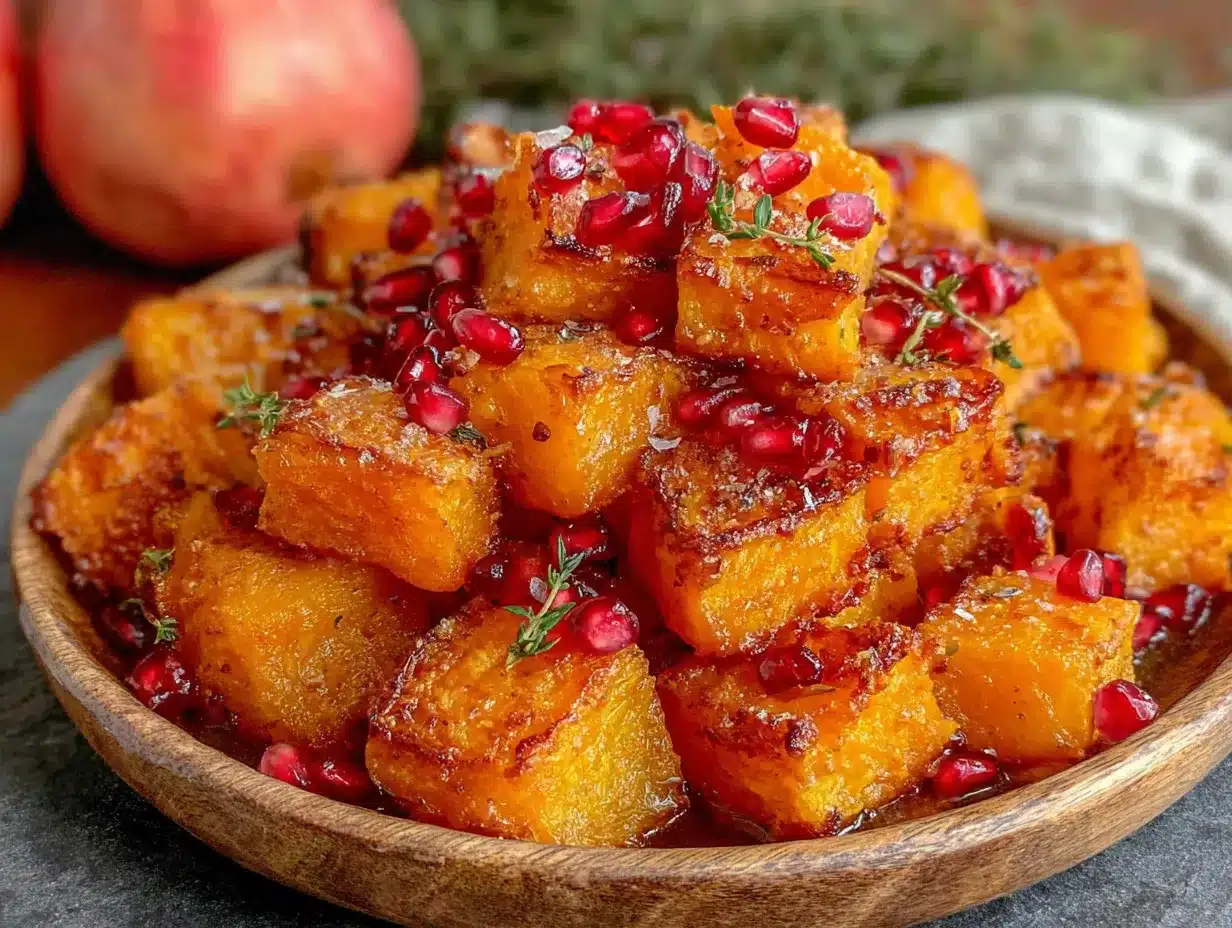
Let’s get cooking! This fall harvest roasted butternut squash with pomegranate seeds comes together in a few simple steps. I’ve broken it down so you can follow along easily.
- Preheat your oven to 400°F (200°C). A hot oven is crucial for caramelization. While it heats, prepare the squash.
- Prep the butternut squash. Using a sharp chef’s knife, cut off both ends of the squash. Then, cut it in half where the narrow neck meets the bulbous bottom. Use a vegetable peeler to remove the skin from both pieces. It’s okay if a little green remains—it’ll soften during roasting. Scoop out the seeds and stringy bits from the bottom half with a spoon. Cut the squash into 1-inch cubes. This should yield about 4-5 cups of cubes. (Pro tip: If you’re short on time, buy pre-cut squash from the store—just make sure the pieces are roughly the same size.)
- Toss with seasonings. In a large mixing bowl, combine the cubed squash with 2 tablespoons olive oil, 2 tablespoons maple syrup, 1/2 teaspoon salt, 1/4 teaspoon black pepper, and 1/2 teaspoon cinnamon. Toss everything together until the squash is evenly coated. The maple syrup might feel sticky, but that’s exactly what you want—it helps create those caramelized edges.
- Spread on a baking sheet. Arrange the squash in a single layer on your baking sheet. Make sure the pieces aren’t touching too much; give them some breathing room. If they’re crowded, they’ll steam instead of roast. (Trust me, I learned this the hard way—my first batch was soggy.)
- Roast for 25-30 minutes. Place the pan in the preheated oven. After 15 minutes, use a spatula to flip the pieces. This ensures even browning. Roast for another 10-15 minutes, until the squash is fork-tender and the edges are golden brown and caramelized. The smell in your kitchen will be incredible—sweet and nutty.
- Toast the pecans (optional). While the squash roasts, heat a small skillet over medium heat. Add the chopped pecans and toast for 2-3 minutes, shaking the pan frequently, until they’re fragrant. Watch them closely—they burn fast. Set aside.
- Assemble the dish. Once the squash is done, transfer it to a serving platter or leave it on the baking sheet for a rustic look. Sprinkle the pomegranate seeds, crumbled feta, and toasted pecans over the top. Finish with fresh thyme leaves if using. The heat from the squash will slightly soften the feta and warm the pomegranate seeds—perfect.
- Serve immediately. This dish is best enjoyed warm, right out of the oven. The contrast of warm squash and cool pomegranate seeds is magical.
One more thing: If you’re making this ahead, roast the squash and store it separately. Add the toppings just before serving to keep everything fresh and crunchy.
Cooking Tips & Techniques
After making this fall harvest roasted butternut squash with pomegranate seeds more times than I can count, I’ve picked up a few tricks that make a real difference.
Cut the squash evenly. This is the number one tip for even roasting. If your cubes are different sizes, some will burn while others stay hard. Aim for 1-inch pieces. I use a ruler the first time—no shame in that.
Don’t skip the flipping. I know it’s tempting to just let the oven do its thing, but flipping the squash halfway through ensures every side gets caramelized. Set a timer so you don’t forget. I’ve definitely burned a batch because I got distracted by laundry.
Watch the maple syrup. Maple syrup can burn if the oven is too hot or if the squash is too close to the heating element. If your oven runs hot, reduce the temperature to 375°F (190°C) and roast a few minutes longer. Also, line your baking sheet with parchment paper for easier cleanup—the caramelized syrup can get sticky.
Toast your nuts. Raw pecans are fine, but toasting them brings out their natural oils and adds a deeper flavor. Just don’t walk away while they’re in the pan. I’ve burned more nuts than I’d like to admit.
Season in layers. A little salt on the squash before roasting, plus a pinch more on the finished dish, makes the flavors pop. Don’t overseason the feta—it’s already salty.
Multitask smartly. While the squash roasts, prep your pomegranate seeds and crumble the feta. This way, everything is ready to go when the timer dings. It makes the final assembly feel effortless.
Variations & Adaptations
One of the best things about this recipe is how flexible it is. Here are some ways to make it your own:
- Vegan version: Skip the feta or use a vegan feta alternative. The dish is still delicious without it—the pomegranate and pecans provide plenty of texture and flavor. You can also add a sprinkle of nutritional yeast for a cheesy note.
- Add protein: Turn this into a main dish by adding roasted chickpeas or grilled chicken. Toss chickpeas with the same oil and spice mix, and roast them alongside the squash. They get crispy and delicious.
- Swap the squash: No butternut squash? Use sweet potatoes, acorn squash, or even pumpkin. Adjust the roasting time based on the vegetable’s density—sweet potatoes might need a few extra minutes.
- Change the nuts: Pecans are my go-to, but walnuts, almonds, or pumpkin seeds all work. For a nut-free option, use sunflower seeds or omit entirely.
- Herb variations: Fresh rosemary or sage are wonderful instead of thyme. I’ve also used a pinch of dried oregano for a slightly different flavor profile.
- Spice it up: Add a pinch of cayenne pepper or red pepper flakes for a subtle heat that contrasts beautifully with the sweet squash. I tried this once on a whim and loved it.
- Balsamic glaze: Drizzle a little balsamic reduction over the finished dish for extra tangy sweetness. It pairs surprisingly well with the pomegranate.
I personally love the variation with roasted chickpeas—it makes the dish hearty enough for a weeknight dinner. Just toss a can of drained chickpeas with the squash before roasting.
Serving & Storage Suggestions
This fall harvest roasted butternut squash with pomegranate seeds is incredibly versatile when it comes to serving. Here’s how I like to enjoy it:
Serving temperature: Serve it warm, straight from the oven. The contrast between the warm squash and the cool pomegranate seeds is part of the magic. It’s also delicious at room temperature, making it perfect for potlucks or picnics.
Presentation: For a beautiful look, arrange the roasted squash on a large white platter. Sprinkle the pomegranate seeds, feta, and pecans artfully over the top. A few fresh thyme sprigs add a touch of elegance. I’ve brought this to Thanksgiving dinners, and it always gets photographed before anyone eats.
Complementary dishes: This side pairs beautifully with roasted chicken, grilled pork chops, or a hearty grain bowl. It also works well alongside a simple green salad with a lemon vinaigrette. For a holiday table, serve it next to mashed potatoes and roasted turkey.
Storage: Store leftovers in an airtight container in the refrigerator for up to 4 days. The texture will soften slightly, but the flavors meld together beautifully. I actually love eating it cold straight from the fridge—it’s like a savory squash salad.
Reheating: To reheat, spread the squash on a baking sheet and warm it in a 350°F (175°C) oven for 5-7 minutes. This helps restore some of the caramelized edges. Avoid the microwave, as it makes the squash mushy. If you’re in a rush, a quick pan-fry over medium heat works too.
Freezing: You can freeze the roasted squash (without toppings) for up to 3 months. Thaw it in the fridge overnight and reheat as above. Add fresh pomegranate seeds and feta after reheating for the best texture.
The flavors actually deepen after a day or two in the fridge—the maple and cinnamon infuse the squash even more. So don’t hesitate to make this ahead.
Nutritional Information & Benefits
This dish isn’t just pretty—it’s packed with goodness. Here’s a rough estimate per serving (about 1 cup, with toppings):
- Calories: ~220
- Protein: 5g
- Fat: 12g (mostly from olive oil and pecans)
- Carbohydrates: 28g
- Fiber: 5g
- Sugar: 14g (natural from squash and maple syrup)
- Vitamin A: 200% of daily value (from butternut squash)
- Vitamin C: 30% of daily value
- Calcium: 10% of daily value (from feta)
Health benefits: Butternut squash is rich in beta-carotene, which supports eye health and immunity. Pomegranate seeds are loaded with antioxidants that fight inflammation. Pecans provide healthy fats and magnesium for heart health. Even the feta adds a dose of calcium for strong bones.
Dietary considerations: This recipe is naturally gluten-free and vegetarian. For a vegan option, skip the feta. It’s also relatively low in added sugar—the maple syrup is minimal and mostly natural. The fiber content helps keep you full and satisfied.
I personally love that this dish feels indulgent but is actually quite nutritious. It’s the kind of side you can feel good about serving to your family—or eating for lunch the next day.
Conclusion
This fall harvest roasted butternut squash with pomegranate seeds started as a total kitchen accident, but it’s become one of my most-requested recipes. The combination of sweet, caramelized squash, tart pomegranate jewels, creamy feta, and crunchy pecans is just unbeatable. It’s simple enough for a Tuesday night, but elegant enough for a holiday table.
I encourage you to make this recipe your own. Swap in your favorite nuts, try different herbs, or add a protein to turn it into a main dish. The beauty of this dish is how forgiving it is—even if you grab the wrong vegetable like I did, you’ll end up with something delicious.
Honestly, every time I make this, I’m reminded that some of the best things in life come from happy accidents. So go ahead, give it a try. And when you do, I’d love to hear how it turns out. Leave a comment below, share your photos, or tell me what variations you tried. Let’s keep the conversation going—and keep those ovens warm.
Happy cooking, friends!
Frequently Asked Questions
Can I use frozen butternut squash?
Yes, you can use frozen butternut squash, but the texture will be softer. There’s no need to thaw it first—just toss it with oil and seasonings and roast for 5-10 minutes longer. The caramelization won’t be as pronounced, but it’s still tasty.
How do I cut a butternut squash safely?
Use a sharp chef’s knife and a stable cutting board. First, cut off both ends to create flat surfaces. Then, cut the squash in half where the narrow neck meets the bulb. Peel each piece with a vegetable peeler before cubing. If the squash is very hard, microwave it whole for 2-3 minutes to soften the skin slightly.
Can I make this dish ahead of time?
Absolutely! Roast the squash up to 2 days in advance and store it in the fridge. Add the pomegranate seeds, feta, and pecans just before serving to keep everything fresh and crunchy. Reheat the squash in a 350°F oven for 5-7 minutes before assembling.
What can I substitute for pomegranate seeds?
If pomegranates aren’t in season, try dried cranberries, fresh raspberries, or even chopped dried cherries. The tartness won’t be exactly the same, but they’ll add a similar pop of color and flavor. For a savory twist, try chopped green apples.
Is this recipe suitable for meal prep?
Yes! Roast a large batch of squash on Sunday, then portion it out for lunches or quick sides throughout the week. Store the toppings separately and add them just before eating. It’s great warm or cold, so it works perfectly for packed lunches.
Pin This Recipe!
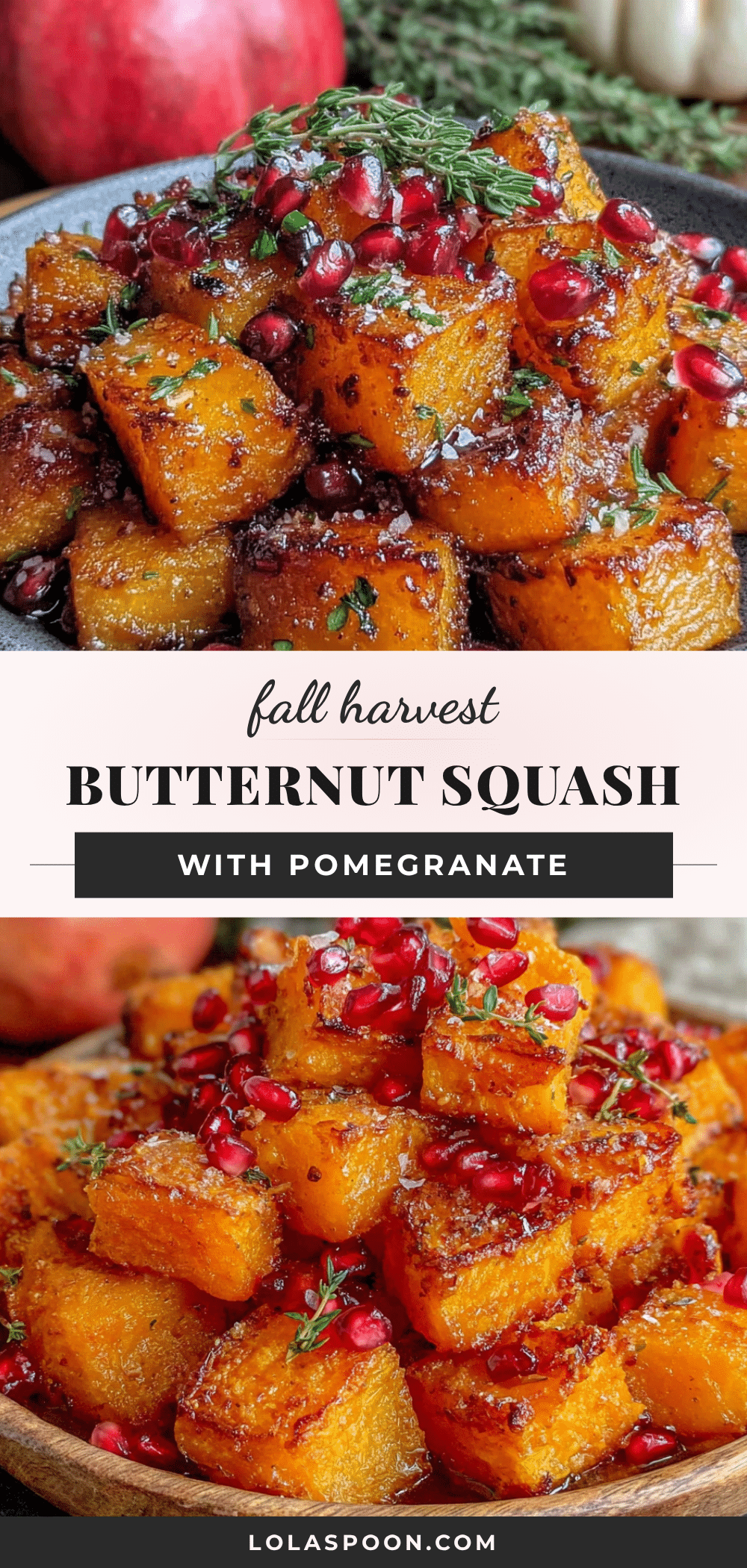
Fall Harvest Roasted Butternut Squash with Pomegranate Seeds
A delightful fall side dish featuring caramelized butternut squash, tart pomegranate seeds, creamy feta, and crunchy pecans. Perfect for holiday gatherings or cozy weeknight dinners.
- Prep Time: 10 minutes
- Cook Time: 30 minutes
- Total Time: 40 minutes
- Yield: 4 servings 1x
- Category: Side Dish
- Cuisine: American
Ingredients
- 1 medium butternut squash (about 2–3 pounds), peeled, seeded, and cut into 1-inch cubes
- 2 tablespoons olive oil
- 2 tablespoons maple syrup
- 1/2 teaspoon salt
- 1/4 teaspoon black pepper
- 1/2 teaspoon ground cinnamon
- 1/2 cup pomegranate seeds
- 1/3 cup crumbled feta cheese
- 1/4 cup chopped pecans
- 1 tablespoon fresh thyme leaves (optional)
Instructions
- Preheat your oven to 400°F (200°C).
- Prep the butternut squash: Cut off both ends, then cut in half where the narrow neck meets the bulbous bottom. Peel with a vegetable peeler, scoop out seeds, and cut into 1-inch cubes.
- In a large mixing bowl, toss the cubed squash with olive oil, maple syrup, salt, pepper, and cinnamon until evenly coated.
- Spread the squash in a single layer on a baking sheet, ensuring pieces are not crowded.
- Roast for 25-30 minutes, flipping halfway through, until fork-tender and edges are golden brown and caramelized.
- While the squash roasts, toast the pecans in a small skillet over medium heat for 2-3 minutes until fragrant. Set aside.
- Transfer the roasted squash to a serving platter. Sprinkle with pomegranate seeds, crumbled feta, toasted pecans, and fresh thyme leaves if using.
- Serve immediately, warm.
Notes
For a vegan version, skip the feta or use vegan feta. To make ahead, roast the squash and store separately; add toppings just before serving. For even roasting, cut squash into uniform 1-inch cubes and flip halfway through.
Nutrition
- Serving Size: 1 cup
- Calories: 220
- Sugar: 14
- Sodium: 350
- Fat: 12
- Saturated Fat: 3
- Carbohydrates: 28
- Fiber: 5
- Protein: 5
Keywords: roasted butternut squash, fall harvest, pomegranate seeds, feta, pecans, maple syrup, holiday side dish