A friend asked me why I couldn’t just use melted butter instead of creaming it with sugar for these cookies. I was in the middle of explaining the science—the air pockets, the structural integrity, the whole spiel—when I stopped. Honestly, I had no good reason except that’s how I’d always done it. So I tried it her way. The cookies were softer, more tender, and came together in half the time. I’ve never gone back.
That was three winters ago, in a tiny kitchen with a cracked mixing bowl and a sticky counter. I was supposed to be the one teaching, but she taught me something better: sometimes the rules are just suggestions. These Cozy Soft Iced Gingerbread Cookies with Molasses are the result of that lesson—a recipe that breaks a few baking conventions to give you something genuinely comforting.
The first batch came out of the oven on a Tuesday evening, and I remember standing there with a spatula in hand, thinking, “This is it. This is the one.” The kitchen smelled like Christmas and cinnamon and something deeply familiar. Maybe you’ve been there—that moment when a recipe just clicks, and you know you’ll be making it for years. These cookies are that for me.
They’re not the crisp, snap-in-half gingerbread cookies you might be thinking of. These are pillowy, almost cake-like, with a soft crumb that practically melts in your mouth. The molasses gives them that deep, rich warmth, and the icing adds just the right touch of sweetness. I keep making them because they feel like a hug in cookie form—exactly what you need on a cold day or a rough one.
Why You’ll Love This Recipe
I’ve tested this recipe more times than I care to admit, and I can tell you with confidence: these are the softest gingerbread cookies you’ll ever make. Here’s why they deserve a permanent spot in your baking rotation:
- Quick & Easy : From mixing bowl to cooling rack in under 30 minutes. No chilling required, which means you can satisfy a craving instantly.
- Simple Ingredients : You probably have most of these in your pantry right now. No weird extracts or hard-to-find spices.
- Perfect for Cozy Nights : Cold weather, hot cocoa, and a plate of these cookies—it doesn’t get better than that.
- Crowd-Pleaser : Kids love the soft texture, adults love the sophisticated molasses flavor. Everyone wins.
- Unbelievably Delicious : The combination of warm spices and creamy icing is pure comfort food magic.
What makes these different from every other gingerbread cookie recipe? It’s the melted butter technique. Most recipes insist on creaming, but using melted butter creates a denser, softer cookie that stays tender for days. I’ve tested both ways side by side, and the melted butter version wins every time. Plus, the molasses-to-spice ratio is perfectly balanced—not so much ginger that it bites back, but enough to warm you from the inside out.
This recipe isn’t just good—it’s the kind that makes you close your eyes after the first bite. It’s comfort food at its finest: nostalgic, soothing, and utterly satisfying without any stress.
What Ingredients You Will Need
These cookies use simple, wholesome ingredients to create something truly special. Most are pantry staples, which makes this recipe perfect for spontaneous baking sessions.
- Unsalted butter, melted and slightly cooled (adds richness and keeps cookies soft)
- Brown sugar, packed (I prefer dark brown sugar for deeper flavor, but light works too)
- Molasses (use unsulphured, like Grandma’s or Brer Rabbit—this is non-negotiable for authentic flavor)
- Large egg, room temperature (helps everything emulsify smoothly)
- Vanilla extract (pure, not imitation—trust me on this)
- All-purpose flour (unbleached gives slightly better structure)
- Baking soda (fresh is important—test it by dropping a pinch in vinegar; it should fizz)
- Ground ginger (freshly opened for maximum punch)
- Ground cinnamon (I use Saigon cinnamon for its warmth)
- Ground cloves (a little goes a long way)
- Salt (fine sea salt or table salt—balances the sweetness)
For the Icing:
- Powdered sugar, sifted (no lumps allowed)
- Milk (whole milk gives the creamiest texture, but any milk works)
- Vanilla extract (again, pure is best)
If you’re feeling adventurous, try adding a pinch of black pepper or cardamom to the spice mix. It adds a subtle warmth that’s absolutely lovely. For a dairy-free version, use vegan butter and plant-based milk—the cookies still come out beautifully soft.
One note on molasses: don’t use blackstrap molasses here. It’s too bitter and will overpower the cookies. Stick with regular unsulphured molasses for that perfect balance of sweet and robust.
Equipment Needed
You don’t need a fancy kitchen to make these cookies. Here’s what you’ll actually use:
- Large mixing bowl (glass or stainless steel works best)
- Whisk (for combining wet ingredients without overmixing)
- Rubber spatula (for folding in flour—avoids overworking the dough)
- Measuring cups and spoons (precise measurements matter in baking)
- Baking sheets (light-colored ones prevent over-browning)
- Parchment paper or silicone baking mat (non-negotiable for easy cleanup)
- Cookie scoop (a 1.5-tablespoon scoop gives uniform cookies—I love my OXO one)
- Cooling rack (wire rack for proper air circulation)
- Small piping bag or zip-top bag (for drizzling icing)
If you don’t have a cookie scoop, use two spoons to portion the dough. It’s a little messier but works fine. And if you don’t have a cooling rack, just let the cookies cool on the baking sheet for a few extra minutes before transferring them to a plate.
Preparation Method
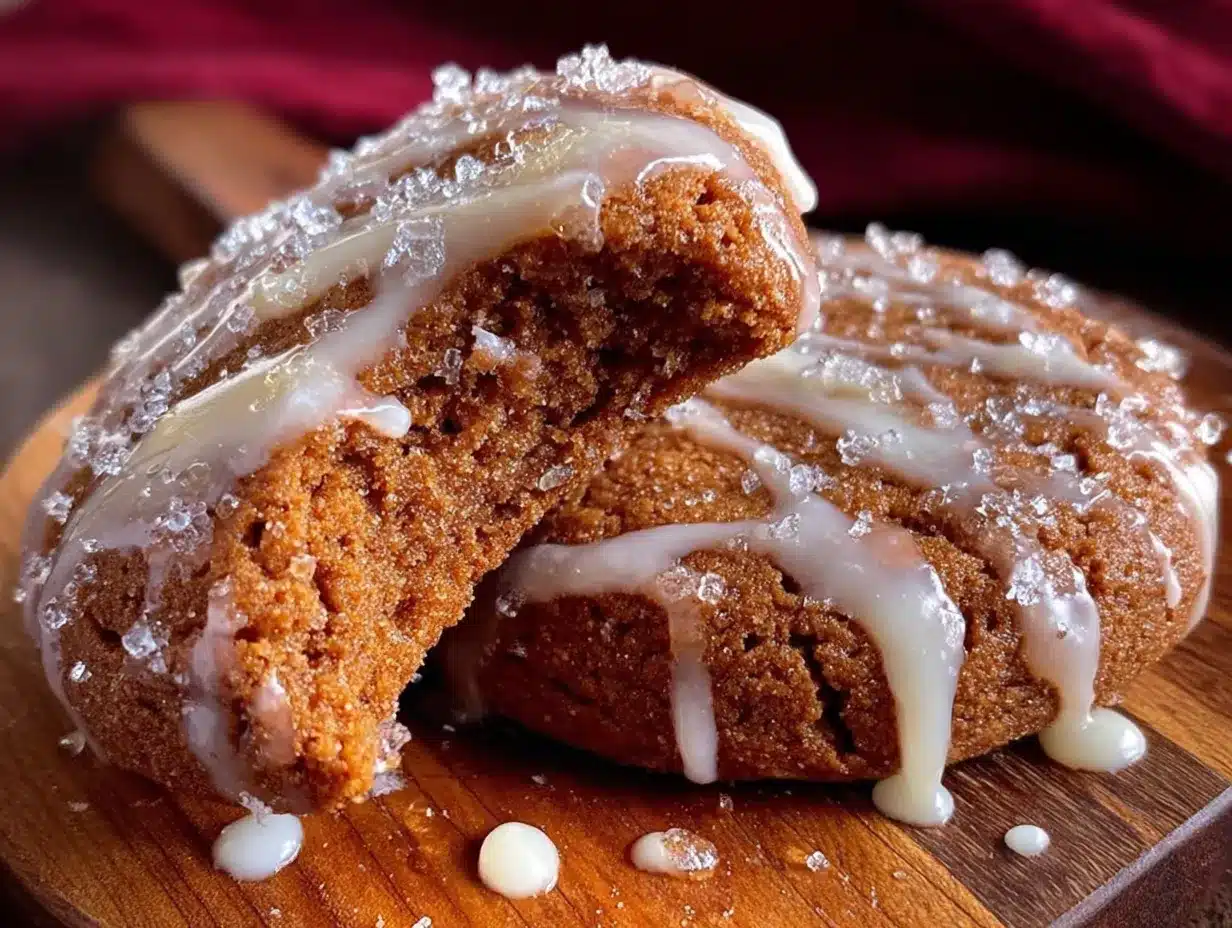
Let me walk you through this step by step. I’ve made these cookies dozens of times, so I’ll share all the little tricks I’ve learned along the way.
- Preheat your oven to 350°F (175°C). Line two baking sheets with parchment paper. This is one of those steps you don’t want to skip—the parchment prevents sticking and makes cleanup a breeze.
- Melt the butter. In a small saucepan or microwave-safe bowl, melt 1/2 cup (113g) unsalted butter. Let it cool for 2-3 minutes—you don’t want it hot enough to cook the egg.
- Mix the wet ingredients. In a large bowl, whisk together the melted butter, 1/2 cup (100g) packed brown sugar, and 1/3 cup (80ml) molasses until smooth. Add 1 large egg and 1 teaspoon vanilla extract, whisking until fully combined. The mixture should look glossy and smell amazing already.
- Combine the dry ingredients. In a separate bowl, whisk together 2 cups (250g) all-purpose flour, 1 teaspoon baking soda, 1 teaspoon ground ginger, 1 teaspoon ground cinnamon, 1/2 teaspoon ground cloves, and 1/4 teaspoon salt. Whisking aerates the flour and distributes the spices evenly.
- Bring it together. Gradually add the dry ingredients to the wet mixture, stirring with a rubber spatula until just combined. Don’t overmix—stop as soon as you don’t see any more flour streaks. The dough will be soft and slightly sticky, which is exactly what you want.
- Portion the dough. Using a 1.5-tablespoon cookie scoop, drop rounded balls of dough onto the prepared baking sheets, spacing them about 2 inches apart. They’ll spread a little, so give them room to breathe.
- Bake. Bake for 8-10 minutes, rotating the pans halfway through. The cookies should look puffed and set around the edges but still soft in the center. They’ll continue to set as they cool, so don’t overbake—that’s the secret to soft cookies.
- Cool. Let the cookies cool on the baking sheet for 5 minutes, then transfer them to a wire rack to cool completely. This step is crucial—moving them too early can cause them to break.
- Make the icing. In a small bowl, whisk together 1 cup (120g) sifted powdered sugar, 2 tablespoons milk, and 1/2 teaspoon vanilla extract. The icing should be thick but drizzle-able—add more milk a teaspoon at a time if needed.
- Ice the cookies. Once the cookies are completely cool, drizzle the icing over them using a piping bag or a zip-top bag with a tiny corner snipped off. Let the icing set for about 15 minutes before serving.
A note from experience: if your dough feels too sticky to scoop, pop it in the fridge for 10 minutes. It’ll firm up just enough to handle easily.
Cooking Tips & Techniques
I’ve learned a few things the hard way so you don’t have to. Here’s what I wish someone had told me:
Don’t overmix the dough. I know it’s tempting to keep stirring until everything looks perfectly smooth, but overmixing develops gluten and makes cookies tough. Stop as soon as the flour disappears. Your cookies will thank you.
Measure your flour correctly. Spoon it into the measuring cup and level it off with a knife. Scooping directly from the bag packs the flour down and can add 20-30% more than you need. I learned this after a batch of hockey puck cookies.
Let the butter cool. I once added melted butter straight from the microwave to the sugar mixture and ended up with scrambled eggs in my cookie dough. Let it sit for a few minutes—it makes a real difference.
Rotate your pans. Most ovens have hot spots, and rotating halfway through ensures even baking. It takes two seconds and saves you from burnt edges.
Test for doneness with your finger. Gently press the center of a cookie. If it springs back, it’s done. If it leaves a dent, give it another minute. This is more reliable than any timer.
Make the icing while the cookies cool. It gives the icing time to come together and the cookies time to cool completely. Hot cookies plus icing equals a melty mess—trust me on this one.
Variations & Adaptations
These cookies are wonderfully adaptable. Here are a few ways I’ve made them my own:
Spiced Orange Gingerbread: Add 1 tablespoon of orange zest to the wet ingredients and replace the vanilla in the icing with orange juice. The citrus cuts through the molasses beautifully—I made this for a holiday party and they disappeared in minutes.
Gluten-Free Version: Swap the all-purpose flour with a 1:1 gluten-free baking flour blend. Add 1/4 teaspoon xanthan gum if your blend doesn’t include it. The texture will be slightly different—a bit more delicate—but still deliciously soft.
Vegan Adaptation: Use melted coconut oil or vegan butter instead of dairy butter, and replace the egg with a flax egg (1 tablespoon ground flaxseed mixed with 3 tablespoons water, let sit for 5 minutes). Use plant-based milk in the icing. I’ve tested this, and honestly, it’s hard to tell the difference.
Extra Spicy: Add 1/4 teaspoon black pepper and a pinch of cayenne to the spice mix. It sounds weird, I know, but the heat intensifies the ginger and makes the cookies feel more grown-up.
Chocolate Drizzle: Melt 1/2 cup dark chocolate chips with 1 teaspoon coconut oil and drizzle over the iced cookies. It’s over-the-top in the best possible way.
Serving & Storage Suggestions
These cookies are best served at room temperature with a tall glass of cold milk or a steaming mug of chai. For an extra cozy touch, warm them in the microwave for 10 seconds before serving—it softens them even more and makes the icing slightly gooey.
They pair beautifully with coffee, hot chocolate, or spiced apple cider. I’ve also crumbled them over vanilla ice cream for an impromptu dessert that feels fancy but takes zero effort.
Storage: Keep the cookies in an airtight container at room temperature for up to 5 days. Layer them with parchment paper to prevent the icing from sticking. They actually get softer on day two, which is a wonderful thing.
Freezing: You can freeze the baked, un-iced cookies for up to 3 months. Wrap them individually in plastic wrap, then place in a freezer bag. When you’re ready, thaw at room temperature, make fresh icing, and drizzle away. You can also freeze the dough—scoop it into balls, freeze on a baking sheet, then transfer to a bag. Bake from frozen, adding 2-3 minutes to the baking time.
Reheating: Pop a cookie in the microwave for 10-15 seconds, or warm them in a 300°F oven for 5 minutes. The aroma alone is worth it.
The flavors actually deepen over time, so don’t be surprised if these taste even better on day three. That molasses and spice combination just gets cozier as it sits.
Nutritional Information & Benefits
Here’s the approximate nutritional breakdown per cookie (based on 24 cookies):
| Nutrient | Amount |
|---|---|
| Calories | 145 |
| Total Fat | 6g |
| Saturated Fat | 3.5g |
| Cholesterol | 25mg |
| Sodium | 115mg |
| Total Carbohydrates | 22g |
| Dietary Fiber | 0.5g |
| Sugars | 13g |
| Protein | 2g |
While these are definitely a treat, there are some redeeming qualities. Molasses contains iron, calcium, and magnesium—more than refined sugar. Ginger has anti-inflammatory properties, and cinnamon can help regulate blood sugar. So you’re getting a little bit of goodness with every bite.
These cookies are vegetarian and can easily be made vegan or gluten-free with the substitutions mentioned earlier. They contain dairy and gluten in their standard form, so keep that in mind for anyone with sensitivities.
I believe in balance—these cookies are meant to be enjoyed without guilt. A warm, soft gingerbread cookie with icing is one of life’s simple pleasures, and sometimes that’s exactly what you need.
Conclusion
These Cozy Soft Iced Gingerbread Cookies with Molasses have become my go-to for everything from holiday parties to Tuesday night cravings. They’re the recipe I turn to when I need something reliable, something comforting, something that feels like home.
What I love most about them is how forgiving they are. You don’t need to be a pastry chef to nail these—they come together quickly, they’re almost impossible to mess up, and they make your whole house smell incredible. That’s the kind of recipe worth keeping close.
I’d love to hear how yours turn out. Did you try a variation? Add something unexpected? Leave a comment below and tell me about it—I read every single one. And if you share them on social media, tag me so I can see your beautiful cookies.
Go ahead, preheat that oven. You deserve a batch of these in your life. Trust me—your future self will thank you.
Frequently Asked Questions
Can I use blackstrap molasses instead of regular molasses?
I wouldn’t recommend it. Blackstrap molasses has a much stronger, more bitter flavor that can overwhelm the cookies. Stick with unsulphured molasses for the best balance of sweetness and depth.
Why are my cookies spreading too much?
This usually happens when the butter is too warm or the dough hasn’t been chilled. Try refrigerating the dough for 15-20 minutes before baking. Also, make sure your baking soda is fresh—old baking soda loses its leavening power.
Can I make the dough ahead of time?
Absolutely! You can refrigerate the dough for up to 3 days or freeze it for up to 3 months. If refrigerating, let it sit at room temperature for 10 minutes before scooping—it’ll be easier to handle.
How do I get the icing to set properly?
Make sure the cookies are completely cool before icing them. The icing should be thick enough that it doesn’t run off the cookie—if it’s too thin, add more powdered sugar. Let the iced cookies sit at room temperature for about 15 minutes, and the icing will set nicely.
Can I use a different type of flour?
Yes! A 1:1 gluten-free baking blend works well, as does whole wheat pastry flour for a nuttier flavor. Avoid using coconut flour or almond flour alone—they have different absorption rates and will change the texture significantly.
Pin This Recipe!
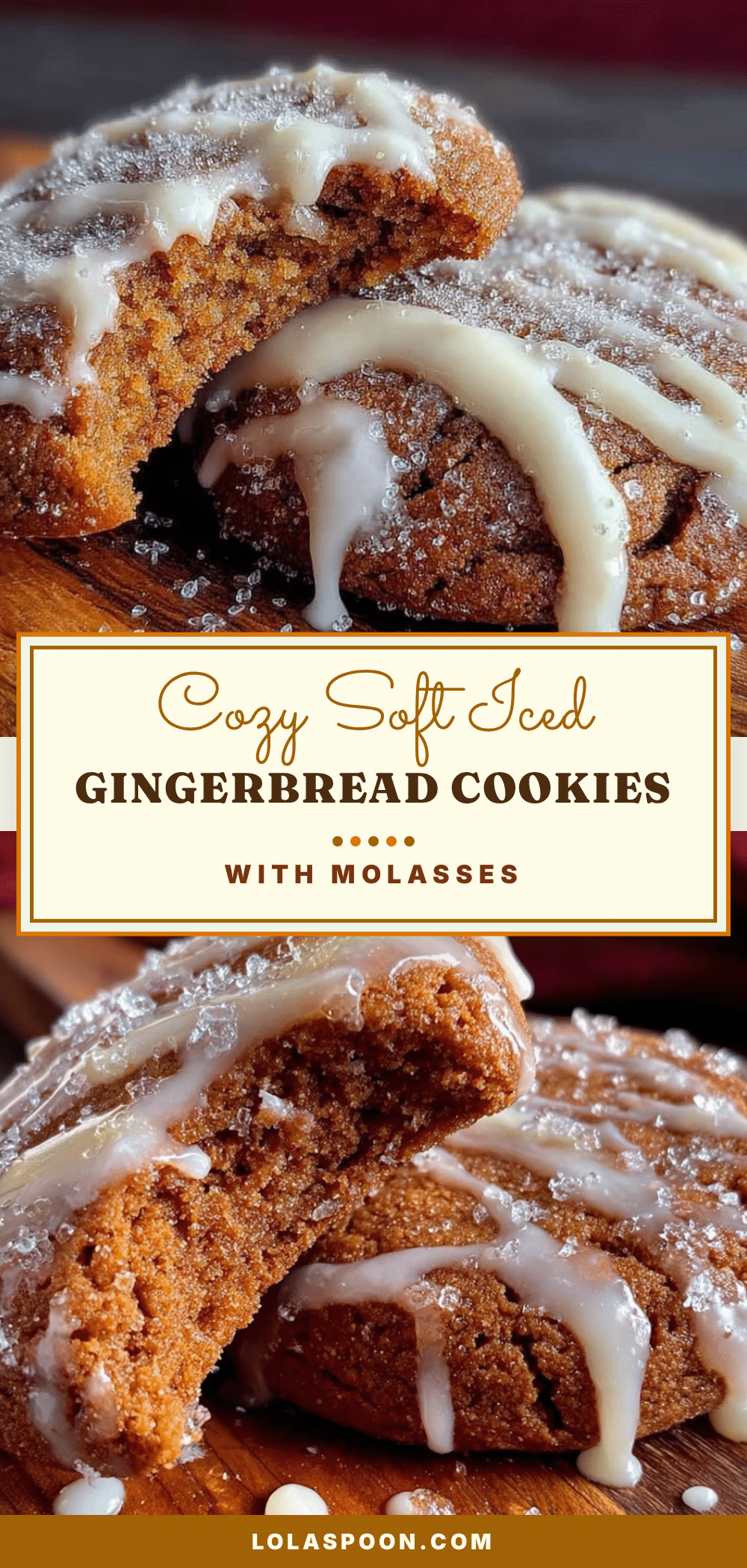
Cozy Soft Iced Gingerbread Cookies with Molasses
These pillowy, cake-like gingerbread cookies are made with melted butter for an extra-soft texture. Topped with a simple vanilla icing, they’re the perfect cozy treat for cold days.
- Prep Time: 15 minutes
- Cook Time: 10 minutes
- Total Time: 25 minutes
- Yield: 24 cookies 1x
- Category: Dessert
- Cuisine: American
Ingredients
- 1/2 cup (113g) unsalted butter, melted and slightly cooled
- 1/2 cup (100g) packed brown sugar (dark or light)
- 1/3 cup (80ml) unsulphured molasses
- 1 large egg, room temperature
- 1 teaspoon pure vanilla extract
- 2 cups (250g) all-purpose flour (unbleached preferred)
- 1 teaspoon baking soda
- 1 teaspoon ground ginger
- 1 teaspoon ground cinnamon (Saigon preferred)
- 1/2 teaspoon ground cloves
- 1/4 teaspoon fine sea salt
- For the Icing:
- 1 cup (120g) powdered sugar, sifted
- 2 tablespoons milk (whole milk preferred)
- 1/2 teaspoon pure vanilla extract
Instructions
- Preheat oven to 350°F (175°C). Line two baking sheets with parchment paper.
- In a small saucepan or microwave-safe bowl, melt 1/2 cup (113g) unsalted butter. Let cool for 2-3 minutes.
- In a large bowl, whisk together melted butter, 1/2 cup (100g) packed brown sugar, and 1/3 cup (80ml) molasses until smooth. Add 1 large egg and 1 teaspoon vanilla extract; whisk until fully combined.
- In a separate bowl, whisk together 2 cups (250g) all-purpose flour, 1 teaspoon baking soda, 1 teaspoon ground ginger, 1 teaspoon ground cinnamon, 1/2 teaspoon ground cloves, and 1/4 teaspoon salt.
- Gradually add dry ingredients to wet mixture, stirring with a rubber spatula until just combined. Do not overmix. Dough will be soft and slightly sticky.
- Using a 1.5-tablespoon cookie scoop, drop rounded balls of dough onto prepared baking sheets, spacing about 2 inches apart.
- Bake for 8-10 minutes, rotating pans halfway through. Cookies should look puffed and set around edges but still soft in center.
- Let cookies cool on baking sheet for 5 minutes, then transfer to a wire rack to cool completely.
- For icing: In a small bowl, whisk together 1 cup (120g) sifted powdered sugar, 2 tablespoons milk, and 1/2 teaspoon vanilla extract until thick but drizzle-able. Add more milk a teaspoon at a time if needed.
- Once cookies are completely cool, drizzle icing over them using a piping bag or zip-top bag with a tiny corner snipped off. Let icing set for about 15 minutes before serving.
Notes
For best results, do not overmix the dough. If dough is too sticky, refrigerate for 10 minutes before scooping. Cookies can be stored in an airtight container at room temperature for up to 5 days. Baked, un-iced cookies can be frozen for up to 3 months. For a vegan version, use melted coconut oil or vegan butter, a flax egg, and plant-based milk in the icing.
Nutrition
- Serving Size: 1 cookie
- Calories: 145
- Sugar: 13
- Sodium: 115
- Fat: 6
- Saturated Fat: 3.5
- Carbohydrates: 22
- Fiber: 0.5
- Protein: 2
Keywords: soft gingerbread cookies, iced gingerbread, molasses cookies, Christmas cookies, easy cookie recipe, no chill cookies