My oldest kid had refused to participate in Christmas cookie decorating for three years. Three years. Every December, I’d lay out the sprinkles, the royal icing, the little star cutters—and every year, she’d take one look at the bowl of dough and announce she was “too busy” reading in her room. I told myself it was fine. Some kids just aren’t into baking, right? Then last December, I caught her. I was cleaning up after yet another solo decorating session, and there she was, standing on a stool at the counter, sneaking pinches of dough out of the bowl I’d left on the counter. “This one doesn’t feel weird,” she said, with a mouthful of raw almond flour dough. “It’s soft. Like play-dough.” That was the moment I knew I’d finally cracked the code. Maybe you’ve been there—that quiet victory when a recipe you tweaked a dozen times finally wins over the toughest critic at your table.
These Kid-Approved Gluten-Free Almond Flour Christmas Sugar Cookies weren’t born from a grand plan. They came from pure desperation—a mom trying to make holiday baking work for a kid with texture sensitivities and a family that needed one less thing to fight about. I’d tried the store-bought gluten-free mixes, the ones that taste like cardboard dust and leave a gritty film on your tongue. I’d tried the fancy recipes from blogs that promised “just like the real thing” but delivered cookies that crumbled before you could get a frosting swirl on them. Honestly, I was about to give up on Christmas cookies altogether. But this version? It changed everything. The dough holds together like a dream, the cookies bake up with those perfect little crackled edges, and the flavor is buttery and sweet without that weird aftertaste. My kid now asks to make them every single weekend in December. I mean, I’ll take it.
Why You’ll Love This Recipe
Let me tell you why this recipe has become the star of our holiday baking rotation. It’s not just another gluten-free cookie—it’s the one that actually works for real families on a budget.
- Quick & Easy: From mixing bowl to oven in under 30 minutes. The dough doesn’t need chilling, which means you can go from “I want cookies” to “cookies are in the oven” with zero waiting around.
- Simple Ingredients: You probably already have almond flour, butter, sugar, and an egg in your kitchen right now. No trips to specialty stores, no weird gums or starches.
- Perfect for Family Baking: The dough is forgiving enough for little hands to roll and cut without falling apart. My three-year-old nephew made a lumpy star last week and it baked up perfectly.
- Crowd-Pleaser: I brought these to a holiday playdate and not one kid—or adult—could tell they were gluten-free. The texture is that good.
- Unbelievably Delicious: The almond flour gives them a naturally sweet, nutty flavor that pairs perfectly with buttercream frosting. They’re soft in the middle with slightly crisp edges.
What makes these different from every other gluten-free cookie out there? It’s the ratio. Most recipes use too much almond flour, which makes cookies greasy and flat. I spent six batches getting the balance right—enough almond flour for structure, but not so much that they spread into sad little puddles. The result is a cookie that holds its shape, tastes like a real sugar cookie, and makes everyone at the table happy. This is comfort food reimagined—healthier, faster, and with the same soul-soothing satisfaction of a classic holiday treat.
What Ingredients You Will Need
This recipe uses simple, wholesome ingredients to deliver that classic sugar cookie flavor without the gluten. Most of these are pantry staples in my house now, and they’re easy to find at any regular grocery store.
- Almond flour – 2 ½ cups (280g), finely ground. I recommend Bob’s Red Mill or Kirkland brand for the best texture. Look for “super-fine” almond flour, not almond meal, which has a coarser texture.
- Unsalted butter – ½ cup (113g), softened to room temperature. Salted butter works too, just reduce the added salt to ¼ teaspoon.
- Granulated sugar – ¾ cup (150g). You can use coconut sugar for a less processed option, but the cookies will be darker and slightly less sweet.
- Large egg – 1, at room temperature. If you forget to take it out of the fridge, place it in a bowl of warm water for 5 minutes.
- Vanilla extract – 1 teaspoon, pure vanilla if you have it. Imitation works fine in a pinch.
- Almond extract – ½ teaspoon (optional but recommended). This gives the cookies that classic sugar cookie flavor that makes everyone ask for the recipe.
- Baking powder – 1 teaspoon, aluminum-free if possible.
- Salt – ¼ teaspoon, fine sea salt or table salt.
For the frosting:
- Powdered sugar – 1 ½ cups (180g), sifted to avoid lumps.
- Unsalted butter – ¼ cup (57g), softened.
- Milk – 2-3 tablespoons, any kind works. Start with 2 and add more for desired consistency.
- Vanilla extract – ½ teaspoon.
- Food coloring – Gel or liquid, for decorating. I prefer gel colors for more vibrant shades without thinning the frosting.
Ingredient selection tips: For the best results, make sure your almond flour is fresh—stale almond flour can taste bitter. Store it in the freezer if you don’t bake often. If you’re on a tight budget, check the bulk bins at your grocery store; they often sell almond flour for less than the packaged versions.
Equipment Needed
You don’t need fancy equipment for these cookies, which is part of why I love this recipe. Here’s what you’ll need:
- Mixing bowls – One large, one medium. I use glass or stainless steel because they don’t retain odors.
- Hand mixer or stand mixer – A hand mixer works perfectly. A stand mixer with the paddle attachment is great if you have one, but not necessary.
- Rolling pin – I use a standard wooden rolling pin. If you don’t have one, a wine bottle works in a pinch—just wrap it in plastic wrap first.
- Cookie cutters – Christmas shapes like stars, trees, and snowflakes. I found a set of 10 at the dollar store that works great.
- Baking sheets – 2 large, light-colored ones. Dark sheets can cause the bottoms to brown too quickly.
- Parchment paper – Essential for easy cleanup and preventing sticking. Silicone baking mats work too.
- Cooling rack – Wire rack for cooling cookies completely before frosting.
- Spatula – A thin metal spatula is best for transferring cut cookies to the baking sheet.
Budget-friendly tip: If you don’t have a rolling pin, you can press the dough flat with your hands or use a flat-bottomed drinking glass. I’ve done both when my rolling pin went missing during a move.
Preparation Method
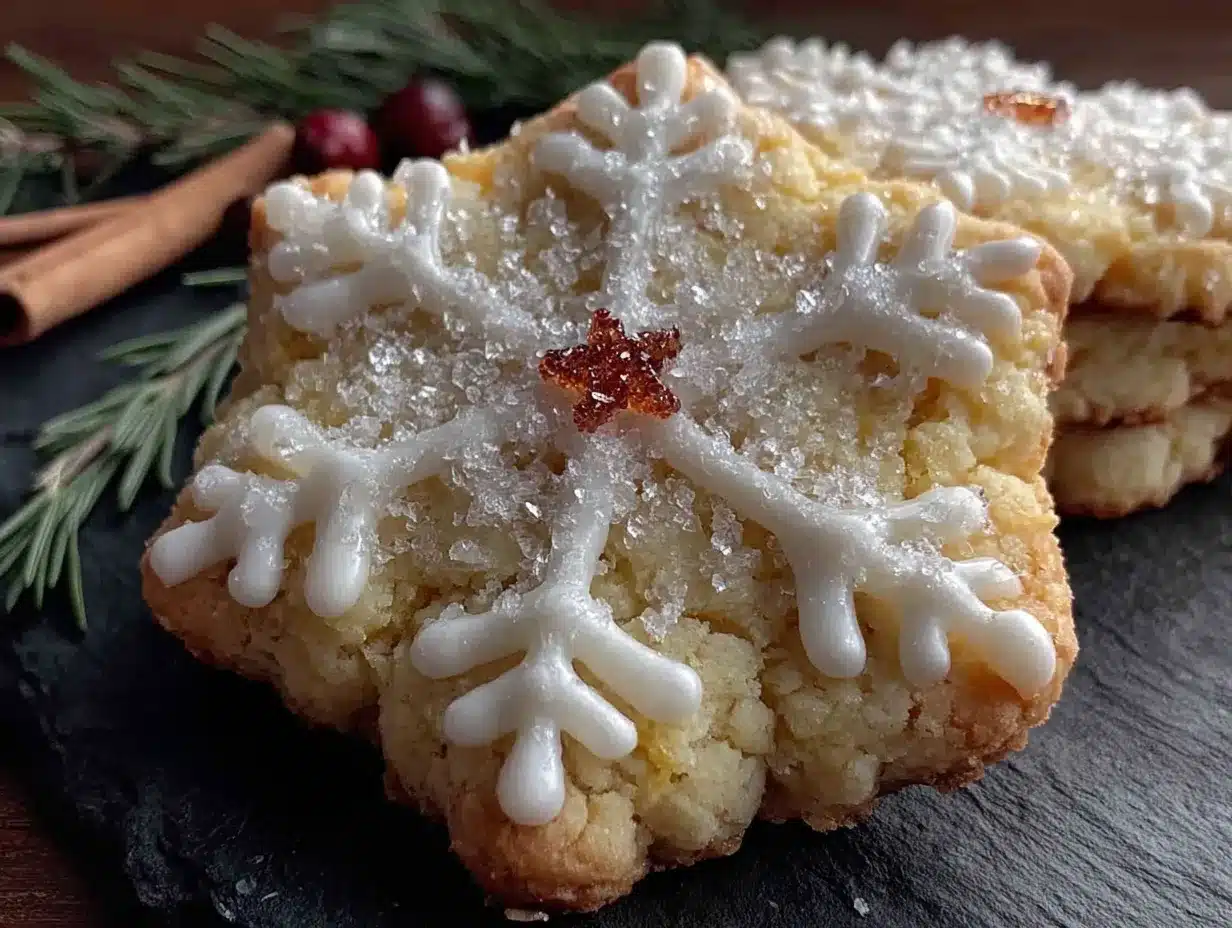
- Preheat your oven to 350°F (175°C). Line two baking sheets with parchment paper. This step is non-negotiable—the parchment prevents sticking and makes cleanup a breeze.
- Cream the butter and sugar. In a large mixing bowl, beat the softened butter and granulated sugar together until light and fluffy, about 2-3 minutes. You’ll know it’s ready when the mixture looks pale and has a texture like soft sand. Scrape down the sides of the bowl once during mixing.
- Add the egg and extracts. Crack the egg into the butter mixture, then add the vanilla extract and almond extract (if using). Beat on medium speed until fully combined, about 30 seconds. The mixture might look a little separated—that’s okay.
- Mix the dry ingredients. In a separate medium bowl, whisk together the almond flour, baking powder, and salt. Make sure there are no clumps of almond flour. Almond flour tends to clump, so break them up with your fingers if needed.
- Combine wet and dry. Gradually add the dry ingredients to the wet mixture, mixing on low speed until a soft dough forms. The dough will be slightly sticky but should hold together when pressed. If it feels too wet, add an extra tablespoon of almond flour. If it’s too dry, add a teaspoon of milk.
- Roll out the dough. Place the dough between two sheets of parchment paper. Roll it out to about ¼-inch thickness. This method prevents sticking without adding extra flour, which can dry out the cookies. If the dough cracks at the edges, just press it back together with your fingers.
- Cut the shapes. Use your cookie cutters to press out shapes. Dip the cutters in a little almond flour if they stick. Place the cut cookies on the prepared baking sheets, spacing them about 1 inch apart. They don’t spread much, so you can fit quite a few on each sheet.
- Bake. Bake for 8-10 minutes, or until the edges are just barely golden. The centers will look slightly underdone—that’s perfect. Overbaking makes them dry. Let them cool on the baking sheet for 5 minutes, then transfer to a wire rack to cool completely.
- Make the frosting. While the cookies cool, beat the softened butter and powdered sugar together until smooth. Add milk one tablespoon at a time until the frosting reaches a spreadable consistency. Stir in the vanilla extract. Divide into bowls and add food coloring as desired.
- Decorate. Once the cookies are completely cool, spread or pipe the frosting onto them. Add sprinkles immediately before the frosting sets. Let the frosting harden for about 30 minutes before stacking or storing.
Personal tip: I learned the hard way that rolling the dough too thin makes the cookies fragile. Stick to that ¼-inch thickness for cookies that hold their shape and don’t crumble when you bite into them.
Cooking Tips & Techniques
After making these cookies probably fifty times, I’ve picked up a few tricks that make the process smoother and the results more consistent.
Don’t overmix the dough. I know it’s tempting to keep beating until everything looks perfectly smooth, but overmixing develops the almond flour’s natural oils and makes the cookies greasy. Mix just until the flour disappears into the butter mixture, then stop.
Chill if you have time. While the dough doesn’t require chilling, popping it in the fridge for 15 minutes makes it even easier to handle. The butter firms up just enough that the cutters slice through cleanly without sticking. On busy days, I skip this step and it still works fine.
Watch the bake time like a hawk. Almond flour cookies brown faster than wheat flour cookies because of the natural sugars in the almonds. I set my timer for 8 minutes and check them. If they need more time, I add it in 1-minute increments. The difference between perfect and overbaked is literally 60 seconds.
Use a ruler for even cookies. This sounds fussy, but I promise it’s worth it. I use a wooden ruler to check my dough thickness before cutting. Even thickness means even baking—no more burnt edges on thin spots.
Let them cool completely. I once frosted cookies that were still slightly warm, and the frosting melted into a sad, runny mess. Patience pays off here. Give them a full 30 minutes on the cooling rack before you touch them with frosting.
Variations & Adaptations
One of the best things about this recipe is how adaptable it is. Here are some variations I’ve tried that turned out great:
- Chocolate version: Replace ¼ cup of almond flour with ¼ cup of unsweetened cocoa powder. The cookies come out darker with a rich chocolate flavor that pairs beautifully with vanilla frosting.
- Vegan adaptation: Swap the butter for vegan butter (I like Earth Balance) and use a flax egg (1 tablespoon ground flaxseed mixed with 3 tablespoons water, let sit for 5 minutes). The texture is slightly less tender but still delicious.
- Citrus twist: Add 1 teaspoon of lemon or orange zest to the dough along with the vanilla. The bright citrus flavor cuts through the richness and makes the cookies taste extra festive.
- Spiced sugar cookies: Add ½ teaspoon of cinnamon, ¼ teaspoon of nutmeg, and a pinch of cloves to the dry ingredients. These taste like Christmas in a bite and don’t even need frosting.
- Nut-free option: Substitute the almond flour with an equal amount of gluten-free all-purpose flour blend. The texture will be slightly different—more like a traditional sugar cookie—but still delicious. Add 1 extra tablespoon of butter for moisture.
Serving & Storage Suggestions
These cookies are best served at room temperature with a glass of cold milk or a warm cup of tea. For holiday gatherings, I arrange them on a festive platter with the frosted sides facing up so everyone can see the decorations.
Storage: Keep unfrosted cookies in an airtight container at room temperature for up to 5 days. They stay soft and chewy the whole time. Frosted cookies should be stored in a single layer (or between layers of parchment paper) to prevent the designs from smudging.
Freezer instructions: These cookies freeze beautifully. Freeze unfrosted cookies in a single layer on a baking sheet, then transfer to a freezer bag for up to 3 months. Thaw at room temperature for 30 minutes before frosting. You can also freeze the dough—roll it out between parchment sheets, wrap tightly in plastic wrap, and freeze for up to 2 months. Thaw in the fridge overnight before cutting and baking.
Flavor development note: The almond flavor actually deepens after a day or two. I’ve found these cookies taste even better on day two, so don’t stress about baking them the same day you plan to serve them.
Nutritional Information & Benefits
These cookies are a healthier twist on traditional sugar cookies, thanks to the almond flour base. Here’s a rough estimate per cookie (without frosting):
| Nutrient | Amount per cookie |
|---|---|
| Calories | 120 |
| Total Fat | 9g |
| Saturated Fat | 3.5g |
| Carbohydrates | 9g |
| Fiber | 2g |
| Protein | 3g |
| Sugar | 6g |
Health benefits: Almond flour is rich in vitamin E, magnesium, and healthy monounsaturated fats. It has a lower glycemic index than wheat flour, which means these cookies won’t spike your blood sugar as dramatically. They’re also naturally gluten-free, making them safe for anyone with celiac disease or gluten sensitivity. Just be aware that they contain tree nuts and dairy, so they’re not suitable for those with allergies to those ingredients.
I personally love that I can let my kids have a couple of these without worrying about a sugar crash later. They’re a treat, yes, but a more balanced one than the standard version.
Conclusion
These Kid-Approved Gluten-Free Almond Flour Christmas Sugar Cookies have become a non-negotiable part of our holiday tradition. They’re the cookie that brought my daughter back to the kitchen, the recipe that proved gluten-free baking can be just as good—if not better—than the original. The dough is forgiving, the flavor is spot-on, and the decorating possibilities are endless.
I’d love to hear how these turn out for you. Did your kids help cut the shapes? Did you try the citrus version or the spiced one? Drop a comment below and let me know—I read every single one. And if you’re looking for another family-friendly holiday treat, you might enjoy my crispy garlic chicken for a savory break from all the sweets. Happy baking, friends. May your cookies be golden, your frosting be smooth, and your kitchen be full of happy, flour-dusted faces.
Frequently Asked Questions
Can I use coconut flour instead of almond flour?
No, coconut flour absorbs much more liquid and would require a completely different ratio of ingredients. Stick with almond flour for this recipe, or use a gluten-free all-purpose flour blend if you need a substitute.
Why did my cookies spread too much?
This usually happens if the butter was too soft or the dough wasn’t chilled. Make sure your butter is softened but not melted, and pop the rolled-out dough in the fridge for 10 minutes before cutting if your kitchen is warm.
Can I make these cookies dairy-free?
Absolutely. Use vegan butter in the same amount as regular butter. For the frosting, use dairy-free milk (like oat or almond milk) and vegan butter. The texture will be slightly different but still delicious.
How do I get clean edges on my cut-out shapes?
Dip your cookie cutters in almond flour before each cut. This prevents the dough from sticking to the cutter and pulling up the edges. Also, make sure your dough is evenly rolled to ¼-inch thickness.
Can I freeze the frosted cookies?
I don’t recommend it. The frosting can become grainy or separate when thawed. Instead, freeze unfrosted cookies and frost them after they’ve thawed. The cookies themselves freeze beautifully for up to 3 months.
Pin This Recipe!
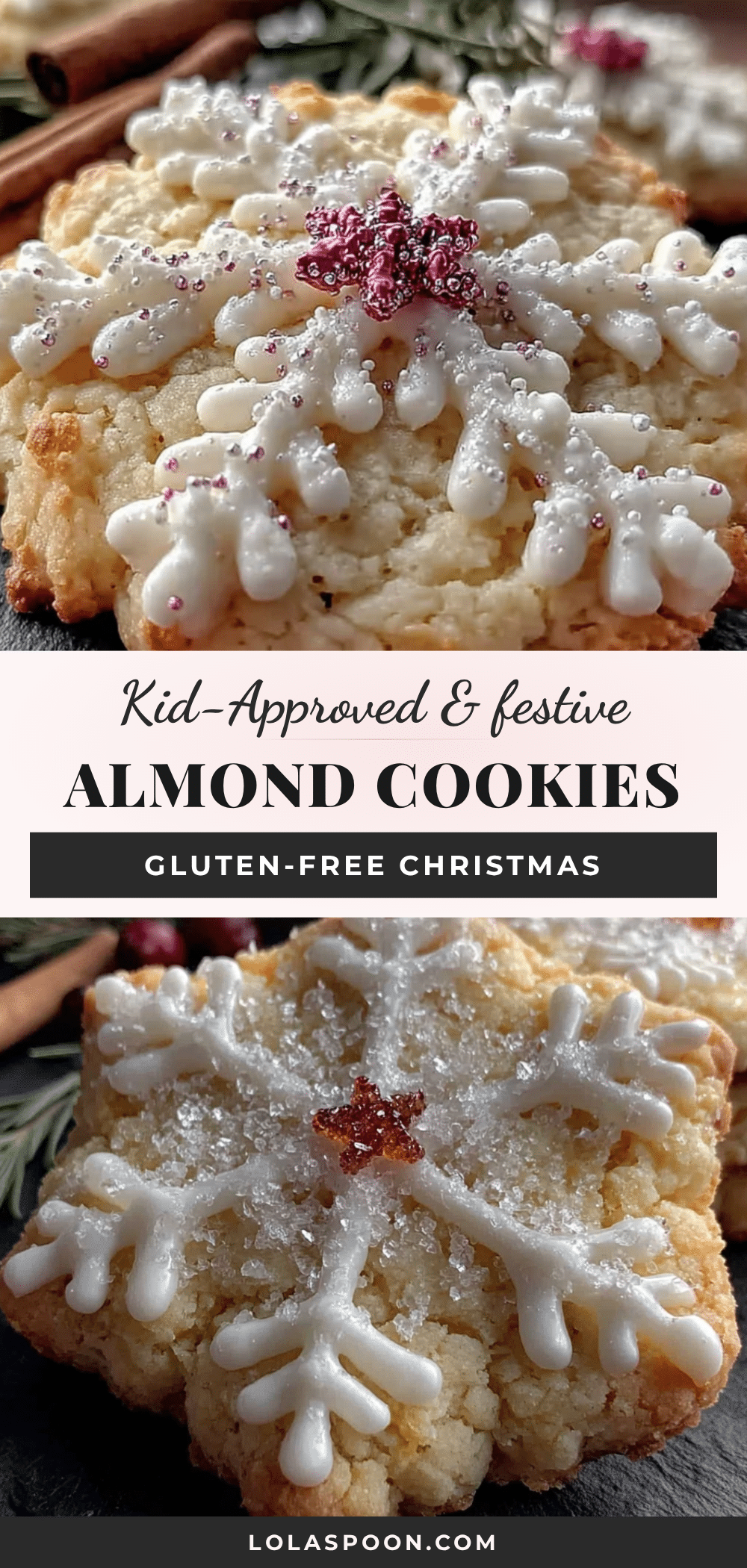
Best Kid-Approved Gluten-Free Almond Flour Christmas Sugar Cookies
These gluten-free almond flour sugar cookies are soft, buttery, and perfect for holiday decorating. Made with simple ingredients and no chilling required, they’re a crowd-pleaser that even picky eaters love.
- Prep Time: 20 minutes
- Cook Time: 10 minutes
- Total Time: 30 minutes
- Yield: 24 servings 1x
- Category: Dessert
- Cuisine: American
Ingredients
- 2 ½ cups (280g) finely ground almond flour
- ½ cup (113g) unsalted butter, softened
- ¾ cup (150g) granulated sugar
- 1 large egg, at room temperature
- 1 teaspoon vanilla extract
- ½ teaspoon almond extract (optional)
- 1 teaspoon baking powder
- ¼ teaspoon salt
- For the frosting:
- 1 ½ cups (180g) powdered sugar, sifted
- ¼ cup (57g) unsalted butter, softened
- 2–3 tablespoons milk
- ½ teaspoon vanilla extract
- Food coloring (gel or liquid)
Instructions
- Preheat your oven to 350°F (175°C). Line two baking sheets with parchment paper.
- In a large mixing bowl, beat the softened butter and granulated sugar together until light and fluffy, about 2-3 minutes. Scrape down the sides of the bowl once during mixing.
- Add the egg, vanilla extract, and almond extract (if using). Beat on medium speed until fully combined, about 30 seconds.
- In a separate medium bowl, whisk together the almond flour, baking powder, and salt. Break up any clumps with your fingers if needed.
- Gradually add the dry ingredients to the wet mixture, mixing on low speed until a soft dough forms. If too wet, add an extra tablespoon of almond flour; if too dry, add a teaspoon of milk.
- Place the dough between two sheets of parchment paper. Roll it out to about ¼-inch thickness.
- Use cookie cutters to press out shapes. Dip the cutters in a little almond flour if they stick. Place the cut cookies on the prepared baking sheets, spacing them about 1 inch apart.
- Bake for 8-10 minutes, or until the edges are just barely golden. Let them cool on the baking sheet for 5 minutes, then transfer to a wire rack to cool completely.
- While the cookies cool, make the frosting: Beat the softened butter and powdered sugar together until smooth. Add milk one tablespoon at a time until the frosting reaches a spreadable consistency. Stir in the vanilla extract. Divide into bowls and add food coloring as desired.
- Once the cookies are completely cool, spread or pipe the frosting onto them. Add sprinkles immediately before the frosting sets. Let the frosting harden for about 30 minutes before stacking or storing.
Notes
The dough doesn’t require chilling, but refrigerating for 15 minutes makes it easier to handle. Watch bake time closely—almond flour cookies brown quickly. For best results, roll dough to exactly ¼-inch thickness. Cookies taste even better on day two as the almond flavor deepens.
Nutrition
- Serving Size: 1 cookie (without fr
- Calories: 120
- Sugar: 6
- Sodium: 50
- Fat: 9
- Saturated Fat: 3.5
- Carbohydrates: 9
- Fiber: 2
- Protein: 3
Keywords: gluten-free cookies, almond flour cookies, Christmas cookies, sugar cookies, kid-friendly, holiday baking, gluten-free dessert