I’m not supposed to have favorites when it comes to recipes, but let’s be honest—we all do. This one earned its spot on a random Tuesday three winters ago, during what my friend Jen called “the jerky incident.” The hunting season had been good, maybe too good. My freezer was overflowing with venison roasts, and I needed a plan, fast. I’d been scrolling through jerky recipes for an hour, everything looking the same—salty, boring, predictable. Then I spotted a note in my grandmother’s handwriting tucked inside an old cookbook: “add brown sugar, trust me.” So I did. I threw together this smoky brown sugar deer jerky recipe on a whim, not expecting much, honestly. The kitchen filled with this incredible sweet-smoky smell that made my neighbor knock on the door asking what on earth I was cooking. I mean, I almost burned the first batch because I got distracted, but that accident taught me something important about timing. The result? Jerky that disappeared faster than anything I’d ever made. My husband ate half the batch before I could bag it up. This recipe is the one I keep coming back to, year after year, because it just works.
Why You’ll Love This Recipe
Look, I’ve tested a lot of jerky recipes over the years. Some are too salty, some are too dry, and some just taste like you’re chewing on leather. This smoky brown sugar deer jerky recipe hits that perfect sweet-savory balance that keeps you reaching for another piece. Here’s why it stands out:
- Quick & Easy: From start to finish, you’re looking at about 6-8 hours total, but most of that is inactive marinating and drying time. Actual hands-on work? Maybe 20 minutes.
- Simple Ingredients: No weird preservatives or hard-to-find items. You probably have most of this in your pantry right now.
- Perfect for Hunters: If you’ve got a freezer full of venison, this is the best way to use up those roasts and steaks that might otherwise sit there forever.
- Crowd-Pleaser: I brought a bag to a Super Bowl party last year, and people who swore they didn’t like venison were asking for the recipe.
- Unbelievably Delicious: The combination of smoky paprika, rich brown sugar, and that natural venison flavor creates something truly addictive.
This isn’t just another jerky recipe you’ll find online. The trick here is using the right balance of brown sugar to create that caramelized exterior without making it candy-sweet. Plus, the liquid smoke gives it that authentic campfire taste without actually needing a smoker. It’s comfort food in jerky form—the kind that makes you close your eyes after the first bite and remember why you love cooking with wild game.
What Ingredients You Will Need
This recipe uses simple, wholesome ingredients that work together to create that perfect sweet-savory profile. Most of these are pantry staples, which makes this recipe incredibly accessible even on short notice.
- 2 pounds venison roast or steak – sliced against the grain into ¼-inch strips (flank or top round work best for tender jerky)
- ½ cup brown sugar – packed firmly (dark brown sugar gives deeper flavor, but light works fine too)
- ⅓ cup soy sauce – use low-sodium if you’re watching salt (I prefer Kikkoman for consistent results)
- ¼ cup Worcestershire sauce – adds that umami depth (Lea & Perrins is my go-to)
- 2 tablespoons liquid smoke – hickory flavor is ideal (adds that campfire taste without a smoker)
- 1 tablespoon smoked paprika – not regular paprika, the smoked kind makes a huge difference
- 1 teaspoon garlic powder – not garlic salt, we’re controlling the salt ourselves
- 1 teaspoon onion powder – adds savory depth without overpowering
- 1 teaspoon black pepper – freshly ground if possible
- ½ teaspoon red pepper flakes – optional, but I love the little kick (adjust to your heat tolerance)
- ½ teaspoon curing salt – Prague powder #1 or pink curing salt (helps with preservation and gives that classic jerky color)
For the best texture, look for venison roasts that have minimal connective tissue. The silver skin can make your jerky tough, so trim it off before slicing. If you’re using meat from a mature buck, the flavor will be stronger, so you might want to add an extra tablespoon of brown sugar to balance it out. I’ve also made this with elk and moose meat, and it works beautifully—just adjust the marinating time based on the thickness of your slices.
Equipment Needed
You don’t need a fancy setup to make amazing jerky at home. Here’s what you’ll need:
- Sharp knife – a good chef’s knife or slicing knife makes cutting even strips so much easier
- Cutting board – preferably one with a groove to catch juices
- Large mixing bowl – for combining the marinade and meat
- Ziplock bag or glass container – for marinating (I prefer glass because plastic can absorb smells)
- Dehydrator – this is my preferred method (I use an Excalibur, but any model works)
- Oven – if you don’t have a dehydrator, your oven works just fine
- Baking sheets – with wire racks if using the oven method
- Paper towels – for patting the meat dry before marinating
- Parchment paper or silicone mats – for easy cleanup
- Airtight containers or vacuum sealer – for storing the finished jerky
If you’re using an oven, just prop the door open slightly with a wooden spoon to let moisture escape. I learned that trick after my first attempt turned out more steamed than dried. A dehydrator is more consistent, but honestly, the oven method works great if you’re patient and watch the temperature.
Preparation Method
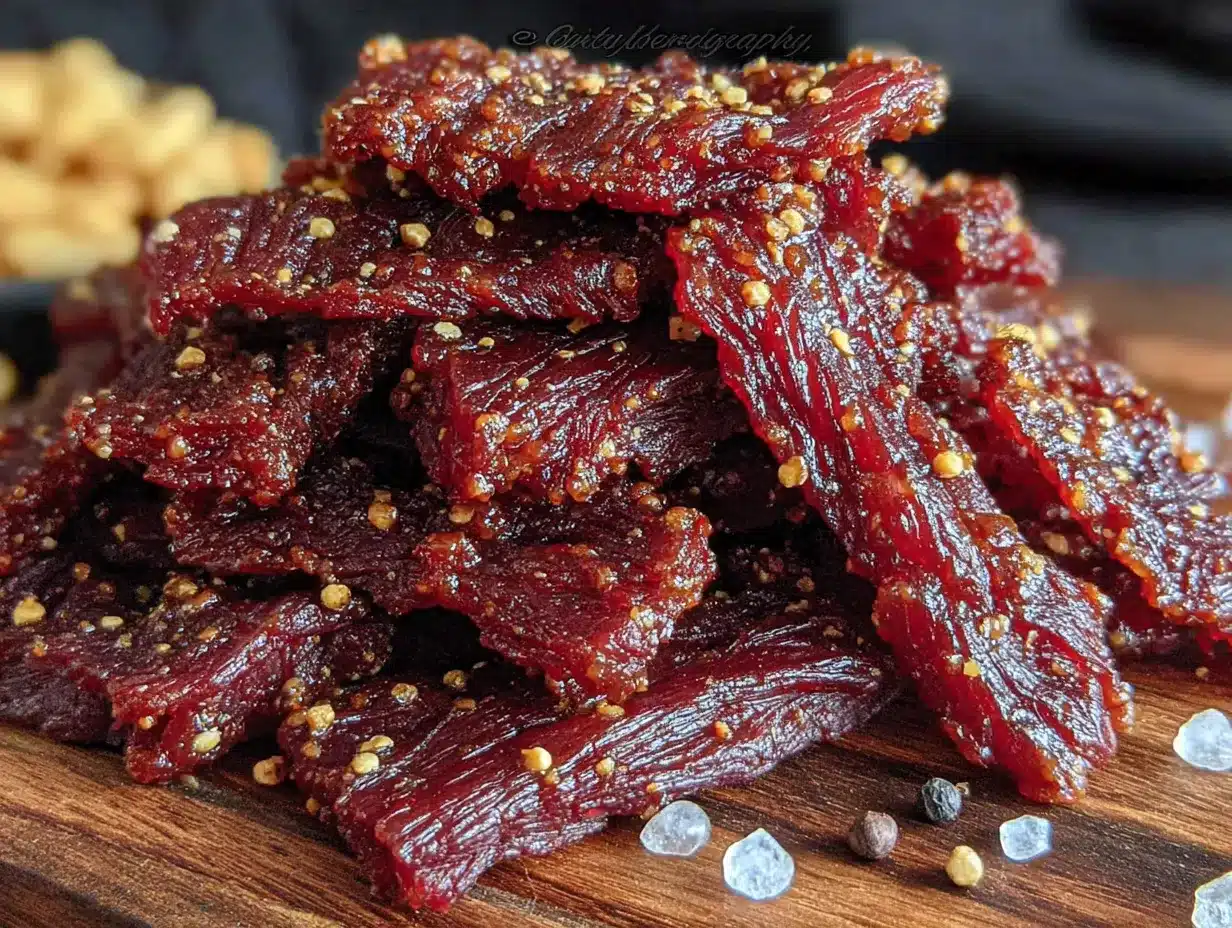
Let me walk you through this step by step. I’ve made this so many times that I could do it in my sleep, but I’ll share all the little details that make the difference between good jerky and great jerky.
- Prep the meat (10 minutes): Place your venison roast in the freezer for about 1-2 hours until it’s partially frozen. This makes slicing so much easier. You want it firm but not rock solid. Slice against the grain into ¼-inch thick strips. If you slice with the grain, your jerky will be chewier—some people prefer that, but I like it tender enough to bite through easily. Trim any silver skin or fat as you go, since fat can go rancid during storage.
- Make the marinade (5 minutes): In a large bowl, whisk together the brown sugar, soy sauce, Worcestershire sauce, liquid smoke, smoked paprika, garlic powder, onion powder, black pepper, red pepper flakes, and curing salt. Make sure the brown sugar dissolves as much as possible. I’ve found that using warm liquid helps this process, so I sometimes microwave the soy sauce for 15 seconds before mixing.
- Marinate the meat (8-24 hours): Place your venison strips in a large ziplock bag or glass container. Pour the marinade over the meat, making sure every piece is coated. Squeeze out as much air as possible from the bag, then massage it gently to distribute the marinade. Refrigerate for at least 8 hours, but 24 hours is better for deeper flavor. I usually start this the night before I plan to dehydrate.
- Prepare for drying (10 minutes): Remove the meat from the refrigerator. Drain off the excess marinade, but don’t rinse the meat—you want that flavor clinging to the surface. Pat the strips dry with paper towels. This step is crucial because excess moisture will extend your drying time significantly. Arrange the strips in a single layer on your dehydrator trays or oven racks, leaving space between each piece for air circulation.
- Dehydrate or oven-dry (4-6 hours): If using a dehydrator, set it to 155°F (68°C). If using an oven, preheat to the lowest setting—usually around 170°F (77°C)—and prop the door open slightly. Dry for 4-6 hours, checking periodically. The jerky is done when it bends and cracks but doesn’t break cleanly in half. It should feel dry to the touch but still have some flexibility. Overdrying makes it brittle, so start checking at the 4-hour mark.
- Cool and condition (2-4 hours): This is the step most people skip, and it makes a difference. Let the jerky cool completely at room temperature. Then place it in a paper bag or loosely covered container for 2-4 hours. This allows the moisture to redistribute evenly throughout the pieces. I learned this from an old-timer at a hunting expo, and it really does improve the texture.
Cooking Tips & Techniques
After making this smoky brown sugar deer jerky recipe more times than I can count, I’ve picked up a few tricks that make the process smoother and the results better.
Watch your temperature carefully. I ruined my first few batches by getting impatient and cranking up the heat. Jerky needs low, consistent heat to dry properly without cooking the meat. If your dehydrator runs hot, check it with an oven thermometer. Some models can be off by 10-15 degrees.
Don’t overcrowd the trays. I know it’s tempting to pack as much meat as possible, but air needs to circulate around each piece. Leave at least a half-inch gap between strips. If you’re making a big batch, just run multiple cycles rather than cramming everything in at once.
Test for doneness properly. The bend test is your best friend. Take a piece that looks done and bend it. If it cracks but doesn’t snap in half, it’s perfect. If it bends like a noodle, it needs more time. If it shatters, you’ve gone too far. Write down your drying time for future reference, since humidity and meat thickness affect it.
Seasoning adjustments matter. Venison from different animals can vary in flavor intensity. A young doe will have milder meat than a mature buck. Taste your marinade before adding the meat—if it seems too sweet, add a splash more soy sauce. If it’s too salty, add more brown sugar. Trust your palate.
Variations & Adaptations
This recipe is incredibly versatile, and I’ve experimented with several variations over the years. Here are some of my favorites:
- Spicy Maple Version: Replace the brown sugar with maple syrup and add an extra teaspoon of red pepper flakes. The maple gives a different kind of sweetness that pairs beautifully with the smoky flavor. I made this for a friend who’s from Vermont, and she said it reminded her of home.
- Teriyaki Twist: Add 2 tablespoons of honey and 1 teaspoon of grated fresh ginger to the marinade. Omit the liquid smoke and paprika. This gives you a more Asian-inspired flavor profile that’s perfect for snacking or adding to stir-fries.
- Pepper-Crusted Version: After marinating, press coarsely ground black pepper and crushed red pepper into both sides of each strip before drying. This creates a spicy crust that contrasts beautifully with the sweet brown sugar base.
- Deer Jerky Without Curing Salt: If you’re planning to eat the jerky within a week or freeze it, you can skip the curing salt. Just increase your drying time slightly and store it in the refrigerator. The texture won’t be quite the same, but it still tastes amazing.
- Gluten-Free Adaptation: Use tamari or coconut aminos instead of soy sauce, and double-check that your Worcestershire sauce is gluten-free. Lea & Perrins is gluten-free in most countries, but always verify the label.
Serving & Storage Suggestions
This jerky is best served at room temperature, which makes it perfect for on-the-go snacking. I like to arrange pieces on a wooden board with sharp cheddar cheese, apple slices, and some whole-grain crackers for a simple but impressive appetizer. It’s also fantastic crumbled over salads or added to trail mix for a protein boost.
Storage tips that actually work: Once your jerky is completely cool, store it in an airtight container. I use mason jars with oxygen absorbers for long-term storage. In the pantry, it’ll keep for 2-3 weeks. In the refrigerator, it lasts 1-2 months. For really long storage, vacuum-seal it and freeze it—it’ll stay good for up to a year.
Here’s something I learned the hard way: don’t store jerky in plastic bags unless you’re going to eat it within a few days. The moisture that naturally remains can cause mold to develop. Airtight glass containers or vacuum-sealed bags are much better options.
The flavor actually improves after a day or two of storage as the seasonings continue to meld. I always try to save at least one bag for a week later, just to experience how the flavors deepen. It never lasts that long in my house, but I keep trying.
Nutritional Information & Benefits
This smoky brown sugar deer jerky is packed with protein and relatively low in fat, making it a smart snack choice. Here’s the approximate nutritional breakdown per 1-ounce serving (about 4-5 pieces):
| Nutrient | Amount |
|---|---|
| Calories | 85 |
| Protein | 15g |
| Fat | 2g |
| Carbohydrates | 6g |
| Sugar | 5g |
| Sodium | 350mg |
Venison is naturally leaner than beef, with about half the fat content. It’s also rich in iron, zinc, and B vitamins, which support energy metabolism and immune function. The brown sugar adds carbohydrates for quick energy, making this jerky an excellent hiking or camping snack.
If you’re watching your sodium intake, use low-sodium soy sauce and reduce the curing salt. The jerky won’t last as long without proper preservation, but it’s fine for immediate consumption. This recipe is naturally gluten-free with the right substitutions and contains no artificial preservatives beyond the optional curing salt.
Conclusion
This smoky brown sugar deer jerky recipe has become a staple in my kitchen for good reason. It transforms humble venison into something truly special—sweet, smoky, savory, and completely addictive. Whether you’re a seasoned hunter with a freezer full of meat or someone who just picked up some venison from a local farmer, this recipe will make you look like a pro.
Don’t be afraid to play with the seasonings and make it your own. Maybe you want more heat, or maybe you prefer a milder sweetness. That’s the beauty of homemade jerky—you control every element. I’d love to hear how yours turns out. Drop a comment below and let me know what variations you tried. And if you’re looking for more ways to use your venison, check out my venison chili recipe for another family favorite.
Happy snacking, and remember—the best jerky is the one you share with the people you love. Even if that means hiding a bag for yourself first!
Frequently Asked Questions
Can I use beef instead of venison for this recipe?
Absolutely. This marinade works beautifully with beef, especially lean cuts like top round or flank steak. Just adjust your drying time slightly since beef can be a bit denser than venison.
How do I know when the jerky is done drying?
Use the bend test. Take a piece that looks dry and bend it. It should crack on the surface but not break in half. If it’s still pliable like a noodle, it needs more time. If it snaps cleanly, it’s overdone.
Do I really need curing salt?
Not if you’re eating the jerky within a week or storing it in the freezer. Curing salt helps prevent bacterial growth and gives jerky that classic pink color and longer shelf life. For short-term storage, you can skip it.
Why is my jerky tough and chewy?
You might be slicing with the grain instead of against it. Slicing against the grain breaks up the muscle fibers, making the jerky easier to chew. Also, make sure you’re not overdrying—check for doneness earlier than you think you need to.
Can I make this in a smoker instead of a dehydrator?
Yes, and the results are incredible. Set your smoker to 160-180°F and use hickory or applewood chips. The drying time will be similar, but you’ll get even more smoky flavor. Just watch the temperature closely so you don’t cook the meat instead of drying it.
Pin This Recipe!
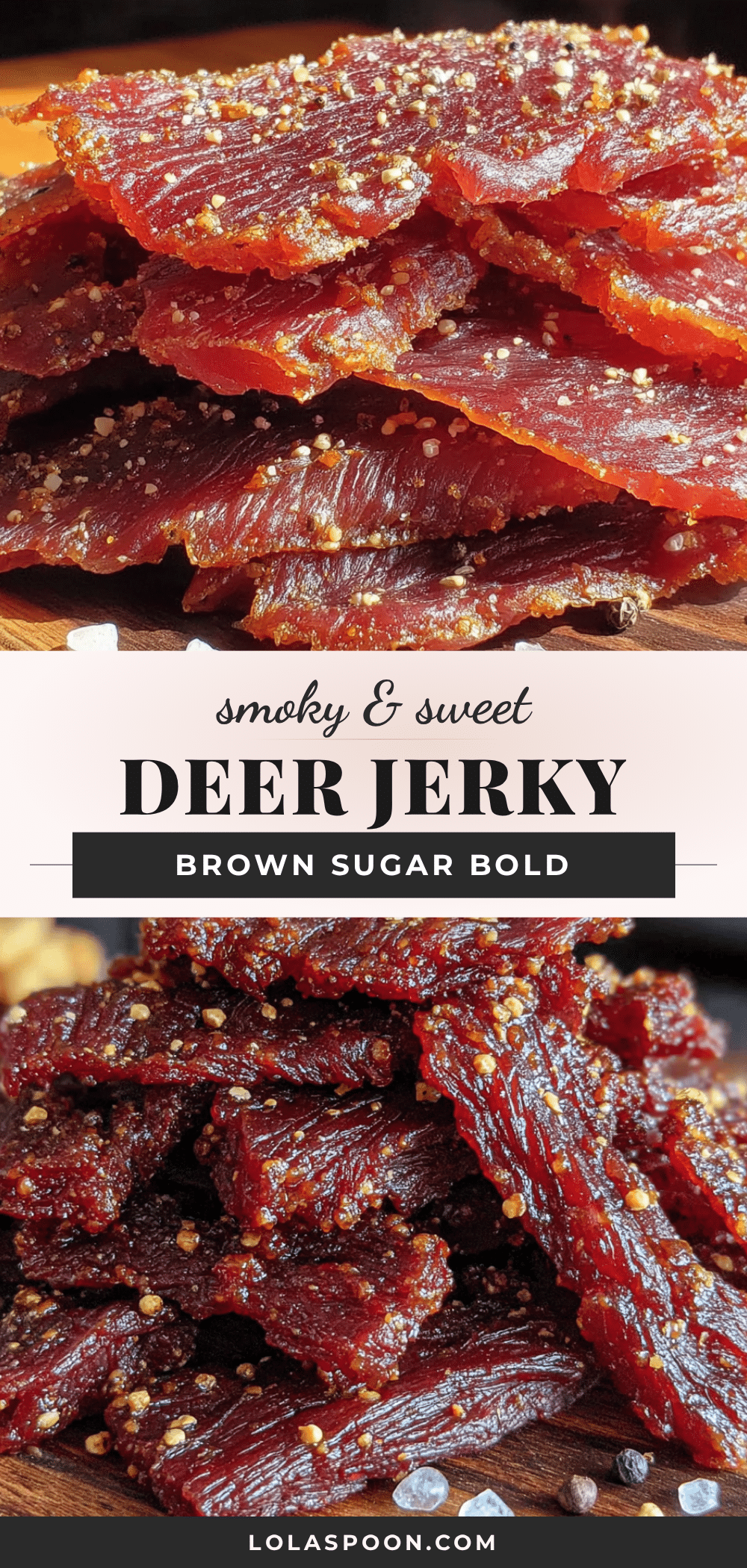
Smoky Brown Sugar Deer Jerky Recipe: Easy, Sweet & Savory
This smoky brown sugar deer jerky recipe transforms humble venison into a sweet, savory, and addictive snack. With a perfect balance of brown sugar and smoky paprika, it’s a crowd-pleaser that’s quick and easy to make.
- Prep Time: 20 minutes
- Cook Time: 4-6 hours
- Total Time: 6-8 hours (including marinating and conditioning)
- Yield: About 8-10 servings 1x
- Category: Snack
- Cuisine: American
Ingredients
- 2 pounds venison roast or steak, sliced against the grain into ¼-inch strips
- ½ cup brown sugar, packed firmly
- ⅓ cup soy sauce (low-sodium if preferred)
- ¼ cup Worcestershire sauce
- 2 tablespoons liquid smoke (hickory flavor)
- 1 tablespoon smoked paprika
- 1 teaspoon garlic powder
- 1 teaspoon onion powder
- 1 teaspoon black pepper, freshly ground
- ½ teaspoon red pepper flakes (optional)
- ½ teaspoon curing salt (Prague powder #1 or pink curing salt)
Instructions
- Prep the meat (10 minutes): Place venison roast in the freezer for 1-2 hours until partially frozen. Slice against the grain into ¼-inch thick strips. Trim any silver skin or fat.
- Make the marinade (5 minutes): In a large bowl, whisk together brown sugar, soy sauce, Worcestershire sauce, liquid smoke, smoked paprika, garlic powder, onion powder, black pepper, red pepper flakes, and curing salt until sugar dissolves.
- Marinate the meat (8-24 hours): Place venison strips in a ziplock bag or glass container. Pour marinade over meat, ensuring all pieces are coated. Squeeze out air, seal, and refrigerate for at least 8 hours (24 hours for deeper flavor).
- Prepare for drying (10 minutes): Remove meat from refrigerator. Drain excess marinade (do not rinse). Pat strips dry with paper towels. Arrange in a single layer on dehydrator trays or oven racks, leaving space between pieces.
- Dehydrate or oven-dry (4-6 hours): If using a dehydrator, set to 155°F (68°C). If using an oven, preheat to lowest setting (around 170°F/77°C) and prop door open slightly. Dry for 4-6 hours, checking periodically. Jerky is done when it bends and cracks but doesn’t break cleanly in half.
- Cool and condition (2-4 hours): Let jerky cool completely at room temperature. Place in a paper bag or loosely covered container for 2-4 hours to allow moisture to redistribute evenly.
Notes
For best texture, slice against the grain. If using a mature buck, add an extra tablespoon of brown sugar to balance stronger flavor. The bend test is key: jerky should crack but not snap. Store in airtight container: pantry 2-3 weeks, fridge 1-2 months, freezer up to 1 year (vacuum-sealed).
Nutrition
- Serving Size: 1 ounce (about 4-5 p
- Calories: 85
- Sugar: 5
- Sodium: 350
- Fat: 2
- Saturated Fat: 0.5
- Carbohydrates: 6
- Protein: 15
Keywords: deer jerky, venison jerky, brown sugar jerky, smoky jerky, homemade jerky, wild game jerky, sweet and savory jerky