My neighbor Jen wasn’t trying to impress anyone when I stopped by last November to borrow a ladder. The smell hit me before I even got through the door—something nutty and warm, with this herbal fragrance that wrapped around you like a good sweater. She was stirring a pot on the stove, completely unfazed, while her toddler built a tower of blocks that was about to topple. “It’s just soup,” she said when I asked what smelled so incredible. “Leftover squash from the farmer’s market.”
Just soup. Let me tell you, that “just soup” changed how I think about fall cooking forever. The thing is, I’d made butternut squash soup a dozen times before—the kind you find in magazines, all perfectly blended and predictably sweet. But this one had something different. There was this deep, almost nutty flavor running through it, and little crispy bits on top that added this incredible texture. Jen had thrown some butter and sage in a pan while the squash was roasting, and honestly, she acted like it was no big deal. Like everyone just casually makes brown butter while their kid builds block towers.
I stood there in her kitchen, holding that ladder I’d supposedly come for, and she handed me a mug of soup. No ceremony, no “tell me what you think.” Just soup in a mug, like it was the most normal thing in the world. And that first sip? I mean, I actually closed my eyes. You know that feeling when something tastes so good it kind of stops you mid-thought? That was it. The squash was all sweet and caramelized from roasting, but the brown butter brought this toasty, almost butterscotch thing, and the sage was just—perfect. Not overwhelming, just there, making everything taste more like itself.
I kept coming back to that soup all winter. Made it for Thanksgiving, made it for quiet Tuesday dinners, made it for a friend who was having a rough week. Every time, I thought about Jen standing at her stove, not trying to be impressive, just making something good with what she had. That’s the kind of recipe that sticks with you—not the fancy ones with a million ingredients, but the ones that feel like they were always meant to be part of your life.
Why You’ll Love This Recipe
This isn’t just another butternut squash soup recipe. I’ve tested this one more times than I care to count, tweaking the roasting time, adjusting the butter-to-sage ratio, and figuring out exactly how to get that silky texture without adding a drop of cream. What I ended up with is something special—a soup that tastes like it simmered all day but comes together in about an hour.
- Seriously Simple Ingredients : You only need a handful of things—butternut squash, butter, fresh sage, onion, garlic, and broth. That’s it. No fancy cream, no hard-to-find spices, nothing that requires a special trip to a specialty store.
- Roasting Changes Everything : Instead of boiling the squash (which makes it watery and bland), we roast it until it’s caramelized and deeply sweet. This one step is the difference between good soup and unforgettable soup.
- Perfect for Hosting : This soup is made for dinner parties and gatherings. You can roast the squash a day ahead, make the brown butter sage topping in advance, and blend everything together right before your guests arrive. It looks impressive without any last-minute stress.
- Always a Crowd-Pleaser : I’ve served this to kids, picky eaters, and serious food lovers, and it gets rave reviews every single time. There’s something about that brown butter sage topping that makes people feel like they’re getting something special.
- Comfort Food That Feels Good : Butternut squash is packed with vitamin A, fiber, and antioxidants. This soup is nourishing without being heavy—the kind of meal that warms you up from the inside out.
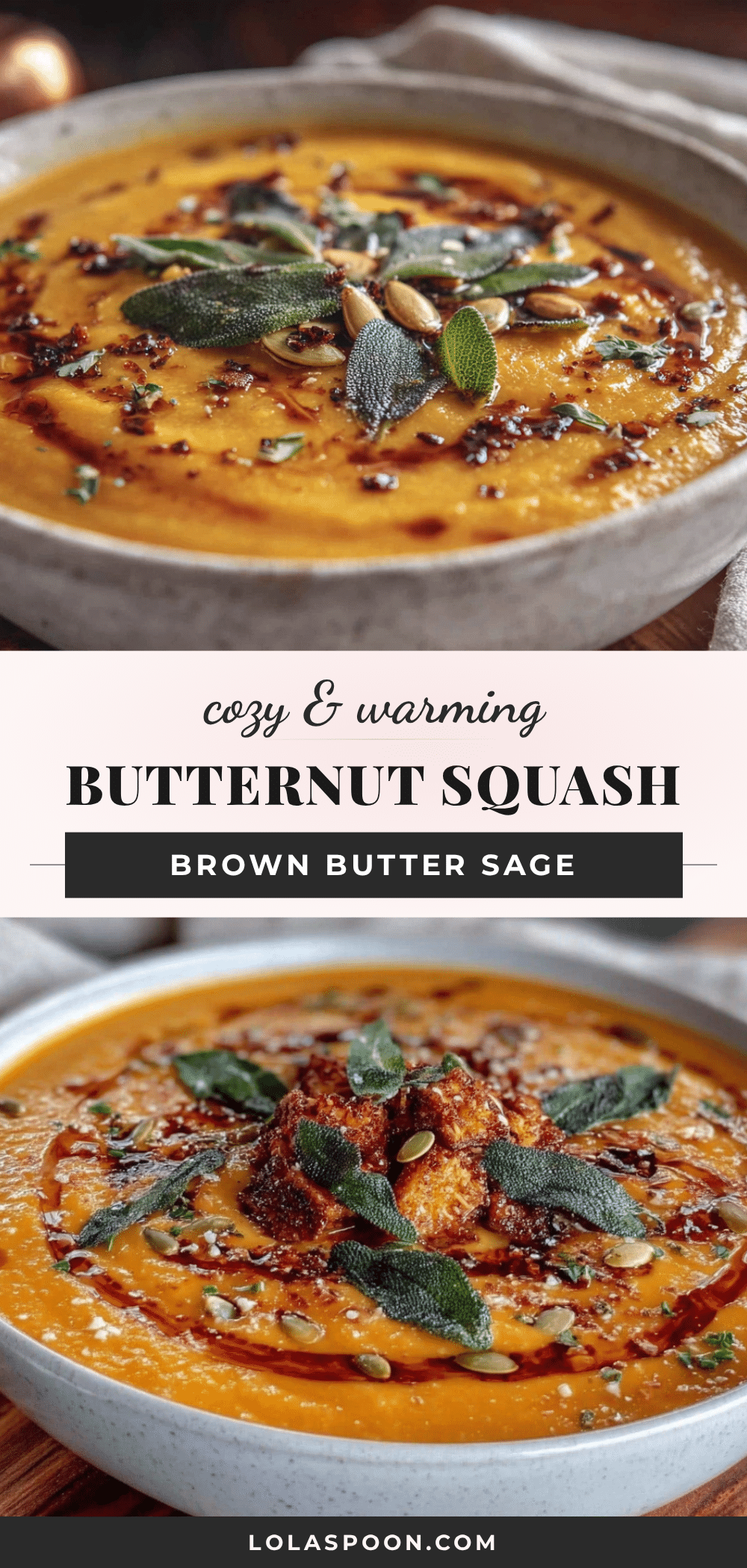
What really sets this recipe apart is the brown butter sage topping. Most squash soups stop at the blending stage, but that crispy sage and nutty butter situation takes it to another level. It adds texture, depth, and this little moment of crunch that makes every spoonful interesting. Plus, it looks gorgeous drizzled over the top—perfect for when you want to impress without actually doing much work.
This is the soup I make when I want to feel like I’ve got my act together. It’s forgiving, it’s flexible, and it honestly gets better the next day. If you’ve been looking for that one soup recipe that feels both fancy and totally doable, this is it.
What Ingredients You Will Need
This recipe uses simple, wholesome ingredients that work together to create something truly special. Most of these are pantry staples or easy to find at any grocery store, especially during fall and winter when squash is at its peak.
For the Soup
- 1 large butternut squash (about 3 pounds) — Look for one that feels heavy for its size with firm, unblemished skin. The neck should be thick and evenly shaped, which makes peeling easier. I prefer using whole squash rather than pre-cut cubes because you get better caramelization when roasting larger pieces.
- 2 tablespoons olive oil — Use a good-quality extra virgin olive oil for roasting. It helps the squash caramelize and adds a subtle fruity note.
- 1 medium yellow onion, diced — Yellow onions have the right balance of sweetness and savory flavor for this soup. White onions work too, but red onions will change the color slightly.
- 3 cloves garlic, minced — Fresh garlic is non-negotiable here. The jarred stuff just doesn’t have the same punch, and since garlic is a key flavor, you want it to shine.
- 4 cups vegetable or chicken broth — I use a low-sodium broth so I can control the salt level. For a vegetarian version, go with vegetable broth. Chicken broth adds a bit more depth if you’re not worried about keeping it meat-free.
- 1/2 teaspoon salt — Start with this and adjust at the end. Different broths have different sodium levels, so taste as you go.
- 1/4 teaspoon black pepper — Freshly ground is always better. It makes a real difference in the final flavor.
- Pinch of nutmeg (optional) — Just a tiny bit, like a whisper of nutmeg. It’s not essential, but it brings out the natural sweetness of the squash in a really lovely way.
For the Brown Butter Sage Topping

- 4 tablespoons unsalted butter — Use unsalted so you can control the salt. The butter is the star here, so use a good brand. I like Kerrygold or any European-style butter for its higher fat content and richer flavor.
- 10-12 fresh sage leaves — Fresh sage is crucial. Dried sage won’t give you the same texture or flavor, and it can be a bit overpowering. Look for sage with vibrant green leaves that aren’t wilted or brown.
- Pinch of flaky sea salt — Maldon or any flaky finishing salt works beautifully here. It adds a little crunch and a pop of salt that contrasts with the sweet soup.
Ingredient Tips and Substitutions
If you can’t find butternut squash, you can substitute with honeynut squash, buttercup squash, or even sugar pumpkin. The flavor will be slightly different, but the roasting method works the same. For a dairy-free version, use a good vegan butter for the brown butter topping—just know that it won’t brown quite the same way, but it will still be delicious. And if you don’t have fresh sage, you can skip the topping altogether and just drizzle the soup with a little good olive oil and some toasted pumpkin seeds for crunch.
I always recommend buying whole squash and roasting it yourself rather than using frozen or pre-cut cubes. The pre-cut stuff tends to be drier and doesn’t caramelize as well because it’s already been sitting in a bag losing moisture. Plus, whole squash is usually cheaper and stays fresh longer in your pantry.
Equipment Needed
You don’t need a ton of fancy equipment for this recipe, which is part of why I love it. Here’s what you’ll need:
- Large baking sheet — A rimmed baking sheet works best to catch any juices from the roasting squash. I use a half-sheet pan, which is the standard size that fits in most home ovens.
- Parchment paper or aluminum foil — Lining the pan makes cleanup so much easier. The caramelized squash can stick to the pan, and nobody wants to scrub that off.
- Chef’s knife and cutting board — A sharp chef’s knife makes cutting through a butternut squash much safer and easier. Dull knives are actually more dangerous because they slip more easily.
- Vegetable peeler — A sturdy Y-shaped peeler works best for removing squash skin. It’s faster and gives you more control than a standard straight peeler.
- Large pot or Dutch oven — A 5- to 6-quart pot is perfect for this recipe. A Dutch oven works great because it holds heat evenly, but any heavy-bottomed pot will do.
- Immersion blender or regular blender — An immersion blender lets you blend the soup right in the pot, which means less cleanup. If you’re using a regular blender, work in batches and be careful with the hot liquid—never fill the blender more than halfway.
- Small skillet — For making the brown butter sage topping. A light-colored skillet is helpful because you can see the butter change color more easily.
- Measuring spoons and cups — For accuracy, though this recipe is pretty forgiving.
If you don’t have an immersion blender, don’t worry. A regular blender works just fine—just let the soup cool slightly before blending, and hold the lid down with a kitchen towel to prevent any hot liquid from splashing out.
Preparation Method
- Preheat your oven to 400°F (200°C). Line a large baking sheet with parchment paper or aluminum foil for easy cleanup. While the oven heats up, get your squash ready.
- Prepare the butternut squash. Using a sharp chef’s knife, carefully cut off both ends of the squash. Then cut it in half where the narrow neck meets the round bulb. Stand each piece on its flat end and use a vegetable peeler to remove the skin. The skin is tough, so take your time and make sure you get all of it. Once peeled, cut the squash in half lengthwise and scoop out the seeds and stringy bits with a spoon. Cut the flesh into 1-inch cubes—try to make them roughly the same size so they roast evenly. This should take about 10 minutes.
- Roast the squash. Spread the cubed squash on your prepared baking sheet in a single layer. Drizzle with 2 tablespoons of olive oil and sprinkle with 1/4 teaspoon of salt and a pinch of pepper. Toss everything with your hands to coat evenly. Roast for 25-30 minutes, flipping halfway through, until the squash is tender and the edges are caramelized and golden brown. You’ll know it’s done when you can easily pierce a cube with a fork. The caramelization is what gives this soup its deep, sweet flavor, so don’t pull it out too early.
- While the squash roasts, start the soup base. In a large pot or Dutch oven, heat 1 tablespoon of olive oil over medium heat. Add the diced onion and cook for 5-7 minutes, stirring occasionally, until it’s soft and translucent. Add the minced garlic and cook for another minute until fragrant. Be careful not to burn the garlic—it can turn bitter if it gets too dark.
- Add the broth and roasted squash. Once the squash is done roasting, add it to the pot along with 4 cups of broth. Stir everything together and bring it to a gentle simmer. Let it cook for 10 minutes to allow the flavors to meld. This is also when you’d add that pinch of nutmeg if you’re using it.
- Blend the soup. Remove the pot from heat. If using an immersion blender, blend the soup directly in the pot until it’s completely smooth and silky. If using a regular blender, work in batches—fill the blender no more than halfway, hold the lid down with a kitchen towel, and blend until smooth. Transfer each batch to a clean pot or bowl. Taste the soup and adjust the salt and pepper as needed. I usually add another 1/4 teaspoon of salt at this point, but it depends on your broth.
- Make the brown butter sage topping. This step goes fast, so have everything ready. In a small skillet, melt 4 tablespoons of butter over medium heat. Swirl the pan occasionally as the butter melts. It will start to foam and bubble—that’s normal. After about 3-4 minutes, the foam will subside and you’ll see little brown specks forming at the bottom of the pan. The butter will smell nutty and toasty. As soon as it turns a golden brown color (not dark brown—you’re looking for the color of hazelnuts), add the sage leaves. They’ll sizzle and crisp up in about 30 seconds. Immediately remove the pan from heat and transfer everything to a small bowl to stop the cooking. Sprinkle with a pinch of flaky sea salt.
- Serve the soup. Ladle the soup into bowls. Drizzle a spoonful of the brown butter over each serving, making sure each bowl gets a couple of crispy sage leaves. Serve immediately while everything is warm.
Cooking Tips & Techniques
Let me share some things I learned the hard way so you don’t have to. The first time I made this soup, I skipped the roasting step and just boiled the squash with the broth. Big mistake. The soup turned out watery and bland, and I ended up adding way too much salt trying to fix it. Roasting concentrates the squash’s natural sugars and gives you that deep, caramelized flavor that makes this soup special. Don’t skip it.
Another thing I learned: don’t overcrowd the baking sheet. If the squash pieces are touching or overlapping, they’ll steam instead of roast, and you’ll miss out on that beautiful caramelization. Give them some space. If your squash is on the larger side, use two baking sheets or roast in batches.
When making the brown butter, keep a close eye on it. Brown butter can go from perfect to burnt in about 30 seconds. I like to use a light-colored skillet so I can see the color change clearly. The moment you see those brown specks form and smell that nutty aroma, get it off the heat. And don’t forget to transfer it to a different bowl—the residual heat from the pan can continue cooking the butter even after you’ve turned off the stove.
For the smoothest soup, make sure your squash is really tender before blending. If you blend it while there are still some firm pieces, you’ll end up with a grainy texture. When in doubt, let it cook an extra 5 minutes. And if your soup seems too thick after blending, just add a little more broth or water until it reaches your preferred consistency.
Here’s a pro tip for hosting: you can roast the squash up to two days ahead and keep it in the fridge. Then, on the day of your dinner party, all you have to do is sauté the onion and garlic, add the broth and roasted squash, simmer, and blend. The whole thing comes together in about 20 minutes, and your kitchen stays clean. The brown butter sage topping should be made fresh, but it only takes 5 minutes, so you can do it right before serving.
Variations & Adaptations
One of the things I love about this soup is how flexible it is. Here are some variations I’ve tried and loved:
Vegan Version : Replace the butter with a high-quality vegan butter or coconut oil for the topping. The coconut oil won’t brown the same way, but it will still get nutty and delicious. Use vegetable broth instead of chicken broth, and you’ve got a completely plant-based soup that’s just as satisfying.
Spicy Twist : Add a pinch of red pepper flakes or a small diced jalapeño (seeds removed) when you sauté the onion. The heat cuts through the sweetness of the squash beautifully. I made this version for a friend who loves spicy food, and she said it was the best soup she’d ever had. Just go easy—you can always add more heat later, but you can’t take it out.
Apple and Squash Combo : Add one peeled and diced apple (Granny Smith or Honeycrisp work great) to the roasting pan along with the squash. The apple adds a subtle sweetness and a hint of tartness that complements the brown butter perfectly. This is my go-to fall variation when apples are in season.
Coconut Curry Version : Swap one cup of the broth for a can of full-fat coconut milk, and add a tablespoon of curry powder when you sauté the onion. The coconut milk makes the soup extra creamy, and the curry adds warmth and complexity. Top with toasted coconut flakes instead of the brown butter sage for a completely different but equally delicious soup.
Make It a Meal : Add a can of drained and rinsed chickpeas to the soup after blending, or stir in some cooked quinoa for extra protein and texture. I’ve also been known to add a handful of spinach at the end and let it wilt into the hot soup. It turns the soup a beautiful green-flecked color and adds a nutritional boost.
Serving & Storage Suggestions
This soup is gorgeous served in shallow bowls with the brown butter sage drizzled artfully on top. I like to add a few extra crispy sage leaves right in the center for a dramatic look. A swirl of heavy cream or coconut milk on top is also beautiful if you want to dress it up even more.
For a dinner party, serve this as a starter in small cups or mugs—it’s elegant and easy for guests to hold while mingling. As a main course, pair it with a crusty loaf of sourdough bread and a simple green salad with a tangy vinaigrette. The acidity of the salad dressing cuts through the richness of the soup perfectly. I also love serving it alongside a roasted Brussels sprouts with balsamic glaze for a complete fall meal that feels both cozy and impressive.
Storage : This soup keeps beautifully in the refrigerator for up to 5 days. Store it in an airtight container, and the flavors will actually deepen and meld overnight. In fact, I often think it tastes even better the next day.
Freezing : This soup freezes like a dream. Let it cool completely, then transfer it to freezer-safe containers or zip-top bags. Leave a little room for expansion, and freeze for up to 3 months. Thaw overnight in the refrigerator before reheating.
Reheating : Reheat the soup gently on the stovetop over medium-low heat, stirring occasionally. If it seems too thick, add a splash of broth or water to loosen it up. You can also reheat individual portions in the microwave, but the stovetop gives you more control over the texture. The brown butter sage topping is best made fresh, but if you have leftover topping, store it separately in the fridge and reheat it gently in a small pan before serving.
Nutritional Information & Benefits
Here’s the thing about this soup—it feels indulgent, but it’s actually pretty good for you. Butternut squash is packed with vitamin A (one cup gives you over 400% of your daily needs), which is great for eye health and immune function. It’s also a good source of vitamin C, potassium, and fiber, all while being relatively low in calories.
The brown butter adds some saturated fat, but a little goes a long way. If you’re watching your fat intake, you can use just a tablespoon or two of the brown butter per serving, or skip the topping altogether and just garnish with fresh sage and a drizzle of good olive oil.
Estimated nutrition per serving (based on 6 servings):
- Calories: 220
- Fat: 12g
- Carbohydrates: 28g
- Fiber: 5g
- Protein: 4g
- Vitamin A: 350% DV
- Vitamin C: 40% DV
- Potassium: 650mg
This soup is naturally gluten-free and can easily be made vegan and dairy-free with the substitutions I mentioned earlier. It’s also relatively low in sodium if you use low-sodium broth, making it a heart-healthy option for those watching their salt intake.
FAQs
Can I use frozen butternut squash instead of fresh?
You can, but the texture won’t be quite as good. Frozen squash tends to release more water during cooking, which makes it harder to get that caramelized, roasted flavor. If you’re in a pinch, thaw the frozen squash first and pat it dry before roasting. It won’t be as sweet, but it will still make a decent soup.
How do I know when the brown butter is done?
Watch for the butter to turn a golden-brown color, like the color of hazelnuts or light caramel. You’ll also smell a nutty, toasty aroma. The butter will go through stages: it melts, then foams, then the foam subsides, and finally you’ll see brown specks forming at the bottom of the pan. That’s your cue to add the sage and remove it from heat immediately.
Can I make this soup ahead of time for a party?
Absolutely. In fact, I recommend it. Roast the squash up to two days ahead and store it in the fridge. On the day of your party, just sauté the onion and garlic, add the broth and roasted squash, simmer, and blend. The whole thing takes about 20 minutes. Make the brown butter sage topping right before serving for the best texture and flavor.
My soup turned out too thin. How can I thicken it?
Let it simmer uncovered for another 10-15 minutes to reduce and concentrate the flavors. You can also add a peeled and diced potato to the soup while it simmers—the starch will help thicken it naturally. Or, for a quick fix, stir in a tablespoon of cornstarch mixed with a little cold water and simmer until thickened.
Can I use dried sage instead of fresh?
I really don’t recommend it for the topping. Dried sage won’t crisp up the way fresh sage does, and it can be quite potent and slightly bitter. For the soup itself, you could add a pinch of dried sage if you don’t have fresh, but the flavor won’t be as bright and herbaceous. Fresh sage is one of those ingredients that’s worth seeking out for this recipe.
Conclusion
This roasted butternut squash soup with brown butter sage has become my go-to for fall gatherings, quiet weeknights, and everything in between. It’s one of those recipes that feels special without being fussy—the kind of thing you can make for a dinner party or just because it’s Tuesday and you need something warm and comforting.
What I love most about it is how forgiving it is. You can adjust the seasonings, swap in different squashes, or add your own twist, and it will still turn out delicious. The brown butter sage topping is the little touch that makes people think you did something complicated, when really, it’s just butter and herbs in a pan for a few minutes.
If you make this soup, I’d love to hear how it turns out. Leave a comment below and let me know if you tried any variations, or tag me in your photos on social media. And if you’re looking for another cozy fall recipe, try my creamy mushroom risotto with Parmesan—it’s another one of those dishes that feels fancy but is actually pretty simple to pull off.
Now go make some soup. Your kitchen is about to smell incredible.
Pin This Recipe!
Easy Roasted Butternut Squash Soup with Brown Butter Sage

This roasted butternut squash soup is deeply flavorful thanks to caramelized squash and a nutty brown butter sage topping. It’s simple to make, naturally gluten-free, and perfect for fall gatherings or cozy weeknight dinners.
- Prep Time: 15 minutes
- Cook Time: 30 minutes
- Total Time: 45 minutes
- Yield: 6 servings 1x
- Category: Soup
- Cuisine: American
Ingredients
- 1 large butternut squash (about 3 pounds)
- 2 tablespoons olive oil
- 1 medium yellow onion, diced
- 3 cloves garlic, minced
- 4 cups vegetable or chicken broth (low-sodium)
- 1/2 teaspoon salt
- 1/4 teaspoon black pepper
- Pinch of nutmeg (optional)
- 4 tablespoons unsalted butter
- 10–12 fresh sage leaves
- Pinch of flaky sea salt
Instructions
- Preheat your oven to 400°F (200°C). Line a large baking sheet with parchment paper or aluminum foil.
- Prepare the butternut squash: cut off both ends, cut in half where the narrow neck meets the round bulb, peel with a vegetable peeler, cut in half lengthwise, scoop out seeds, and cut into 1-inch cubes.
- Spread the cubed squash on the prepared baking sheet in a single layer. Drizzle with 2 tablespoons olive oil, sprinkle with 1/4 teaspoon salt and a pinch of pepper, and toss to coat. Roast for 25-30 minutes, flipping halfway, until tender and caramelized.
- While the squash roasts, heat 1 tablespoon olive oil in a large pot or Dutch oven over medium heat. Add the diced onion and cook for 5-7 minutes until soft and translucent. Add the minced garlic and cook for 1 minute until fragrant.
- Add the roasted squash and 4 cups of broth to the pot. Stir and bring to a gentle simmer. Cook for 10 minutes to meld flavors. Add a pinch of nutmeg if using.
- Remove from heat. Blend the soup with an immersion blender directly in the pot until smooth. If using a regular blender, work in batches, filling no more than halfway, and blend until smooth. Adjust salt and pepper to taste.
- In a small skillet, melt 4 tablespoons butter over medium heat. Swirl occasionally. After 3-4 minutes, the butter will foam and then subside, with brown specks forming at the bottom. When it turns golden brown and smells nutty, add the sage leaves. They will sizzle and crisp in about 30 seconds. Immediately remove from heat and transfer to a small bowl. Sprinkle with flaky sea salt.
- Ladle the soup into bowls. Drizzle a spoonful of the brown butter over each serving and top with a few crispy sage leaves. Serve immediately.
Notes
Roasting the squash is essential for deep flavor—do not skip it. For the smoothest soup, ensure squash is very tender before blending. Brown butter can go from perfect to burnt quickly; watch closely and remove from heat as soon as brown specks appear. The soup can be made ahead: roast squash up to 2 days in advance and store in the fridge. The brown butter sage topping is best made fresh. For a vegan version, use vegan butter and vegetable broth.
Nutrition
- Serving Size: 1 bowl (about 1.5 cu
- Calories: 220
- Sugar: 8
- Sodium: 480
- Fat: 12
- Saturated Fat: 6
- Carbohydrates: 28
- Fiber: 5
- Protein: 4
Keywords: butternut squash soup, roasted butternut squash soup, brown butter sage soup, fall soup, easy soup recipe, gluten-free soup, vegetarian soup