The school bake sale was in twelve hours and I’d completely forgotten. My daughter had reminded me three times that week — written it on the calendar in purple marker — and somehow, the night before, I was staring into an empty pantry like a deer in headlights. Everyone else would be bringing Pinterest-perfect cupcakes with buttercream rosettes and those fancy cake pops that take three hours to decorate. I had a bowl of overripe persimmons sitting on the counter, a bag of walnuts that had been hiding behind the oatmeal, and honestly? A mild panic setting in.
Let me tell you, nothing makes you more creative than a deadline and the look on your kid’s face when she says, “Mom, everyone else’s parents already baked theirs.” I grabbed those persimmons — the ones I’d bought on a whim at the farmers market because they were pretty — and started mashing. I figured if I added enough cinnamon and sugar, something edible would happen. Maybe even something that wouldn’t embarrass my daughter in front of the whole fifth grade.
The kitchen looked like a flour bomb had gone off. I got batter on the ceiling fan — don’t ask me how, I still don’t know. The loaf went into the oven at 10 PM, and I told myself that if it came out lopsided, we’d just call it “rustic.” You know that feeling when you’re praying to the baking gods and crossing your fingers at the same time? That was me, standing in front of a warm oven in my pajamas at midnight, smelling cinnamon and hoping for a miracle.
Here’s the part I still can’t quite believe. The next morning, that slightly lopsided loaf of persimmon bread was the first thing to sell out at the bake sale. My daughter texted me from the school office phone — they let her call because she was so excited — to say that Mrs. Patterson bought two slices and asked who made it. Two moms asked for the recipe before pickup even started. I stood there in the parking lot, holding an empty tin, feeling like I’d accidentally stumbled onto something really special.
That’s how this persimmon bread became our family’s secret weapon. It’s the recipe I make when I need to bring something to a potluck and have zero time. It’s the one that makes people say, “Wait, what’s in this?” with their mouths full. And honestly? It’s the one that taught me that sometimes the best recipes come from a little bit of panic and a whole lot of improvisation. Maybe you’ve been there — staring at a weird fruit and wondering what on earth to do with it. Well, friend, this is what you do with it.
Why You’ll Love This Recipe
I’ve made this persimmon bread more times than I can count — probably thirty loaves at this point, between bake sales, holiday gifts, and “oops I bought too many persimmons again” moments. Every single time, it works. Here’s why this recipe is different from every other quick bread you’ve tried:
- Kid-Approved and Picky-Eater Tested : My youngest refuses to eat anything that looks “healthy,” but she devours this bread. The persimmons melt into the batter so completely that kids just taste sweet, fruity goodness with warm cinnamon. It’s basically a muffin masquerading as bread.
- Pantry-Friendly Ingredients : No weird stuff here. You probably have flour, sugar, eggs, and cinnamon in your kitchen right now. The persimmons are the only “special” ingredient, and they’re surprisingly easy to find in season — most grocery stores carry them from September through December.
- Budget-Friendly Baking : Persimmons cost about the same as apples, and walnuts are affordable in bulk. This whole loaf costs less than $5 to make. Compare that to a bakery loaf that’d run you $8 or $9, and you’re saving real money while feeding your family something homemade.
- Reheats Like a Dream : Day-old persimmon bread? Honestly, it’s better. The flavors meld together overnight, and a quick 15-second zap in the microwave makes it taste fresh-baked. Perfect for busy mornings when you need breakfast on the go.
- Freezes Beautifully : I always bake two loaves — one for now, one for the freezer. Wrap it tight in plastic wrap and foil, and it’ll keep for three months. Pull it out for unexpected guests or crazy school mornings.
What makes this recipe stand out from every other persimmon bread out there is the texture. Most persimmon breads turn out dense and heavy, almost like a brick. This one? It’s tender and moist with a delicate crumb, thanks to a trick I learned after my first few attempts came out too heavy. The walnuts add just enough crunch to keep things interesting, and the cinnamon isn’t shy — it’s warm and present without overwhelming the fruit. It’s comfort food reimagined: healthier than a coffee cake, faster than a yeast bread, and twice as satisfying.
This is the kind of bread that makes you close your eyes after the first bite. It’s perfect for impressing guests without stressing yourself out, or turning a simple Tuesday afternoon into something memorable. And honestly? It makes the whole house smell like a fall candle, which is never a bad thing.
What Ingredients You Will Need
This persimmon bread recipe uses simple, wholesome ingredients that work together to create something truly special. Most of these are pantry staples you probably already have, which makes this recipe perfect for those “I need to bake something right now” moments.
For the Bread Batter
- 2 cups all-purpose flour (spooned and leveled — don’t scoop directly from the bag or you’ll pack it too tight)
- 1 teaspoon baking soda (make sure it’s fresh — test it by dropping a pinch in vinegar; if it fizzes, it’s good)
- 1/2 teaspoon baking powder
- 1/2 teaspoon salt (I use fine sea salt, but table salt works fine too)
- 2 teaspoons ground cinnamon (I prefer McCormick or Simply Organic for the best flavor)
- 1/2 teaspoon ground nutmeg (freshly grated is amazing if you have it, but pre-ground works great)
- 1/4 teaspoon ground cloves (optional, but adds that cozy holiday depth)
- 1 cup granulated sugar
- 1/2 cup packed brown sugar (light or dark — dark gives a richer flavor)
- 1/2 cup vegetable oil (canola or avocado oil work perfectly; melted coconut oil works too)
- 3 large eggs, room temperature (cold eggs can make the batter seize up — set them out 30 minutes before baking)
- 1 teaspoon vanilla extract (pure vanilla, not imitation, if you can swing it)
- 2 cups persimmon pulp (about 3-4 ripe Hachiya persimmons — more on that below)
For the Add-Ins
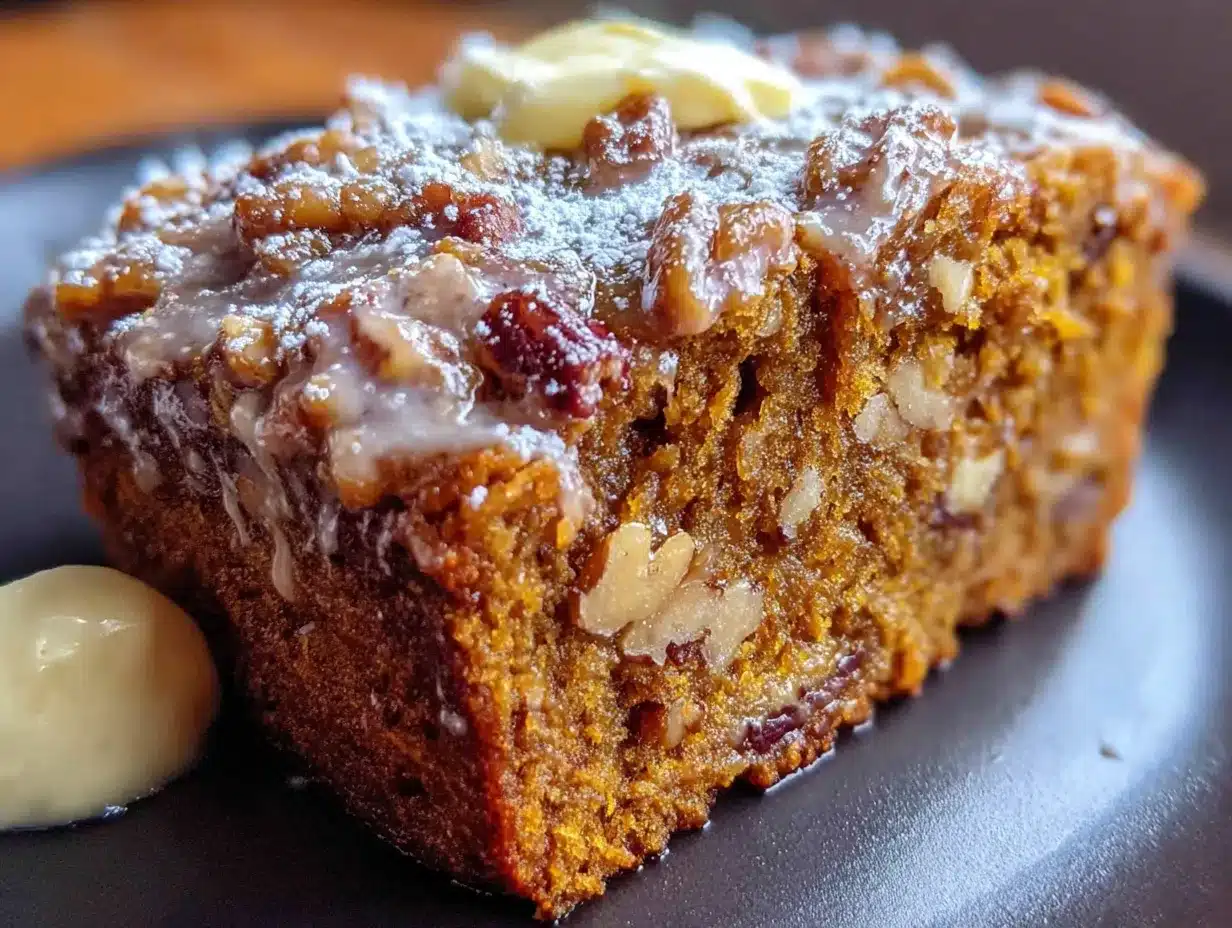
- 1 cup chopped walnuts (toast them first for extra flavor — 5 minutes in a dry pan or 350°F oven)
- 1/2 cup golden raisins (optional, but my kids love the little bursts of sweetness)
Ingredient Selection Tips
The most important thing to get right is the persimmons. There are two main types: Fuyu and Hachiya. Fuyu persimmons are squat and firm — they’re good for eating raw but won’t give you the right texture for baking. You want Hachiya persimmons, which are acorn-shaped and need to be very ripe — almost mushy, like a tomato that’s past its prime. They should feel like a water balloon when you squeeze them gently. If they’re still firm, let them sit on the counter for a few days until they soften. Trust me on this — unripe Hachiya persimmons are incredibly astringent and will make your mouth pucker.
For the walnuts, I recommend buying raw walnuts and toasting them yourself. Pre-toasted walnuts can be hit or miss, and toasting them fresh takes just a few minutes. If walnuts aren’t your thing, pecans are a wonderful substitute — they have a similar buttery richness.
One more thing about the oil: vegetable oil keeps this bread incredibly moist, but you can substitute melted butter if you want a richer flavor. Just know that butter-based breads tend to be a touch denser and dry out faster. For the best texture and longest shelf life, stick with oil.
Equipment Needed
You don’t need fancy equipment to make this persimmon bread — that’s one of the things I love about it. Here’s what you’ll need:
- 9×5-inch loaf pan (a standard loaf pan works perfectly; if yours is glass, reduce the oven temperature by 25°F)
- Large mixing bowl (for dry ingredients)
- Medium mixing bowl (for wet ingredients)
- Whisk (for combining dry ingredients evenly)
- Wooden spoon or rubber spatula (for folding everything together — don’t overmix!)
- Measuring cups and spoons (dry measuring cups for flour, liquid measuring cup for oil)
- Fine-mesh strainer or food mill (for making persimmon pulp — a potato masher and some elbow grease works too)
- Parchment paper (highly recommended for easy removal — I learned this the hard way after a stuck loaf incident)
- Cooling rack (a wire rack lets air circulate so the bottom doesn’t get soggy)
- Toothpick or cake tester (for checking doneness)
If you don’t have a food mill, don’t worry. I’ve made this persimmon bread using just a fork and a bowl — just mash the persimmons until they’re mostly smooth, and pick out any stringy bits. A potato ricer works great too. The key is getting that pulp smooth so it incorporates evenly into the batter.
One tip from experience: line your loaf pan with parchment paper, leaving a few inches of overhang on the long sides. This creates “handles” that make lifting the finished loaf out so much easier. I used to just grease the pan, and about one in three loaves would stick. Parchment paper changed my baking life.
Preparation Method
Let me walk you through this step by step. I’ve made this persimmon bread so many times that I could do it in my sleep, but I’ll share all the little tricks I’ve picked up along the way.
Step 1: Prep Your Persimmons
Start by preparing your persimmon pulp. Take your very ripe Hachiya persimmons and cut off the green calyx (the leaf-like part on top). Cut the fruit in half and scoop out the flesh with a spoon — it should be so soft that it practically falls out. Push the pulp through a fine-mesh strainer or food mill to remove any fibers or seeds. You should end up with about 2 cups of smooth, orange pulp. Set this aside. (Pro tip: if your persimmons aren’t quite ripe enough, you can speed things up by freezing them overnight — the freezing process breaks down the cell walls and makes them soft when thawed.)
Step 2: Preheat and Prep the Pan
Preheat your oven to 350°F (175°C). While it’s heating, grease your 9×5-inch loaf pan with butter or cooking spray, then line it with parchment paper. Leave about 2 inches of overhang on the long sides — this will be your lifeline later. I learned this trick after destroying a perfectly good loaf trying to get it out of the pan. Trust me, future you will be grateful.
Step 3: Toast the Walnuts
Spread your chopped walnuts on a baking sheet and toast them in the preheating oven for 5-7 minutes, until they smell nutty and are slightly darker. Watch them carefully — nuts can go from perfect to burnt in about 30 seconds. Let them cool while you mix the batter. Toasting brings out the natural oils and makes the walnuts taste richer and more complex. It’s a small step that makes a big difference.
Step 4: Mix the Dry Ingredients
In a large bowl, whisk together the flour, baking soda, baking powder, salt, cinnamon, nutmeg, and cloves. Whisk for about 20 seconds — this aerates the flour and distributes the leavening agents evenly. If you’ve ever taken a bite of bread and gotten a mouthful of baking soda, you know why this matters. Don’t skip this step.
Step 5: Mix the Wet Ingredients
In a separate medium bowl, combine the granulated sugar, brown sugar, and vegetable oil. Whisk until smooth — it should look like wet sand. Add the eggs one at a time, whisking well after each addition. Stir in the vanilla extract and the persimmon pulp. The mixture should be smooth and glossy, with a beautiful golden-orange color. Take a moment to appreciate how pretty it looks — this is the fun part.
Step 6: Combine Wet and Dry
Pour the wet ingredients into the bowl of dry ingredients. Use a rubber spatula to fold everything together gently. Here’s the most important tip I can give you: mix until just combined. A few streaks of flour are totally fine. Overmixing develops the gluten and makes the bread tough and dense. You want tender, not tough. Fold in the toasted walnuts and golden raisins (if using) with just a few more strokes.
Step 7: Bake the Bread
Pour the batter into your prepared loaf pan and spread it evenly with the spatula. Bake at 350°F for 55-65 minutes. Around the 45-minute mark, check the top — if it’s browning too quickly, tent the pan loosely with aluminum foil. The bread is done when a toothpick inserted into the center comes out clean or with just a few moist crumbs attached. The top should be golden brown and cracked in that beautiful, rustic way that homemade bread always does.
Step 8: Cool and Enjoy
Let the bread cool in the pan on a wire rack for 15 minutes. Then use the parchment paper handles to lift it out and transfer it to the rack to cool completely. I know it’s tempting to slice into it right away — the smell is intoxicating — but warm bread tends to crumble. Wait at least an hour if you can. The texture firms up as it cools, and the flavors continue to develop. If you can wait overnight, you’ll be rewarded with an even better loaf.
Cooking Tips & Techniques
After making this persimmon bread more times than I care to count, I’ve collected a few hard-won lessons. Let me save you from making the same mistakes I did.
The Persimmon Ripeness Rule : I cannot stress this enough — your Hachiya persimmons need to be very ripe. My first attempt at persimmon bread was a disaster because I used slightly underripe fruit. The bread had this weird, drying sensation in my mouth, and I couldn’t figure out why. Turns out, unripe Hachiya persimmons contain tannins that make your mouth pucker. Ripe persimmons should feel like a water balloon — soft, squishy, and almost bursting. If they’re not there yet, let them sit on the counter for a few more days. You can also speed things up by putting them in a paper bag with a banana or apple.
The Don’t-Overmix Rule : This is the number one mistake I see in quick bread recipes. You want to mix the batter until it just comes together — about 15-20 strokes with a spatula. A few lumps are totally fine. Overmixing develops gluten, which gives you a tough, rubbery bread instead of a tender, cake-like crumb. I learned this the hard way when I made a loaf that could have doubled as a doorstop.
The Toothpick Test Trick : Insert a toothpick into the center of the loaf. If it comes out clean, it’s done. If it comes out with wet batter, give it another 5-10 minutes. But here’s the thing — if the toothpick comes out with a few moist crumbs, that’s actually perfect. The bread will continue to cook slightly as it cools in the pan. Taking it out at the “moist crumbs” stage gives you the most tender texture.
Timing and Multitasking : This recipe comes together quickly — about 15 minutes of active prep time. I like to toast the walnuts while the oven is preheating, then mix the dry ingredients while the nuts cool. By the time the oven beeps, the batter is ready to go. It’s one of those rare recipes where everything flows naturally without a lot of waiting around.
The Freezer Hack : I always make a double batch and freeze one loaf. Wrap it tightly in plastic wrap, then a layer of aluminum foil, and it’ll keep for up to three months. When you’re ready to eat it, let it thaw on the counter overnight, then warm slices in the microwave for 15 seconds. It tastes almost as good as fresh-baked.
Variations & Adaptations
One of the best things about this persimmon bread recipe is how adaptable it is. Here are some variations I’ve tried and loved:
Gluten-Free Version : Substitute the all-purpose flour with a 1:1 gluten-free baking flour blend (I like Bob’s Red Mill or King Arthur’s measure-for-measure blend). The texture will be slightly more delicate, so handle the batter gently. Add an extra tablespoon of oil to compensate for the lack of gluten structure. My gluten-free sister-in-law gives this version two thumbs up.
Dairy-Free Adaptation : The recipe is already dairy-free since it uses oil instead of butter. Just make sure your chocolate chips (if adding) are dairy-free, and you’re good to go. It’s naturally vegan-friendly too — just substitute the eggs with flax eggs (1 tablespoon ground flaxseed mixed with 3 tablespoons water per egg).
Spice It Up : For a more intense flavor profile, add 1/2 teaspoon of ground ginger and a pinch of cardamom along with the cinnamon. This gives the bread a chai-inspired warmth that’s absolutely gorgeous. I made this version for a holiday brunch and got requests for the recipe from three different people.
Nut-Free Option : If you’re baking for a nut-free classroom or have allergies, simply omit the walnuts. The bread is still delicious without them. You can substitute sunflower seeds or pumpkin seeds for a similar crunch, or add an extra 1/4 cup of raisins or dried cranberries for sweetness.
Chocolate Chip Persimmon Bread : My kids’ favorite variation — fold in 1/2 cup of semi-sweet chocolate chips along with the walnuts. The chocolate and persimmon combo is surprisingly good. The sweetness of the persimmon balances the dark chocolate beautifully. This version never lasts more than 24 hours in our house.
Muffin Version : This batter makes excellent muffins — just divide it among a greased muffin tin (about 12 muffins) and bake at 350°F for 18-22 minutes. Perfect for lunchboxes or grab-and-go breakfasts. My daughter calls them “persimmon cupcakes” and I don’t correct her.
Serving & Storage Suggestions
This persimmon bread is versatile enough for breakfast, snack time, or dessert. Here’s how I like to serve and store it:
Serving Suggestions : Serve the bread slightly warm or at room temperature. A thin slice with a pat of salted butter is my favorite way to enjoy it — the butter melts into the warm crumb and takes it to another level. For a more decadent treat, spread a layer of cream cheese frosting on top (just mix 4 oz cream cheese, 2 tablespoons butter, 1 cup powdered sugar, and 1/2 teaspoon vanilla). It’s also wonderful alongside a cup of coffee or a glass of cold milk — my kids swear by the milk pairing.
Storage Instructions : Store the bread in an airtight container at room temperature for up to 4 days. I wrap mine in plastic wrap first, then put it in a ziplock bag. The bread actually gets better on day two — the flavors meld together and the texture becomes even more moist. If your kitchen is warm or humid, you can store it in the refrigerator, but let it come to room temperature before serving for the best texture.
Freezing Instructions : To freeze, wrap the completely cooled loaf tightly in plastic wrap, then a layer of aluminum foil. Label with the date and freeze for up to 3 months. To thaw, leave it on the counter overnight (still wrapped) to prevent condensation from making the bread soggy. For individual servings, slice the bread before freezing and place parchment paper between slices — you can pull out one slice at a time and microwave it for 15-20 seconds.
Reheating Tips : For that fresh-baked experience, reheat slices in a 300°F oven for 5-7 minutes or in the microwave for 10-15 seconds. If you’re reheating a whole loaf, wrap it in foil and warm it in a 300°F oven for about 15 minutes. The aroma will fill your kitchen and make everyone wander in asking what’s for breakfast.
Nutritional Information & Benefits
Here’s the approximate nutritional breakdown for one slice (based on 12 slices per loaf):
- Calories: 285
- Total Fat: 14g
- Saturated Fat: 2g
- Cholesterol: 46mg
- Sodium: 210mg
- Total Carbohydrates: 37g
- Dietary Fiber: 2g
- Sugars: 22g
- Protein: 5g
This persimmon bread isn’t just delicious — it actually offers some nutritional benefits. Persimmons are packed with vitamin A (great for eye health) and vitamin C (immune support). They’re also a good source of fiber, which helps with digestion and keeps you feeling full. Walnuts provide healthy omega-3 fatty acids and protein, making this bread more satisfying than your average sweet treat.
While this is definitely a treat (it’s still bread with sugar, let’s be honest), it’s a more wholesome option than many baked goods. The fruit provides natural sweetness and nutrients, and the nuts add healthy fats and protein. For a healthier version, you can reduce the sugar by 1/4 cup and add an extra tablespoon of persimmon pulp — the bread will be slightly less sweet but still delicious.
Dietary Considerations : This recipe is dairy-free and can easily be made gluten-free and vegan with the substitutions mentioned above. It contains nuts (walnuts) and gluten (wheat flour), so it’s not suitable for those with allergies to those ingredients.
Conclusion
This persimmon bread with walnuts and cinnamon has become one of those recipes that I genuinely look forward to making. It started as a panicked bake sale solution, but it’s turned into a family favorite that we make every fall. There’s something about the combination of sweet, fruity persimmon, warm cinnamon, and crunchy walnuts that just works — it’s comforting without being heavy, special without being complicated.
What I love most about this recipe is how forgiving it is. It doesn’t demand precision or fancy techniques. It just asks for ripe persimmons and a little bit of patience while it bakes. Whether you’re making it for a school event, a holiday gathering, or just because Tuesday feels like it needs something warm and delicious, this bread delivers. It’s the kind of recipe that makes you look like a hero in the kitchen, even when you’re just trying to use up some fruit before it goes bad.
I’d love to hear how yours turns out. Did you add chocolate chips? Try it with pecans? Serve it with cream cheese frosting? Drop a comment below and let me know — I read every single one, and I love hearing about your kitchen adventures. And if you’re looking for more easy, family-friendly baking recipes, be sure to check out my easy banana bread recipe and my simple pumpkin muffins — they’re both made with the same kind of pantry-friendly approach.
Happy baking, friends. May your persimmons be ripe and your kitchen smell like cinnamon.
Frequently Asked Questions
Can I use Fuyu persimmons instead of Hachiya?
Technically yes, but the texture will be different. Fuyu persimmons are firmer and less sweet, so they won’t break down as easily in the batter. If you only have Fuyu, peel them first, then puree them in a food processor until smooth. The bread will be slightly less moist and a bit denser, but still tasty.
How do I know when persimmons are ripe enough for baking?
Hachiya persimmons should feel like a water balloon — very soft and squishy when gently squeezed. The skin might look slightly translucent or have small brown spots. If they’re still firm, let them sit at room temperature for a few days. You can speed up ripening by placing them in a paper bag with a banana or apple.
Can I make this recipe without a food mill or strainer?
Absolutely. Just mash the persimmon flesh with a fork or potato masher until it’s mostly smooth. You might have a few small fibers, but they’ll be barely noticeable in the finished bread. The texture will be slightly more rustic, which I actually kind of like.
How long does persimmon bread stay fresh?
Stored properly in an airtight container at room temperature, it stays fresh for 3-4 days. The flavor actually improves after the first day as the spices meld with the fruit. You can also refrigerate it for up to a week, but let slices come to room temperature before eating for the best texture.
Can I double this recipe?
Yes! I double it all the time. Just make sure you use a bowl large enough to hold everything — the batter comes together quickly, and you don’t want to be scrambling for a bigger bowl mid-mix. Bake the loaves on separate racks, and swap their positions halfway through baking for even results. You might need to add 5-10 minutes to the baking time if both loaves are in the oven at once.
Pin This Recipe!
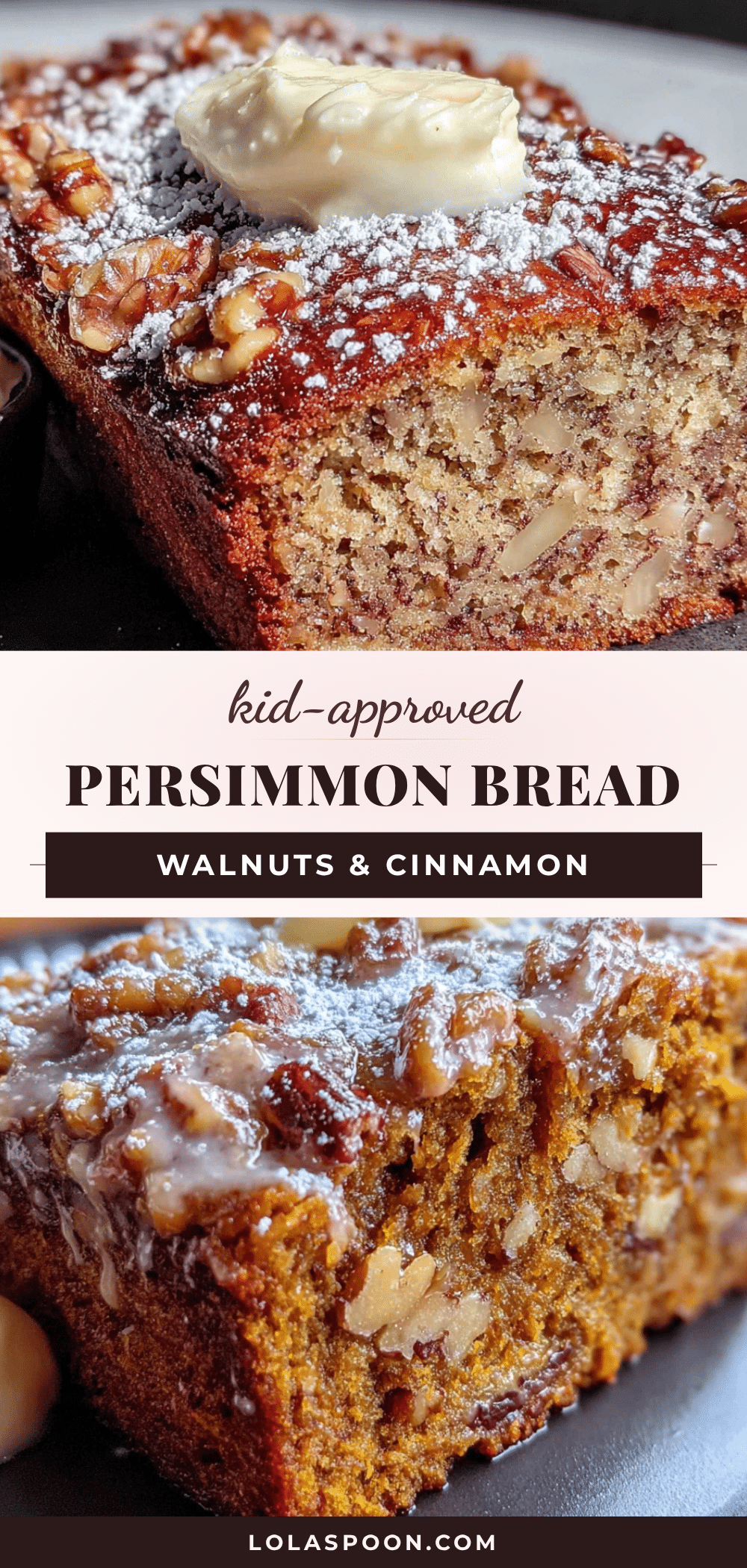
Best Kid-Approved Persimmon Bread: Easy Walnut Cinnamon Recipe
This tender, moist persimmon bread with walnuts and cinnamon is a family favorite that started as a panicked bake sale solution. It’s easy to make, budget-friendly, and perfect for breakfast, snack, or dessert.
- Prep Time: 15 minutes
- Cook Time: 55-65 minutes
- Total Time: 1 hour 10 minutes - 1 hour 20 minutes
- Yield: 12 servings 1x
- Category: Bread
- Cuisine: American
Ingredients
- 2 cups all-purpose flour (spooned and leveled)
- 1 teaspoon baking soda
- 1/2 teaspoon baking powder
- 1/2 teaspoon fine sea salt
- 2 teaspoons ground cinnamon
- 1/2 teaspoon ground nutmeg
- 1/4 teaspoon ground cloves (optional)
- 1 cup granulated sugar
- 1/2 cup packed brown sugar (light or dark)
- 1/2 cup vegetable oil (canola or avocado oil)
- 3 large eggs, room temperature
- 1 teaspoon pure vanilla extract
- 2 cups persimmon pulp (about 3–4 very ripe Hachiya persimmons)
- 1 cup chopped walnuts (toasted)
- 1/2 cup golden raisins (optional)
Instructions
- Preheat oven to 350°F (175°C). Grease a 9×5-inch loaf pan and line with parchment paper, leaving 2 inches overhang on the long sides.
- Prepare persimmon pulp: Cut off the calyx of very ripe Hachiya persimmons, cut in half, and scoop out the flesh. Push through a fine-mesh strainer or food mill to remove fibers and seeds. Measure 2 cups.
- Toast walnuts: Spread chopped walnuts on a baking sheet and toast in the preheating oven for 5-7 minutes until fragrant and slightly darker. Let cool.
- Mix dry ingredients: In a large bowl, whisk together flour, baking soda, baking powder, salt, cinnamon, nutmeg, and cloves for about 20 seconds.
- Mix wet ingredients: In a separate medium bowl, whisk together granulated sugar, brown sugar, and vegetable oil until smooth. Add eggs one at a time, whisking well after each. Stir in vanilla and persimmon pulp until smooth and glossy.
- Combine: Pour wet ingredients into dry ingredients. Fold gently with a rubber spatula until just combined (a few streaks of flour are fine). Fold in toasted walnuts and golden raisins (if using).
- Bake: Pour batter into prepared loaf pan and spread evenly. Bake at 350°F for 55-65 minutes. If top browns too quickly, tent loosely with foil after 45 minutes. Bread is done when a toothpick inserted in the center comes out clean or with a few moist crumbs.
- Cool: Let bread cool in the pan on a wire rack for 15 minutes. Use parchment handles to lift it out and transfer to the rack to cool completely. Wait at least 1 hour before slicing for best texture.
Notes
Use very ripe Hachiya persimmons (soft like a water balloon). Do not overmix the batter. For best flavor, let the bread cool completely and rest overnight. To freeze, wrap tightly in plastic wrap and foil for up to 3 months.
Nutrition
- Serving Size: 1 slice
- Calories: 285
- Sugar: 22
- Sodium: 210
- Fat: 14
- Saturated Fat: 2
- Carbohydrates: 37
- Fiber: 2
- Protein: 5
Keywords: persimmon bread, walnut cinnamon bread, easy persimmon bread, kid-approved persimmon bread, fall baking, quick bread