It was 11:47 PM on a random Wednesday in October, and I had an overwhelming urge for Thanksgiving dinner. Not the whole production, you understand — just that part. The tender, juicy turkey with herb butter melting into every slice, and a silky gravy that makes everything it touches taste like home. The problem? It was nearly midnight, I was in my pajamas, and the only thing in my freezer was a single turkey breast I’d picked up on a whim two weeks prior.
I didn’t have the energy for a brined, trussed, all-day affair. But I had a stick of softened butter, a handful of fresh herbs from the sad little bunch in my crisper drawer, and the kind of reckless late-night confidence that only comes when nobody is watching. So I did something I’d never tried before — I whipped up a light herb butter, slathered it all over that turkey breast, and threw it in the oven at a slightly higher temp than any recipe would recommend.
Honestly, I expected it to be a disaster. I was half-prepared to order pizza when it inevitably dried out. But something about the quiet kitchen, the low hum of the oven, and the fact that I wasn’t overthinking every step — it worked. The turkey came out golden, impossibly juicy, and fragrant with rosemary and thyme. I made a quick pan gravy with the drippings and stood at the counter eating slices straight off the cutting board at midnight, feeling like I’d discovered a secret.
Maybe you’ve been there — that moment when a random kitchen experiment turns into something you can’t stop thinking about. This Light Herb Butter Roasted Turkey Breast with Pan Gravy is that recipe for me. It’s the one I make when I want the comfort of a holiday meal without the stress, the mess, or the three-day prep. And it’s the one I’m pretty sure you’re going to love just as much.
Why You’ll Love This Recipe
Let me tell you why this recipe has earned a permanent spot in my rotation — and why I think it’ll become your go-to, too. I’ve tested this method at least a dozen times now, tweaking the herb ratios, adjusting the roasting temperature, and even convincing my picky neighbor to try it. The verdict every single time? Absolute winner.
- Quick & Easy : From fridge to table in about 90 minutes, with only 15 minutes of active prep. Perfect for a weeknight dinner that feels special.
- Simple Ingredients : You probably already have butter, garlic, and dried herbs in your kitchen. The fresh herbs are optional — I’ve made this with dried just as successfully.
- Perfect for Small Gatherings : Ideal for a cozy dinner for two, a small Friendsgiving, or when you want turkey without feeding a crowd for a week.
- Crowd-Pleaser : Even the “I don’t really like turkey” people have asked for seconds. The herb butter does something magical to the meat.
- Unbelievably Delicious : The light herb butter keeps the breast incredibly moist while the pan gravy is pure liquid gold — rich, savory, and made from the drippings so nothing goes to waste.
What makes this recipe different from every other turkey breast out there? It’s the technique. Instead of a heavy, greasy butter rub, I use a lightened-up version with fresh lemon zest and a touch of white wine in the pan. The result is a turkey that tastes bright and herbaceous, not weighed down. It’s not just another roasted turkey breast — it’s the one that makes you close your eyes after the first bite and forget you’re eating “healthier.”
This is comfort food reimagined — lighter, faster, but with the same soul-soothing satisfaction that makes turkey dinner feel like a hug. And honestly? It’s impressive enough for guests but simple enough for a random Tuesday night. That’s the sweet spot.
What Ingredients You Will Need
This recipe uses simple, wholesome ingredients that come together to create something truly special. Most of these are pantry staples, and I’ve included notes on substitutions so you can make it work with what you have.
For the Herb Butter
- Unsalted butter (4 tablespoons, softened) — I prefer Kerrygold for its rich flavor, but any good-quality unsalted butter works. Salted butter can be used if you reduce the added salt.
- Fresh rosemary (1 tablespoon, finely chopped) — The backbone of this herb blend. If using dried, use 1 teaspoon.
- Fresh thyme leaves (1 tablespoon) — Adds an earthy, slightly floral note. Dried thyme works at 1 teaspoon.
- Fresh sage (1 teaspoon, finely chopped) — Optional but wonderful. Adds that classic Thanksgiving aroma.
- Garlic (2 cloves, minced) — Fresh is best here; don’t use jarred garlic for this.
- Lemon zest (1 teaspoon) — This is the secret ingredient that lightens everything up. Don’t skip it!
- Salt (½ teaspoon) — I use fine sea salt.
- Black pepper (¼ teaspoon, freshly ground)
For the Turkey Breast
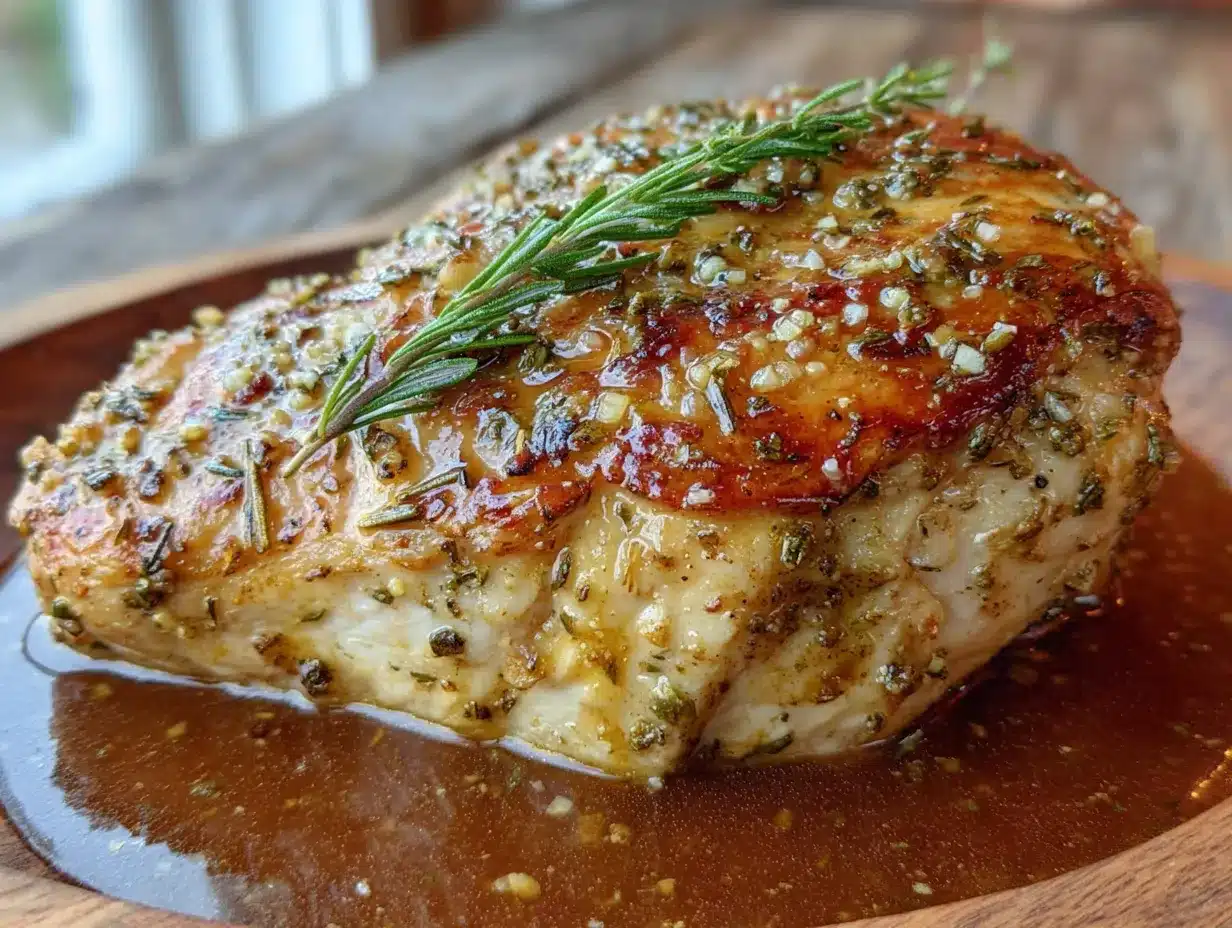
- Bone-in, skin-on turkey breast (3 to 4 pounds / 1.4 to 1.8 kg) — The bone adds flavor and helps keep the meat moist. Skin-on is non-negotiable for crispy skin.
- Olive oil (1 tablespoon) — Helps the skin crisp up beautifully.
- Salt (1 teaspoon) — For seasoning the outside.
- Black pepper (½ teaspoon)
- Dry white wine (½ cup / 120 ml) — Adds acidity and helps deglaze the pan for gravy. Chicken broth works too.
- Chicken broth (½ cup / 120 ml) — For the roasting pan and the gravy.
For the Pan Gravy
- Pan drippings (from the roasted turkey) — This is where all the flavor lives.
- All-purpose flour (2 tablespoons) — For thickening. Use cornstarch slurry for gluten-free.
- Chicken broth (1 to 1½ cups / 240 to 360 ml) — To thin the gravy to your preferred consistency.
- Salt and pepper (to taste)
- Fresh herbs (optional, for garnish)
Ingredient Selection Tip : Look for a turkey breast that’s plump and evenly shaped for even cooking. If you can find a “self-basting” or “enhanced” turkey breast, it will be extra forgiving. For the herbs, farmers’ market bunches are usually more fragrant than grocery store packs — I’ve noticed a real difference in flavor.
Substitution Guidance : For a dairy-free version, use a high-quality vegan butter or olive oil mixed with a little nutritional yeast for savory depth. For gluten-free gravy, swap the flour for a 1:1 gluten-free flour blend or cornstarch slurry (1 tablespoon cornstarch mixed with 2 tablespoons cold water, stirred in at the end).
Equipment Needed
You don’t need a fancy kitchen for this recipe. Here’s what you’ll need:
- Roasting pan (9×13-inch or similar) — A metal or ceramic baking dish works fine. I’ve used a cast iron skillet too.
- Wire rack (to fit inside the pan) — Helps air circulate under the turkey for even cooking. Not essential, but helpful.
- Instant-read thermometer — This is non-negotiable for perfectly cooked turkey. I’ve learned the hard way that guessing leads to dry meat.
- Small bowl (for mixing the herb butter)
- Chef’s knife and cutting board
- Measuring spoons and cups
- Whisk (for the gravy)
- Fat separator (or a regular measuring cup) — Makes gravy-making much easier. If you don’t have one, just skim the fat with a spoon.
- Aluminum foil (for tenting the turkey)
I’ll be honest — I made this for years without a wire rack, just placing the turkey directly in the pan. It works fine, but the rack does help the skin get crispy on the bottom too. Also, don’t stress about a fancy roasting pan. My most-used one is a $15 metal baking dish from the grocery store that’s been dented and scratched for years — it still delivers perfect results every time.
Preparation Method
Let’s get cooking. Follow these steps, and you’ll have a beautiful, juicy roasted turkey breast with gravy that’ll make you forget you ever bought the canned stuff.
Step 1: Prep the Herb Butter
In a small bowl, combine the softened butter, chopped rosemary, thyme, sage (if using), minced garlic, lemon zest, salt, and pepper. Mix until everything is well incorporated. The mixture should be spreadable but not melted. Set it aside at room temperature while you prep the turkey.
Step 2: Prep the Turkey Breast
Preheat your oven to 400°F (200°C). Pat the turkey breast dry with paper towels — this is crucial for crispy skin. Place it on the wire rack set inside your roasting pan. Drizzle the olive oil over the skin and rub it in evenly. Season generously with salt and pepper, making sure to get the sides and underneath.
Step 3: Apply the Herb Butter
Using your fingers, gently loosen the skin of the turkey breast from the meat, creating a pocket. Be careful not to tear the skin. Spoon about half of the herb butter under the skin, spreading it evenly over the meat. Rub the remaining herb butter all over the outside of the skin. This double application ensures flavor throughout.
Step 4: Set Up the Pan
Pour the white wine and ½ cup of chicken broth into the bottom of the roasting pan, being careful not to wash the butter off the turkey. The liquid will keep the pan from burning and create the base for your gravy.
Step 5: Roast the Turkey
Place the turkey in the preheated oven and roast for 15 minutes at 400°F (200°C). This high initial heat helps brown the skin. Then, without opening the oven, reduce the temperature to 350°F (175°C). Continue roasting for about 45 minutes to 1 hour, or until the internal temperature reaches 155°F (68°C) when measured at the thickest part of the breast. Important : Start checking the temperature at the 45-minute mark. Every oven is different, and a 3-pound breast will cook faster than a 4-pound one.
If the skin is browning too quickly, tent the turkey loosely with aluminum foil for the last 20 minutes of cooking.
Step 6: Rest the Turkey
Once the turkey hits 155°F (68°C), remove it from the oven and transfer it to a cutting board. Do not skip this step — the internal temperature will continue to rise to a safe 165°F (74°C) during resting. Tent loosely with foil and let it rest for 15-20 minutes. This allows the juices to redistribute, ensuring every slice is moist.
Step 7: Make the Pan Gravy
While the turkey rests, make the gravy. Place the roasting pan over two burners on the stovetop over medium heat. (If your pan isn’t stovetop-safe, scrape the drippings into a saucepan.) Whisk in the flour and cook for 1-2 minutes, scraping up all the browned bits from the bottom — that’s pure flavor. Gradually whisk in the remaining chicken broth, starting with 1 cup. Bring to a simmer and cook for 3-5 minutes, until the gravy thickens to your liking. Season with salt and pepper to taste. If the gravy is too thick, add more broth; if too thin, simmer a bit longer.
Step 8: Slice and Serve
Carve the turkey breast against the grain into thick slices. Arrange on a platter, drizzle with some of the gravy, and serve the rest on the side. Garnish with fresh herbs if desired.
Cooking Tips & Techniques
I’ve made this recipe enough times to have a few hard-won lessons. Here’s what I’ve learned so you don’t have to make the same mistakes.
Don’t skip the resting time. I know it’s tempting to slice right into that beautiful golden bird, but I promise you — waiting 15 minutes makes the difference between juicy turkey and dry turkey. The carryover cooking is real, and it’s your friend.
Use an instant-read thermometer. I cannot stress this enough. Turkey is notoriously easy to overcook, and the visual cues (clear juices, golden skin) aren’t reliable. A $10 thermometer will save you every time. Insert it into the thickest part of the breast, avoiding the bone.
Let the butter come to room temperature. Cold butter won’t spread under the skin evenly. I’ve made this mistake at least three times — it’s frustrating and results in uneven flavor. Set the butter out 30 minutes before you start.
Don’t overcrowd the pan. If you’re making a larger turkey breast (over 4 pounds), make sure it has room in the pan. If it’s touching the sides, the heat won’t circulate properly, and you’ll end up with uneven cooking.
Deglaze thoroughly. When making the gravy, those brown bits stuck to the pan (called fond) are pure flavor. Don’t just whisk the flour in — really scrape the bottom with your whisk or a wooden spoon. That’s where the gravy gets its deep, savory character.
One last thing — I once forgot to add the lemon zest to the herb butter. The turkey was still good, but it was missing that brightness that makes this recipe special. The zest really does lighten everything up, so don’t skip it!
Variations & Adaptations
This recipe is wonderfully adaptable. Here are some variations I’ve tried and loved:
Herb Variations
Swap the rosemary and thyme for tarragon and parsley for a more delicate, French-inspired flavor. Or try a Mediterranean version with oregano, basil, and a pinch of red pepper flakes. I made the tarragon version for Easter brunch last year, and it was a huge hit.
Dietary Adaptations
For a dairy-free version, use a high-quality vegan butter or olive oil infused with the same herbs. For gluten-free, skip the flour in the gravy and use a cornstarch slurry instead (1 tablespoon cornstarch whisked into 2 tablespoons cold water, stirred in at the end and simmered until thickened). The turkey itself is naturally gluten-free.
Different Cooking Methods
You can make this in an air fryer for a faster version — cook at 375°F (190°C) for about 30-40 minutes for a 2-pound breast, checking temperature frequently. Or try the slow cooker method: sear the breast in a skillet first, then cook on low for 4-5 hours with the herbs and broth. The skin won’t be crispy, but the meat will be fall-apart tender.
Flavor Twists
Add a tablespoon of Dijon mustard to the herb butter for a tangy kick. Or try a maple-herb version by adding 1 tablespoon of pure maple syrup to the butter — the sweetness pairs beautifully with the sage and thyme. I tried this last Thanksgiving for a small gathering, and everyone asked for the recipe.
Serving & Storage Suggestions
This turkey breast is best served warm, right after resting and slicing. Arrange the slices on a warm platter and drizzle with a few spoonfuls of gravy. I love serving it with simple sides that let the turkey shine — mashed potatoes are classic, but roasted vegetables or a light green salad work beautifully too.
What to serve with it: Creamy mashed potatoes (obviously), roasted Brussels sprouts with balsamic glaze, a simple arugula salad with lemon vinaigrette, or crusty bread to soak up every last drop of gravy. For drinks, a crisp Sauvignon Blanc or a light Pinot Noir complements the herb flavors perfectly.
Storage: Store leftover turkey in an airtight container in the refrigerator for up to 4 days. The gravy keeps separately for up to 5 days. The flavors actually deepen overnight — I often think the leftovers are even better the next day.
Reheating: The best way to reheat turkey without drying it out is in a covered dish with a splash of broth or gravy, in a 300°F (150°C) oven for about 15-20 minutes. You can also microwave individual portions, but cover them with a damp paper towel to add moisture. For the gravy, reheat gently on the stovetop or in the microwave, adding a splash of broth if it’s too thick.
Freezing: Cooked turkey breast freezes well for up to 3 months. Wrap tightly in plastic wrap and then foil, or use a freezer-safe bag. Thaw overnight in the refrigerator before reheating. The gravy can also be frozen in a sealed container for up to 3 months.
Nutritional Information & Benefits
This recipe is naturally high in protein and lower in fat than many roasted turkey preparations, thanks to the light herb butter approach. Here’s an approximate breakdown per serving (based on 6 servings):
| Nutrient | Amount per Serving |
|---|---|
| Calories | 320 |
| Protein | 42g |
| Fat | 12g |
| Saturated Fat | 5g |
| Carbohydrates | 4g |
| Fiber | 0g |
| Sugar | 1g |
| Sodium | 680mg |
Health Benefits: Turkey is an excellent source of lean protein, which supports muscle health and keeps you feeling full. It’s also rich in B vitamins, particularly B6 and B12, which are important for energy metabolism. The herbs in this recipe — rosemary, thyme, and sage — are packed with antioxidants and have anti-inflammatory properties. Using a light hand with the butter keeps the saturated fat in check while still delivering great flavor.
Dietary Considerations: This recipe is naturally low-carb and keto-friendly. For a lower-sodium version, use unsalted butter and reduce the added salt. It’s also gluten-free if you use cornstarch for the gravy instead of flour.
Conclusion
This Light Herb Butter Roasted Turkey Breast with Pan Gravy is the recipe I keep coming back to — not because it’s fancy or complicated, but because it’s the kind of food that makes you feel taken care of. It’s proof that you don’t need a whole turkey or a full day in the kitchen to get that deep, comforting flavor of a holiday meal.
I love how forgiving this recipe is. Whether you make it for a quiet Sunday dinner, a small Thanksgiving gathering, or just because you had a random craving at 11 PM on a Wednesday (no judgment here), it delivers every single time. The herb butter keeps the meat incredibly moist, the pan gravy ties everything together, and the whole thing comes together with minimal fuss.
Now I want to hear from you. Have you tried making a turkey breast this way? What’s your favorite herb combination? Drop a comment below and let me know how it turned out — I read every single one, and I love hearing about your kitchen victories. And if you make this recipe, snap a photo and share it — I’d love to see your beautiful roast!
Until next time, happy cooking — and don’t forget to save some gravy for the leftovers.
Frequently Asked Questions
Can I use a boneless turkey breast for this recipe?
Absolutely. Boneless turkey breast works well, but it will cook faster — start checking the temperature at 30 minutes. The bone does add flavor and helps retain moisture, so if you can find bone-in, I recommend it.
Can I make the herb butter ahead of time?
Yes! The herb butter can be made up to 3 days in advance and stored in the refrigerator. Just let it come to room temperature for about 20 minutes before using so it’s spreadable.
My gravy turned out lumpy. What went wrong?
Lumpy gravy usually happens when the flour isn’t whisked in thoroughly. Make sure you whisk constantly when adding the flour to the drippings, and cook it for a full minute before adding the broth. If it’s already lumpy, you can strain it through a fine-mesh sieve for a smooth finish.
Can I use dried herbs instead of fresh?
Yes, but use about one-third the amount. Dried herbs are more concentrated. For this recipe, use 1 teaspoon dried rosemary, 1 teaspoon dried thyme, and ½ teaspoon dried sage. The flavor won’t be quite as bright, but it will still be delicious.
How do I know when the turkey is done without a thermometer?
While I strongly recommend a thermometer, you can check by piercing the thickest part of the breast with a knife. The juices should run clear, not pink. But honestly, a thermometer is the only reliable way to avoid overcooking — it’s worth the small investment.
Pin This Recipe!
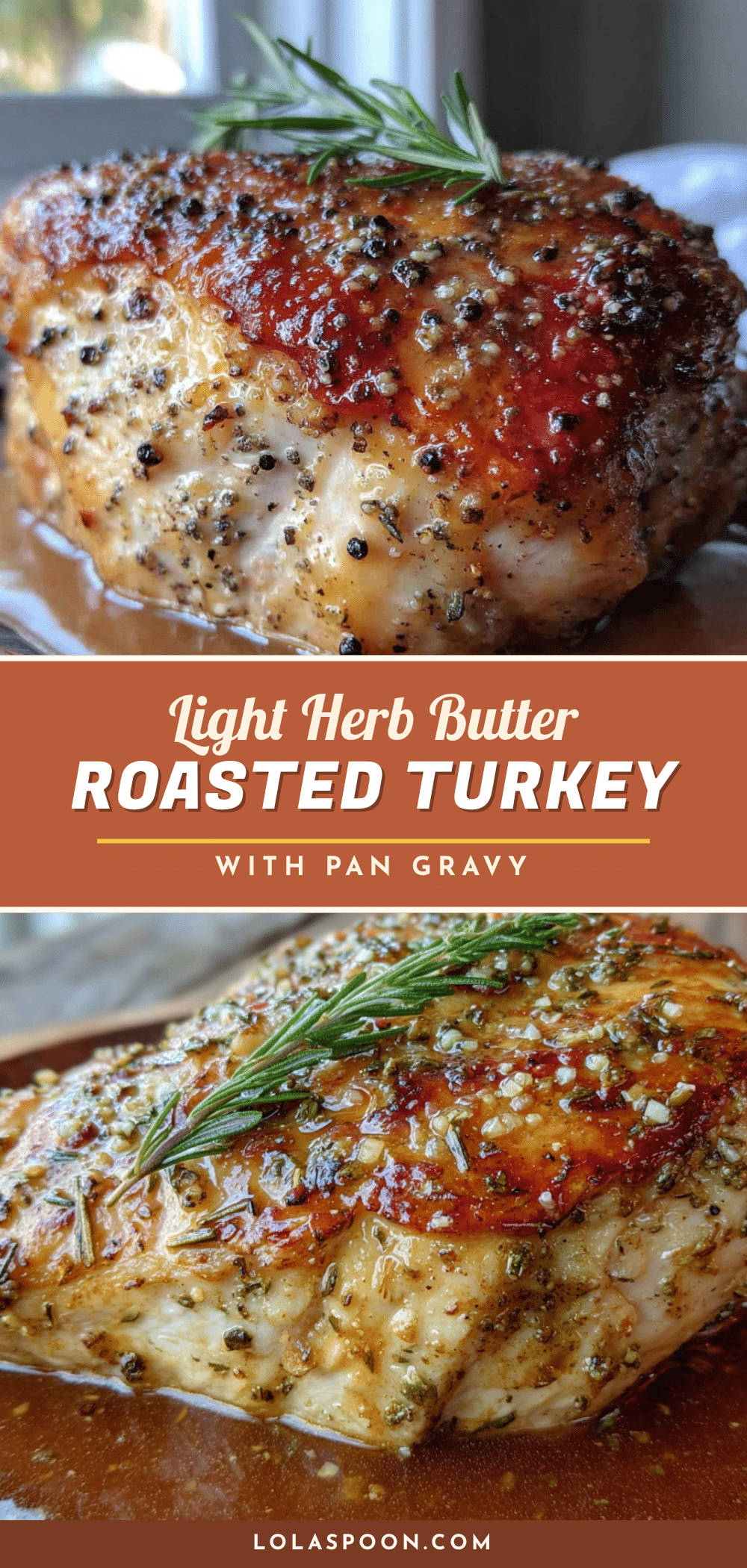
Light Herb Butter Roasted Turkey Breast with Easy Pan Gravy
A quick and easy roasted turkey breast with a light herb butter that keeps the meat incredibly moist, served with a silky pan gravy. Perfect for small gatherings or a cozy weeknight dinner that feels special.
- Prep Time: 15 minutes
- Cook Time: 1 hour 15 minutes
- Total Time: 1 hour 30 minutes
- Yield: 6 servings 1x
- Category: Main Course
- Cuisine: American
Ingredients
- 4 tablespoons unsalted butter, softened
- 1 tablespoon fresh rosemary, finely chopped (or 1 teaspoon dried)
- 1 tablespoon fresh thyme leaves (or 1 teaspoon dried)
- 1 teaspoon fresh sage, finely chopped (optional)
- 2 cloves garlic, minced
- 1 teaspoon lemon zest
- ½ teaspoon fine sea salt
- ¼ teaspoon freshly ground black pepper
- 1 bone-in, skin-on turkey breast (3 to 4 pounds / 1.4 to 1.8 kg)
- 1 tablespoon olive oil
- 1 teaspoon salt
- ½ teaspoon black pepper
- ½ cup dry white wine (120 ml)
- ½ cup chicken broth (120 ml)
- Pan drippings from roasted turkey
- 2 tablespoons all-purpose flour
- 1 to 1½ cups chicken broth (240 to 360 ml)
- Salt and pepper to taste
- Fresh herbs for garnish (optional)
Instructions
- Preheat oven to 400°F (200°C).
- In a small bowl, combine softened butter, chopped rosemary, thyme, sage (if using), minced garlic, lemon zest, ½ teaspoon salt, and ¼ teaspoon pepper. Mix until well incorporated.
- Pat the turkey breast dry with paper towels. Place on a wire rack set inside a roasting pan. Drizzle with olive oil and rub evenly. Season with 1 teaspoon salt and ½ teaspoon pepper.
- Gently loosen the skin from the meat to create a pocket. Spoon about half of the herb butter under the skin, spreading evenly. Rub remaining herb butter over the outside of the skin.
- Pour white wine and ½ cup chicken broth into the bottom of the roasting pan.
- Roast at 400°F (200°C) for 15 minutes. Reduce oven temperature to 350°F (175°C) and continue roasting for 45 minutes to 1 hour, until internal temperature reaches 155°F (68°C) at the thickest part. Tent with foil if browning too quickly.
- Remove turkey from oven and transfer to a cutting board. Tent loosely with foil and let rest for 15-20 minutes (temperature will rise to 165°F/74°C).
- While turkey rests, place roasting pan over two burners on medium heat. Whisk in flour and cook for 1-2 minutes, scraping up browned bits. Gradually whisk in remaining chicken broth (start with 1 cup). Bring to a simmer and cook for 3-5 minutes until thickened. Season with salt and pepper.
- Carve turkey against the grain into thick slices. Arrange on a platter, drizzle with gravy, and serve remaining gravy on the side. Garnish with fresh herbs if desired.
Notes
Don’t skip the resting time—it ensures juicy meat. Use an instant-read thermometer for perfect doneness. Let butter come to room temperature for easy spreading. Deglaze the pan thoroughly for maximum flavor in the gravy. The lemon zest is key for brightness; do not omit.
Nutrition
- Serving Size: 1 serving (about 6 o
- Calories: 320
- Sugar: 1
- Sodium: 680
- Fat: 12
- Saturated Fat: 5
- Carbohydrates: 4
- Protein: 42
Keywords: roasted turkey breast, herb butter turkey, easy turkey recipe, small turkey breast, pan gravy, Thanksgiving turkey, quick turkey dinner