I wasn’t trying to make persimmon bread. Honestly, I’d stopped by my neighbor Marta’s house on a gray Tuesday afternoon to return her hedge clippers, and the smell of warm cinnamon and something deeply, almost honey-sweet hit me before I even got to her screen door. She was standing in her tiny kitchen, wiping flour off her cheek with the back of her hand, completely nonchalant, like she hadn’t just created the exact thing the season demanded. “Oh, that?” she said when I asked, gesturing with a spatula toward a loaf pan cooling on the stovetop. “Just using up those mushy persimmons from the tree out back. It’s nothing special.” But it was—it was the kind of nothing special that makes you rethink everything you thought you knew about quick breads.
I stood there, leaning against her counter, watching her slice into that loaf. The crumb was tender, almost velvety, studded with toasted walnuts and that unmistakable ribbon of cinnamon running through it. She handed me a warm slice on a napkin, and I swear, the first bite was a revelation. It wasn’t overly sweet—just enough to feel like a treat—but the persimmon brought a jammy, sun-ripened depth that felt like biting into autumn itself. Marta shrugged when I asked for the recipe. “It’s just the one from the back of the pectin box, sort of,” she said. “I tweaked it a bit.” And that, right there, is the whole point of this cozy persimmon bread with walnuts and cinnamon. It’s not a fussy, complicated thing. It’s the kind of recipe you stumble into on a random weekday and then can’t stop making. Maybe you’ve been there, standing in someone else’s kitchen, smelling something that makes you forget why you came over in the first place. This bread is that moment.
I’ve made it a dozen times since that Tuesday, tweaking it myself until it felt like mine. It’s become my go-to for those in-between days—not quite a celebration, not quite a weekday. The kind of day where you want the house to smell good without spending hours in the kitchen. And honestly, every time I pull a loaf out of the oven, I think of Marta, her flour-dusted cheek, and the way she made something extraordinary feel like no big deal at all.
Why You’ll Love This Recipe
This isn’t just another quick bread recipe. It’s the one that actually works, every single time, with ingredients you probably already have or can easily find. Here’s why it’s earned a permanent spot in my fall baking rotation:
- Quick & Easy: From start to oven in about 15 minutes. No stand mixer required, no complicated techniques. Just a bowl, a whisk, and a spatula.
- Simple Ingredients: You don’t need to hunt down fancy baking supplies. Ripe persimmons, pantry staples, and a handful of walnuts are all it takes.
- Perfect for the Season: Whether it’s a cozy Thanksgiving morning, a chilly afternoon with a cup of tea, or a hostess gift for a holiday gathering, this bread fits right in.
- Crowd-Pleaser: I’ve brought this to brunches, potlucks, and book club meetings. It disappears every time. Kids love it, adults love it, even people who swear they don’t like persimmons come back for seconds.
- Unbelievably Delicious: The texture is what gets you. It’s moist without being dense, tender without being crumbly. The walnuts add a little crunch, the cinnamon warms everything up, and the persimmon keeps it all perfectly balanced.
What makes this version different from the dozens of persimmon bread recipes out there? It’s the method. Instead of just mashing the persimmon pulp, I blend it until it’s completely smooth. This step makes the crumb incredibly silky and distributes the fruit’s flavor evenly throughout the loaf. No weird stringy bits, no uneven pockets of mush. Just pure, consistent deliciousness. It’s a small tweak, but it makes a world of difference. This is the kind of bread that makes you close your eyes after the first bite. It’s comfort food reimagined—simpler, faster, but with the same soul-soothing satisfaction.
What Ingredients You Will Need
This recipe uses simple, wholesome ingredients to deliver bold flavor and satisfying texture without the fuss. Most of these are pantry staples, and the persimmons are the star of the show. Here’s what you’ll need and why each ingredient matters.
- Ripe Hachiya or Fuyu Persimmons (about 1 ½ cups pulp): This is the most important ingredient, so choose wisely. For the best texture, you want Hachiya persimmons—they’re the acorn-shaped ones that get incredibly soft and jelly-like when ripe. Fuyu persimmons (the squat, tomato-shaped ones) can work if they’re very soft, but they won’t give you the same intense, jammy flavor. Look for persimmons that feel like a water balloon when gently squeezed. (Pro tip: If your Hachiyas are still a bit firm, let them sit on the counter for a few days. The astringency will disappear as they soften.)
- All-Purpose Flour (2 cups / 240g): Standard all-purpose flour gives this bread the perfect structure. I’ve tested this with a 50/50 blend of whole wheat pastry flour, and it works well if you want a nuttier flavor. For a gluten-free option, use a good 1:1 gluten-free flour blend (I like Bob’s Red Mill for this).
- Granulated Sugar (1 cup / 200g): Regular white sugar keeps the bread tender and sweet without overwhelming the persimmon flavor. You can reduce it to ¾ cup if your persimmons are exceptionally sweet, but I wouldn’t go lower than that.
- Light Brown Sugar (½ cup / 100g, packed): This adds a subtle molasses depth that pairs beautifully with the cinnamon and walnuts. Don’t skip it—it’s part of what makes this bread taste so cozy.
- Vegetable Oil (½ cup / 120ml): Oil keeps the bread incredibly moist, even after a few days on the counter. I use a neutral oil like canola or grapeseed. You can substitute melted coconut oil or unsalted butter if you prefer, but the texture will be slightly different.
- Large Eggs (2, room temperature): Eggs provide structure and richness. Take them out of the fridge about 30 minutes before you start baking so they incorporate more evenly.
- Vanilla Extract (1 teaspoon): A good-quality vanilla extract rounds out the flavors. I always use pure vanilla extract when I can, but imitation works fine in a pinch.
- Ground Cinnamon (2 teaspoons): This is non-negotiable. The cinnamon is what makes the house smell like autumn. I use Saigon cinnamon for its stronger, sweeter flavor, but any good ground cinnamon will do.
- Baking Soda (1 teaspoon): This is the leavening agent that helps the bread rise. Make sure it’s fresh—if it doesn’t fizz when mixed with an acid (like the persimmon), it’s time to buy a new box.
- Salt (½ teaspoon): Salt balances the sweetness and enhances all the other flavors. Don’t skip it, even if you’re watching your sodium.
- Chopped Walnuts (1 cup / 120g, toasted): Toasting the walnuts first makes a huge difference. Spread them on a baking sheet and toast at 350°F for 5-7 minutes until they smell fragrant. Let them cool before adding to the batter. They add a lovely crunch and a slightly bitter contrast to the sweet bread.
Equipment Needed
You don’t need a fully stocked professional kitchen to make this bread. Here’s what you’ll actually use:
- 9×5-inch Loaf Pan: This is the standard size for a quick bread. If you only have an 8×4-inch pan, the bread will take longer to bake and might dome more. Adjust the time accordingly.
- Mixing Bowls: You’ll need one large bowl for the wet ingredients and one medium bowl for the dry ingredients. Nothing fancy—I use the same set I’ve had for years.
- Whisk and Rubber Spatula: A whisk for the dry ingredients and a spatula for folding everything together. A wooden spoon works too, but a spatula makes it easier to scrape the sides.
- Blender or Food Processor: This is my secret weapon for the smoothest persimmon pulp. You can mash the fruit by hand, but blending it gives you that silky texture I mentioned earlier. I use a small NutriBullet for this.
- Parchment Paper: Line your loaf pan with a sling of parchment paper for easy removal. Trust me on this—it saves you from the heartbreak of a stuck loaf.
- Cooling Rack: Letting the bread cool completely on a rack prevents a soggy bottom. If you don’t have one, you can use the inverted loaf pan trick, but a rack is better.
Preparation Method
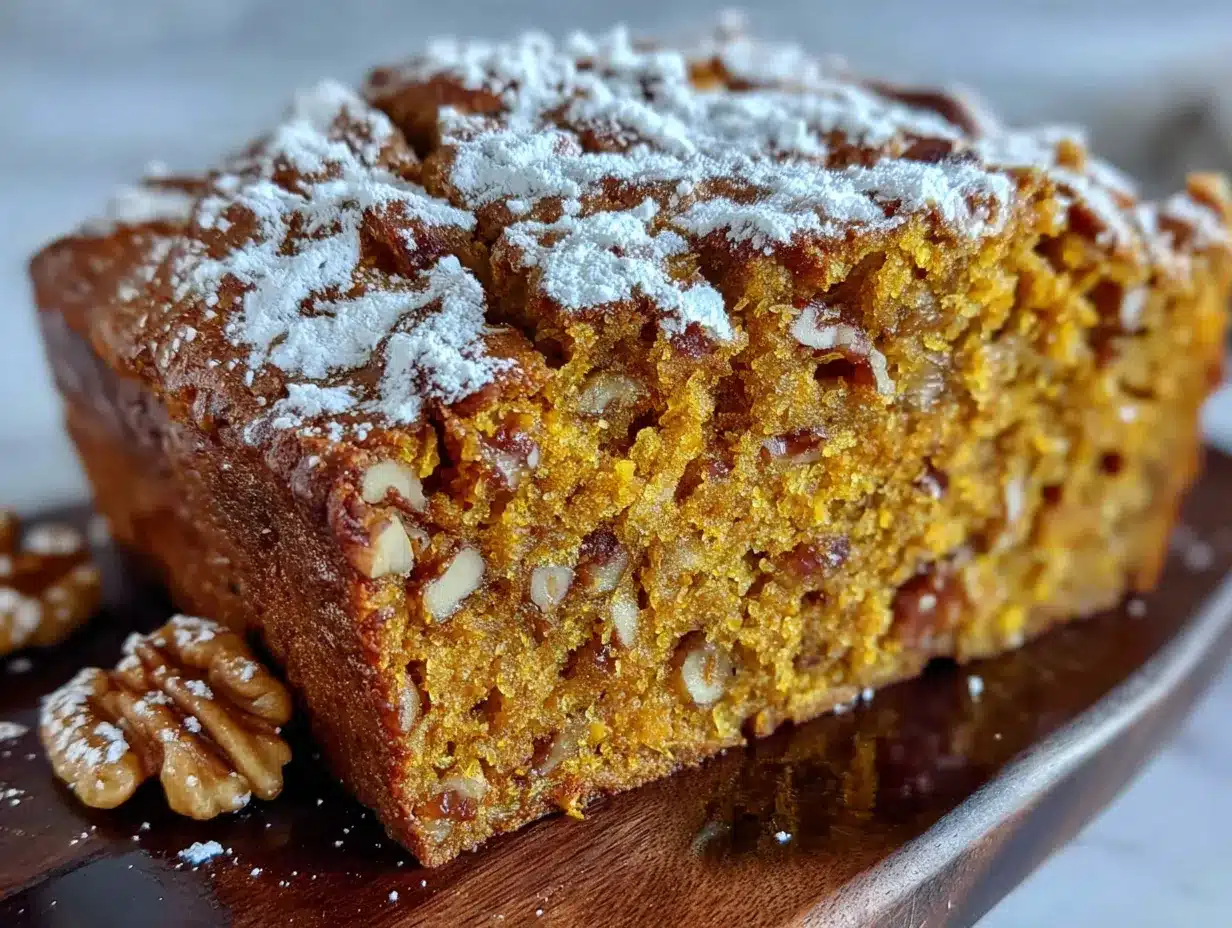
This is where the magic happens. Follow these steps closely, and you’ll have a perfect loaf every time.
- Preheat and Prep (5 minutes): Preheat your oven to 350°F (175°C). Grease your 9×5-inch loaf pan and line it with a strip of parchment paper, leaving a couple of inches hanging over the long sides. This creates handles for lifting the bread out later. Set it aside.
- Prepare the Persimmon Pulp (5 minutes): Cut your ripe persimmons in half and scoop out the flesh. Discard any seeds or tough core pieces. Place the pulp in a blender or food processor and blitz until completely smooth. You should have about 1 ½ cups of puree. If you’re a little short, you can add a splash of water or apple juice to reach the right amount. Set the puree aside.
- Mix the Dry Ingredients (3 minutes): In a medium bowl, whisk together the 2 cups of all-purpose flour, 2 teaspoons of ground cinnamon, 1 teaspoon of baking soda, and ½ teaspoon of salt. Make sure everything is evenly combined. Set this bowl aside.
- Combine the Wet Ingredients (5 minutes): In a large bowl, whisk together the 1 cup of granulated sugar and ½ cup of packed light brown sugar. Add the ½ cup of vegetable oil and whisk until smooth. It will look a bit like wet sand—that’s okay. Add the 2 room-temperature eggs and 1 teaspoon of vanilla extract, and whisk until the mixture is pale and slightly thickened, about a minute. Now, pour in the persimmon puree and whisk until fully incorporated. The batter will be thin and a little frothy.
- Fold in the Dry Ingredients (3 minutes): Pour the dry ingredients into the wet ingredients. Use your rubber spatula to fold everything together gently. Stir just until you no longer see streaks of flour—overmixing will make the bread tough. A few small lumps are fine. The batter will be thick but still pourable.
- Add the Walnuts (1 minute): Gently fold in the 1 cup of toasted, chopped walnuts. Reserve a handful to sprinkle on top if you want a prettier finish. Don’t overmix at this stage—just fold until the nuts are evenly distributed.
- Bake the Bread (50-60 minutes): Pour the batter into your prepared loaf pan and spread it into an even layer. If you reserved some walnuts, sprinkle them over the top now. Bake for 50 to 60 minutes, or until a toothpick inserted into the center comes out clean or with just a few moist crumbs attached. If the top is browning too quickly (after about 40 minutes), tent the pan loosely with aluminum foil.
- Cool and Serve (2 hours minimum): Let the bread cool in the pan for 15 minutes. Then, use the parchment handles to lift it out and transfer it to a wire rack to cool completely. I know it’s tempting to slice into it warm, but letting it cool fully (at least 2 hours) allows the crumb to set properly. Warm bread is gummy bread—patience pays off here.
Cooking Tips & Techniques
I’ve made this bread more times than I can count, and I’ve learned a few things along the way. Here are my best tips for getting it right every single time.
Don’t skip the toasting step for the walnuts. I know it feels like an extra thing to do, but toasting brings out the oils and makes the nuts infinitely more flavorful. I learned this the hard way after making a batch with raw walnuts that tasted flat and a little chalky. Five minutes in the oven transforms them completely. Also, let them cool before adding to the batter, or they’ll melt the butter (if you’re using it) and mess with the texture.
Watch your persimmon ripeness closely. Under-ripe Hachiyas will make your bread taste astringent and leave a weird, fuzzy feeling in your mouth. It’s not dangerous, but it’s not pleasant. If you’re unsure, taste a tiny bit of the puree before adding it to the batter. It should be sweet and smooth, not puckering. If it’s still a bit tart, let the persimmons sit for another day or two.
Use the parchment sling. I cannot stress this enough. I’ve had loaves that looked perfect in the pan but crumbled into pieces when I tried to flip them out. Parchment paper is cheap insurance. It also makes cleanup a breeze, which is always a win in my book.
Check for doneness with a toothpick, not your eyes. The top of the bread might look golden and set, but the center can still be raw. Insert a toothpick into the thickest part of the loaf. If it comes out clean, you’re good. If it’s wet with batter, give it another 5-10 minutes. Every oven runs a little differently, so trust the toothpick over the timer.
Let it cool completely before slicing. This is the hardest tip to follow, I know. But cutting into warm bread compresses the crumb and makes it gummy. I’ve ruined more than one loaf by being impatient. Let it cool on the rack for at least 2 hours. If you can wait overnight, the flavors actually meld together even better.
Variations & Adaptations
Once you’ve mastered the basic recipe, feel free to play around. Here are some of my favorite variations:
- Spiced Persimmon Bread: Add ½ teaspoon of ground ginger, ¼ teaspoon of ground nutmeg, and a pinch of ground cloves to the dry ingredients. This gives the bread a warmer, more complex spice profile that’s perfect for the holidays.
- Chocolate Chip Persimmon Bread: Swap the walnuts for 1 cup of semi-sweet chocolate chips. The chocolate adds a rich, almost fudgy element that pairs surprisingly well with the persimmon. My kids beg for this version.
- Vegan Persimmon Bread: Replace the eggs with 2 flax eggs (2 tablespoons ground flaxseed mixed with 6 tablespoons water, let sit for 5 minutes) and use a neutral oil instead of butter. The texture will be slightly denser, but it’s still delicious. I’ve brought this to a vegan potluck and no one knew the difference.
- Gluten-Free Option: Use a high-quality 1:1 gluten-free flour blend that contains xanthan gum. I’ve tested this with King Arthur’s Measure for Measure, and it works beautifully. Just be careful not to overmix the batter, as gluten-free flours can get gummy if overworked.
- Dried Fruit Addition: Fold in ½ cup of dried cranberries or chopped dried apricots along with the walnuts. The chewy texture and tartness add another layer of interest. I did this once when I was out of walnuts, and it was a happy accident.
Serving & Storage Suggestions
This bread is incredibly versatile when it comes to serving. Here’s how I like to enjoy it and how to keep it fresh.
Serving: Serve the persimmon bread at room temperature or slightly warm. A slice with a pat of salted butter is my go-to, but it’s also fantastic with a spread of cream cheese or a drizzle of honey. For a more decadent treat, toast a slice and top it with a scoop of vanilla ice cream. It’s also perfect alongside a cup of hot coffee or chai tea on a cold afternoon.
Storage: Wrap the cooled loaf tightly in plastic wrap or aluminum foil and store it at room temperature for up to 4 days. The moisture from the persimmons keeps it soft, but it will start to dry out after day 3. If you live in a humid climate, you might want to store it in the refrigerator to prevent mold, but bring it to room temperature before serving for the best texture.
Freezing: This bread freezes beautifully. Wrap the completely cooled loaf (or individual slices) in a layer of plastic wrap, then a layer of aluminum foil, and place in a freezer-safe bag. It will keep for up to 3 months. To thaw, leave it on the counter for a few hours or pop a frozen slice in the toaster for a quick treat. I always keep a loaf in the freezer for unexpected guests.
Flavor Development: Honestly, this bread tastes even better the day after it’s baked. The flavors have time to meld, and the crumb becomes even more tender. If you can resist eating it all on day one, you’ll be rewarded on day two.
Nutritional Information & Benefits
While this is definitely a treat, there are a few redeeming qualities worth noting. Persimmons are packed with vitamins A and C, as well as fiber and antioxidants. Walnuts add healthy omega-3 fatty acids and a good dose of protein. That said, this is still a sweet bread with sugar and oil, so enjoy it in moderation.
Here are the approximate nutritional values per slice (based on 12 slices):
- Calories: 320
- Fat: 16g
- Carbohydrates: 42g
- Fiber: 2g
- Sugar: 24g
- Protein: 5g
Dietary Considerations: This recipe contains gluten, eggs, and walnuts. For a gluten-free version, see the variations section. For a nut-free version, simply omit the walnuts or substitute with sunflower seeds or pumpkin seeds. The bread is naturally dairy-free if you use oil instead of butter.
Frequently Asked Questions
Can I use Fuyu persimmons instead of Hachiya?
You can, but the texture will be different. Fuyu persimmons are less juicy and have a firmer, more apple-like texture. If you use them, make sure they are very ripe and soft, and puree them thoroughly. The bread will be a little less moist and have a milder flavor.
Why did my persimmon bread sink in the middle?
This usually happens for one of two reasons: the batter was overmixed, or the bread was underbaked. Overmixing develops the gluten too much, causing the bread to rise quickly and then collapse. Underbaking means the structure isn’t set when it comes out of the oven. Make sure your toothpick test comes out clean and mix the batter just until combined.
Can I make this into muffins instead of a loaf?
Absolutely. Grease a 12-cup muffin tin and fill each cup about ¾ full. Bake at 350°F (175°C) for 18-22 minutes, or until a toothpick inserted into the center comes out clean. Muffins will bake faster than a loaf, so start checking at 18 minutes.
How do I know if a Hachiya persimmon is ripe?
A ripe Hachiya persimmon should feel like a water balloon—very soft and squishy to the touch. The skin will be deep orange and may have some slight blemishes. If it’s still firm, it will be astringent and taste terrible. Let it ripen on the counter at room temperature for a few days until it’s almost jelly-like inside.
Can I reduce the sugar in this recipe?
You can reduce the granulated sugar to ¾ cup and the brown sugar to ⅓ cup without significantly affecting the texture. Any less than that, and the bread might be a little dry or less tender. If your persimmons are exceptionally sweet, you can also cut back a bit, but I wouldn’t go below 1 cup total of sugar.
Conclusion
This cozy persimmon bread with walnuts and cinnamon is everything I want in a fall recipe. It’s simple enough for a weekday, special enough for a holiday table, and forgiving enough for a beginner baker. The smell alone is worth the effort—it fills your kitchen with warmth and makes you feel like you’ve got it all together, even on a messy Tuesday.
I love that this recipe came from a casual moment, a neighbor who didn’t think she was doing anything special. It reminds me that the best recipes aren’t always the ones we plan—they’re the ones we stumble into, tweak, and make our own. I hope you’ll make this bread, share it with someone you love, and maybe even pass the recipe along. Because that’s how good food works, right? It’s meant to be shared.
If you give this a try, I’d love to hear how it turns out. Leave a comment below or tag me in your photos—I’m always inspired by seeing how you make a recipe your own. Happy baking, and here’s to finding a little extra coziness in your kitchen.
Pin This Recipe!
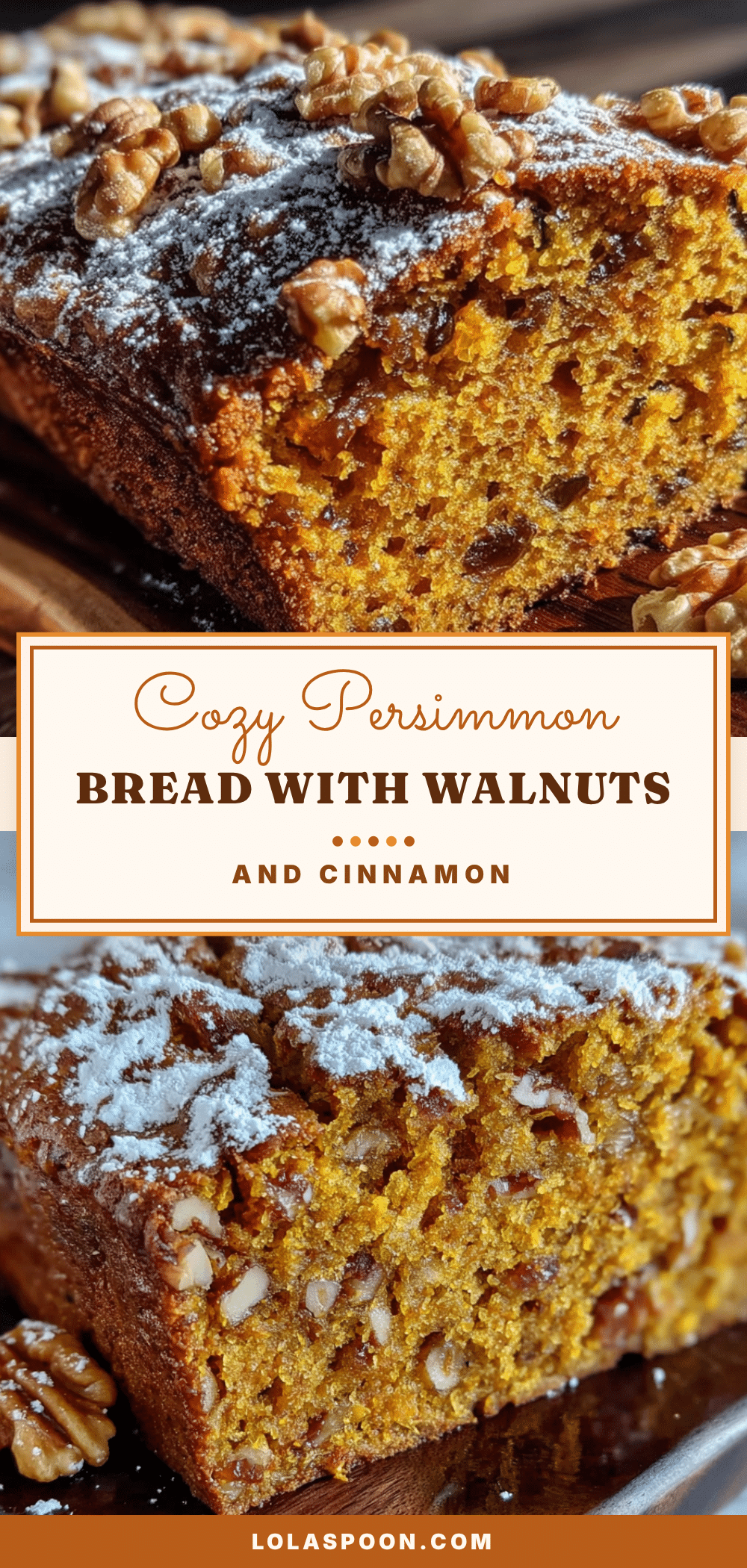
Best Easy Persimmon Bread Recipe with Walnuts

This cozy persimmon bread with walnuts and cinnamon is a simple, forgiving quick bread that fills your kitchen with warmth. Made with ripe persimmons, pantry staples, and a handful of walnuts, it’s perfect for fall baking and sharing.
- Prep Time: 15 minutes
- Cook Time: 55 minutes
- Total Time: 1 hour 10 minutes (plus cooling)
- Yield: 12 servings 1x
- Category: Dessert
- Cuisine: American
Ingredients
- 1 ½ cups ripe Hachiya or Fuyu persimmon pulp (about 3–4 persimmons)
- 2 cups all-purpose flour (240g)
- 1 cup granulated sugar (200g)
- ½ cup light brown sugar, packed (100g)
- ½ cup vegetable oil (120ml)
- 2 large eggs, room temperature
- 1 teaspoon vanilla extract
- 2 teaspoons ground cinnamon
- 1 teaspoon baking soda
- ½ teaspoon salt
- 1 cup chopped walnuts, toasted (120g)
Instructions
- Preheat oven to 350°F (175°C). Grease a 9×5-inch loaf pan and line with parchment paper, leaving overhang for easy removal.
- Cut ripe persimmons in half, scoop out flesh, discard seeds and core. Blend pulp in a blender or food processor until completely smooth. Measure 1 ½ cups puree.
- In a medium bowl, whisk together flour, cinnamon, baking soda, and salt.
- In a large bowl, whisk together granulated sugar and brown sugar. Add oil and whisk until smooth. Add eggs and vanilla, whisk until pale and slightly thickened, about 1 minute. Stir in persimmon puree until fully incorporated.
- Pour dry ingredients into wet ingredients. Fold gently with a rubber spatula until just combined (a few lumps are fine). Do not overmix.
- Gently fold in toasted walnuts, reserving a handful for topping if desired.
- Pour batter into prepared loaf pan, spread evenly. Sprinkle reserved walnuts on top if using.
- Bake for 50-60 minutes, until a toothpick inserted in center comes out clean or with a few moist crumbs. If top browns too quickly, tent with foil after 40 minutes.
- Cool in pan for 15 minutes, then lift out using parchment sling and transfer to a wire rack. Cool completely (at least 2 hours) before slicing.
Notes
For best texture, use very ripe Hachiya persimmons. Toasting walnuts enhances flavor. Let bread cool completely before slicing to avoid gummy texture. Bread tastes even better the next day.
Nutrition
- Serving Size: 1 slice
- Calories: 320
- Sugar: 24
- Sodium: 180
- Fat: 16
- Saturated Fat: 2
- Carbohydrates: 42
- Fiber: 2
- Protein: 5
Keywords: persimmon bread, persimmon recipe, fall baking, quick bread, walnut bread, easy bread recipe