I was standing in the beer aisle at my local grocery store last Tuesday, staring at a six-pack of Guinness, when the smell hit me. It wasn’t the beer itself—it was the faint, earthy scent of a damp cellar mixed with the memory of caramelizing onions. And suddenly I was seven years old, standing on a wobbly wooden stool in my neighbor Mrs. Kowalski’s tiny kitchen on a gray October afternoon. She had a pot bubbling on the stove that smelled like nothing I’d ever experienced before—dark, rich, almost sweet in a way that made my stomach growl even though I’d just had lunch. She let me stir it once, the wooden spoon heavy in my small hand, and told me the secret was “something dark and something slow.” I never got her recipe, and she moved away the following summer. But I’ve spent years trying to recreate that exact feeling—that cozy, bone-deep warmth that only comes from a pot of something that’s been simmering for hours. This Guinness beef stew with root vegetables is the closest I’ve ever gotten. Honestly, the first time I made it, I burned the roof of my mouth because I couldn’t wait to taste it. Worth it.
Why You’ll Love This Guinness Beef Stew
This isn’t just another beef stew recipe. I’ve tested this version over a dozen times, tweaking the ratio of stout to broth, playing with the vegetable sizes, and even trying different cuts of beef. What I landed on is the perfect balance of rich, malty depth from the Guinness and sweet, earthy comfort from the root vegetables. It’s the kind of meal that makes your whole house smell like a pub in County Cork on a rainy day.
Here’s why this recipe stands out:
- Deep, Complex Flavor: The Guinness doesn’t just add color—it brings a roasted bitterness that cuts through the richness of the beef and caramelizes beautifully with the vegetables.
- Simple, Everyday Ingredients: Nothing fancy here. You’ll find most of these items in your pantry or at any grocery store. No specialty shops required.
- Perfect for Cold Weather: This stew was made for those days when the wind is howling and you just want to curl up with something warm. It’s basically a hug in a bowl.
- Crowd-Pleaser Guaranteed: I’ve brought this to potlucks and family dinners, and the pot always comes back empty. Even people who “don’t like beer” end up asking for seconds.
- Gets Better the Next Day: Like all great stews, the flavors deepen overnight. Make it a day ahead if you can—your future self will thank you.
What makes this version different from the dozens of other Guinness stews out there? It’s the technique. I brown the beef in batches—no crowding the pan—and I take the time to let the tomato paste caramelize before adding the liquid. That little extra step makes a world of difference. Plus, I add the root vegetables in stages so they’re perfectly tender without turning to mush. This isn’t just a recipe; it’s a system for the best stew you’ll make all season.
What Ingredients You Will Need
This Guinness beef stew relies on simple, hearty ingredients that work together to create something truly special. Most of these are pantry staples or easy to find at any grocery store, especially during the fall and winter months.
- Beef chuck, 2 pounds (900g), cut into 1½-inch cubes – This is my go-to cut for stew. It has enough marbling to stay tender during the long simmer. Skip lean cuts like sirloin—they’ll turn tough and dry.
- Guinness Draught, 1 can (14.9 oz / 440ml) – The star of the show. I use the classic Draught, not the Extra Stout, which can be too bitter. The nitrogen in the Draught gives the stew a silky texture.
- Beef broth, 2 cups (480ml) – Use a good-quality low-sodium broth so you can control the salt. I prefer Swanson’s or Kitchen Basics for consistent flavor.
- Tomato paste, 2 tablespoons (30g) – This adds umami and helps thicken the stew. Don’t skip it!
- Yellow onions, 2 large, diced – They melt into the broth, adding sweetness and body. I’ve tried red onions, but yellow are best here.
- Carrots, 3 large, peeled and cut into 1-inch chunks – Look for firm, bright orange carrots. They hold their shape beautifully during the long cook.
- Parsnips, 2 large, peeled and cut into 1-inch chunks – These add a subtle sweetness and earthy flavor that pairs perfectly with the stout. Don’t skip them!
- Potatoes, 1 pound (450g), Yukon Gold or red, cut into 1½-inch chunks – Yukon Golds hold their shape better than Russets. Red potatoes work well too.
- Celery, 2 stalks, diced – Adds a subtle savory note and texture.
- Garlic, 4 cloves, minced – Because everything is better with garlic.
- All-purpose flour, ¼ cup (30g) – Used to coat the beef for browning and to thicken the stew.
- Fresh thyme, 4 sprigs – Adds an earthy, slightly floral note. Dried thyme works in a pinch (use 1 teaspoon).
- Bay leaves, 2 – For that classic stew aroma.
- Olive oil, 2 tablespoons (30ml) – For browning the beef. Avocado oil works too.
- Butter, 1 tablespoon (14g) – Adds richness and helps caramelize the tomato paste.
- Salt and black pepper, to taste – I use kosher salt for better control.
- Fresh parsley, chopped, for garnish – Optional, but adds a nice pop of color.
Equipment Needed
You don’t need a fancy kitchen to make this stew, but a few key tools will make the process smoother. My absolute must-have is a heavy-bottomed Dutch oven—I use a 6-quart Le Creuset that I’ve had for years, and it distributes heat perfectly. If you don’t have one, a large heavy pot or a slow cooker will work, but the browning step is trickier without a good surface.
You’ll also need a sharp chef’s knife for cutting the beef and vegetables—a dull knife is dangerous and makes uneven pieces. A wooden spoon or a sturdy spatula for stirring is essential, especially when scraping up the browned bits from the bottom of the pot (that’s where the flavor lives!). A set of measuring cups and spoons, a cutting board, and a large bowl for tossing the beef with flour round out the list. If you’re using a slow cooker, you’ll still need a skillet for browning the beef first. Trust me, don’t skip that step.
Preparation Method
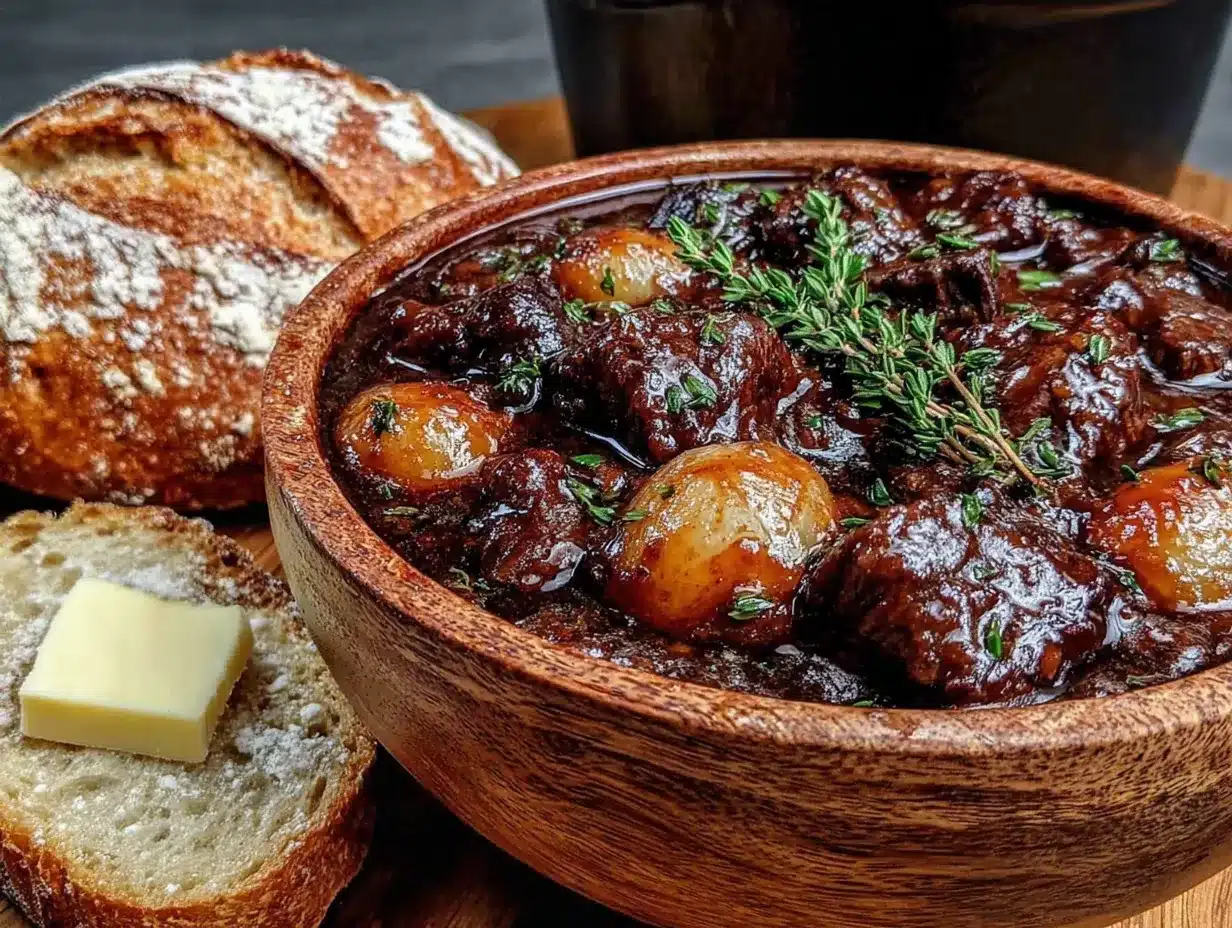
This Guinness beef stew takes about 2½ hours from start to finish, but most of that is hands-off simmering. Here’s how to make it perfect every time.
- Prep the beef (10 minutes): Pat the beef cubes dry with paper towels. This is crucial—wet meat won’t brown properly. Season generously with salt and pepper, then toss with the flour until evenly coated. Shake off any excess flour.
- Brown the beef in batches (15 minutes): Heat 1 tablespoon of olive oil in your Dutch oven over medium-high heat until it shimmers. Add the beef in a single layer—don’t crowd the pot. Work in batches if needed. Brown on all sides, about 3-4 minutes per side. The beef should have a deep, dark crust. Transfer to a plate and set aside. Pro tip: If the beef sticks, it’s not ready to flip. Give it another 30 seconds.
- Sauté the aromatics (8 minutes): Reduce heat to medium. Add the remaining 1 tablespoon of olive oil and the butter. Once the butter melts, add the diced onions and celery. Cook, stirring occasionally, until softened and translucent, about 5 minutes. Add the minced garlic and cook for 1 minute more, until fragrant.
- Caramelize the tomato paste (3 minutes): Push the vegetables to the sides of the pot and add the tomato paste to the center. Let it cook, stirring constantly, until it darkens to a deep brick red, about 2-3 minutes. This step adds incredible depth of flavor. I once skipped this step in a hurry, and the stew was noticeably flat. Don’t make my mistake!
- Deglaze the pot (2 minutes): Pour in about ½ cup of the Guinness and scrape up all the browned bits from the bottom of the pot with your wooden spoon. This is where so much flavor lives. Let it bubble for a minute.
- Add the liquids and beef (5 minutes): Pour in the remaining Guinness and the beef broth. Add the browned beef back to the pot, along with the fresh thyme sprigs and bay leaves. Stir everything together. Bring the stew to a gentle boil, then reduce the heat to low so it’s at a steady simmer.
- Simmer the beef (1 hour): Cover the pot and let it simmer for 1 hour. Stir occasionally to prevent sticking. The beef should be starting to get tender but not quite there yet.
- Add the root vegetables (30-40 minutes): After the hour is up, add the carrots, parsnips, and potatoes. Stir them in, cover again, and continue simmering for another 30-40 minutes, until the vegetables are fork-tender and the beef is fall-apart tender. Check the seasoning and add more salt and pepper if needed.
- Finish and rest (10 minutes): Remove the bay leaves and thyme stems. Let the stew rest off the heat for 10 minutes before serving. This allows the flavors to meld and the stew to thicken slightly. Taste and adjust seasoning one last time.
- Serve: Ladle into bowls and garnish with fresh parsley. Serve with crusty bread for dipping—you’ll want to soak up every last drop of that rich, dark broth.
Cooking Tips & Techniques
After making this stew more times than I can count, I’ve picked up a few tricks that make a real difference. First, don’t rush the browning. I know it’s tempting to throw all the beef in at once, but crowding the pan steams the meat instead of browning it. Take the extra 10 minutes to do it in batches—your patience will be rewarded with deeper flavor.
Second, taste as you go. I can’t stress this enough. The salt level can vary depending on your broth and the Guinness, so adjust gradually. I usually add salt at three points: when seasoning the beef, after deglazing, and at the very end before serving. This builds layers of flavor without making it too salty.
A common mistake is overcooking the vegetables. Root vegetables like carrots and parsnips can go from tender to mushy quickly. That’s why I add them after the beef has already simmered for an hour. They’ll cook perfectly in the remaining time. And here’s a lesson I learned the hard way: if you’re making this stew ahead of time, undercook the vegetables slightly. They’ll continue to soften as the stew sits in the fridge, and you’ll avoid that sad, mushy texture when you reheat it.
Finally, if your stew seems too thin at the end, don’t panic. You can make a quick slurry by whisking 1 tablespoon of cornstarch with 2 tablespoons of cold water, then stirring it into the simmering stew. Cook for 5 minutes, and it’ll thicken right up. But honestly, I prefer the texture as-is—the flour from browning the beef does most of the work.
Variations & Adaptations
One of the best things about this Guinness beef stew is how adaptable it is. I’ve experimented with plenty of variations over the years, and here are some of my favorites.
Slow Cooker Version: Brown the beef and sauté the aromatics as directed, then transfer everything to a slow cooker. Add the Guinness, broth, and beef, and cook on low for 6-7 hours. Add the root vegetables in the last 2 hours of cooking. This is perfect for busy days when you want dinner waiting for you.
Gluten-Free Adaptation: Skip the flour when browning the beef—just season it well and sear it directly. The stew will still thicken from the vegetables and the Guinness. Use a gluten-free broth and check that your tomato paste is certified gluten-free. I’ve made this version for friends with celiac disease, and they couldn’t tell the difference.
Vegetarian Twist: Replace the beef with 2 cans of drained and rinsed chickpeas or 1 pound of hearty mushrooms (cremini or portobello). Use vegetable broth instead of beef broth. The Guinness and root vegetables still create a rich, satisfying stew. I tried this during a Meatless March challenge, and it was surprisingly good—just don’t expect it to taste exactly like the original.
Seasonal Vegetable Swap: In the spring, I swap the parsnips for turnips and add a handful of fresh peas at the end. In the summer, I use zucchini and summer squash, adding them in the last 15 minutes so they don’t get mushy. The stew is forgiving and welcomes whatever vegetables you have on hand.
Spicy Kick: Add 1 teaspoon of smoked paprika and a pinch of cayenne pepper along with the tomato paste. It gives the stew a subtle warmth that pairs beautifully with the stout. My brother-in-law loves this version and requests it every Christmas.
Serving & Storage Suggestions
This Guinness beef stew is best served piping hot in deep bowls, with a generous hunk of crusty bread on the side for sopping up the broth. I love a good sourdough or a rustic Irish soda bread. For a truly cozy meal, serve it with a simple side salad dressed with a sharp vinaigrette to cut through the richness. And honestly, a pint of Guinness on the side doesn’t hurt either.
For storage, let the stew cool completely before transferring it to an airtight container. It will keep in the refrigerator for up to 4 days. The flavor actually improves after a day or two, so don’t hesitate to make it ahead. When reheating, warm it gently on the stovetop over medium-low heat, adding a splash of broth or water if it’s too thick. You can also microwave individual portions, but the stovetop gives a better texture.
This stew freezes beautifully. Portion it into freezer-safe containers or zip-top bags, leaving a little room for expansion. It will keep for up to 3 months. Thaw overnight in the refrigerator before reheating. I like to freeze individual portions for quick lunches on cold days—just grab, reheat, and enjoy.
One thing to note: the potatoes can get a bit grainy after freezing. If you’re planning to freeze the whole batch, consider adding the potatoes fresh when you reheat it. Just boil them separately and stir them in before serving.
Nutritional Information & Benefits
This Guinness beef stew is a hearty, balanced meal that’s packed with nutrients. Each serving (about 1½ cups) provides approximately 450-500 calories, 30g of protein, 35g of carbohydrates, and 15g of fat. The exact numbers will vary based on the cut of beef and the specific vegetables you use.
The beef is an excellent source of iron, zinc, and B vitamins, which support energy metabolism and immune function. The root vegetables—carrots, parsnips, and potatoes—are rich in fiber, vitamin A, and potassium. Carrots are particularly high in beta-carotene, which your body converts to vitamin A for healthy vision and skin. Parsnips are a good source of folate and vitamin C. And the Guinness? Believe it or not, stout contains antioxidants and a small amount of B vitamins, though the alcohol cooks off during simmering.
This recipe is naturally dairy-free if you skip the butter garnish and use oil instead. It’s also nut-free and egg-free. If you’re watching your sodium, use low-sodium broth and go easy on the added salt. The stew is filling and satisfying without being overly heavy—perfect for a cold winter night when you need something nourishing.
Conclusion
This Guinness beef stew with root vegetables has become my go-to for cold weather comfort. It’s the recipe I turn to when I need something that feels like a warm blanket on a gray day. The rich, malty depth from the stout, the sweetness of the carrots and parsnips, the tender chunks of beef—it all comes together in a way that’s greater than the sum of its parts. And every time I make it, I think of Mrs. Kowalski and that little kitchen, and I feel like I’ve finally gotten close to that memory.
I’d love to hear how this stew turns out for you. Did you try any variations? Did you serve it with something unexpected? Drop a comment below and let me know—I read every single one, and your ideas often inspire my next kitchen experiment. And if you loved this recipe, please share it with a friend who needs a little comfort right now. Happy cooking, friends!
Frequently Asked Questions
Can I use a different type of beer?
Absolutely! While Guinness Draught is my favorite for its smooth, roasty flavor, you can use any dark beer or stout. Irish stouts like Murphy’s or Beamish work great. Avoid light beers or IPAs—they won’t give you the same depth of flavor.
Can I make this stew in a slow cooker?
Yes, and it’s perfect for busy days. Brown the beef and sauté the aromatics on the stovetop first, then transfer everything to the slow cooker. Cook on low for 6-7 hours, adding the root vegetables in the last 2 hours. The flavor will be just as deep and rich.
How do I thicken the stew if it’s too thin?
If your stew is thinner than you’d like, make a slurry by whisking 1 tablespoon of cornstarch with 2 tablespoons of cold water. Stir it into the simmering stew and cook for 5 minutes. Alternatively, you can mash some of the cooked potatoes against the side of the pot to release their starch.
Can I freeze this stew?
Yes, it freezes wonderfully. Let it cool completely, then portion it into freezer-safe containers. It will keep for up to 3 months. Thaw overnight in the fridge before reheating. For best results, add fresh potatoes when you reheat, as frozen potatoes can become grainy.
What can I serve with this stew besides bread?
This stew pairs beautifully with a simple green salad dressed with a tangy vinaigrette to cut through the richness. Mashed potatoes are another classic option—just skip the extra potatoes in the stew and serve it over a bed of creamy mash. For a lighter side, try roasted Brussels sprouts or steamed green beans.
Pin This Recipe!
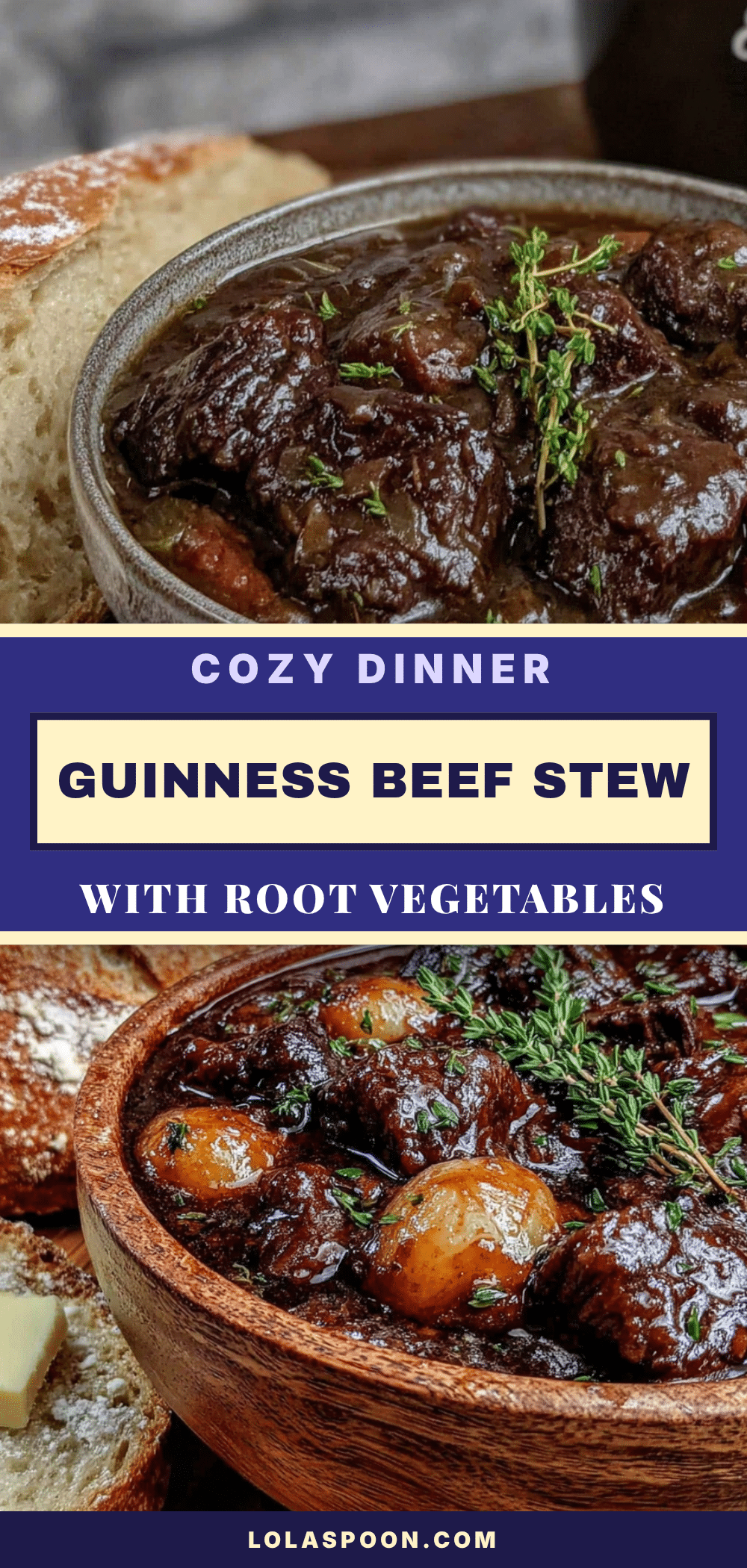
Best Guinness Beef Stew with Root Vegetables

This hearty Guinness beef stew with root vegetables is the ultimate cold-weather comfort food. Rich, malty depth from the stout pairs perfectly with tender beef and sweet, earthy root vegetables for a deeply satisfying meal.
- Prep Time: 15 minutes
- Cook Time: 2 hours 15 minutes
- Total Time: 2 hours 30 minutes
- Yield: 6 servings 1x
- Category: Main Course
- Cuisine: Irish
Ingredients
- 2 pounds (900g) beef chuck, cut into 1½-inch cubes
- 1 can (14.9 oz / 440ml) Guinness Draught
- 2 cups (480ml) low-sodium beef broth
- 2 tablespoons (30g) tomato paste
- 2 large yellow onions, diced
- 3 large carrots, peeled and cut into 1-inch chunks
- 2 large parsnips, peeled and cut into 1-inch chunks
- 1 pound (450g) Yukon Gold or red potatoes, cut into 1½-inch chunks
- 2 stalks celery, diced
- 4 cloves garlic, minced
- ¼ cup (30g) all-purpose flour
- 4 sprigs fresh thyme (or 1 teaspoon dried)
- 2 bay leaves
- 2 tablespoons (30ml) olive oil
- 1 tablespoon (14g) butter
- Salt and black pepper, to taste
- Fresh parsley, chopped, for garnish
Instructions
- Prep the beef: Pat the beef cubes dry with paper towels. Season generously with salt and pepper, then toss with the flour until evenly coated. Shake off any excess flour.
- Brown the beef in batches: Heat 1 tablespoon of olive oil in a Dutch oven over medium-high heat until it shimmers. Add the beef in a single layer—don’t crowd the pot. Work in batches if needed. Brown on all sides, about 3-4 minutes per side. Transfer to a plate and set aside.
- Sauté the aromatics: Reduce heat to medium. Add the remaining 1 tablespoon of olive oil and the butter. Once the butter melts, add the diced onions and celery. Cook, stirring occasionally, until softened and translucent, about 5 minutes. Add the minced garlic and cook for 1 minute more, until fragrant.
- Caramelize the tomato paste: Push the vegetables to the sides of the pot and add the tomato paste to the center. Let it cook, stirring constantly, until it darkens to a deep brick red, about 2-3 minutes.
- Deglaze the pot: Pour in about ½ cup of the Guinness and scrape up all the browned bits from the bottom of the pot with a wooden spoon. Let it bubble for a minute.
- Add the liquids and beef: Pour in the remaining Guinness and the beef broth. Add the browned beef back to the pot, along with the fresh thyme sprigs and bay leaves. Stir everything together. Bring the stew to a gentle boil, then reduce the heat to low so it’s at a steady simmer.
- Simmer the beef: Cover the pot and let it simmer for 1 hour. Stir occasionally to prevent sticking.
- Add the root vegetables: After the hour is up, add the carrots, parsnips, and potatoes. Stir them in, cover again, and continue simmering for another 30-40 minutes, until the vegetables are fork-tender and the beef is fall-apart tender. Check the seasoning and add more salt and pepper if needed.
- Finish and rest: Remove the bay leaves and thyme stems. Let the stew rest off the heat for 10 minutes before serving. Taste and adjust seasoning one last time.
- Serve: Ladle into bowls and garnish with fresh parsley. Serve with crusty bread for dipping.
Notes
For best flavor, make the stew a day ahead and reheat. The flavors deepen overnight. If the stew is too thin, make a slurry with 1 tablespoon cornstarch and 2 tablespoons cold water, stir in, and simmer for 5 minutes. For a slow cooker version, brown beef and sauté aromatics on stovetop, then transfer to slow cooker with liquids and beef; cook on low for 6-7 hours, adding root vegetables in the last 2 hours.
Nutrition
- Serving Size: 1½ cups
- Calories: 475
- Sugar: 8
- Sodium: 600
- Fat: 15
- Saturated Fat: 5
- Carbohydrates: 35
- Fiber: 6
- Protein: 30
Keywords: Guinness beef stew, Irish stew, beef stew, root vegetables, comfort food, winter recipe, stout stew