Miss Delia watched me fumbling with a bag of dried black-eyed peas in the corner market on Bell Street, her shopping cart parked right next to mine. She didn’t say anything at first. Then she reached over, picked up the bag, and handed me a different one—the store brand, cheaper by a dollar. “These cook up softer,” she said, like it was the most obvious thing in the world. I was new to the neighborhood, new to the idea that a soup could carry so much meaning, and honestly, a little overwhelmed by the sheer number of bean options. She laughed, a warm, crinkly-eyed laugh, and told me about her family’s New Year’s tradition. It wasn’t a formal lesson, you know? It was just her, standing there in her worn-out coat, sharing a piece of her life because she saw I needed a hand.
That conversation turned into an invitation. She told me to come by her place that Saturday, that she’d show me how to make it right. I showed up with a bottle of wine I was nervous about, and she put me straight to work washing collard greens in her deep farmhouse sink. The kitchen smelled like smoked turkey and old memories. She talked about her grandmother, about moving north, about how this soup had seen her through good years and bad. I messed up the cornbread—burned the bottom something awful—but she just said, “First time’s for learning, honey.” What stuck with me wasn’t just the recipe. It was the way she treated the kitchen like a living room, a place where people showed up as themselves. Maybe you’ve been there, standing in someone else’s kitchen, feeling like you’re on the edge of something important.
This soup, this black-eyed pea and collard greens soup, became my anchor. Every New Year’s Eve, I make a huge pot. It’s the one thing my guests count on, the dish that shows up without me even asking. It’s not fancy. It’s not complicated. But it carries a kind of weight that store-bought luck just can’t match. I keep making it because it reminds me of Miss Delia, of that first Saturday, of the way a stranger can become a guide if you’re paying attention. And honestly, it’s the best-tasting luck I’ve ever had.
Why You’ll Love This Recipe
I’ve tested this soup more times than I can count, and trust me, it delivers every single time. If you’re hosting a New Year’s gathering or just want a pot of something that feels like a hug, this is it. Here’s why it works:
- Simple Ingredients, Big Flavor: No fancy grocery trips. You probably have most of this in your pantry right now—dried peas, a smoked ham hock or turkey leg, onions, garlic, and a bunch of fresh collards. That’s it.
- Perfect for a Crowd: This recipe scales beautifully. I’ve made it for four people and for forty. It just keeps on giving, and it actually tastes better the next day.
- Unbelievably Comforting: There’s something about the way the smoky broth mingles with the tender greens and creamy peas. It’s the kind of soup that makes you close your eyes after the first spoonful.
- Stress-Free Hosting: You can make this entirely ahead of time. In fact, I recommend it. The flavors meld and deepen overnight, which means you get to actually enjoy your party instead of hovering over the stove.
- Tradition with a Twist: It honors the classic Southern New Year’s tradition—black-eyed peas for luck, collard greens for wealth—but it’s all in one pot. Less cleanup, more time with your people.
What makes this recipe different from all the others? It’s the technique. Most recipes just dump everything in a pot and call it a day. But I’ve learned from years of trial and error that building layers of flavor makes all the difference. You start by browning the meat, then sweating the aromatics, then adding the broth in stages. It sounds like extra work, but I promise, it’s the secret to a broth that tastes like it simmered all day. And it’s the kind of dish that impresses guests without making you sweat. They’ll think you worked magic. You’ll know it’s just a little patience and a good pot.
What Ingredients You Will Need
This recipe uses honest, straightforward ingredients that come together to create something truly memorable. I’ve tested each one to make sure it pulls its weight in the pot.
- 1 pound dried black-eyed peas (rinsed and picked over for any small stones or debris; I prefer the store brand, just like Miss Delia taught me)
- 1 large smoked ham hock or 2 smoked turkey legs (about 1.5 pounds total; this is the backbone of your smoky broth. I’ve used both, and honestly, turkey legs give a leaner, cleaner flavor that I’ve come to love)
- 2 tablespoons olive oil (for browning the aromatics; use a good quality one here)
- 1 large yellow onion, diced (about 2 cups; sweet onions work too, but yellow gives the best savory base)
- 4 cloves garlic, minced (fresh only, please—the jarred stuff just doesn’t have the same pop)
- 3 ribs celery, diced (about 1 cup; adds that subtle earthy note)
- 2 large carrots, diced (about 1 cup; for sweetness and color)
- 1 large bunch collard greens (about 1 pound; look for leaves that are deep green and crisp, not wilted. I get mine from the farmers market when I can)
- 8 cups low-sodium chicken broth (or vegetable broth; I like Swanson’s or Kitchen Basics for consistency)
- 2 cups water (plus more as needed to adjust consistency)
- 1 teaspoon smoked paprika (adds a subtle wood-fired depth)
- 1/2 teaspoon cayenne pepper (optional, but I love the gentle heat; adjust to your crowd’s tolerance)
- 2 bay leaves (dried is fine; just remember to fish them out before serving)
- 1 teaspoon dried thyme (or 3 sprigs fresh if you have them)
- 1 tablespoon apple cider vinegar (added at the end; it brightens everything up and cuts through the richness)
- Salt and black pepper to taste (go easy on the salt early—the smoked meat adds plenty)
- Hot sauce for serving (Tabasco or Crystal are my go-tos; let guests add their own)
Ingredient selection tips: For the black-eyed peas, I’ve found that dried peas are far superior to canned in this soup. They hold their shape better and absorb the smoky broth more deeply. If you’re in a pinch, you can use three 15-ounce cans of black-eyed peas, drained and rinsed, but reduce the simmering time significantly—maybe 20 minutes total. For the collard greens, always remove the tough central ribs before chopping. They’re fibrous and won’t break down in the soup. And if you can’t find collards, kale or mustard greens make a fine substitute, though the flavor will be a bit more peppery.
Equipment Needed
You don’t need a professional kitchen to pull this off. Here’s what you’ll actually use:
- Large Dutch oven or heavy-bottomed stockpot (at least 6 quarts; I use a Le Creuset that I saved up for, but a good enameled cast iron from Lodge works just as well. The heavy bottom prevents scorching and distributes heat evenly)
- Sharp chef’s knife (for chopping the collards and vegetables; a dull knife is actually more dangerous than a sharp one, trust me)
- Cutting board (wood or plastic; I prefer wood for vegetables, but make sure it’s large enough to handle a bunch of greens)
- Wooden spoon (for stirring; metal can scratch your pot, and a wooden spoon just feels right for a soup like this)
- Measuring cups and spoons (for accuracy, especially with the spices)
- Large bowl (for soaking the peas if you choose to do so)
- Tongs (for handling the hot ham hock or turkey legs when removing them to shred the meat)
- Colander (for rinsing the peas and washing the greens)
Budget-friendly alternatives: If you don’t have a Dutch oven, a heavy-bottomed stainless steel pot works fine. Just keep an eye on the heat and stir a bit more often to prevent sticking. And if you don’t have a chef’s knife, a sturdy paring knife will do in a pinch—it’ll just take a little longer to chop the greens.
Preparation Method
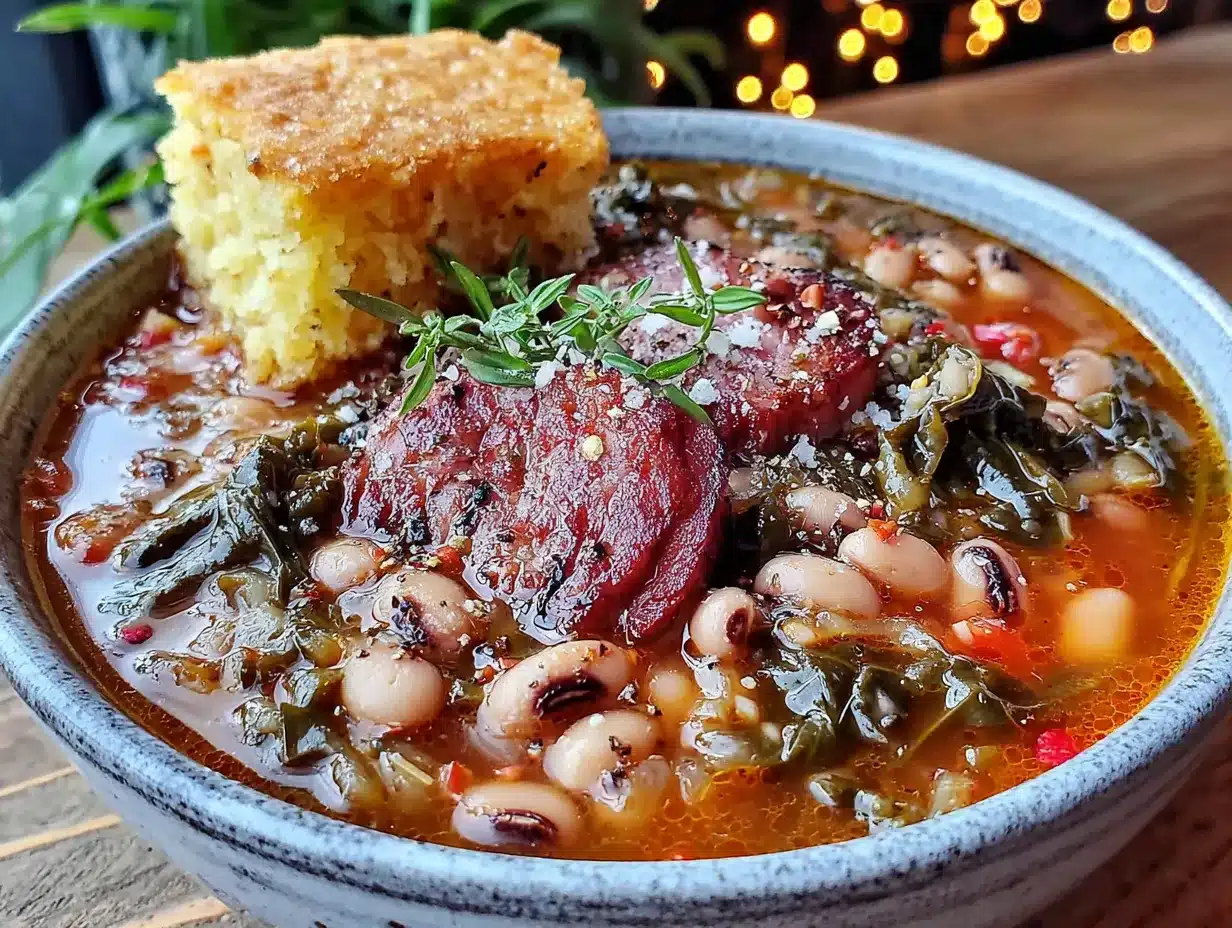
This is where the magic happens. Take your time with each step—the soup rewards patience.
- Soak the black-eyed peas (optional but recommended). Place the dried peas in a large bowl and cover with cold water by about 2 inches. Let them soak for at least 4 hours or overnight. This softens them and reduces cooking time. If you’re short on time, you can skip this step, but you’ll need to simmer the soup for an extra 30 to 45 minutes. I usually soak them overnight while I sleep—it’s effortless and guarantees perfectly tender peas.
- Prepare the collard greens. Wash the greens thoroughly under cold running water, making sure to get between the leaves. Stack the leaves on your cutting board, then roll them tightly like a cigar. Slice the roll crosswise into thin ribbons, about 1/2 inch wide. This is called a chiffonade, and it’s the best way to get tender, manageable pieces. Discard the tough stems. You should have about 6 to 8 cups of shredded greens.
- Brown the smoked meat. Heat the olive oil in your Dutch oven over medium-high heat. Add the ham hock or turkey legs and cook for about 4 to 5 minutes per side, until deeply browned. Don’t rush this step—the brown bits on the bottom of the pot are pure flavor. Remove the meat to a plate and set aside.
- Sweat the aromatics. Reduce the heat to medium. Add the diced onion, celery, and carrots to the pot. Cook, stirring occasionally, for about 6 to 8 minutes, until the vegetables are softened and the onion is translucent. Scrape up any browned bits from the bottom as you stir. Add the minced garlic and cook for another minute, until fragrant.
- Bloom the spices. Stir in the smoked paprika, cayenne (if using), and dried thyme. Cook for about 30 seconds, stirring constantly. This wakes up the spices and makes them more aromatic.
- Add the broth and peas. Pour in the chicken broth and water, then add the soaked and drained black-eyed peas. Return the browned meat to the pot, nestling it into the liquid. Add the bay leaves. Bring the soup to a boil over high heat.
- Simmer the soup. Once boiling, reduce the heat to low, cover the pot, and let it simmer gently for 45 minutes. The broth should be barely bubbling—a gentle simmer, not a rolling boil. After 45 minutes, remove the lid and add the shredded collard greens. Stir them in—they’ll look like a lot at first, but they’ll wilt down significantly. Re-cover and simmer for another 30 to 45 minutes, until the peas are tender but not mushy, and the greens are silky.
- Shred the meat. Carefully remove the ham hock or turkey legs from the pot using tongs. Place them on a cutting board and let them cool for a few minutes. Once cool enough to handle, shred the meat, discarding any bones, skin, and gristle. Return the shredded meat to the pot. Stir well.
- Finish with vinegar and seasoning. Remove the bay leaves and discard. Stir in the apple cider vinegar—this brightens the entire soup. Taste and adjust seasoning with salt and pepper. Remember, the smoked meat adds salt, so go slowly. You might need a full teaspoon of salt, or you might need none at all. Trust your taste buds.
- Let it rest (if you can). The soup is technically ready now, but I swear it’s even better the next day. If you’re serving it immediately, let it sit off the heat for 10 minutes to allow the flavors to settle. If you’re making it ahead, cool it completely, then refrigerate overnight. Reheat gently over low heat, adding a splash of broth or water if it’s thickened too much.
Cooking Tips & Techniques
After making this soup maybe twenty or thirty times, I’ve learned a few things the hard way. Let me save you the trouble.
Don’t skip the browning step. I know it’s tempting to just throw everything in the pot and walk away. I’ve done it. The result is a soup that tastes flat and one-dimensional. That deep, almost caramelized flavor you get from browning the meat first is non-negotiable. It’s the difference between a good soup and a great one. And while you’re at it, don’t rush the sweating of the vegetables. Let them get soft and translucent—that’s where the sweetness comes from.
Watch your salt levels. This is probably the most common mistake I see. Smoked ham hocks and turkey legs are already salty. If you add salt at the beginning, you risk ending up with a soup that’s borderline inedible. I add salt only at the very end, after I’ve tasted the broth. And I always start with a quarter teaspoon, then adjust from there. You can always add more, but you can’t take it out.
Timing is everything with the greens. I used to add the collard greens at the same time as everything else. They turned into a sad, olive-green mush. Now I add them halfway through the simmering process, which gives them enough time to become tender but still retain a bit of structure. They should be silky, not slimy. If you’re using kale or mustard greens, adjust accordingly—kale takes about 20 minutes, mustard greens about 15.
Multitask like a pro. While the soup is simmering, I use that time to clean up the kitchen, set the table, or prep any side dishes. If you’re hosting, this is your golden window. The soup is doing all the work. You can even make a batch of cornbread or prep a simple salad while the pot bubbles away. The key is to stay in the kitchen, so you can check on the soup every now and then, but you don’t need to hover.
One failure I’ll never forget. The first time I made this for a New Year’s party, I forgot to soak the peas. I figured, how different could it be? The answer is: very different. The soup took almost two and a half hours to cook, the peas were unevenly tender, and I was frantically adding water every twenty minutes. My guests were gracious, but I learned my lesson. Soak the peas. Your future self will thank you.
Variations & Adaptations
This soup is wonderfully forgiving, and I’ve played around with it more times than I can count. Here are some of my favorite variations:
- Vegetarian Version: Omit the smoked meat entirely. Instead, use 8 cups of vegetable broth and add 2 tablespoons of liquid smoke and a teaspoon of smoked paprika for that smoky depth. I’ve also added a can of drained and rinsed chickpeas for extra protein. It’s not the same as the original, but it’s genuinely delicious in its own right.
- Spicy Southern Twist: Add one finely diced jalapeño (seeds and all if you’re brave) along with the onions. I also like to stir in a teaspoon of chipotle powder along with the smoked paprika. The heat builds slowly and warms you from the inside out. My brother-in-law, who loves everything extra spicy, requests this version every year.
- Slow Cooker Method: Brown the meat and sweat the vegetables on the stovetop first, then transfer everything to a slow cooker. Cook on low for 6 to 8 hours or on high for 3 to 4 hours. Add the collard greens in the last hour. This is perfect for a party where you don’t want to babysit the stove. Just set it and forget it.
- Instant Pot Adaptation: Use the sauté function to brown the meat and cook the aromatics. Then add the broth, soaked peas, and spices. Pressure cook on high for 20 minutes. Quick-release the pressure, add the collard greens, and cook on sauté mode for another 10 minutes. It’s fast, and the results are surprisingly good.
- Herb-Forward Version: I once added a bundle of fresh thyme, rosemary, and parsley tied together with kitchen twine. I let it simmer in the pot and removed it before serving. The herbal notes complemented the smoky broth beautifully. It’s a subtle change, but it makes the soup feel a little more refined.
Serving & Storage Suggestions
This soup is a meal in itself, but the right accompaniments can turn it into a feast. Here’s how I serve it when I’m hosting:
Serving temperature and presentation: Serve the soup piping hot in deep bowls. I like to ladle it over a scoop of steamed white rice or alongside a thick slice of warm cornbread. The rice soaks up the broth, and the cornbread adds a touch of sweetness that balances the smoky, savory soup. If you’re feeling fancy, garnish each bowl with a sprinkle of fresh parsley or a few drops of hot sauce. It adds a pop of color that looks beautiful on the table.
What to serve alongside: A simple side salad with a tangy vinaigrette cuts through the richness of the soup. I also love serving pickled red onions or a spoonful of chow-chow relish on the side for a bright, acidic contrast. For drinks, a cold beer or a glass of crisp white wine like Sauvignon Blanc works wonders. If you’re keeping it non-alcoholic, sweet tea is the classic choice.
Storage instructions: This soup keeps beautifully. Let it cool completely, then transfer it to an airtight container. It will last in the refrigerator for up to 5 days. In fact, the flavors deepen and meld overnight, so it’s even better on day two. For longer storage, freeze the soup in individual portions. I use quart-sized freezer bags laid flat—they stack neatly and thaw quickly. The soup will keep in the freezer for up to 3 months.
Reheating tips: Thaw frozen soup in the refrigerator overnight. Reheat gently on the stovetop over medium-low heat, stirring occasionally. If the soup has thickened too much, add a splash of broth or water to thin it out. You can also reheat individual portions in the microwave, but the stovetop gives a more even result. And here’s a little secret: a squeeze of fresh lemon juice or a dash of vinegar right before serving can revive the flavors after freezing.
How flavors develop over time: I’ve noticed that the soup reaches its peak flavor on the second or third day. The smoky, savory notes become more integrated, and the greens soften even further. If you’re planning a party, I highly recommend making the soup two days in advance. Your guests will think you spent all day cooking, but you’ll be relaxed and ready to enjoy the celebration.
Nutritional Information & Benefits
This soup isn’t just delicious—it’s genuinely good for you. Here’s a rough estimate per serving (based on 8 servings):
- Calories: Approximately 320-350 per serving
- Protein: 18-22 grams (thanks to the black-eyed peas and smoked meat)
- Fiber: 10-12 grams (the peas and greens are fiber powerhouses)
- Fat: 8-10 grams (mostly from the olive oil and the rendered fat from the meat)
- Carbohydrates: 40-45 grams (complex carbs from the legumes)
- Sodium: Varies depending on the broth and meat used; using low-sodium broth helps keep it in check
Health benefits: Black-eyed peas are packed with folate, iron, and magnesium, which support heart health and energy levels. Collard greens are a fantastic source of vitamins A, C, and K, as well as calcium. Together, they make a soup that’s both comforting and nourishing. The fiber content also helps with digestion and keeps you feeling full longer—perfect for a leisurely New Year’s meal.
Dietary considerations: This recipe is naturally gluten-free and dairy-free. For a vegetarian version, the protein content will be slightly lower, but you can boost it by adding a can of chickpeas or lentils. If you’re watching your sodium, use unsalted broth and skip the added salt until the very end. And if you’re on a low-carb diet, this soup is relatively moderate in carbs, but you can reduce the portion size or skip the rice.
Conclusion
This soup is more than a recipe—it’s a tradition I look forward to every single year. It’s the dish that brings people to the table, that sparks conversations about luck and prosperity and the year ahead. I’ve made it for quiet dinners and crowded parties, and it never fails to deliver that warm, soulful feeling that only a pot of slow-simmered soup can provide.
I hope you’ll give it a try. Don’t be afraid to make it your own—swap in different greens, adjust the heat, or add your own secret ingredient. That’s the beauty of a recipe like this. It’s a starting point, not a final destination. And honestly, the best versions are the ones you make with your own hands and share with the people you love.
If you make this soup, I’d love to hear about it. Leave a comment below and let me know how it turned out, or share a photo on social media and tag me. Did you add a twist? Did your guests go back for seconds? Tell me everything. And if you’re looking for more New Year’s recipes, check out our crispy garlic chicken or our southern cornbread recipe for the perfect pairing. Until next time, happy cooking—and here’s to a year full of flavor!
Frequently Asked Questions
Can I use canned black-eyed peas instead of dried?
Yes, you can. Use three 15-ounce cans, drained and rinsed. Add them during the last 20 minutes of simmering, since they’re already cooked. The texture won’t be quite as creamy as dried peas that have simmered for a long time, but it’s a solid shortcut when you’re short on time.
How do I remove the bitterness from collard greens?
Collard greens can sometimes be a little bitter, especially if they’re older. The key is to cook them long enough—about 30 to 45 minutes of simmering tames that bitterness. Adding a splash of apple cider vinegar at the end also helps balance the flavors. If you’re really concerned, you can blanch the greens in boiling salted water for 2 minutes before adding them to the soup.
Can I make this soup in advance for a party?
Absolutely. In fact, I recommend it. Make the soup a day or two ahead, let it cool completely, and refrigerate it. The flavors will meld and deepen beautifully. When you’re ready to serve, reheat it gently on the stovetop, adding a little broth or water to adjust the consistency. It’s a lifesaver for hosting.
What’s the best way to store leftovers?
Let the soup cool completely, then transfer it to an airtight container. It will keep in the refrigerator for up to 5 days. For longer storage, freeze it in individual portions using freezer-safe bags or containers. It will keep for up to 3 months. Thaw overnight in the refrigerator before reheating.
Can I use a different type of meat?
Definitely. Smoked turkey legs are my personal favorite for a leaner flavor, but a smoked ham hock is traditional and adds a richer, more unctuous quality. You can also use smoked sausage, like andouille or kielbasa, sliced and browned along with the aromatics. Just reduce the amount of salt you add, since smoked sausage can be quite salty.
Pin This Recipe!
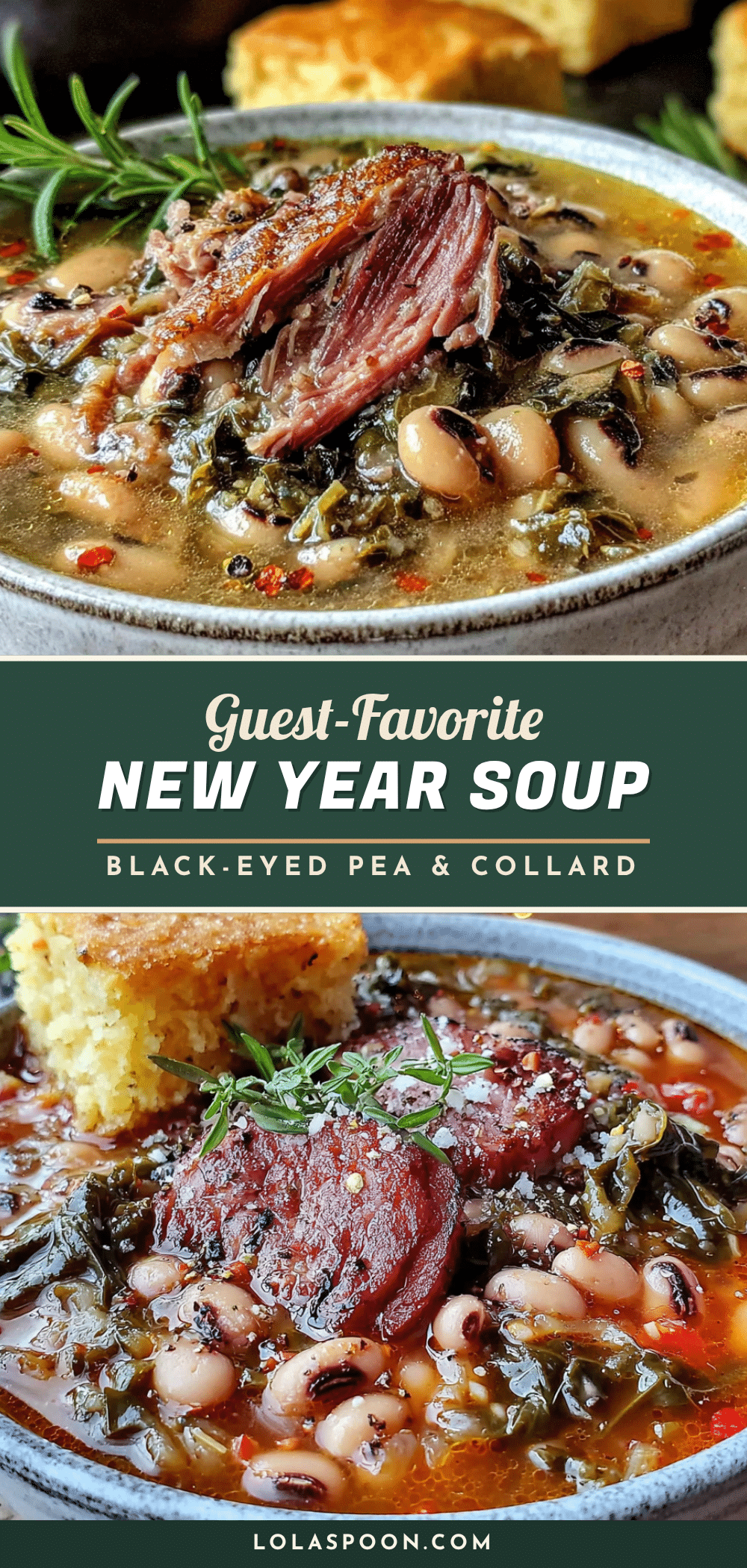
Best New Year Black-Eyed Pea and Collard Greens Soup Recipe
A soulful, one-pot Southern New Year’s tradition featuring black-eyed peas for luck and collard greens for wealth, with a smoky, deeply flavorful broth. This recipe honors a classic while being perfect for a crowd and even better made ahead.
- Prep Time: 20 minutes
- Cook Time: 1 hour 30 minutes
- Total Time: 1 hour 50 minutes (plus optional soaking time)
- Yield: 8 servings 1x
- Category: Soup
- Cuisine: Southern
Ingredients
- 1 pound dried black-eyed peas, rinsed and picked over
- 1 large smoked ham hock or 2 smoked turkey legs (about 1.5 pounds total)
- 2 tablespoons olive oil
- 1 large yellow onion, diced (about 2 cups)
- 4 cloves garlic, minced
- 3 ribs celery, diced (about 1 cup)
- 2 large carrots, diced (about 1 cup)
- 1 large bunch collard greens (about 1 pound), tough stems removed and leaves thinly sliced
- 8 cups low-sodium chicken broth
- 2 cups water
- 1 teaspoon smoked paprika
- 1/2 teaspoon cayenne pepper (optional)
- 2 bay leaves
- 1 teaspoon dried thyme
- 1 tablespoon apple cider vinegar
- Salt and black pepper to taste
- Hot sauce for serving
Instructions
- Soak the black-eyed peas (optional but recommended): Place the dried peas in a large bowl and cover with cold water by about 2 inches. Let them soak for at least 4 hours or overnight. Drain and rinse before using.
- Prepare the collard greens: Wash the greens thoroughly. Stack the leaves, roll them tightly like a cigar, and slice crosswise into thin ribbons (about 1/2 inch wide). Discard tough stems. You should have about 6 to 8 cups of shredded greens.
- Brown the smoked meat: Heat the olive oil in a large Dutch oven over medium-high heat. Add the ham hock or turkey legs and cook for about 4 to 5 minutes per side, until deeply browned. Remove the meat to a plate and set aside.
- Sweat the aromatics: Reduce heat to medium. Add the diced onion, celery, and carrots to the pot. Cook, stirring occasionally, for about 6 to 8 minutes, until softened and the onion is translucent. Add the minced garlic and cook for another minute until fragrant.
- Bloom the spices: Stir in the smoked paprika, cayenne (if using), and dried thyme. Cook for about 30 seconds, stirring constantly.
- Add the broth and peas: Pour in the chicken broth and water, then add the soaked and drained black-eyed peas. Return the browned meat to the pot. Add the bay leaves. Bring the soup to a boil over high heat.
- Simmer the soup: Once boiling, reduce heat to low, cover, and let it simmer gently for 45 minutes. After 45 minutes, remove the lid and add the shredded collard greens. Stir them in. Re-cover and simmer for another 30 to 45 minutes, until the peas are tender and the greens are silky.
- Shred the meat: Carefully remove the ham hock or turkey legs from the pot using tongs. Let cool slightly, then shred the meat, discarding bones, skin, and gristle. Return the shredded meat to the pot and stir well.
- Finish with vinegar and seasoning: Remove the bay leaves and discard. Stir in the apple cider vinegar. Taste and adjust seasoning with salt and pepper. Remember, the smoked meat adds salt, so go slowly.
- Let it rest (if you can): The soup is ready now, but it’s even better the next day. If serving immediately, let it sit off the heat for 10 minutes. If making ahead, cool completely, then refrigerate overnight. Reheat gently over low heat, adding a splash of broth or water if needed.
Notes
Soaking the peas overnight is recommended for best texture. Browning the meat and sweating the vegetables builds deep flavor. Add salt only at the end to avoid over-salting. The soup tastes even better the next day. For a vegetarian version, omit the meat and use vegetable broth with liquid smoke and extra smoked paprika.
Nutrition
- Serving Size: 1 bowl (about 1.5 cu
- Calories: 335
- Sugar: 6
- Sodium: 680
- Fat: 9
- Saturated Fat: 2.5
- Carbohydrates: 42
- Fiber: 11
- Protein: 20
Keywords: black-eyed peas, collard greens, New Year's soup, Southern soup, lucky soup, ham hock, turkey legs, one-pot meal