My neighbor, a retired nurse named Carol who grows the most chaotic tomatoes I’ve ever seen, asked me why I couldn’t just toss everything on one pan and call it dinner. I started to explain why that wouldn’t work—something about moisture levels and cooking times and the sacred order of a proper roast. Then I stopped. Honestly, I had no good reason. I was just being stubborn about a method I’d learned in culinary school, where we were taught that chicken and vegetables needed separate attention, separate pans, separate everything. I told Carol I’d try it her way, mostly to prove her wrong. Let me tell you, I ate those words with a side of perfectly roasted broccoli and the juiciest chicken thighs I’d made in months.
The whole thing came together on a Tuesday evening in late September, when the air had that crisp edge and I was desperate for something warm without spending two hours scrubbing dishes. I had a package of chicken thighs in the fridge, a bag of carrots that were starting to look sad, and half a head of garlic that was sprouting little green shoots. Carol’s method—just throw it all on a sheet pan with some butter and garlic—felt too simple. Too casual. But I was tired, and the sink was already full, so I gave in. I chopped everything haphazardly, tossed it with melted butter and garlic, and slid the pan into the oven. Thirty-five minutes later, I pulled out the kind of dinner that makes you close your eyes on the first bite.
Maybe you’ve been there—standing in your kitchen, convinced that good food requires complicated steps and multiple pans, when all along the answer was sitting right in front of you, simple and unassuming. That’s this recipe in a nutshell. It’s the meal I make when I want to feel like I have my life together, even on nights when I definitely don’t. The garlic butter seeps into everything, the chicken gets that crackling golden skin, and the vegetables soak up all those savory juices until they’re practically candy. I keep making it because it reminds me that sometimes the best cooking advice comes from a neighbor with overgrown tomato plants and zero culinary credentials.
Why You’ll Love This Recipe
I’ve tested this sheet pan dinner at least a dozen times, tweaking temperatures and timing until every component hits its peak at the same moment. The result is a meal that feels special enough for a Sunday supper but comes together faster than takeout. Here’s why it works:
- Quick & Easy: From fridge to table in about 45 minutes, with just 10 minutes of active prep. Perfect for those evenings when you’re running on empty.
- Simple Ingredients: Chicken thighs, vegetables, butter, garlic, and basic pantry spices. No specialty items, no last-minute grocery runs.
- Perfect for Cozy Season: This is the dinner you want when the temperature drops and you need something deeply satisfying. It’s autumn on a sheet pan.
- Crowd-Pleaser: I’ve served this to picky kids, skeptical in-laws, and foodie friends—everyone goes back for seconds.
- Unbelievably Delicious: The garlic butter creates this incredible sauce that coats everything, and the chicken thighs stay impossibly moist while the skin gets shatteringly crisp.
What makes this version different from every other sheet pan chicken recipe out there? It’s the technique. Most recipes tell you to toss everything together and hope for the best. I spent weeks figuring out the exact temperature and timing that lets the chicken develop that perfect golden crust without drying out the vegetables. The secret is starting the chicken alone for the first ten minutes, then adding the vegetables. It adds almost no extra effort but completely transforms the result.
This recipe is the kind that makes you feel like a hero with minimal effort. It’s comfort food at its most practical—hearty, flavorful, and forgiving. The first time I made it, I actually texted Carol a photo with a humble apology. She replied with a single laughing emoji and a note that said, “Told you.”
What Ingredients You Will Need
This recipe relies on a handful of quality ingredients to deliver maximum flavor with minimal fuss. Most of these are pantry staples, especially if you keep your fridge stocked with basic vegetables and good butter.
- Bone-in, skin-on chicken thighs (6-8 thighs, about 2.5 pounds): This is non-negotiable for the best results. The bone keeps the meat juicy, and the skin crisps up beautifully. I prefer organic chicken from a local farm when I can get it, but any good-quality brand works. If you only have boneless thighs, reduce cooking time by about 10 minutes.
- Unsalted butter (4 tablespoons, melted): Use the good stuff here—it’s the star of the show. European-style butter like Kerrygold adds extra richness, but any unsalted butter works. Salted butter will make the dish too salty, so stick with unsalted and control the salt yourself.
- Fresh garlic (6-8 cloves, minced): Don’t even think about using jarred garlic here. Fresh garlic is what gives this dish its aromatic backbone. I use a microplane to mince it fine so it melts into the butter.
- Baby potatoes (1.5 pounds, halved): Yukon Gold or red potatoes work best. They hold their shape during roasting and get creamy on the inside. No need to peel them—the skins add texture and nutrients.
- Carrots (4 medium, cut into 2-inch chunks): Look for firm, bright orange carrots. I leave a little of the green tops attached because it looks pretty, but that’s purely optional.
- Broccoli crowns (2 cups, cut into florets): Added halfway through cooking so they don’t turn to mush. Choose crowns with tight, dark green florets for the best texture.
- Red onion (1 large, cut into wedges): Adds sweetness and color. Cut through the root end slightly so the wedges hold together during roasting.
- Fresh rosemary (2 sprigs): I grow rosemary in a pot on my windowsill, and it’s the one herb I use constantly. Dried rosemary works in a pinch, but fresh is noticeably better.
- Fresh thyme (4-5 sprigs): Adds an earthy, slightly floral note that complements the garlic butter perfectly.
- Paprika (1 teaspoon): Smoked paprika adds depth, but sweet paprika works too. This is my secret weapon for getting that gorgeous golden color on the chicken skin.
- Salt and black pepper (to taste): I use kosher salt for seasoning and flaky sea salt for finishing. Freshly ground black pepper makes a difference here.
- Olive oil (2 tablespoons): Just a little to coat the vegetables. A good quality extra virgin olive oil adds flavor, but regular works fine.
- Optional garnish: Fresh parsley, chopped, and lemon wedges for squeezing over the finished dish.
For substitutions, you can swap the potatoes for sweet potatoes, cauliflower, or parsnips. Green beans or asparagus can replace the broccoli—just add them in the last 15 minutes of cooking. If you’re dairy-free, use a high-quality vegan butter or ghee (which is technically lactose-free).
Equipment Needed
You don’t need a fancy kitchen to pull off this recipe. Here’s what you’ll actually use:
- Large sheet pan (18×13 inches): A rimmed baking sheet is essential to catch all those buttery juices. I’ve used both non-stick and uncoated aluminum pans, and both work fine. If you only have a smaller pan, use two to avoid overcrowding.
- Parchment paper or aluminum foil: Lining the pan makes cleanup almost nonexistent. I prefer parchment because nothing sticks to it, but foil works if you give it a light spray of cooking oil.
- Chef’s knife and cutting board: A sharp knife makes prepping vegetables quick and safe. I use a 8-inch chef’s knife for everything.
- Small bowl: For mixing the garlic butter. Any small bowl works—I use a ceramic ramekin.
- Microplane or garlic press: For mincing garlic fine. A knife works too, but the microplane is faster and gives you that paste-like texture that disappears into the butter.
- Tongs: For flipping the chicken and tossing vegetables. Silicone-tipped tongs won’t scratch your pan.
- Instant-read thermometer: This is my most-used kitchen tool. Chicken thighs are done at 165°F, but I pull them at 160°F because they continue cooking as they rest.
If you don’t have a microplane, just mince the garlic as fine as you can with a knife. If you don’t have an instant-read thermometer, cut into the thickest thigh to check—the juices should run clear and the meat should no longer be pink at the bone.
Preparation Method
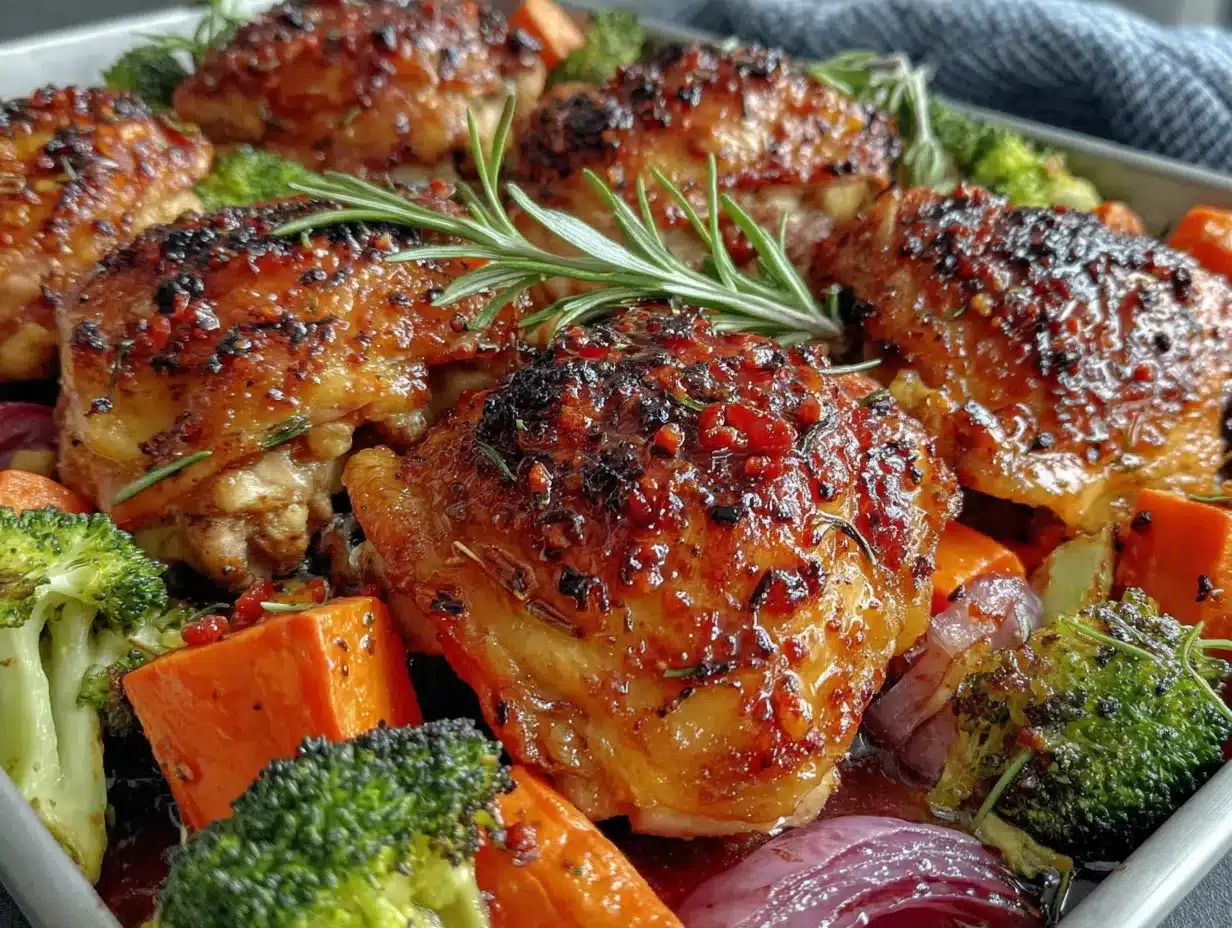
Let me walk you through this step by step. I’ve included all the little details I wish someone had told me the first time I made this.
- Preheat your oven to 425°F. Place the rack in the upper third of the oven—this helps the chicken skin crisp up. While the oven heats, line your sheet pan with parchment paper or foil.
- Pat the chicken thighs dry with paper towels. This is the most important step for crispy skin. Don’t skip it. Place the thighs on a plate and season both sides generously with salt and pepper. Let them sit at room temperature while you prep the vegetables—about 10 minutes.
- Melt the butter in a small saucepan or microwave. Stir in the minced garlic, paprika, and a pinch of salt. Set aside. The garlic will mellow as it cooks, so don’t worry about it being too strong.
- Toss the vegetables (potatoes, carrots, and red onion) with olive oil, salt, and pepper in a large bowl. I use my hands for this—it’s faster and ensures everything gets coated evenly. Add the rosemary and thyme sprigs to the bowl and toss again.
- Arrange the chicken thighs skin-side up on the prepared sheet pan, leaving space between each piece. Brush half of the garlic butter over the skin, making sure to get some of the garlic bits on each thigh. Don’t pour all the butter on at once—you’ll need the rest later.
- Roast the chicken alone for 10 minutes. This head start gives the skin a chance to begin crisping before the vegetables release their moisture. While it’s in the oven, spread the vegetables out on a second sheet pan or a large plate.
- Add the vegetables to the pan after 10 minutes, arranging them around the chicken in a single layer. Don’t pile them on top of each other or they’ll steam instead of roast. Drizzle the remaining garlic butter over the vegetables.
- Roast for 20 minutes, then remove the pan from the oven. Use tongs to flip the chicken thighs and toss the vegetables. Add the broccoli florets to the pan, tucking them between the other vegetables. Return the pan to the oven.
- Roast for another 10-15 minutes, until the chicken reaches 165°F at the thickest part and the vegetables are tender and caramelized. The broccoli should be bright green with lightly charred edges. If the chicken skin isn’t as crispy as you’d like, switch the oven to broil for the last 2-3 minutes—watch it carefully so it doesn’t burn.
- Let the pan rest for 5 minutes before serving. This allows the juices to redistribute through the chicken. Sprinkle with fresh parsley and squeeze lemon wedges over everything right before serving.
A few notes from my many rounds of testing: If your vegetables are cut into different sizes, check the smaller pieces first to make sure they’re not burning. The potatoes should be easily pierced with a fork. And don’t crowd the pan—if everything is packed too tightly, you’ll get steamed chicken and soggy vegetables. Use two pans if needed.
Cooking Tips & Techniques
I’ve made this recipe enough times to have a few disasters along the way. Here’s what I learned so you don’t have to repeat my mistakes.
The biggest mistake I made was using chicken breasts instead of thighs. The breasts dried out before the vegetables were done, and I ended up with sad, stringy meat. Chicken thighs are forgiving—they have enough fat to stay moist even if you overcook them by a few minutes. Save the breasts for another recipe.
Another lesson came from my impatience with the garlic. I used pre-minced garlic from a jar once because I was in a hurry, and it burned in the oven, leaving a bitter taste over everything. Fresh garlic is worth the extra thirty seconds it takes to peel and chop it.
Temperature matters more than you think. I used to roast everything at 400°F because that’s what most recipes call for, but bumping it up to 425°F changed everything. The higher heat gives you that golden, crackling skin without drying out the meat. If your oven runs hot, check the chicken at the 30-minute mark.
Timing strategy: While the chicken gets its head start in the oven, use those 10 minutes to wash the dishes you’ve already dirtied. Trust me, you’ll thank yourself when dinner is over and the kitchen is already clean. Or, if you’re like me, you’ll use that time to sit down and rest—it’s been a long day.
For consistent results, always bring your chicken to room temperature before roasting. Cold chicken straight from the fridge will cook unevenly, with the outside drying out before the inside is done. Twenty minutes on the counter makes a real difference.
Variations & Adaptations
This recipe is endlessly adaptable, which is why it’s become my go-to for so many situations. Here are a few variations I’ve tried and loved:
Seasonal Vegetable Swap: In summer, replace the potatoes and carrots with zucchini, bell peppers, and cherry tomatoes. Add them at the same time as the broccoli since they cook faster. In winter, use butternut squash, parsnips, and Brussels sprouts—just cut them smaller so they cook through.
Herb Change-Up: Not a fan of rosemary and thyme? Try oregano and basil for an Italian twist, or cumin and coriander for a warm, earthy flavor. I once used tarragon and it was unexpectedly amazing—it has this subtle licorice note that pairs beautifully with the garlic butter.
Spicy Version: Add a teaspoon of red pepper flakes to the garlic butter, or toss the vegetables with a pinch of cayenne. My husband loves this version, and it’s perfect for cold nights when you want something that warms you from the inside out.
Dairy-Free Adaptation: Use olive oil or avocado oil instead of butter, and add a splash of nutritional yeast for that savory, buttery flavor. It’s not quite the same, but it’s still delicious. I’ve made this for friends with dairy sensitivities and they always ask for the recipe.
One-Pan Meal Prep: Double the recipe and divide everything into containers for the week. The flavors actually get better after a day or two in the fridge. Just reheat in the oven or air fryer to bring back the crispiness—microwaving will make the skin soggy.
Serving & Storage Suggestions
This dish is best served hot, straight from the oven, with the garlic butter pooling around the vegetables. I like to arrange everything on a large platter family-style, with the chicken thighs nestled among the vegetables and fresh herbs scattered on top. A squeeze of lemon juice right before serving brightens all the flavors.
What to serve alongside: A simple green salad with a lemon vinaigrette balances the richness of the chicken. Crusty bread is non-negotiable—you’ll want something to soak up every last drop of that garlic butter. For a heartier meal, serve over rice, quinoa, or creamy polenta.
Storage: Leftovers keep in an airtight container in the refrigerator for up to 4 days. The vegetables will soften over time, but the flavors deepen. I actually look forward to leftovers because the garlic butter has had time to soak into everything.
Reheating: The oven is your best friend here. Reheat at 350°F for 10-15 minutes, until everything is warmed through and the chicken skin crisps back up. The air fryer works even faster—5 minutes at 375°F does the trick. Avoid the microwave unless you’re in a desperate hurry, because the skin will turn rubbery.
Freezing: This dish freezes surprisingly well. Let everything cool completely, then transfer to a freezer-safe container. It will keep for up to 3 months. Thaw overnight in the refrigerator and reheat in the oven. The vegetables will be softer after freezing, so consider freezing just the chicken and making fresh vegetables when you’re ready to serve.
Nutritional Information & Benefits
This recipe is as nourishing as it is delicious. Here’s an approximate breakdown per serving (based on 4 servings):
| Nutrient | Amount |
|---|---|
| Calories | 485 |
| Protein | 32g |
| Fat | 28g |
| Saturated Fat | 12g |
| Carbohydrates | 30g |
| Fiber | 6g |
| Sugar | 8g |
| Sodium | 680mg |
Health Benefits: Chicken thighs are rich in B vitamins, particularly B6 and B12, which support energy metabolism and brain function. The garlic in this recipe is a powerhouse—it contains compounds that may support immune health and reduce inflammation. Broccoli is packed with vitamin C, fiber, and antioxidants. Carrots provide beta-carotene, which your body converts to vitamin A for healthy vision and skin.
Dietary Considerations: This recipe is naturally gluten-free and can be made dairy-free with a simple butter swap. It’s also low-carb if you replace the potatoes with extra broccoli or cauliflower. The only potential allergen is dairy from the butter. For anyone watching their sodium, use unsalted butter and go light on the added salt—the natural flavors are strong enough to carry the dish.
I love that this meal feels indulgent but is actually packed with vegetables and lean protein. It’s the kind of dinner that satisfies your cravings while still making you feel good about what you’re eating.
Conclusion
This sheet pan garlic butter chicken has become my unofficial signature dish, and it all started because I was too stubborn to listen to good advice. Carol’s simple suggestion—just put everything on one pan—turned into a recipe I genuinely look forward to making, week after week. It’s proof that sometimes the best cooking comes from letting go of what you think you know.
I hope you give this recipe a try, especially on a night when you need something warm and comforting without a lot of fuss. Play with the vegetables, adjust the herbs, make it your own. That’s the beauty of a simple recipe—it leaves room for your own creativity. And if someone questions your method, maybe listen to them. They might just be right.
I’d love to hear how yours turns out. Drop a comment below and let me know what vegetables you used, or tag me in your photos. Happy cooking, friends!
Frequently Asked Questions
Can I use chicken breasts instead of thighs?
You can, but I don’t recommend it. Chicken breasts cook faster and dry out more easily. If you must use them, reduce the initial roasting time to 5 minutes and check for doneness at the 25-minute mark. The breast meat won’t be as juicy, but it will still taste good with the garlic butter.
How do I prevent the broccoli from getting soggy?
The key is adding the broccoli later in the cooking process. Tossing it in at the 20-minute mark gives it just enough time to get tender and slightly charred without turning to mush. Also, make sure your broccoli florets are dry before adding them to the pan—excess moisture creates steam.
Can I prepare this recipe ahead of time?
Absolutely. You can chop all the vegetables and mix the garlic butter up to 24 hours in advance. Store them separately in the refrigerator. When you’re ready to cook, just arrange everything on the pan and follow the roasting instructions. The chicken should be seasoned right before cooking, not ahead of time, to avoid drawing out too much moisture.
What’s the best way to reheat leftovers without drying them out?
The oven or air fryer is your best bet. Reheat at 350°F for 10-15 minutes, covering loosely with foil if the chicken skin starts to brown too much. The air fryer works in about 5 minutes at 375°F. Avoid the microwave—it will make the chicken skin rubbery and the vegetables mushy.
Can I add other vegetables to this recipe?
Definitely! This recipe is very forgiving. Try adding bell peppers, zucchini, asparagus, green beans, or butternut squash. Just be mindful of cooking times—harder vegetables like carrots and potatoes need more time, while softer vegetables like zucchini and bell peppers should be added later. A good rule of thumb is to add soft vegetables at the same time as the broccoli.
Pin This Recipe!
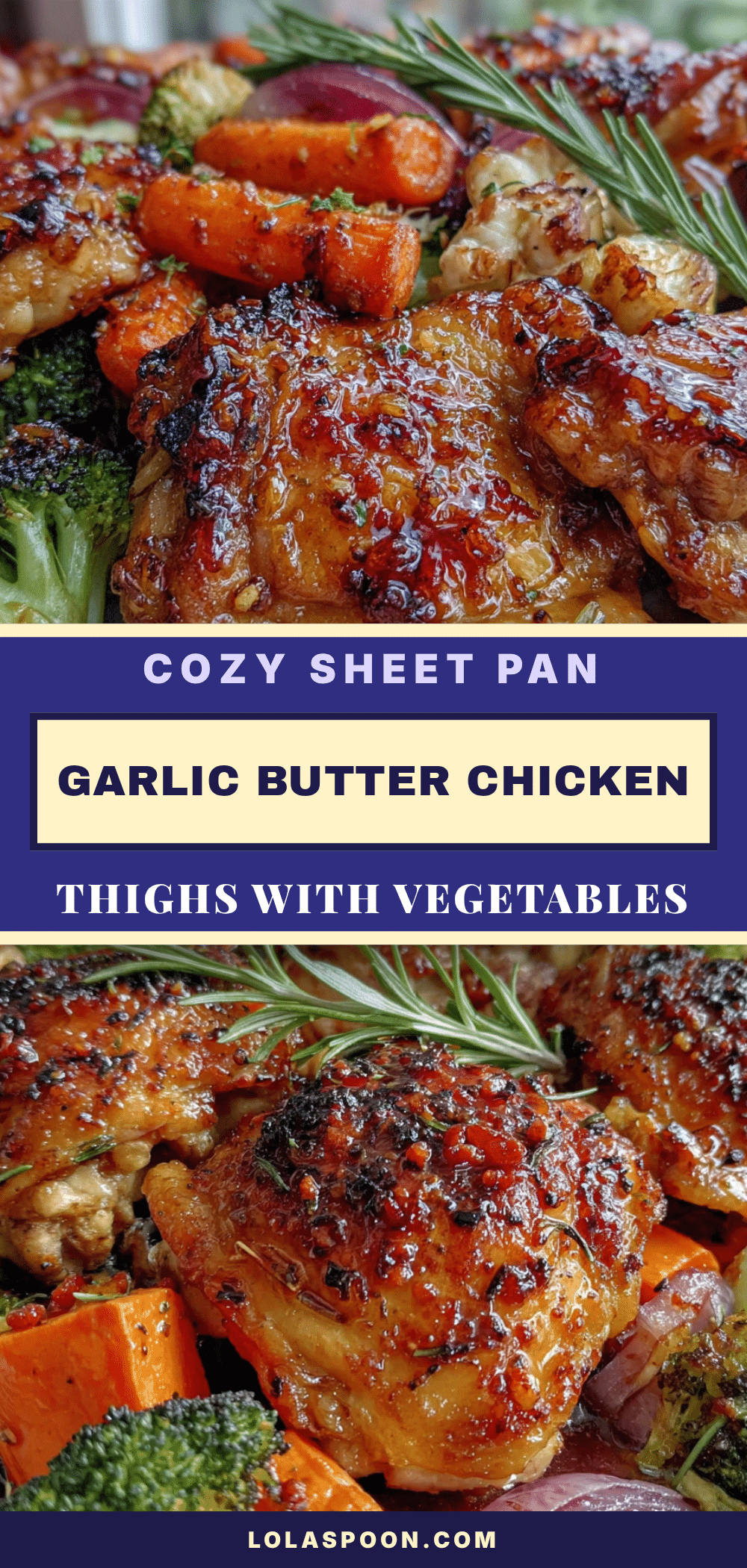
Cozy Sheet Pan Garlic Butter Chicken Thighs and Veggies
A simple, one-pan dinner featuring juicy bone-in chicken thighs and roasted vegetables all coated in a rich garlic butter sauce. Ready in about 45 minutes with minimal cleanup, this recipe is perfect for busy weeknights and cozy autumn evenings.
- Prep Time: 10 minutes
- Cook Time: 35 minutes
- Total Time: 45 minutes
- Yield: 4 servings 1x
- Category: Main Course
- Cuisine: American
Ingredients
- 6–8 bone-in, skin-on chicken thighs (about 2.5 pounds)
- 4 tablespoons unsalted butter, melted
- 6–8 cloves fresh garlic, minced
- 1.5 pounds baby potatoes (Yukon Gold or red), halved
- 4 medium carrots, cut into 2-inch chunks
- 2 cups broccoli crowns, cut into florets
- 1 large red onion, cut into wedges
- 2 sprigs fresh rosemary
- 4–5 sprigs fresh thyme
- 1 teaspoon paprika (smoked or sweet)
- Salt and black pepper to taste
- 2 tablespoons olive oil
- Fresh parsley, chopped (optional garnish)
- Lemon wedges (optional garnish)
Instructions
- Preheat oven to 425°F. Place rack in upper third of oven. Line a large sheet pan (18×13 inches) with parchment paper or aluminum foil.
- Pat chicken thighs dry with paper towels. Season both sides generously with salt and pepper. Let sit at room temperature while prepping vegetables (about 10 minutes).
- Melt butter in a small saucepan or microwave. Stir in minced garlic, paprika, and a pinch of salt. Set aside.
- In a large bowl, toss potatoes, carrots, and red onion with olive oil, salt, and pepper. Add rosemary and thyme sprigs and toss again.
- Arrange chicken thighs skin-side up on prepared sheet pan, leaving space between each piece. Brush half of the garlic butter over the skin.
- Roast chicken alone for 10 minutes.
- After 10 minutes, remove pan from oven. Arrange vegetables around chicken in a single layer. Drizzle remaining garlic butter over vegetables.
- Roast for 20 minutes. Remove pan, flip chicken thighs, and toss vegetables. Add broccoli florets to the pan, tucking them between other vegetables.
- Return pan to oven and roast for another 10-15 minutes, until chicken reaches 165°F at thickest part and vegetables are tender and caramelized. For extra crispy skin, broil for 2-3 minutes at the end.
- Let pan rest for 5 minutes before serving. Sprinkle with fresh parsley and squeeze lemon wedges over everything just before serving.
Notes
For best results, use bone-in, skin-on chicken thighs. Bring chicken to room temperature before roasting. Add broccoli later in cooking to prevent sogginess. If using boneless thighs, reduce cooking time by about 10 minutes. For dairy-free, substitute butter with olive oil or vegan butter.
Nutrition
- Serving Size: 1 serving (about 2 t
- Calories: 485
- Sugar: 8
- Sodium: 680
- Fat: 28
- Saturated Fat: 12
- Carbohydrates: 30
- Fiber: 6
- Protein: 32
Keywords: sheet pan dinner, garlic butter chicken, chicken thighs, roasted vegetables, easy dinner, one-pan meal, autumn recipe