I’m not supposed to have a favorite Christmas morning dish, but here we are. Last Christmas Eve, I was dropping off a plate of cookies at my neighbor Patty’s house—nothing fancy, just a quick handoff before the chaos of wrapping presents—when the smell hit me before I even got to her screen door. It was warm and sweet, like cinnamon and vanilla had gotten married and were having a party in her kitchen. I stood there on her porch, holding my cookie plate, completely frozen by the aroma.
Patty opened the door and laughed at me. “You look like a dog who just heard a steak being unwrapped,” she said. She was wearing an old sweatshirt with a reindeer on it that had seen better days, and she had flour on her cheek. She wasn’t trying to impress anyone. She was just making breakfast for her kids the next morning, getting a head start so she could actually enjoy Christmas Day instead of being stuck in the kitchen. “It’s nothing,” she said, waving her hand. “Just some bread and eggs.”
But it wasn’t nothing. It was the easiest, most incredible thing I’d ever smelled, and when she finally let me peek at the pan she’d assembled, I knew I had to get the details. She was so casual about it—”Oh, I just throw stuff together”—that I had to practically beg her for measurements. Honestly, that’s how the best recipes happen, isn’t it? Someone who doesn’t think they’re doing anything special creates magic, and you’re left trying to figure out how to bottle it. Maybe you’ve been there, standing in someone else’s kitchen, watching them be nonchalant about something that’s about to change your life. This is that recipe, and I’ve been making it every Christmas morning since.
Why You’ll Love This Recipe
Let me tell you why this Easy Christmas Morning Baked French Toast Casserole has become my absolute go-to for the holidays. I’ve tested this thing about six times now—poor Patty, I kept texting her with questions—and every single time, it delivers. Here’s what makes it special:
- Prep It the Night Before : This is the real Christmas miracle. You assemble everything on Christmas Eve, pop it in the fridge, and wake up to a breakfast that just needs to bake. No early morning scrambling, no messy stovetop. You can actually sip your coffee and watch the kids open presents.
- Simple Pantry Ingredients : You probably have everything already. Bread, eggs, milk, butter, cinnamon, vanilla, and a little brown sugar. No special trips to the store for obscure ingredients. I mean, who wants to fight holiday crowds for anything?
- Perfect for a Crowd : This casserole feeds a hungry family easily, and it’s the kind of dish that makes everyone happy—picky eaters, adults, even that cousin who claims they don’t like breakfast. It’s a crowd-pleaser through and through.
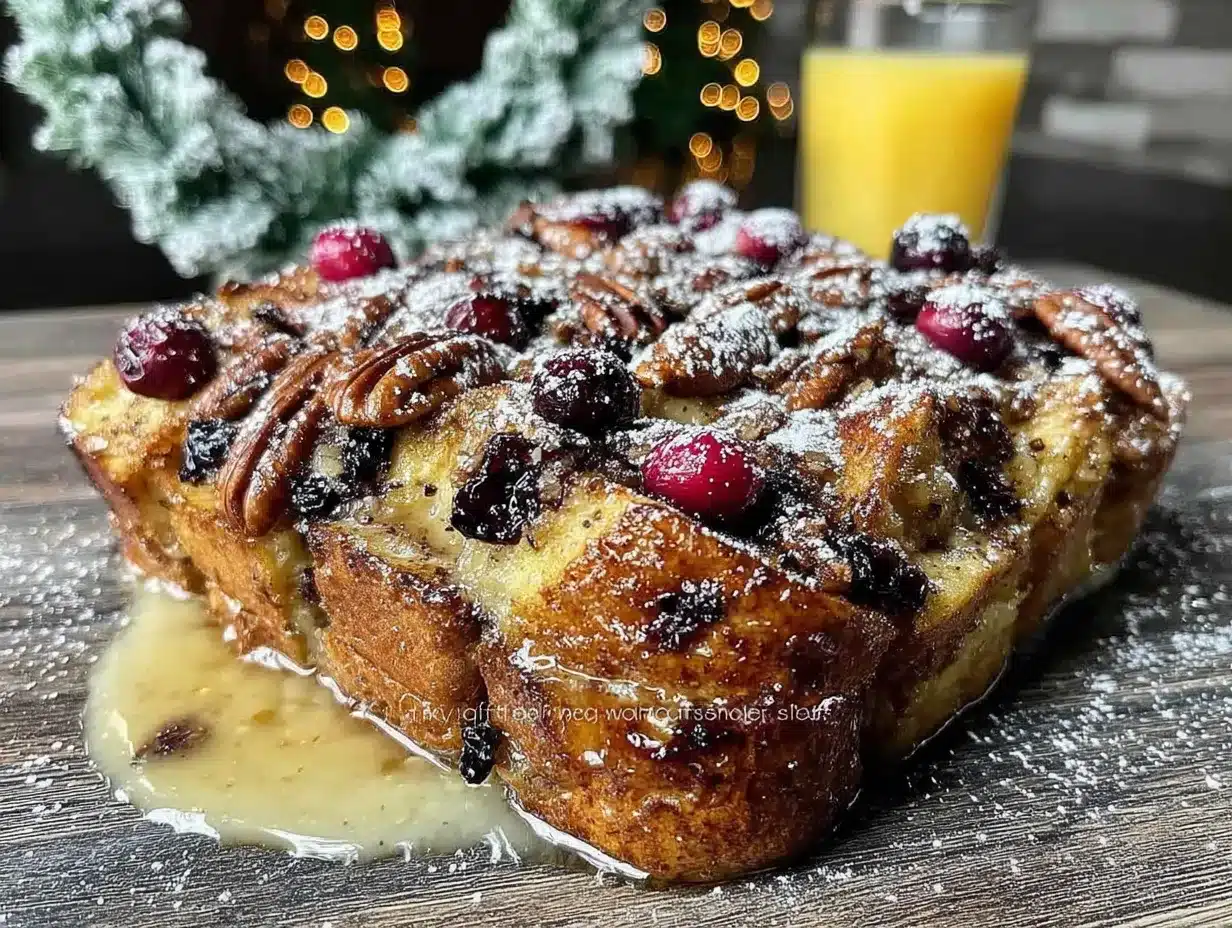
- Unbelievably Delicious : The top gets this gorgeous, caramelized crust while the inside stays soft and custard-like. Every bite has that perfect balance of sweet and eggy, with just enough cinnamon warmth to feel like Christmas in a dish.
- Budget-Friendly : You can use day-old bread, which is cheaper and actually works better. This is smart cooking for a family that needs to stretch the holiday budget without skimping on flavor.
What makes this recipe different from all the other French toast casseroles out there is the ratio. I spent a lot of time figuring out the perfect amount of custard to bread so you don’t end up with a soggy mess or a dry brick. It’s the Goldilocks of breakfast casseroles—just right. And when you take that first bite, the one that makes you close your eyes for a second? That’s when you know this one’s a keeper.
What Ingredients You Will Need
This recipe uses simple, honest ingredients to create something truly special. Most of these are things you probably already have in your pantry, which is exactly what you want on a busy holiday morning. Here’s what you’ll need:
For the Casserole Base
- 1 loaf (about 16 ounces) day-old French bread or brioche , cut into 1-inch cubes (day-old bread soaks up the custard better without turning to mush)
- 8 large eggs , room temperature (room temperature eggs blend more smoothly into the custard)
- 2 cups whole milk (whole milk gives the richest texture, but 2% works in a pinch)
- 1/2 cup heavy cream (this is the secret to that luxurious, silky custard)
- 1/2 cup granulated sugar (adds just the right sweetness without being cloying)
- 1/4 cup packed light brown sugar (brings a subtle molasses depth that makes everything feel cozy)
- 2 teaspoons vanilla extract (use pure vanilla extract if you can—it really makes a difference)
- 1 teaspoon ground cinnamon (the star of the show, honestly—don’t skimp)
- 1/4 teaspoon ground nutmeg (freshly grated if you have it, but pre-ground works fine)
- 1/4 teaspoon salt (just a pinch to balance the sweetness and wake up all the flavors)
For the Topping
- 1/2 cup all-purpose flour (creates that crumbly, streusel-like texture)
- 1/2 cup packed light brown sugar (the caramelization from this is everything)
- 1 teaspoon ground cinnamon (more cinnamon because we’re not messing around)
- 1/4 teaspoon salt (keeps the topping from being one-note sweet)
- 1/2 cup cold unsalted butter , cut into small cubes (cold butter is key for that crumbly texture)
For Serving (Optional but Highly Recommended)
- Pure maple syrup (warm it up slightly before serving)
- Powdered sugar , for dusting (makes it look fancy with zero effort)
- Fresh berries (a pop of color and freshness cuts through the richness)
I personally recommend using a good-quality French bread from your bakery section—nothing too fancy, just something with a nice crust and soft interior. I’ve tested this with regular sandwich bread too, and while it works, the texture isn’t quite as good. The bread cubes need to hold their shape after soaking overnight, and a sturdier loaf does that better. If you’re using brioche, you’re in for a real treat—it’s richer and softer, almost like dessert for breakfast.
For the milk and cream, I’ve found that whole milk combined with heavy cream gives the best results. If you’re watching your budget, you can use all whole milk and skip the cream—it’ll still be delicious, just slightly less luxurious. And for the eggs, try to remember to take them out of the fridge about 30 minutes before you start mixing. It’s one of those small things that actually matters, though I’ve definitely forgotten before and it still turned out fine.
Equipment Needed
You don’t need anything fancy for this recipe, which is part of why I love it so much. Here’s what you’ll need:
- 9×13-inch baking dish (this is the standard size for feeding a family—if you’re making a half batch, an 8×8 works)
- Large mixing bowl (for whisking the custard together)
- Medium mixing bowl (for making the topping)
- Whisk (a good whisk makes blending eggs and milk effortless)
- Pastry cutter or two forks (for cutting butter into the flour mixture—you can also use your fingers if you don’t mind getting messy)
- Knife and cutting board (for cubing the bread)
- Plastic wrap or aluminum foil (for covering the dish overnight)
- Measuring cups and spoons (the basics—nothing special)
If you don’t have a pastry cutter, honestly, just use your hands. The warmth of your fingers will soften the butter a bit, which is actually fine for this recipe. I’ve also used a food processor in a pinch—just pulse the flour, sugar, cinnamon, and salt a few times, then add the cold butter cubes and pulse until it looks like coarse meal. Just be careful not to over-process it, or you’ll end up with a paste instead of crumbles.
One thing I’ve learned the hard way: make sure your baking dish is actually 9×13. I grabbed what I thought was the right dish one year and it turned out to be slightly smaller, and the casserole puffed up and spilled over the edges. What a mess on Christmas morning! Measure if you’re not sure—it’s worth the 30 seconds.
Preparation Method
Alright, let’s get to the good part. This is where the magic happens, and I promise it’s easier than you think. Here’s how to make the best Easy Christmas Morning Baked French Toast Casserole:
- Prep the bread (5 minutes) : Cut your day-old French bread or brioche into 1-inch cubes. Don’t stress about making them perfect—rustic chunks are fine. Spread them evenly in your greased 9×13-inch baking dish. If your bread is fresh and soft, you can toast the cubes in a 300°F oven for about 10 minutes to dry them out a bit. This helps them soak up the custard without turning into a mushy mess.
- Make the custard (10 minutes) : In your large mixing bowl, whisk together the 8 eggs until they’re well beaten and slightly frothy. This takes about a minute of steady whisking. Add the 2 cups whole milk, 1/2 cup heavy cream, 1/2 cup granulated sugar, 1/4 cup brown sugar, 2 teaspoons vanilla extract, 1 teaspoon cinnamon, 1/4 teaspoon nutmeg, and 1/4 teaspoon salt. Whisk everything together until the sugars are mostly dissolved and the mixture is smooth and uniform. Give it a sniff—it should smell like Christmas in a bowl.
- Pour and soak (2 minutes) : Pour the custard mixture evenly over the bread cubes in the baking dish. Use a spatula or your hands to gently press the bread down so every piece gets soaked. Don’t mash it—just a gentle push to make sure the custard reaches all the nooks and crannies. You’ll see some bread cubes floating, and that’s totally fine. They’ll absorb the liquid as they sit.
- Make the topping (5 minutes) : In your medium mixing bowl, combine 1/2 cup flour, 1/2 cup brown sugar, 1 teaspoon cinnamon, and 1/4 teaspoon salt. Whisk to combine. Add the 1/2 cup cold butter cubes. Using your pastry cutter, two forks, or clean fingers, cut the butter into the flour mixture until it looks like coarse sand with some pea-sized butter chunks remaining. You want those little butter pockets—they melt during baking and create the most incredible caramelized crust.
- Assemble and rest (overnight or at least 4 hours) : Sprinkle the topping evenly over the soaked bread cubes. Don’t press it in—just let it sit on top like a beautiful crumbly blanket. Cover the dish tightly with plastic wrap or aluminum foil and refrigerate for at least 4 hours, but overnight is ideal. This resting time is crucial. It lets the bread fully absorb the custard so you get that perfect soft interior. I’ve made the mistake of rushing this step, and the bread was still a little dry in the middle. Trust the process.
- Bake (45-55 minutes) : When you’re ready to bake, preheat your oven to 350°F. Take the casserole out of the fridge while the oven heats up—about 15-20 minutes. This takes the chill off and helps it bake more evenly. Bake uncovered for 45-55 minutes, until the top is golden brown and the center is set. You’ll know it’s done when you give the dish a gentle shake and the middle doesn’t jiggle like liquid. The edges should be bubbly and the topping should be deeply golden. If the top is browning too quickly before the center is set, tent it loosely with foil for the last 10-15 minutes.
- Rest and serve (10 minutes) : Let the casserole rest on a wire rack for at least 10 minutes before serving. This is the hardest part, I know, but it’s important. The casserole needs time to set up so you get clean slices instead of a messy scoop. Dust with powdered sugar, drizzle with warm maple syrup, and add fresh berries if you’re feeling fancy. Then watch everyone’s faces light up.
One thing I want to mention: every oven is different. My oven runs a little hot, so I start checking at the 40-minute mark. Yours might need the full 55 minutes. The jiggle test is your best friend here. And if you’re making this for a crowd, you can keep it warm in a 200°F oven for up to 30 minutes after baking—just cover it loosely with foil so the topping doesn’t get too dark.
Cooking Tips & Techniques
After making this casserole more times than I care to count, I’ve picked up a few tricks that make a real difference. Let me share them with you so you can skip the trial and error.
Use day-old bread : This is non-negotiable. Fresh bread is too soft and will turn into a soggy pudding instead of a casserole with distinct bread pieces. If you only have fresh bread, cube it and spread it on a baking sheet in a 300°F oven for 10-15 minutes. You want it slightly dried out but not toasted. I learned this the hard way when I used fresh brioche and ended up with what my husband called “bread soup.” Not my finest moment.
Don’t skip the resting time : I know it’s tempting to rush this, especially on Christmas Eve when you’re tired and just want to go to bed. But the resting time is what transforms this from a good recipe into a great one. The bread needs time to fully absorb the custard, and the flavors need time to meld together. Four hours is the minimum, but overnight is where the magic really happens.
Room temperature eggs matter : Cold eggs don’t blend as smoothly into the milk mixture, which can leave you with streaks of egg white in your custard. Take them out of the fridge about 30 minutes before you start. If you forget (and I forget all the time), you can place them in a bowl of warm water for 5 minutes to take the chill off.
Watch your oven temperature : Every oven is a liar, including mine. An oven thermometer is a cheap investment that will save you from undercooked or burnt casseroles. I keep one in my oven year-round, and it’s saved countless baked goods. If your casserole is browning too fast on top but still jiggly in the middle, tent it with foil and lower the temperature by 25 degrees.
Make extra topping : I always, always make a little extra topping. It’s the best part—that crumbly, buttery, cinnamon-sugar crust. If you have leftover topping, you can freeze it in a zip-top bag and use it on muffins or fruit crisps later. Waste not, want not, right?
Variations & Adaptations
One of the best things about this recipe is how adaptable it is. Here are some variations I’ve tried over the years, each one delicious in its own way:
Apple Cinnamon Version : Peel and dice 2 medium apples (Granny Smith or Honeycrisp work great) and toss them with 1 tablespoon of brown sugar and 1/2 teaspoon of cinnamon. Layer half the bread cubes in the dish, spread the apples over them, then top with the remaining bread cubes. Pour the custard over everything and proceed as usual. The apples get soft and jammy during baking, and it feels like you’re eating apple pie for breakfast. My kids go crazy for this version.
Dairy-Free Adaptation : Substitute the whole milk with unsweetened almond milk or oat milk, and use full-fat coconut cream instead of heavy cream. For the butter in the topping, use a good-quality vegan butter stick (not the spreadable kind in a tub). The texture is slightly less rich, but it’s still incredibly satisfying. I made this for a friend who’s lactose intolerant, and she asked for the recipe before she even finished her first serving.
Gluten-Free Option : Use a good-quality gluten-free bread (I like the ones from Canyon Bakehouse or Udi’s) and substitute the all-purpose flour in the topping with a 1:1 gluten-free baking flour blend. Let the bread cubes soak for a full 8 hours or overnight—gluten-free bread needs more time to absorb the custard. The texture is a bit different, but honestly, it’s still delicious.
Make It a Savory-Sweet Hybrid : Reduce the sugar in the custard to 1/4 cup total and omit the cinnamon and nutmeg. Add 1 teaspoon of fresh thyme leaves and 1/2 teaspoon of black pepper to the custard. Skip the sweet topping and instead sprinkle the casserole with 1/2 cup of grated Gruyère or sharp cheddar cheese before baking. This sounds weird, I know, but it’s absolutely incredible served with a side of crispy bacon or sausage. My husband was skeptical until he tried it, and now he requests it for Christmas brunch.
Berry Burst Version : Sprinkle 1 cup of fresh or frozen berries (blueberries, raspberries, or sliced strawberries) over the bread cubes before pouring the custard. If using frozen berries, don’t thaw them first—they’ll release too much liquid and make the casserole watery. The berries burst during baking and create these little pockets of jammy goodness throughout the casserole. It’s gorgeous and tastes like summer in the middle of winter.
Serving & Storage Suggestions
This casserole is at its best when served warm, fresh from the oven, with a generous drizzle of maple syrup and a dusting of powdered sugar. I like to set up a little topping bar on the table so everyone can customize their own serving. Fresh berries, extra cinnamon, a dollop of whipped cream, or even a sprinkle of toasted pecans—let people make it their own.
For drinks, this casserole pairs beautifully with a hot cup of coffee or a spiced chai latte. If you’re serving it for Christmas brunch, a pitcher of fresh orange juice or a sparkling cranberry mocktail rounds out the meal perfectly. And if you’re feeling extra indulgent (it’s Christmas, after all), a little Bailey’s in your coffee never hurt anyone.
Storage : Leftovers (if you have any) can be stored in an airtight container in the refrigerator for up to 3 days. The topping will soften a bit, but the flavor is still fantastic. To reheat, pop individual servings in the microwave for 30-45 seconds, or reheat the whole casserole in a 300°F oven for about 15 minutes. I actually think the leftovers are even better the next day—the flavors have more time to meld together.
Freezing : You can freeze the unbaked casserole for up to 3 months. Assemble everything in the baking dish, cover tightly with plastic wrap and then foil, and freeze. When you’re ready to bake, thaw it in the refrigerator overnight and bake as directed. You can also freeze baked leftovers—just wrap individual portions in plastic wrap and store them in a freezer bag. Reheat from frozen in the microwave or oven.
One thing I’ve noticed: the casserole gets a little more custard-like as it sits, so don’t be surprised if day-old leftovers are softer than the fresh version. It’s still delicious, just different. My kids actually fight over the leftover corner pieces because they’re extra caramelized and chewy.
Nutritional Information & Benefits
Let’s be real—this is a holiday breakfast, not a health food. But that doesn’t mean it’s without its redeeming qualities. Here’s a rough breakdown per serving (based on 12 servings):
| Nutrient | Amount Per Serving |
|---|---|
| Calories | 385 |
| Total Fat | 18g |
| Saturated Fat | 10g |
| Cholesterol | 165mg |
| Sodium | 410mg |
| Total Carbohydrates | 46g |
| Dietary Fiber | 2g |
| Sugars | 28g |
| Protein | 11g |
On the bright side, this casserole does provide a good amount of protein from the eggs and milk, which helps keep everyone full and satisfied through the present-opening chaos. The eggs also provide choline, which is important for brain health, and the cinnamon has anti-inflammatory properties. The bread gives you energy to get through the day, and honestly, sharing a warm, homemade breakfast with your family on Christmas morning is good for the soul.
If you’re watching your sugar intake, you can reduce the sugar in the custard by half and skip the powdered sugar topping. The maple syrup on top adds sweetness, so you can let each person control their own sugar level. And if you’re feeding a crowd with different dietary needs, the variations above offer plenty of options to keep everyone happy.
Conclusion
This Easy Christmas Morning Baked French Toast Casserole has become a non-negotiable part of my holiday tradition, and I honestly can’t imagine Christmas morning without it. It’s the kind of recipe that makes you look like a hero with almost no effort—the perfect solution for a busy parent who wants to give their family something special without spending the whole morning in the kitchen.
What I love most about this recipe is how forgiving it is. You can use whatever bread you have, adjust the sweetness to your taste, and throw in whatever fruit or spices you’re in the mood for. It’s a recipe that works with you, not against you. And when you pull that golden, bubbly casserole out of the oven on Christmas morning, the smell filling your house and your family gathering around the table—that’s the kind of moment that makes all the holiday stress worth it.
I’d love to hear how this recipe turns out for you! Did you add your own twist? Did your picky eater go back for seconds? Drop a comment below and let me know. And if you’re looking for more holiday breakfast inspiration, be sure to check out my Easy Cinnamon Roll Casserole for another crowd-pleasing option that’s just as simple to put together. Happy Christmas, friends—may your morning be warm, your coffee be strong, and your French toast casserole be absolutely perfect.
Frequently Asked Questions
Can I make this casserole without the overnight rest?
Technically yes, but I really don’t recommend it. The bread needs time to absorb the custard, and without that resting period, you’ll end up with a casserole that’s dry in some spots and soggy in others. If you’re in a real pinch, let it sit at room temperature for at least 30 minutes before baking, but overnight is truly best for the texture and flavor.
What’s the best bread to use for this recipe?
Day-old French bread or brioche are my top choices. French bread gives you a nice sturdy texture that holds up well, while brioche is richer and softer. Challah works beautifully too. Avoid very soft sandwich bread—it tends to disintegrate during the soaking process. Whatever you use, make sure it’s at least a day old for the best results.
Can I freeze the baked casserole?
Absolutely! Let the baked casserole cool completely, then cut it into individual portions. Wrap each portion tightly in plastic wrap and store them in a freezer-safe bag or container. They’ll keep for up to 3 months. To reheat, unwrap a portion and microwave for 45-60 seconds, or reheat in a 300°F oven for about 10 minutes. The topping won’t be as crispy, but the flavor is still wonderful.
How do I know when the casserole is fully baked?
The top should be golden brown and the edges should be bubbly. Give the dish a gentle shake—if the center jiggles like liquid, it needs more time. If it moves like set custard (a slight wobble but not liquid), it’s done. You can also insert a knife into the center; if it comes out clean or with just a few moist crumbs, you’re good to go.
Can I reduce the sugar in this recipe?
Yes, you can. The casserole will still be delicious with less sugar. Try reducing the granulated sugar to 1/4 cup and the brown sugar in the topping to 1/4 cup. The maple syrup you serve it with will add sweetness, so you can let each person adjust to their taste. I’ve made a lower-sugar version for my mom, who’s watching her blood sugar, and she loved it.
Pin This Recipe!
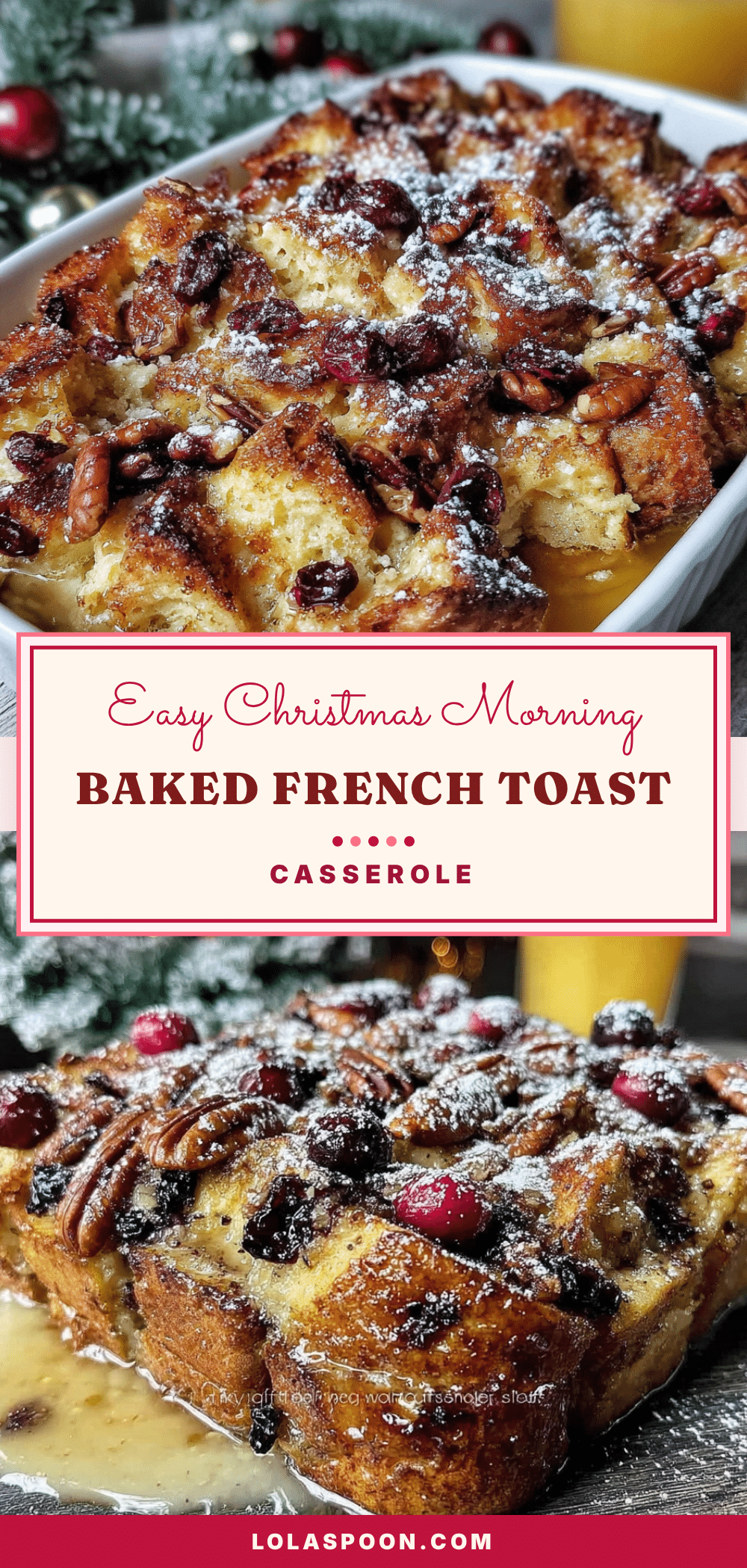
Easy Christmas Morning Baked French Toast Casserole

This overnight baked French toast casserole is the perfect Christmas morning breakfast. Prep it the night before, then bake it in the morning for a warm, caramelized, and custard-like dish that feeds a crowd with minimal effort.
- Prep Time: 15 minutes
- Cook Time: 50 minutes
- Total Time: 8 hours 5 minutes (includes overnight resting)
- Yield: 12 servings 1x
- Category: Breakfast
- Cuisine: American
Ingredients
- 1 loaf (about 16 ounces) day-old French bread or brioche, cut into 1-inch cubes
- 8 large eggs, room temperature
- 2 cups whole milk
- 1/2 cup heavy cream
- 1/2 cup granulated sugar
- 1/4 cup packed light brown sugar
- 2 teaspoons vanilla extract
- 1 teaspoon ground cinnamon
- 1/4 teaspoon ground nutmeg
- 1/4 teaspoon salt
- 1/2 cup all-purpose flour
- 1/2 cup packed light brown sugar
- 1 teaspoon ground cinnamon
- 1/4 teaspoon salt
- 1/2 cup cold unsalted butter, cut into small cubes
- Pure maple syrup (for serving)
- Powdered sugar (for dusting)
- Fresh berries (optional, for serving)
Instructions
- Prep the bread: Cut day-old French bread or brioche into 1-inch cubes. Spread evenly in a greased 9×13-inch baking dish. If bread is fresh, toast cubes in a 300°F oven for 10 minutes to dry them out.
- Make the custard: In a large mixing bowl, whisk 8 eggs until well beaten and slightly frothy. Add 2 cups whole milk, 1/2 cup heavy cream, 1/2 cup granulated sugar, 1/4 cup brown sugar, 2 teaspoons vanilla extract, 1 teaspoon cinnamon, 1/4 teaspoon nutmeg, and 1/4 teaspoon salt. Whisk until smooth and sugars are mostly dissolved.
- Pour and soak: Pour custard evenly over bread cubes. Gently press bread down with a spatula or hands to ensure all pieces are soaked.
- Make the topping: In a medium bowl, combine 1/2 cup flour, 1/2 cup brown sugar, 1 teaspoon cinnamon, and 1/4 teaspoon salt. Cut in 1/2 cup cold butter cubes using a pastry cutter or forks until mixture resembles coarse sand with some pea-sized butter chunks.
- Assemble and rest: Sprinkle topping evenly over soaked bread. Cover tightly with plastic wrap or foil and refrigerate for at least 4 hours, preferably overnight.
- Bake: Preheat oven to 350°F. Remove casserole from fridge while oven heats (15-20 minutes). Bake uncovered for 45-55 minutes, until top is golden brown and center is set (no jiggle when shaken). If top browns too quickly, tent with foil for last 10-15 minutes.
- Rest and serve: Let casserole rest on a wire rack for at least 10 minutes. Dust with powdered sugar, drizzle with warm maple syrup, and add fresh berries if desired.
Notes
Use day-old bread for best texture. Overnight resting is crucial for proper custard absorption. For a dairy-free version, use unsweetened almond milk and coconut cream. For gluten-free, use gluten-free bread and a 1:1 gluten-free flour blend. Leftovers can be stored in the refrigerator for up to 3 days or frozen for up to 3 months.
Nutrition
- Serving Size: 1 serving (1/12 of c
- Calories: 385
- Sugar: 28
- Sodium: 410
- Fat: 18
- Saturated Fat: 10
- Carbohydrates: 46
- Fiber: 2
- Protein: 11
Keywords: baked French toast casserole, Christmas breakfast, overnight French toast, holiday brunch, easy breakfast casserole