This was supposed to be a simple roasted squash situation. I had this whole plan for a light, brothy soup with ginger and maybe some coconut milk. But then my oven decided to run about fifty degrees too hot that Tuesday—typical—and I got distracted trying to untangle my headphones while on the phone with my sister. By the time I smelled something nutty and rich, the butter I had in the pan was already browning, and the squash was practically caramelized into submission. Honestly, I almost just ordered pizza. But I threw everything into the pot anyway, figuring I’d salvage what I could, and what came out was nothing like the plan.
It was better.
The brown butter gave this deep, almost toasty richness that completely changed the flavor profile. Instead of that light, gingery broth I was after, I ended up with this velvety, golden-orange soup that tasted like fall had been distilled into a bowl. I stood there at the counter, tasting it straight from the ladle, and I actually laughed. You know that feeling when you mess up so badly it somehow works in your favor? That was this soup. I brought it to a friend’s potluck that weekend, and three people asked for the recipe before I even sat down. I just smiled and said, “It was an accident.”
Now I make it on purpose. Every time I need to feed a crowd and actually feel relaxed doing it, this is the soup I reach for. It’s forgiving, it’s stunning, and it tastes like you spent hours fussing when you really just let the oven and a little burnt butter do the heavy lifting.
Why You’ll Love This Recipe
Let’s be real for a second. Hosting is stressful enough without a complicated recipe that demands your full attention. This crowd-pleasing butternut squash soup with brown butter is the opposite of that. It’s the dish you bring out when you want to look like a hero without actually breaking a sweat.
- Completely Make-Ahead Friendly: You can make this soup a full day before your gathering. The flavors actually get better overnight as they meld together. Just reheat gently and add the brown butter drizzle right before serving.
- Simple, Real Ingredients: No weird, hard-to-find items. Butternut squash, onion, garlic, broth, butter, and a few pantry spices. That’s it. Your grocery bill stays reasonable, and your stress stays low.
- Naturally Crowd-Pleasing: This soup hits that sweet spot where it’s elegant enough for a dinner party but cozy enough for a casual potluck. It’s naturally gluten-free and can easily be made dairy-free or vegan. Everyone leaves happy.
- Unbelievably Delicious: That brown butter drizzle on top? It’s not just garnish. It adds a nutty, savory depth that makes people close their eyes after the first spoonful. I’ve watched it happen at my own table.
- Impressive Presentation, Zero Fuss: A swirl of brown butter, a sprinkle of pepitas, maybe a crack of black pepper. It looks like you fussed for hours. You didn’t. That’s our little secret.
This isn’t just another butternut squash soup recipe. The technique of roasting the squash until it’s deeply caramelized and then finishing with brown butter is what sets it apart. It’s the kind of dish that makes you feel like a confident host, even when you’re running behind schedule.
What Ingredients You Will Need
This recipe relies on simple, wholesome ingredients that work together to create something truly special. The star of the show is the butternut squash, but every component plays a role in building that deep, comforting flavor.
For the Roasted Squash Base
- 1 large butternut squash (about 3 pounds) — peeled, seeded, and cut into 1-inch cubes. Look for a squash that feels heavy for its size with firm, unblemished skin. I prefer buying pre-cut cubes from the store when I’m short on time, but whole squash is usually cheaper and fresher.
- 2 tablespoons olive oil — for roasting. A good quality extra virgin olive oil adds a subtle fruitiness.
- 1 teaspoon salt — I use kosher salt for roasting. It distributes more evenly than table salt.
- ½ teaspoon black pepper — freshly ground is always better here.
For the Soup Base
- 1 medium yellow onion — diced. About 1½ cups. Onion adds a savory backbone to the soup.
- 3 cloves garlic — minced. Fresh garlic is non-negotiable here. The jarred stuff just doesn’t have the same punch.
- 4 cups vegetable or chicken broth — I recommend using a low-sodium broth so you can control the salt level. I personally love the flavor of Better Than Bouillon roasted vegetable base for this recipe.
- ½ cup heavy cream or full-fat coconut milk — for richness and that silky texture. Coconut milk is a fantastic dairy-free option that adds a subtle sweetness.
- 2 tablespoons maple syrup — just a touch to enhance the natural sweetness of the roasted squash. Use pure maple syrup, not pancake syrup.
For the Brown Butter Drizzle
- 4 tablespoons unsalted butter — this is the magic ingredient. If you’re dairy-free, use a high-quality plant-based butter like Miyoko’s or Country Crock Plant Butter.
- 6-8 fresh sage leaves — optional but highly recommended. They crisp up beautifully in the brown butter and add an earthy, aromatic note.
For Garnish (Optional but Recommended)
- ¼ cup toasted pepitas (pumpkin seeds) — adds a lovely crunch and a pop of green color.
- Extra drizzle of heavy cream or coconut milk — for that beautiful swirl on top.
- Fresh thyme or parsley — a few small sprigs or leaves for a fresh finish.
Equipment Needed
You don’t need a professional kitchen to pull this off. Here’s what you’ll actually use:
- Large baking sheet — rimmed, please. You don’t want squash juices dripping into your oven. Half-sheet pans are perfect for this.
- Large soup pot or Dutch oven — a 5 to 6-quart pot is ideal. I use my trusty Lodge enameled Dutch oven, but any heavy-bottomed pot works.
- Immersion blender or regular blender — an immersion blender is easier and creates less cleanup. If using a regular blender, blend in batches and don’t fill the jar more than halfway with hot liquid. Trust me on this one.
- Small saucepan — for browning the butter. A light-colored pan helps you see the color change.
- Chef’s knife and cutting board — a sharp knife makes peeling and cubing squash so much safer and faster.
- Vegetable peeler — a Y-peeler works best for butternut squash skin.
If you don’t have an immersion blender, you can use a potato masher for a chunkier texture, or a food processor in batches. No need to buy new gear.
Preparation Method
Let’s get cooking. This recipe is broken into simple stages so you can work through it without feeling rushed.
Step 1: Roast the Squash
Preheat your oven to 400°F (200°C). While it heats, peel your butternut squash using a sharp vegetable peeler. Cut off the stem and base, then slice the squash in half where the narrow neck meets the rounder bottom. Scoop out the seeds with a spoon—save them for roasting later if you’re feeling ambitious.
Cut the squash into 1-inch cubes. Toss them on your baking sheet with the olive oil, salt, and pepper. Spread them in a single layer—crowding the pan will steam them instead of roasting them. Roast for 25-30 minutes, flipping halfway through, until the cubes are tender and have deep golden-brown edges. The caramelization is where the flavor lives.
Step 2: Sauté the Aromatics
While the squash roasts, heat a drizzle of olive oil in your large soup pot over medium heat. Add the diced onion and cook for 5-6 minutes, stirring occasionally, until it’s soft and translucent. Add the minced garlic and cook for another minute until fragrant. Don’t let the garlic burn—it turns bitter fast.
Step 3: Simmer the Soup
Add the roasted squash cubes to the pot with the onions and garlic. Pour in the broth and bring everything to a gentle boil. Reduce the heat to low and let it simmer for 10 minutes. This gives the flavors time to get to know each other.
Step 4: Blend Until Silky
Remove the pot from the heat. If you’re using an immersion blender, carefully blend the soup directly in the pot until it’s completely smooth. If using a regular blender, work in batches—fill the jar no more than halfway, hold the lid down with a towel, and blend until smooth. Return the blended soup to the pot.
Stir in the heavy cream (or coconut milk) and maple syrup. Taste and adjust the salt and pepper. The soup should be velvety and rich, with a hint of sweetness.
Step 5: Make the Brown Butter
This is the step that takes the soup from good to unforgettable. In your small saucepan, melt the butter over medium heat. Swirl the pan occasionally. The butter will foam up, then the foam will subside, and you’ll start to see tiny brown specks forming at the bottom. This is the milk solids toasting. The whole process takes about 4-5 minutes.
Watch it closely—brown butter can go from perfect to burnt in seconds. When it smells nutty and looks amber-colored, immediately remove it from the heat. If you’re using sage leaves, drop them in the hot butter for 10-15 seconds until they’re crisp. They’ll sizzle and curl up beautifully.
Step 6: Serve and Impress
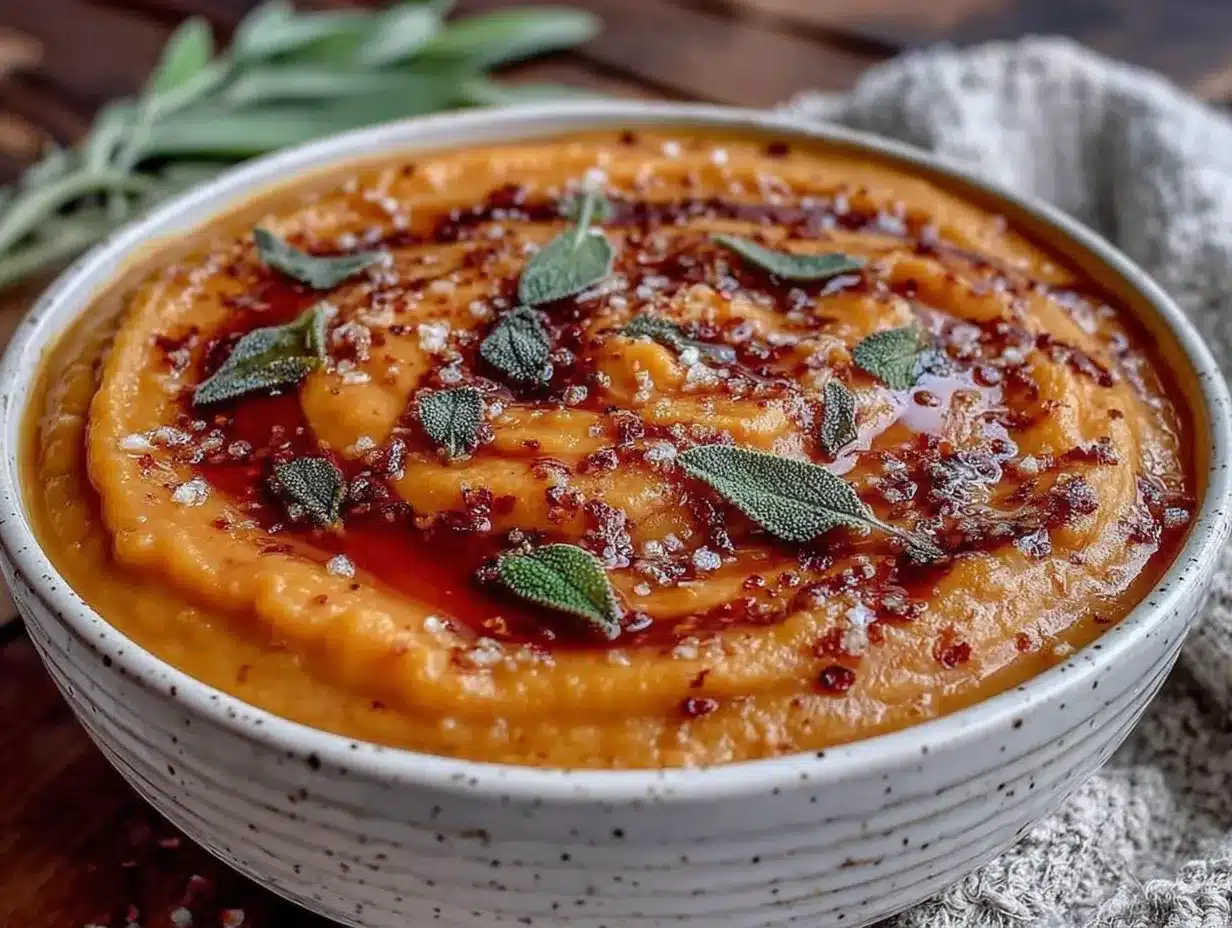
Ladle the soup into bowls. Drizzle a spoonful of brown butter over each serving, letting it swirl into the surface. Top with crispy sage leaves (if using), a sprinkle of toasted pepitas, and a few cracks of black pepper. Serve immediately while it’s warm and inviting.
Cooking Tips & Techniques
I’ve made this soup more times than I can count, and I’ve learned a few things the hard way. Let me save you the trouble.
Don’t skip the roasting step. I know it’s tempting to just boil the squash to save time, but roasting concentrates the natural sugars and gives you that deep, caramelized flavor that makes this soup so special. It’s non-negotiable in my kitchen.
Watch the brown butter like a hawk. The first time I made brown butter, I walked away to check my phone and came back to a pan of black, acrid sludge. It happens to the best of us. Stay at the stove, swirl the pan, and trust your nose. When it smells like toasted hazelnuts, you’re there.
Blend in batches if using a regular blender. Hot liquid expands when blended, and if you fill the jar too full, you’ll end up with soup on your ceiling. I learned this one the messy way. Fill halfway, hold the lid with a towel, and start on low speed.
Season in layers. Add salt at the roasting stage, again at the sautéing stage, and again after blending. This builds depth of flavor that you can’t get from seasoning at the end alone.
Make it ahead for better flavor. This soup actually improves overnight. The flavors meld and mellow, and the texture becomes even silkier. I often make it the day before a gathering and just reheat it gently with an extra splash of broth if it’s too thick.
Variations & Adaptations
One of the best things about this soup is how adaptable it is. Here are some ways to make it your own.
Vegan & Dairy-Free: Use full-fat coconut milk instead of heavy cream, and a high-quality plant-based butter for the brown butter drizzle. Miyoko’s European-style cultured butter works beautifully and browns surprisingly well.
Spicy Kick: Add a pinch of cayenne pepper or red pepper flakes when you sauté the onions. The heat plays beautifully against the sweet squash and nutty brown butter. I did this for a game day gathering once, and it was the first bowl to empty.
Roasted Apple Variation: Toss two peeled and chopped apples (Honeycrisp or Fuji work great) onto the baking sheet with the squash. They add a bright, fruity sweetness that complements the brown butter beautifully. This version is especially good for fall dinner parties.
Smoky Twist: Swap the olive oil for bacon fat when roasting the squash. Then crumble cooked bacon over the top as a garnish. It’s indulgent, but for a holiday gathering or special occasion, it’s absolutely worth it.
Herb-Infused Version: Add a sprig of fresh rosemary and a couple of thyme sprigs to the pot while the soup simmers. Remove them before blending. The herbal notes add complexity without overwhelming the squash.
Serving & Storage Suggestions
This soup is incredibly versatile when it comes to serving. Here’s how to make it shine at your next gathering.
Serving Temperature: Serve this soup hot, but not boiling. Let it cool for a few minutes after blending so the flavors settle. A warm bowl of soup is comforting; a scalding one is just stressful.
Presentation Tips: Ladle the soup into shallow bowls for a more elegant look. Drizzle the brown butter in a spiral pattern, then drag a toothpick through it to create a decorative swirl. Top with a few crispy sage leaves and a sprinkle of pepitas. It looks like you spent an hour on plating when it took you thirty seconds.
What to Serve Alongside: This soup pairs beautifully with crusty bread or a simple green salad with a tangy vinaigrette. For a heartier meal, serve it alongside a roasted chicken or a grilled cheese sandwich with sharp cheddar. At my last dinner party, I served it in small mugs as a starter before a pasta course, and it was the perfect portion.
Storage: Store leftover soup in an airtight container in the refrigerator for up to 5 days. The flavors actually deepen overnight. Reheat gently on the stovetop over medium-low heat, stirring occasionally. If the soup has thickened too much, stir in a splash of broth or water to loosen it.
Freezing: This soup freezes beautifully. Let it cool completely, then transfer to freezer-safe containers or zip-top bags. Leave a little room for expansion. Freeze for up to 3 months. Thaw overnight in the refrigerator and reheat as directed. The brown butter drizzle is best made fresh, so save that step for serving day.
Nutritional Information & Benefits
This soup isn’t just delicious—it’s packed with good-for-you ingredients. Here’s a rough breakdown per serving (based on 6 servings):
- Calories: Approximately 280-320
- Fat: 18g (mostly from healthy olive oil, cream, and butter)
- Carbohydrates: 30g
- Fiber: 6g
- Protein: 5g
- Vitamin A: Over 400% of the daily value (thanks to the butternut squash)
- Vitamin C: 35% of the daily value
- Potassium: 15% of the daily value
Butternut squash is a nutritional powerhouse. It’s loaded with beta-carotene, which your body converts to vitamin A for healthy vision and immune function. The fiber content keeps you full and supports digestive health. And the brown butter? Well, it’s not a health food, but a little bit of good fat helps your body absorb the fat-soluble vitamins in the squash. Everything in balance.
This soup is naturally gluten-free and can easily be made vegan and dairy-free with the substitutions mentioned earlier. It’s also relatively low in added sugar—just a touch of maple syrup to enhance the squash’s natural sweetness.
Conclusion
This crowd-pleasing butternut squash soup with brown butter has become my secret weapon for hosting. It started as a happy accident—a distracted Tuesday, an overheated oven, a pan of butter that went a little too far—but it’s now the recipe I’m most proud of. It’s the one I bring to potlucks, serve at dinner parties, and make for myself on cold, quiet evenings when I need a bowl of something warm and comforting.
What I love most about this soup is how it makes people feel. It’s not just food—it’s an experience. That first spoonful, with the silky texture and the nutty brown butter and the hint of sweetness, always gets a reaction. And as a host, there’s nothing better than watching your guests close their eyes and smile.
I’d love to hear how this soup turns out for you. Did you try a variation? Serve it at a special gathering? Make a mess in your kitchen like I did? Drop a comment below and let me know. And if you loved it, share it with a friend who needs a new go-to recipe. Happy cooking!
Frequently Asked Questions
Can I use frozen butternut squash instead of fresh?
Yes, you can use frozen butternut squash to save time. However, I recommend roasting it directly from frozen on a baking sheet at 425°F for about 30-35 minutes. Frozen squash tends to release more water, so you may need to drain off any excess liquid before adding it to the pot. The flavor won’t be quite as caramelized as fresh, but it’s a solid shortcut for busy weeknights.
How do I prevent the brown butter from burning?
The key is to stay at the stove and watch it closely. Use a light-colored pan so you can see the color change. Once the butter melts, it will foam, then the foam will subside. When you see tiny golden-brown specks forming at the bottom and smell a nutty aroma, remove it from the heat immediately. Pour it into a heatproof bowl to stop the cooking process.
Can I make this soup completely dairy-free?
Absolutely. Use full-fat coconut milk instead of heavy cream, and a high-quality plant-based butter for the brown butter drizzle. I’ve tested this with Miyoko’s European-style cultured butter, and it browns beautifully. The soup will have a slightly different flavor profile—a hint of coconut—but it’s absolutely delicious.
How far in advance can I make this soup for a party?
You can make this soup up to 3 days in advance. Store it in an airtight container in the refrigerator. The flavors actually improve over time. When you’re ready to serve, gently reheat it on the stovetop over medium-low heat, stirring occasionally. If it’s too thick, add a splash of broth or water. Make the brown butter drizzle fresh right before serving for the best flavor and texture.
What’s the best way to peel a butternut squash?
Use a sharp Y-shaped vegetable peeler—it’s much easier and safer than using a knife. First, cut off the stem and base of the squash. Then, cut the squash in half where the narrow neck meets the rounder bottom. Stand each piece upright on your cutting board and peel downward. If the squash is very hard, you can microwave it whole for 2-3 minutes to soften the skin slightly before peeling.
Pin This Recipe!
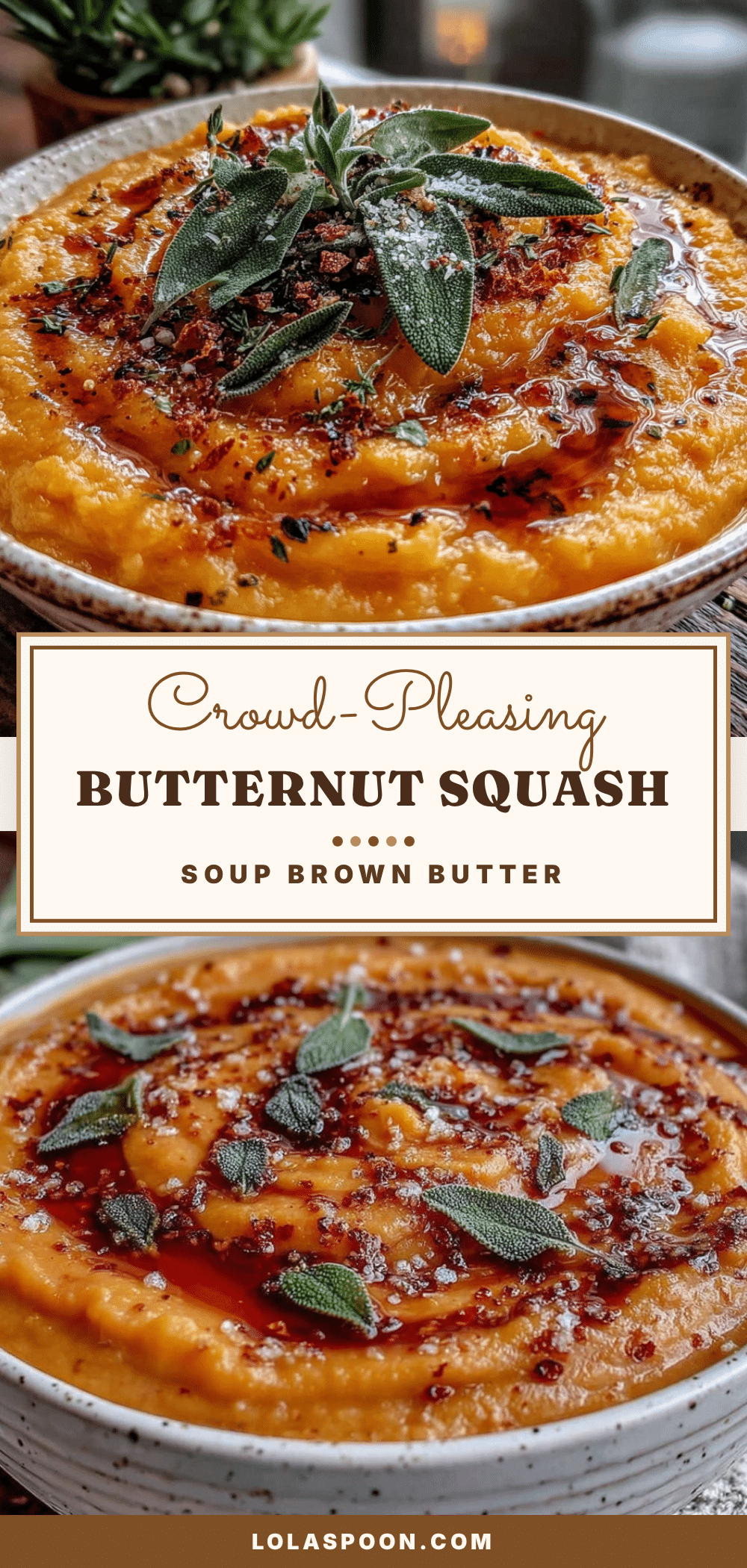
Easy Crowd-Pleasing Butternut Squash Soup with Brown Butter

A velvety, golden-orange soup with deep caramelized squash and nutty brown butter. This forgiving, make-ahead recipe is perfect for feeding a crowd with minimal fuss.
- Prep Time: 15 minutes
- Cook Time: 40 minutes
- Total Time: 55 minutes
- Yield: 6 servings 1x
- Category: Soup
- Cuisine: American
Ingredients
- 1 large butternut squash (about 3 pounds), peeled, seeded, and cut into 1-inch cubes
- 2 tablespoons olive oil
- 1 teaspoon kosher salt
- ½ teaspoon freshly ground black pepper
- 1 medium yellow onion, diced (about 1½ cups)
- 3 cloves garlic, minced
- 4 cups low-sodium vegetable or chicken broth
- ½ cup heavy cream or full-fat coconut milk
- 2 tablespoons pure maple syrup
- 4 tablespoons unsalted butter (or high-quality plant-based butter for dairy-free)
- 6–8 fresh sage leaves (optional)
- ¼ cup toasted pepitas (pumpkin seeds), for garnish
- Extra drizzle of heavy cream or coconut milk, for garnish
- Fresh thyme or parsley, for garnish
Instructions
- Preheat oven to 400°F (200°C). Peel the butternut squash, cut off stem and base, slice in half where the narrow neck meets the rounder bottom, and scoop out seeds. Cut into 1-inch cubes.
- Toss squash cubes with olive oil, salt, and pepper on a large rimmed baking sheet. Spread in a single layer. Roast for 25-30 minutes, flipping halfway, until tender and deep golden-brown.
- While squash roasts, heat a drizzle of olive oil in a large soup pot or Dutch oven over medium heat. Add diced onion and cook 5-6 minutes until soft and translucent. Add minced garlic and cook 1 minute until fragrant.
- Add roasted squash cubes to the pot with the onions and garlic. Pour in broth and bring to a gentle boil. Reduce heat to low and simmer for 10 minutes.
- Remove pot from heat. Using an immersion blender, blend soup directly in the pot until completely smooth. (If using a regular blender, blend in batches, filling jar no more than halfway, holding lid with a towel.)
- Stir in heavy cream (or coconut milk) and maple syrup. Taste and adjust salt and pepper.
- In a small saucepan, melt butter over medium heat. Swirl pan occasionally. Butter will foam, then foam subsides and tiny brown specks form. When it smells nutty and turns amber (about 4-5 minutes), remove from heat immediately. If using sage leaves, drop them in hot butter for 10-15 seconds until crisp.
- Ladle soup into bowls. Drizzle brown butter over each serving. Top with crispy sage leaves, toasted pepitas, and a few cracks of black pepper. Serve immediately.
Notes
Don’t skip roasting the squash—it concentrates natural sugars and adds deep flavor. Watch brown butter closely; it can burn in seconds. Season in layers for best flavor. Soup improves overnight; make ahead and reheat gently. For vegan version, use full-fat coconut milk and plant-based butter. For spicy kick, add cayenne or red pepper flakes with onions.
Nutrition
- Serving Size: 1 bowl (about 1½ cup
- Calories: 300
- Sugar: 12
- Sodium: 600
- Fat: 18
- Saturated Fat: 8
- Carbohydrates: 30
- Fiber: 6
- Protein: 5
Keywords: butternut squash soup, brown butter, fall soup, crowd-pleasing, make-ahead, gluten-free, vegetarian