This was supposed to be roasted butternut squash soup. I had the squash, the ginger, the coconut milk all lined up on the counter. My plan was a silky, warm bowl of autumn comfort—the kind you sip while wrapped in a blanket. But somewhere between peeling that stubborn squash and realizing my immersion blender was still in my sister’s kitchen three towns over, the whole thing fell apart. I stood there, knife in hand, staring at a mountain of cubed squash and feeling that familiar kitchen panic creep in.
I had already invited my neighbor, Maria, over for dinner. The soup was the star of the show, and now the star had no show. I could feel the clock ticking, and honestly, I was this close to ordering pizza. But then I spotted a box of farfalle in the pantry, a bag of cranberries I’d bought on a whim, and a bottle of apple cider that was supposed to be for mimosas. A crazy idea started forming. What if I just… threw it all together? I mean, pasta salad is a summer thing, right? But what if it didn’t have to be? What if fall could have its own version?
I grabbed the wrong vinegar—balsamic instead of white wine—and the oven was already preheated to 400°F from the abandoned soup plan. So I roasted the squash anyway, tossed it with the pasta, added some crumbled goat cheese, and whisked up a dressing with that apple cider. What came out was nothing like the plan. It was better. It was the kind of dish that makes you stop mid-chew and just look at the bowl. This cozy fall pasta salad wasn’t a backup meal. It was a happy accident that I’ve now made every single October since. Maybe you’ve been there—staring down a ruined dinner plan, ready to give up. Let me tell you, sometimes the best recipes come from the biggest messes.
Why You’ll Love This Recipe
This easy fall pasta salad is the kind of dish that surprises you. It’s hearty enough to be a main course but works just as well as a side for a cozy gathering. I’ve tested this recipe about seven times now, tweaking the dressing ratio and the roast time on the squash, and I can tell you with confidence—this version is the one.
- Quick & Easy: From start to table in under 45 minutes. The pasta cooks while the squash roasts, so you’re multitasking without the stress.
- Simple Ingredients: No need to hunt down specialty items. You probably have the apple cider, olive oil, and mustard in your kitchen right now.
- Perfect for Fall Gatherings: Bring this to a Friendsgiving, a potluck, or just eat it on your couch while watching a scary movie. It fits every cozy occasion.
- Crowd-Pleaser: Even people who “don’t like pasta salad” have asked me for the recipe. The sweet-tangy dressing wins everyone over.
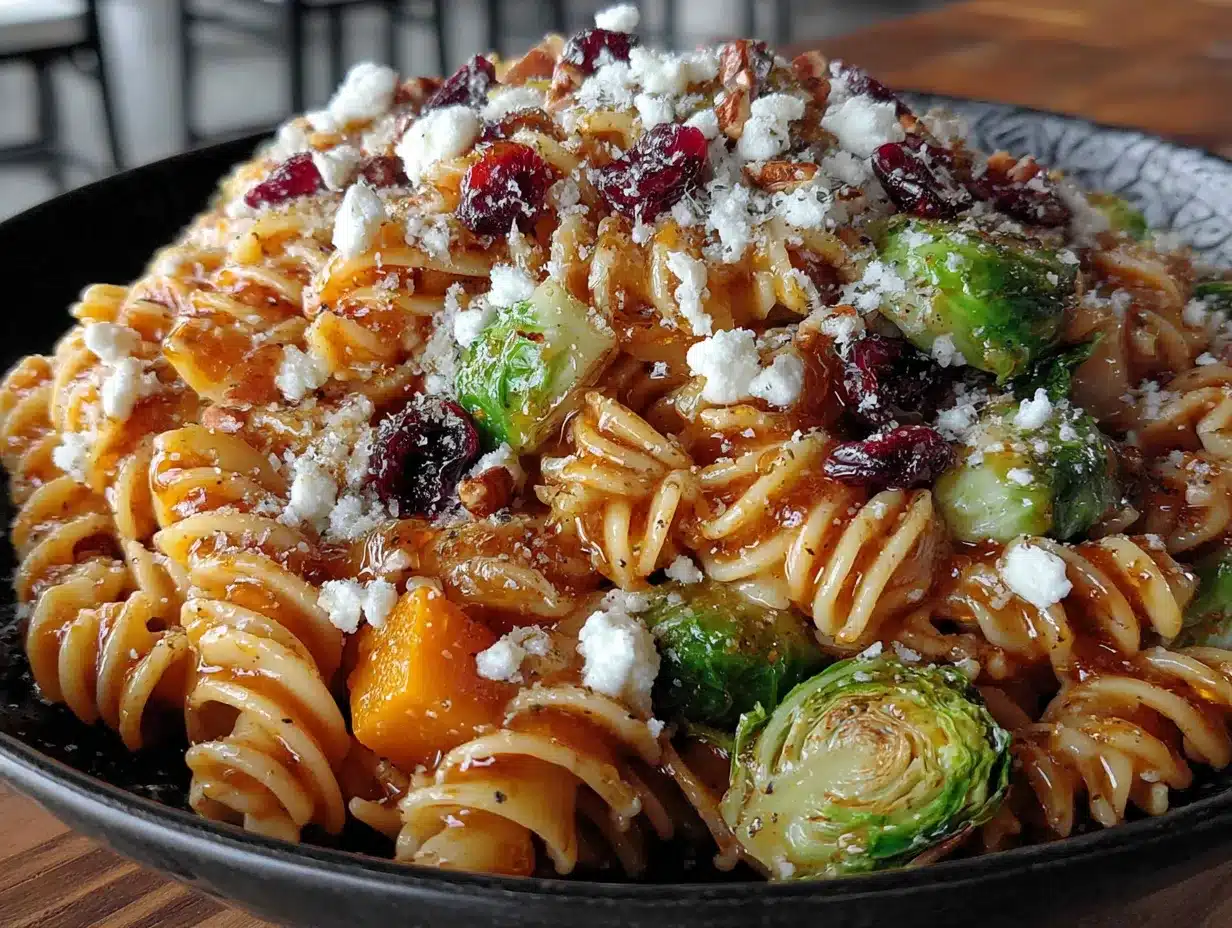
- Unbelievably Delicious: The combination of roasted squash, chewy cranberries, creamy goat cheese, and that apple cider vinaigrette is next-level comfort food. It’s sweet, savory, tangy, and a little bit salty all at once.
What makes this different from every other pasta salad out there? It’s the roasted squash. Most recipes just toss in raw veggies, but roasting the butternut squash brings out its natural sweetness and gives it a caramelized edge that plays perfectly with the tangy dressing. And that dressing—honestly, it’s the star. The apple cider vinegar gives it a sharpness that cuts through the richness of the cheese and the nuts. This isn’t just another version of pasta salad. It’s the fall version you didn’t know you needed.
What Ingredients You Will Need
This recipe uses simple, wholesome ingredients to deliver bold fall flavor without the fuss. Most of these are pantry staples or easy to find at any grocery store during autumn.
For the Pasta Salad
- Farfalle pasta (12 oz / 340g) – I love the shape for this salad because the little “bowties” catch the dressing and the small bits of squash. You can use rotini or penne if that’s what you have.
- Butternut squash (3 cups, cubed / about 400g) – Look for firm, deep orange squash. Pre-cut cubes from the store work great if you’re short on time.
- Olive oil (2 tbsp / 30ml) – For roasting the squash. Use a good quality one here since the flavor matters.
- Dried cranberries (½ cup / 60g) – Adds that chewy, tart pop that screams fall. I prefer Craisins brand for consistent texture.
- Goat cheese (4 oz / 115g), crumbled – The creamy, tangy crumbles balance the sweetness of the squash and dressing. If you’re not a goat cheese fan, feta works too.
- Pecans (½ cup / 60g), roughly chopped – Toast them lightly for extra crunch and nutty flavor. Walnuts are a great substitute.
- Red onion (¼ cup / 40g), thinly sliced – Adds a sharp bite that mellows out as the salad sits.
- Fresh sage leaves (about 8 leaves) – Optional but amazing. Fry them in a little butter for a crispy, earthy topping.
For the Apple Cider Vinaigrette
- Apple cider vinegar (¼ cup / 60ml) – The backbone of the dressing. Use raw, unfiltered if you can—it has more depth.
- Extra virgin olive oil (⅓ cup / 80ml) – A fruity one works best here.
- Dijon mustard (1 tbsp / 15ml) – Helps emulsify the dressing and adds a subtle tang. Grey Poupon is my go-to.
- Maple syrup (1 tbsp / 15ml) – Just a touch of sweetness to round out the vinegar. Honey works if that’s what you have.
- Garlic (1 small clove, minced) – Fresh is best, but a pinch of garlic powder works in a pinch.
- Salt and black pepper (to taste) – I use about ½ tsp salt and ¼ tsp pepper.
Equipment Needed
- Large pot (6-8 quart) – For boiling the pasta. Don’t use a small pot; the pasta needs room to move.
- Baking sheet – A rimmed half-sheet pan works best for roasting the squash evenly.
- Parchment paper – Makes cleanup a breeze and prevents the squash from sticking.
- Mixing bowls – One large for the salad, one medium for the dressing. Glass or stainless steel is ideal.
- Whisk – For emulsifying the vinaigrette. A fork works if you’re in a bind, but a whisk is better.
- Sharp knife and cutting board – For cubing the squash and slicing the onion.
- Small skillet – Only if you’re making the fried sage leaves.
I bought my favorite whisk from a restaurant supply store for like three bucks, and it’s lasted five years. You don’t need fancy equipment here—just the basics will do.
Preparation Method
- Preheat your oven to 400°F (200°C). Line a baking sheet with parchment paper. While the oven heats, cube your butternut squash into ½-inch pieces. If they’re too big, they won’t roast evenly. Too small, and they’ll burn. Aim for bite-sized.
- Toss the squash with 2 tablespoons of olive oil, a pinch of salt, and a crack of black pepper. Spread them in a single layer on the baking sheet. Don’t overcrowd—if they’re touching too much, they’ll steam instead of roast. Roast for 20-25 minutes, flipping halfway through. You want them golden and tender, with slightly caramelized edges. A fork should slide in easily.
- While the squash roasts, bring a large pot of salted water to a rolling boil. I add about a tablespoon of salt per 4 quarts of water—it should taste like the sea. Add the farfalle and cook according to package directions until al dente. For most brands, that’s about 10-12 minutes. Taste a piece to be sure; there should be a tiny white speck in the center.
- Drain the pasta and rinse it briefly with cool water to stop the cooking process. Don’t rinse it completely—a little starch left on the pasta helps the dressing cling. Drizzle a tiny bit of olive oil over it and toss to prevent sticking. Set it aside to cool slightly while you make the dressing.
- Make the apple cider vinaigrette: In a medium bowl, combine ¼ cup apple cider vinegar, 1 tablespoon Dijon mustard, 1 tablespoon maple syrup, and the minced garlic. Whisk until smooth. Slowly drizzle in ⅓ cup olive oil while whisking constantly. This helps the dressing emulsify and stay creamy. Season with salt and pepper to taste. Give it a taste—it should be tangy, a little sweet, and well-balanced. Adjust the maple syrup or vinegar if needed.
- Toast the pecans in a dry skillet over medium heat for 2-3 minutes, shaking the pan frequently. You’ll know they’re done when they smell fragrant and look slightly darker. Watch closely—they burn fast. Set them aside to cool.
- Assemble the salad: In a large mixing bowl, combine the cooled pasta, roasted squash, dried cranberries, toasted pecans, and thinly sliced red onion. Pour about two-thirds of the dressing over the top and toss gently to combine. You want everything evenly coated without breaking up the squash.
- Add the goat cheese by gently folding it in. I like to leave some crumbles visible on top for a pretty presentation. If you’re using fried sage leaves, scatter them over the top now.
- Let the salad sit for at least 10 minutes before serving. This is the hardest part, I know, but it’s crucial. The pasta needs time to absorb the dressing. The flavors meld and deepen as it rests. Taste and add more dressing if needed.
One time I forgot to add the cranberries until after I’d already served it. I just sprinkled them on top and called it “deconstructed.” No one noticed. Perfection is overrated.
Cooking Tips & Techniques
Roasting squash can be tricky. I’ve definitely had batches that turned out mushy or burnt. The trick is to cut the cubes evenly and give them space on the baking sheet. If they’re crowded, they’ll steam and get soft instead of caramelizing. Also, don’t skip flipping them halfway through—it makes a huge difference.
The dressing is where a lot of people mess up. If you dump all the oil in at once, it’ll separate and look greasy. Drizzle it slowly while whisking, and you’ll get a beautiful, emulsified vinaigrette that clings to every piece of pasta. I learned this the hard way after making a dressing that looked like a science experiment gone wrong.
One more thing—don’t overdress the salad. Pasta absorbs liquid as it sits, so what looks like a little dressing at first will be perfect after 10-15 minutes. Start with two-thirds of the dressing and add more just before serving if needed. I’ve ruined salads by being too generous upfront, ending up with a soggy mess.
Timing-wise, roast the squash while the pasta cooks. That way, both are done around the same time. While they cool slightly, make the dressing. It’s a smooth workflow that keeps you from feeling rushed.
Variations & Adaptations
Make it vegan: Swap the goat cheese for a vegan feta or just leave it out entirely. The dressing and roasted squash are so flavorful that you won’t miss the cheese. Add some toasted pumpkin seeds for extra crunch.
Add protein: I’ve made this with shredded rotisserie chicken mixed in, and it turned into a hearty main dish that my husband requested three weeks in a row. Grilled chicken, sliced sausage, or even leftover turkey from Thanksgiving all work beautifully.
Switch up the squash: Butternut is my favorite, but delicata squash (no need to peel!) or even sweet potatoes work great. In the summer, I’ve used grilled zucchini and corn instead—it’s a completely different salad but still delicious.
Gluten-free option: Use your favorite gluten-free pasta. Brown rice pasta holds up well here. Just be careful not to overcook it—gluten-free pasta goes from al dente to mush very quickly.
I tried a version with pomegranate seeds instead of cranberries once, and honestly, it was a mess. The seeds popped and stained everything pink. Stick with the cranberries. Some experiments just don’t work, and that’s okay.
Serving & Storage Suggestions
This cozy fall pasta salad is best served at room temperature. The flavors are more pronounced when it’s not straight out of the fridge. If you’ve refrigerated it, let it sit on the counter for about 20 minutes before serving. Give it a good stir and add a splash of dressing to revive it.
It pairs beautifully with a bowl of roasted butternut squash soup for a double-dose of fall comfort. A crisp green salad with a simple lemon vinaigrette also works as a side if you’re serving this as the main. For drinks, a dry hard cider or a glass of Sauvignon Blanc complements the tangy dressing perfectly.
For storage, transfer the salad to an airtight container and refrigerate for up to 4 days. The pasta will absorb more dressing over time, so don’t be alarmed if it looks drier on day two. I actually like it better the next day—the flavors have a chance to get friendly with each other. If you’re meal-prepping, keep the dressing separate and toss it in just before serving.
Freezing is not recommended. The texture of the pasta and the squash will suffer. Trust me, I tried it once, and it was a sad, watery mess. Just make a fresh batch when the craving hits.
Nutritional Information & Benefits
This recipe makes about 6 servings. Per serving, you’re looking at approximately 420 calories, 18g fat, 55g carbohydrates, 8g fiber, and 10g protein. These are estimates and will vary based on your specific ingredients and portion sizes.
Butternut squash is packed with vitamin A, which is great for your immune system and eye health. The pecans provide healthy fats and a little magnesium, while the apple cider vinegar in the dressing has been linked to better blood sugar regulation. This isn’t a health food, but it’s a dish that makes you feel good—both in the moment and after.
If you’re watching your carb intake, you can use chickpea pasta or a low-carb pasta alternative. The rest of the ingredients are naturally gluten-free (just double-check your mustard and vinegar labels).
Conclusion
This easy fall pasta salad with apple cider vinaigrette is the kind of recipe that feels like a warm hug on a chilly day. It started as a kitchen disaster, but honestly, I’m grateful for that failed soup. Sometimes the best things come from plans falling apart. The combination of sweet roasted squash, tart cranberries, creamy goat cheese, and that tangy, maple-kissed dressing is something you’ll crave all season long.
I hope you make this your own. Add more pecans if you’re a nut lover. Swap in feta if goat cheese isn’t your thing. Leave out the onion if you’re not a fan. The beauty of this recipe is how forgiving it is—just like the day I accidentally invented it. If you try it, let me know how it turns out. Tag me in your photos or leave a comment below. I’d love to hear about your own happy kitchen accidents. Until next time, happy cooking!
Frequently Asked Questions
Can I make this pasta salad ahead of time?
Absolutely. In fact, it tastes even better the next day. Make it up to 24 hours in advance, but store the dressing separately and toss it in about 30 minutes before serving. This keeps the pasta from getting too soggy.
What’s the best pasta shape for this recipe?
Farfalle (bowtie pasta) is my top choice because the nooks and crannies catch the dressing and small bits of squash. Rotini, penne, or even orecchiette work great too. Avoid long noodles like spaghetti—they don’t hold the ingredients as well.
Can I use a different type of squash?
Yes! Delicata, acorn, or even pumpkin work well. If using delicata, you don’t need to peel it—the skin is tender and edible. Sweet potatoes are also a fantastic substitute and roast up beautifully.
How do I prevent the pasta from getting mushy?
Cook it to al dente—firm to the bite. The pasta will continue to soften slightly as it absorbs the dressing. Rinsing it with cool water after draining also stops the cooking process. And don’t overdress it; start with less and add more as needed.
Is this recipe gluten-free?
It can be! Simply use your favorite gluten-free pasta. Brown rice or chickpea pasta hold up well. Just be careful not to overcook them—gluten-free pasta tends to get mushy faster than wheat pasta. Check all other ingredients like mustard and vinegar to ensure they’re certified gluten-free.
Pin This Recipe!
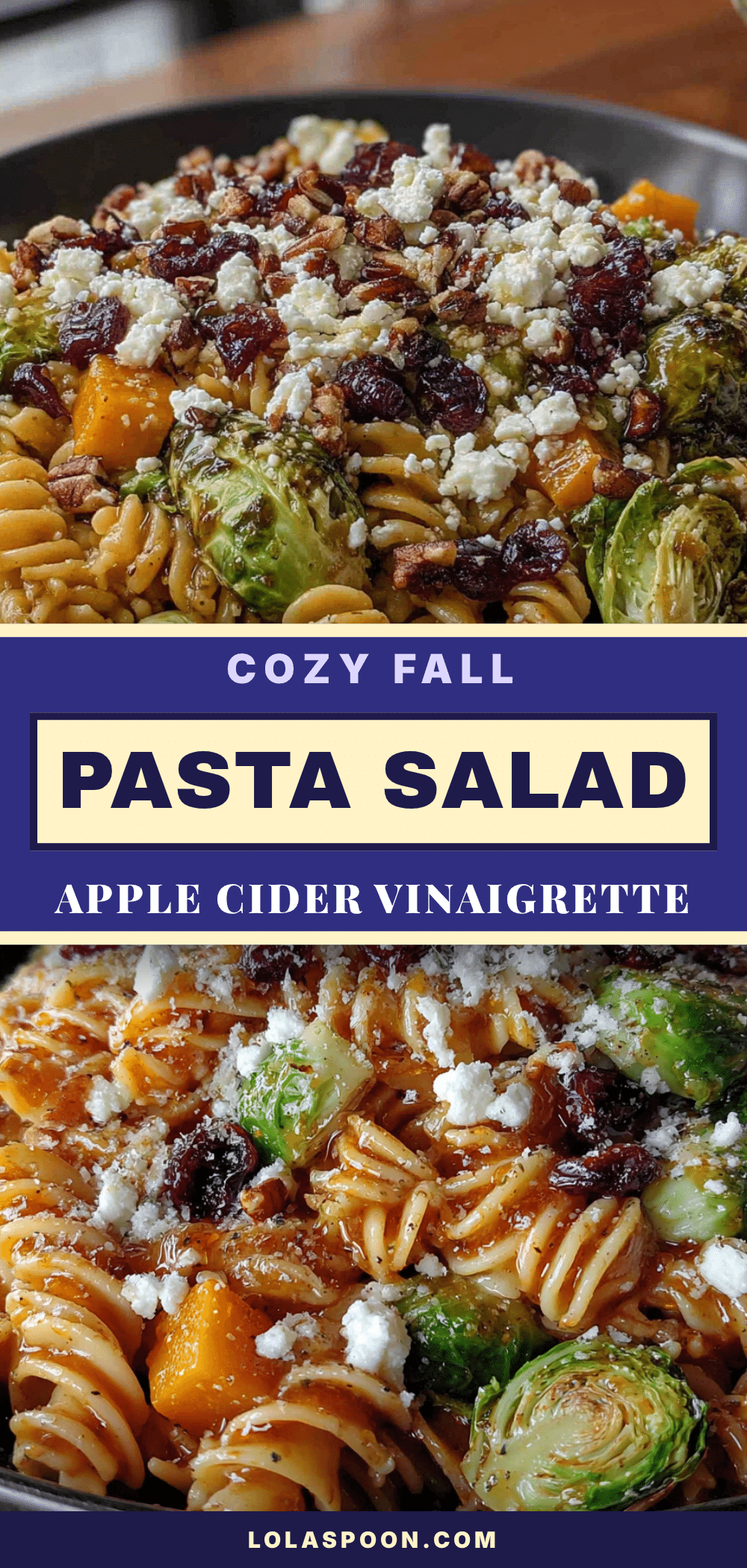
Easy Fall Pasta Salad with Apple Cider Vinaigrette
A cozy fall pasta salad featuring roasted butternut squash, dried cranberries, goat cheese, and pecans, all tossed in a tangy apple cider vinaigrette. Perfect for autumn gatherings or a comforting weeknight meal.
- Prep Time: 15 minutes
- Cook Time: 25 minutes
- Total Time: 40 minutes
- Yield: 6 servings 1x
- Category: Main Course
- Cuisine: American
Ingredients
- 12 oz (340g) farfalle pasta
- 3 cups (about 400g) cubed butternut squash
- 2 tbsp (30ml) olive oil
- ½ cup (60g) dried cranberries
- 4 oz (115g) goat cheese, crumbled
- ½ cup (60g) pecans, roughly chopped
- ¼ cup (40g) red onion, thinly sliced
- 8 fresh sage leaves (optional)
- ¼ cup (60ml) apple cider vinegar
- ⅓ cup (80ml) extra virgin olive oil
- 1 tbsp (15ml) Dijon mustard
- 1 tbsp (15ml) maple syrup
- 1 small garlic clove, minced
- Salt and black pepper to taste
Instructions
- Preheat oven to 400°F (200°C). Line a baking sheet with parchment paper.
- Toss cubed butternut squash with 2 tbsp olive oil, salt, and pepper. Spread in a single layer on the baking sheet. Roast for 20-25 minutes, flipping halfway, until golden and tender.
- Bring a large pot of salted water to a boil. Cook farfalle according to package directions until al dente. Drain and rinse briefly with cool water; drizzle with a little olive oil to prevent sticking.
- In a medium bowl, whisk together apple cider vinegar, Dijon mustard, maple syrup, and minced garlic. Slowly drizzle in ⅓ cup olive oil while whisking constantly to emulsify. Season with salt and pepper.
- Toast pecans in a dry skillet over medium heat for 2-3 minutes until fragrant. Set aside to cool.
- In a large bowl, combine cooled pasta, roasted squash, dried cranberries, toasted pecans, and sliced red onion. Pour about two-thirds of the dressing over and toss gently.
- Fold in crumbled goat cheese. If using fried sage leaves, scatter on top.
- Let the salad sit for at least 10 minutes before serving to allow flavors to meld. Add more dressing if needed.
Notes
Let the salad sit for at least 10 minutes before serving to allow flavors to meld. Store leftovers in an airtight container in the refrigerator for up to 4 days. The salad tastes even better the next day. For meal prep, keep dressing separate and add just before serving. Freezing is not recommended.
Nutrition
- Serving Size: 1 serving
- Calories: 420
- Sugar: 12
- Sodium: 350
- Fat: 18
- Saturated Fat: 4
- Carbohydrates: 55
- Fiber: 8
- Protein: 10
Keywords: fall pasta salad, butternut squash pasta salad, apple cider vinaigrette, easy fall recipe, vegetarian pasta salad