My sister-in-law, Jenna, asked me why I couldn’t just use a box of muffin mix instead of making the persimmon bread from scratch. I started to explain why that wouldn’t work—the texture would be all wrong, the persimmon flavor would get lost, it just wasn’t the same. Then I stopped. Honestly, I was tired, it was a Tuesday, and I had a sink full of dishes. So I handed her the box mix, the persimmons I’d been hoarding, and a jar of walnuts. “Fine,” I said. “Show me.”
She mashed those ripe Hachiya persimmons into the mix, threw in a handful of cinnamon, and folded in the walnuts with way more confidence than I had. The loaf came out of the oven looking a little lopsided because she’d forgotten to grease the pan evenly. But the smell? That warm, spicy, fruity aroma that filled the kitchen was something else entirely. I took a slice while it was still warm, and let me tell you—I had to eat my words right along with that bread. It was incredible. The persimmon made it almost pudding-like in the center, and the walnuts gave it this perfect crunch.
Maybe you’ve been there, thinking you have to follow every rule to get a good result. I was wrong. That moment taught me that sometimes the best recipes come from letting go of control. This Guest-Favorite Persimmon Bread with Walnuts and Cinnamon is the result of that happy accident. It’s the bread I now bring to every potluck and dinner party, the one people ask for by name. It’s forgiving, it’s forgiving, and it steals the show every single time.
Why You’ll Love This Recipe
This isn’t just another quick bread recipe. This is the one that makes people close their eyes after the first bite. I’ve tested it more times than I can count, tweaking the amount of cinnamon, the type of walnut, even the ripeness of the persimmons. Here’s why it works so well for hosting:
- Simple Ingredients: You probably have most of these in your pantry right now. No fancy extracts or hard-to-find flours. Just good, honest baking staples.
- Perfect for Gatherings: This bread is a showstopper on a brunch table, a welcome addition to a holiday dessert spread, or a thoughtful hostess gift. It travels beautifully and slices cleanly.
- Crowd-Pleaser: I’ve served it to kids who usually hate fruit in baked goods, and to adults who claim they don’t have a sweet tooth. It disappears every time. The texture is moist but not gummy, and the walnuts add that satisfying crunch.
- Unbelievably Delicious: The persimmon brings a natural sweetness and a honey-like richness that you just can’t get from any other fruit. Paired with warm cinnamon and toasted walnuts, it’s comfort food at its finest.
- Stress-Free Hosting: You can make this a day ahead—in fact, it tastes even better the next day. That means one less thing to worry about when your guests arrive.
What makes this recipe different from all the other persimmon breads out there? It’s the ratio. I spent weeks getting the persimmon puree to flour balance just right. Too much persimmon and the bread sinks in the middle. Too little and you lose that unique flavor. This version is my best version, and it’s been taste-tested by dozens of friends and family members. It’s the kind of recipe that makes you look like a hero in the kitchen with minimal effort.
What Ingredients You Will Need
This recipe relies on simple, wholesome ingredients that work together to create something truly special. The persimmon is the star here, so make sure you pick the right ones. Here’s what you’ll need:
For the Bread
- Ripe Hachiya persimmons (about 2-3 medium): These are the acorn-shaped ones, not the squat Fuyu variety. Hachiyas are astringent until fully ripe—like a jelly-like consistency inside. You want them so soft they practically fall apart. Mash them well to get about 1 cup of puree.
- All-purpose flour (1 ½ cups / 180g): Spoon and level your flour for the best texture. Too much flour makes the bread dry.
- Granulated sugar (¾ cup / 150g): You can reduce this slightly if your persimmons are incredibly sweet, but I wouldn’t go below ½ cup.
- Baking soda (1 teaspoon): This helps the bread rise and react with the persimmon’s natural acidity.
- Baking powder (½ teaspoon): For a little extra lift.
- Ground cinnamon (1 ½ teaspoons): I prefer Saigon cinnamon for its bold, spicy warmth. It really stands up to the persimmon.
- Salt (½ teaspoon): Don’t skip it—it balances the sweetness.
- Large eggs (2, room temperature): Room temperature eggs blend more evenly into the batter.
- Vegetable oil (½ cup / 120ml): A neutral oil like canola or grapeseed keeps the bread incredibly moist. You can substitute melted coconut oil if you prefer.
- Vanilla extract (1 teaspoon): Pure vanilla, not imitation, for the best flavor.
- Walnuts (1 cup / 120g, chopped): Toast them lightly in a dry pan for 3-4 minutes before adding to the batter. It makes a huge difference in flavor.
Optional Add-Ins
- Golden raisins (½ cup): Adds little bursts of sweetness. I sometimes add these when I want a more traditional fruitcake vibe.
- Orange zest (1 tablespoon): Brightens up the flavor beautifully. Add it with the wet ingredients.
Ingredient Selection Tip: When buying Hachiya persimmons, look for ones that are deeply orange and feel like a water balloon when you squeeze them gently. If they’re still firm, leave them on the counter for a few days. You can speed up ripening by placing them in a paper bag with a banana.
Equipment Needed
You don’t need a professional bakery setup for this. Here’s what you’ll need:
- 9×5-inch loaf pan: A standard metal or glass pan works great. If you use a dark non-stick pan, keep an eye on the baking time—it can brown faster.
- Mixing bowls: One large and one medium.
- Whisk: For combining dry ingredients.
- Wooden spoon or rubber spatula: For folding everything together. Don’t overmix!
- Measuring cups and spoons: Accurate measurements matter in baking.
- Parchment paper: Lining the pan makes removal a breeze. I’ve learned this the hard way after a few stuck loaves.
- Cooling rack: Essential for even cooling so the bottom doesn’t get soggy.
If you don’t have a 9×5-inch pan, you can use an 8×4-inch pan and just bake it a little longer—about 10-15 minutes more. Or make muffins! Bake them at 350°F for 18-22 minutes.
Preparation Method
Follow these steps, and you’ll have a beautiful loaf every time. I’ve added little notes from my own trial and error along the way.
- Preheat your oven to 350°F (175°C). Position the rack in the center of the oven. Line your loaf pan with parchment paper, leaving some overhang on the long sides. This is your lifeline for lifting the bread out later.
- Prepare your persimmon puree. Cut the ripe Hachiya persimmons in half and scoop out the soft flesh with a spoon. Discard any seeds or tough bits. Mash the flesh with a fork until smooth. You should have about 1 cup. If you have a little extra, that’s fine—just don’t go over 1 ¼ cups or the bread might sink.
- Toast the walnuts. Spread the chopped walnuts on a baking sheet and toast in the preheated oven for 5-6 minutes, until fragrant. Watch them closely—they burn fast. Let them cool completely while you mix the batter.
- Mix the dry ingredients. In a medium bowl, whisk together the flour, baking soda, baking powder, cinnamon, and salt. Make sure everything is evenly distributed. I like to give it a few extra whisks to aerate the flour.
- Mix the wet ingredients. In a large bowl, whisk together the sugar, eggs, oil, vanilla extract, and persimmon puree until smooth. The mixture should look thick and glossy, like a thin pudding.
- Combine wet and dry. Pour the dry ingredients into the wet mixture. Gently fold with a rubber spatula until just combined. A few streaks of flour are okay. Overmixing will make the bread tough. I’ve done it, and I promise you, the results are disappointing.
- Fold in the walnuts. Add the toasted walnuts (and any optional add-ins like raisins or zest) and fold them in with just a few strokes. Don’t overwork the batter.
- Pour into the pan. Scrape the batter into the prepared loaf pan and spread it evenly. Give the pan a gentle tap on the counter to release any air bubbles.
- Bake. Place the pan in the preheated oven and bake for 50-60 minutes. Start checking at 50 minutes by inserting a toothpick into the center. If it comes out clean or with a few moist crumbs, it’s done. If the top is browning too quickly, tent the pan loosely with aluminum foil for the last 15 minutes.
- Cool. Let the bread cool in the pan on a wire rack for 15 minutes. Then use the parchment paper overhang to lift it out and transfer it to the rack to cool completely. Patience is key here—slicing it warm will result in a crumbly mess. Trust me, I’ve been there.
Cooking Tips & Techniques
Here are the things I wish someone had told me the first time I made this bread:
Don’t rush the persimmon. Seriously. Under-ripe Hachiya persimmons are unpleasantly astringent. They’ll make your mouth feel fuzzy. Wait until they’re practically liquid inside. If you’re in a hurry, you can freeze ripe persimmons, then thaw them. The freezing process breaks down the cell walls and makes them even easier to puree.
Measure your flour correctly. The spoon-and-level method is your friend. Fluff the flour in its container, spoon it into your measuring cup, and level it off with a knife. Scooping directly with the cup can pack in up to 25% more flour, resulting in a dry, dense loaf.
Toast the walnuts, always. I learned this lesson after making a batch where the walnuts tasted flat and slightly bitter. Toasting brings out their natural oils and adds a depth of flavor that transforms the bread. You can toast them in a dry skillet on the stovetop too—just shake the pan frequently and remove them as soon as you smell that nutty aroma.
Let it rest overnight. This is my number one hosting secret. The bread is good fresh, but it’s amazing the next day. The flavors meld together, the texture becomes even more tender, and it slices like a dream. Wrap the cooled loaf tightly in plastic wrap and leave it on the counter overnight.
Mind your baking time. Every oven is different. My old oven ran hot and would brown the top too fast while the center was still raw. If you’re unsure, use an oven thermometer. And always start checking for doneness a few minutes early.
Variations & Adaptations
This recipe is wonderfully adaptable. Here are some ways to make it your own:
Dietary Adaptations
- Gluten-Free: Substitute the all-purpose flour with a good 1:1 gluten-free baking blend that contains xanthan gum. I’ve had great results with Bob’s Red Mill 1-to-1 Baking Flour.
- Dairy-Free: This recipe is already dairy-free as written, since it uses oil instead of butter. Just double-check your chocolate or any add-ins if you’re serving someone with a dairy allergy.
- Lower Sugar: You can reduce the sugar to ½ cup without major issues. The persimmon provides plenty of natural sweetness. You might also try using coconut sugar for a more complex flavor.
Flavor Twists
- Spiced Variation: Add ½ teaspoon of ground ginger, ¼ teaspoon of ground cloves, and a pinch of nutmeg along with the cinnamon. This makes it taste almost like a persimmon gingerbread.
- Citrus Burst: Add the zest of one orange and one lemon to the wet ingredients. The bright citrus cuts through the richness beautifully.
- Chocolate Chip: Fold in ½ cup of dark chocolate chips along with the walnuts. The combination of persimmon and chocolate is unexpectedly amazing.
Different Cooking Methods
- Muffins: Divide the batter among a 12-cup muffin tin lined with paper liners. Bake at 350°F for 18-22 minutes. Perfect for a grab-and-go breakfast.
- Mini Loaves: Use three 5×3-inch mini loaf pans. Bake for 30-35 minutes. These make wonderful gifts.
Serving & Storage Suggestions
This bread shines in so many settings. Here’s how to make the most of it:
Serving Temperature: Serve it at room temperature or slightly warm. If you’re reheating slices, pop them in a 300°F oven for 5-7 minutes, or toast them lightly. A smear of salted butter or a dollop of mascarpone cheese takes it over the top.
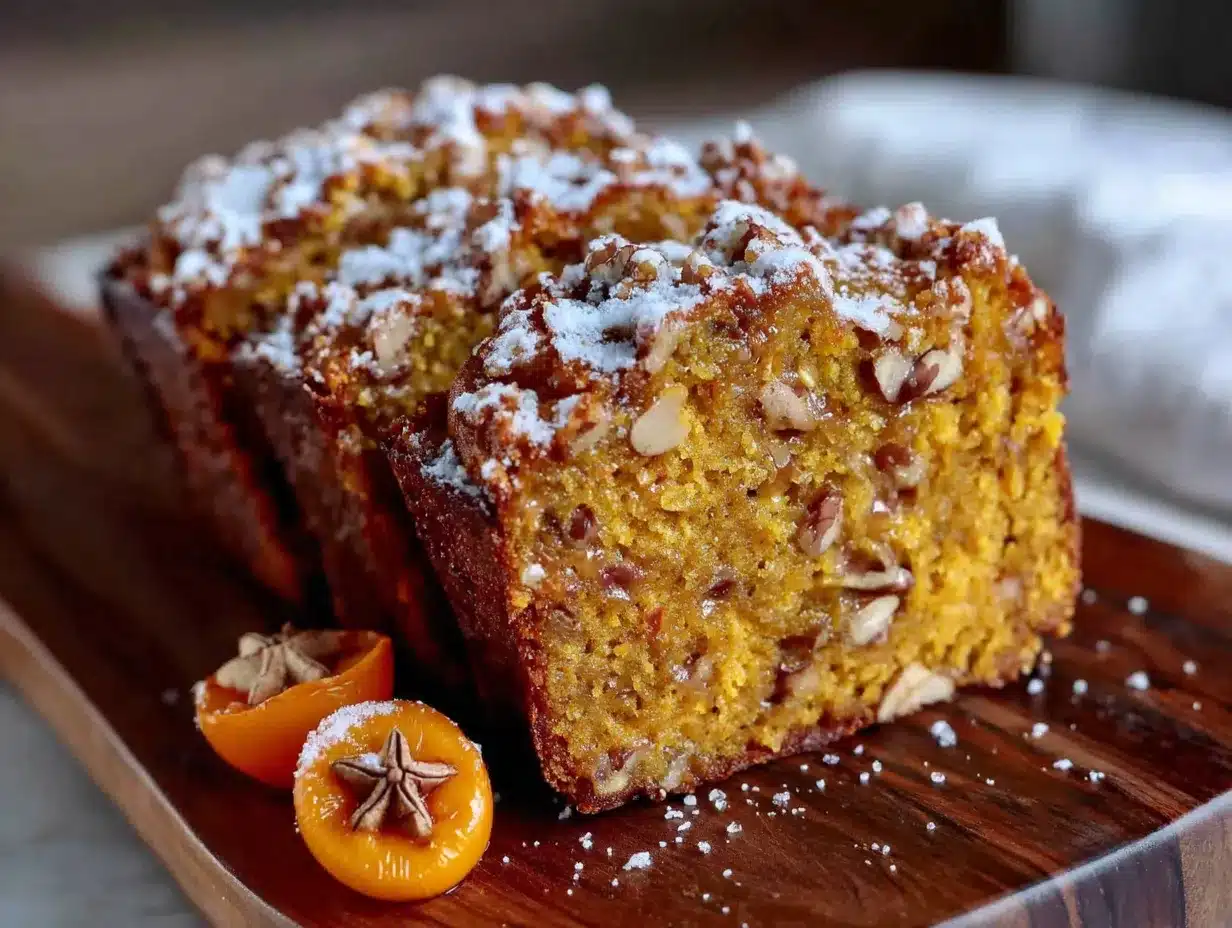
Presentation for Guests: Slice the bread neatly and arrange it on a wooden board or a cake stand. Dust with a little powdered sugar and scatter a few extra toasted walnuts around for a rustic, inviting look. It pairs beautifully with a cup of strong coffee or a chai latte.
Storage: Wrap the cooled bread tightly in plastic wrap and store it at room temperature for up to 4 days. The flavor actually improves after the first day. For longer storage, wrap it in plastic wrap and then a layer of aluminum foil, and freeze for up to 3 months. Thaw overnight in the refrigerator or at room temperature for a few hours.
Reheating: To revive frozen slices, microwave them for 15-20 seconds, or toast them in a toaster oven. The texture comes back beautifully.
Flavor Development: I always tell my friends to make this at least a day before they plan to serve it. The persimmon flavor deepens, the cinnamon mellows into something more complex, and the walnuts stay perfectly crunchy. It’s like the bread needs time to become itself.
Nutritional Information & Benefits
Here’s an approximate nutritional breakdown per slice (based on 10 slices):
- Calories: 280
- Fat: 14g
- Carbohydrates: 36g
- Fiber: 3g
- Sugar: 18g
- Protein: 5g
Health Benefits: Persimmons are packed with vitamin A, vitamin C, and antioxidants. They’re great for eye health and immune support. Walnuts are a fantastic source of omega-3 fatty acids, which are good for brain health. So while this is definitely a treat, you’re getting some real nutritional value with every slice.
Dietary Considerations: This recipe is naturally dairy-free and can easily be made gluten-free with a simple flour swap. It contains nuts (walnuts) and gluten (unless substituted), so keep that in mind for guests with allergies.
I love that this bread feels indulgent but uses whole, recognizable ingredients. It’s the kind of dessert you can feel good about serving—and eating.
Conclusion
This Guest-Favorite Persimmon Bread with Walnuts and Cinnamon is more than just a recipe. It’s a reminder that sometimes the best things happen when you let go of control and trust the process. Jenna’s box mix experiment turned into a family staple, and now it’s the bread I turn to whenever I need to impress without stress.
I love this recipe because it’s forgiving, it’s delicious, and it makes people happy. The way the persimmon melts into the batter, the warmth of the cinnamon, the crunch of the walnuts—it all comes together in a loaf that feels both humble and special. Whether you’re serving it at a holiday brunch, a casual dinner party, or just for yourself on a quiet Sunday morning, I hope it brings you as much joy as it’s brought me.
Now I want to hear from you! Have you ever cooked with persimmons? Did you try any of the variations? Drop a comment below and let me know how your bread turned out. And if you loved this recipe, share it with a friend who needs a new go-to for their next gathering. Happy baking!
Frequently Asked Questions
Can I use Fuyu persimmons instead of Hachiya?
You can, but the texture will be different. Fuyu persimmons are firm and sweet even when not fully ripe. They won’t break down into a smooth puree the way Hachiyas do. If you use Fuyus, you’ll get a chunkier, more rustic bread. It’s still tasty, just not as moist and pudding-like.
How do I know when a Hachiya persimmon is ripe enough?
It should feel like a water balloon—very soft and squishy to the touch. The skin will be deep orange and may have some wrinkles. If it’s still firm, leave it on the counter for a few days. You can also speed up the process by placing it in a paper bag with an apple or banana.
Why did my bread sink in the middle?
This usually happens for one of two reasons: either the batter was overmixed, or the persimmon puree was too wet. Make sure you’re not adding more than 1 cup of puree. Also, be gentle when folding the ingredients together. Overmixing develops gluten, which can cause the bread to rise too quickly and then collapse.
Can I freeze this bread?
Absolutely! Wrap the cooled loaf tightly in plastic wrap, then in a layer of aluminum foil. Freeze for up to 3 months. When you’re ready to enjoy it, thaw it in the refrigerator overnight or at room temperature for a few hours. It tastes just as fresh as the day you baked it.
What can I serve with this bread for a brunch spread?
This bread pairs beautifully with a fresh fruit salad, a dollop of Greek yogurt or mascarpone, and a hot cup of coffee or chai. For a more substantial spread, add some scrambled eggs and crispy bacon. The bread’s sweetness balances savory dishes perfectly.
Pin This Recipe!
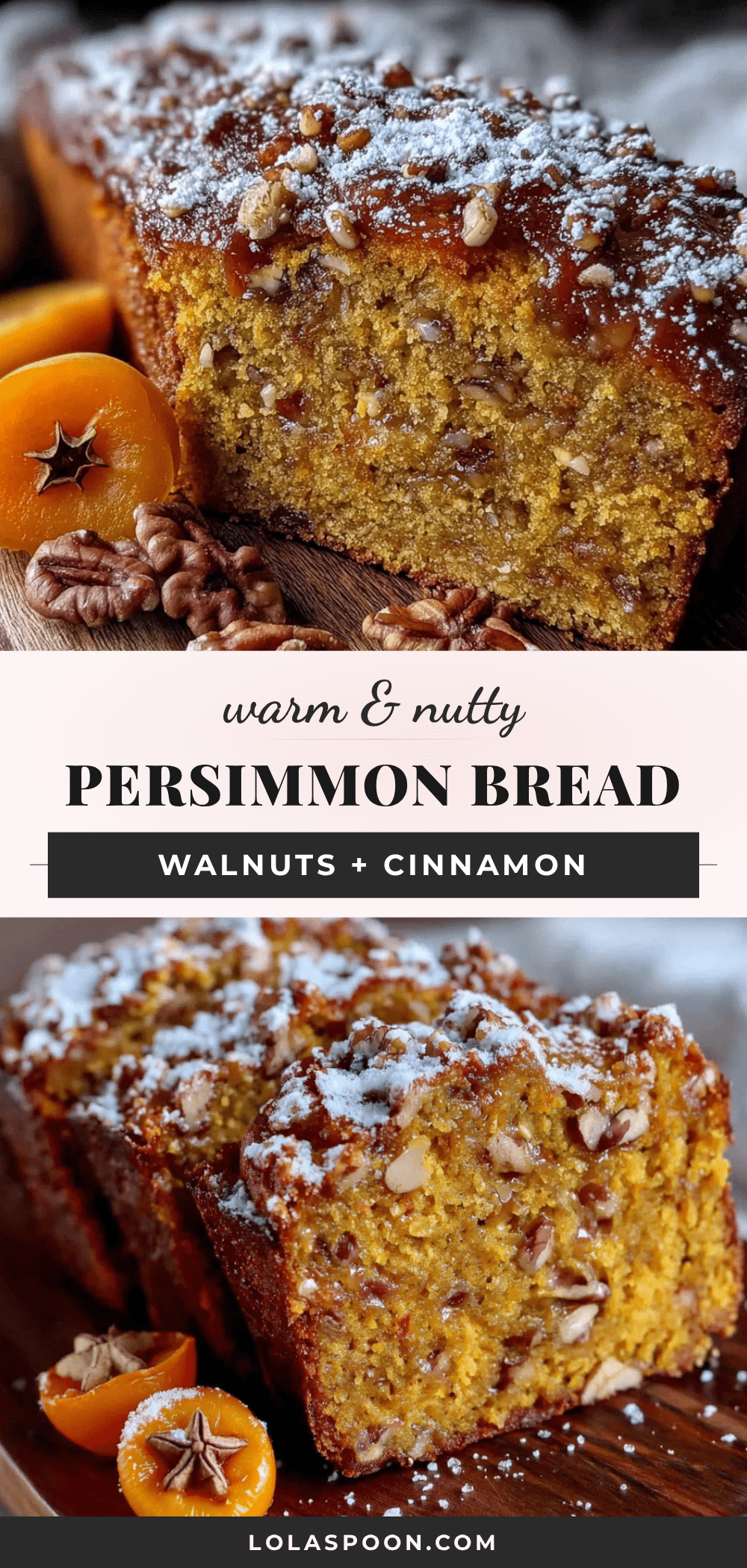
Easy Guest-Favorite Persimmon Bread with Walnuts & Cinnamon

This moist, pudding-like persimmon bread is packed with warm cinnamon and crunchy walnuts. It’s a forgiving, crowd-pleasing recipe that’s perfect for potlucks, brunches, or holiday gatherings.
- Prep Time: 15 minutes
- Cook Time: 55 minutes
- Total Time: 1 hour 10 minutes
- Yield: 10 servings 1x
- Category: Dessert
- Cuisine: American
Ingredients
- 1 cup ripe Hachiya persimmon puree (from about 2–3 medium persimmons)
- 1 ½ cups all-purpose flour (180g)
- ¾ cup granulated sugar (150g)
- 1 teaspoon baking soda
- ½ teaspoon baking powder
- 1 ½ teaspoons ground cinnamon (preferably Saigon)
- ½ teaspoon salt
- 2 large eggs, room temperature
- ½ cup vegetable oil (120ml), such as canola or grapeseed
- 1 teaspoon vanilla extract
- 1 cup chopped walnuts (120g), toasted
- ½ cup golden raisins (optional)
- 1 tablespoon orange zest (optional)
Instructions
- Preheat oven to 350°F (175°C). Position rack in center. Line a 9×5-inch loaf pan with parchment paper, leaving overhang on long sides.
- Prepare persimmon puree: Cut ripe Hachiya persimmons in half, scoop out soft flesh, discard seeds and tough bits. Mash with a fork until smooth. Measure 1 cup.
- Toast walnuts: Spread chopped walnuts on a baking sheet and toast in preheated oven for 5-6 minutes until fragrant. Let cool completely.
- Mix dry ingredients: In a medium bowl, whisk together flour, baking soda, baking powder, cinnamon, and salt.
- Mix wet ingredients: In a large bowl, whisk together sugar, eggs, oil, vanilla extract, and persimmon puree until smooth and glossy.
- Combine wet and dry: Pour dry ingredients into wet mixture. Gently fold with a rubber spatula until just combined (a few streaks of flour are okay). Do not overmix.
- Fold in walnuts: Add toasted walnuts (and optional raisins or zest if using) and fold in with a few strokes.
- Pour batter into prepared loaf pan and spread evenly. Tap pan gently on counter to release air bubbles.
- Bake for 50-60 minutes, until a toothpick inserted in center comes out clean or with a few moist crumbs. If top browns too quickly, tent loosely with foil for last 15 minutes.
- Cool in pan on a wire rack for 15 minutes. Use parchment overhang to lift bread out and transfer to rack to cool completely before slicing.
Notes
For best flavor, wrap cooled loaf tightly in plastic wrap and let rest overnight before serving. The bread can be frozen for up to 3 months. To make gluten-free, substitute all-purpose flour with a 1:1 gluten-free baking blend containing xanthan gum.
Nutrition
- Serving Size: 1 slice
- Calories: 280
- Sugar: 18
- Sodium: 210
- Fat: 14
- Saturated Fat: 2
- Carbohydrates: 36
- Fiber: 3
- Protein: 5
Keywords: persimmon bread, persimmon recipe, quick bread, walnut bread, cinnamon bread, fall baking, holiday bread, brunch recipe