My neighbor Kathy wasn’t making a big deal of it. I’d stopped by to return her garden clippers—the ones she’d loaned me three weeks ago, honestly, I’d been meaning to—and the smell hit me before I even got past her screen door. That warm, yeasty, olive-oily perfume that makes your brain stop whatever it was thinking about and just pay attention.
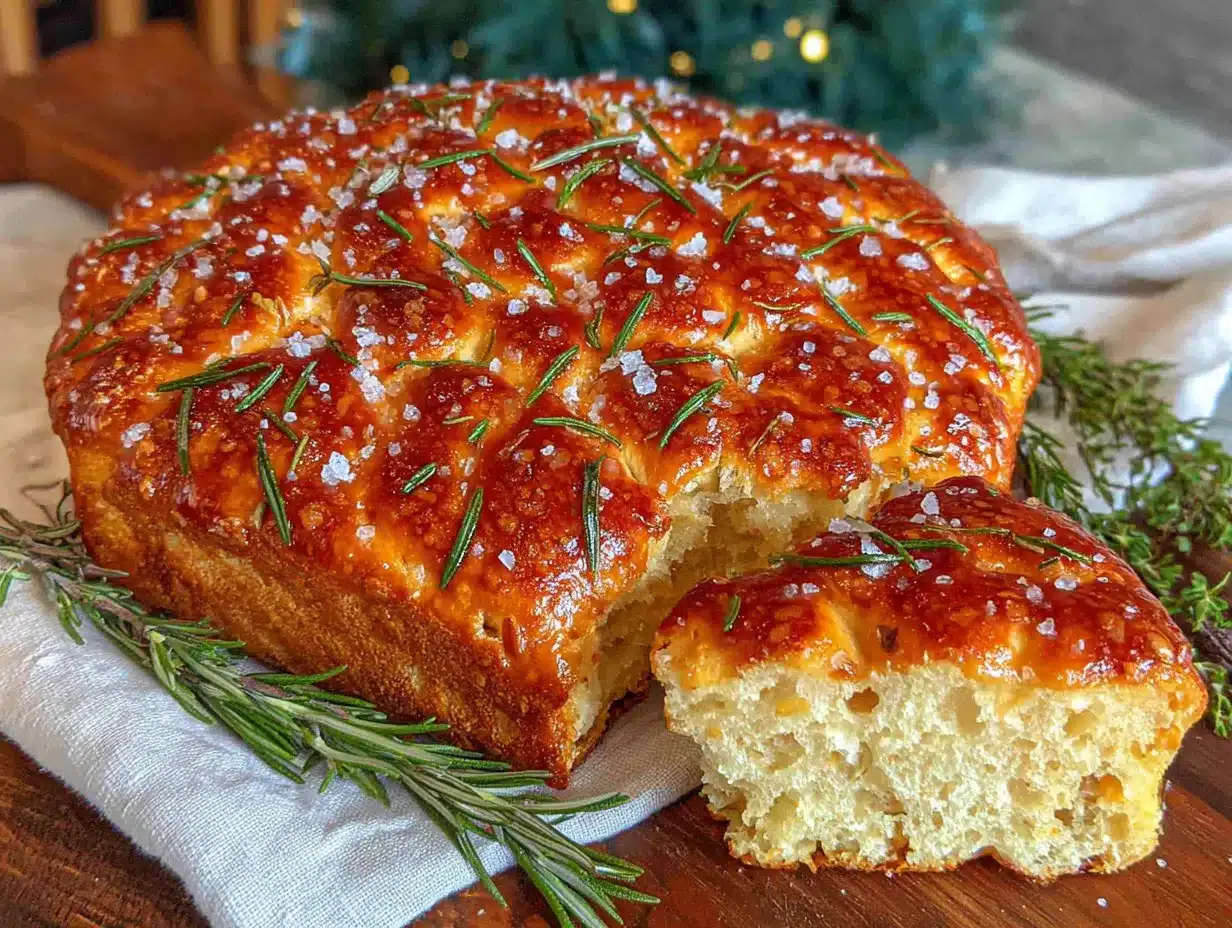
She was pulling this golden slab of bread out of her oven, all dimpled and glistening, with rosemary needles scattered across the top like little green confetti. “Oh, that’s just my sourdough focaccia,” she said, waving her hand like it was nothing. Like she hadn’t just created something that smelled like a bakery in Tuscany had somehow landed in her suburban kitchen on a random Tuesday afternoon.
I stood there, probably staring, while she set it on the counter without a second thought. “You want a piece?” she asked, already reaching for a knife. Let me tell you, that first bite was the kind of moment you remember—crispy edges, soft pillowy center, the salt and rosemary doing exactly what they’re supposed to do. And the best part? She’d started it that morning. No overnight proofing, no complicated schedules. Just a quick mix, a few hours of rising, and dinner was sorted.
Maybe you’ve been there—standing in someone’s kitchen, watching them casually pull off something you assumed required serious effort. That’s exactly how this easy rosemary sourdough focaccia was born into my life. And now I make it every holiday season when time is tight and I still want something that feels special.
Why You’ll Love This Recipe
This isn’t just another bread recipe—it’s your new secret weapon for the holidays. I’ve tested this easy rosemary sourdough focaccia more times than I can count, tweaking the hydration, the proofing times, the salt level. What I landed on is a recipe that delivers every single time without demanding your whole day.
- Quick & Easy: From mixing to table in about 3 hours. No overnight starter feeding, no complicated folding schedules. Perfect for those days when you realize at 2 PM that you need bread for dinner.
- Simple Ingredients: Flour, water, salt, olive oil, rosemary, and your sourdough discard or active starter. That’s it. You probably have everything right now.
- Perfect for the Holiday Table: It looks impressive—all golden and herb-flecked—but takes maybe 15 minutes of active work. Your guests will think you slaved away.
- Crowd-Pleaser: I’ve brought this to three different Thanksgiving dinners and two Christmas parties. Not a crumb left. Ever.
- Unbelievably Delicious: The texture is what gets people. That chewy interior with the crackly, almost-fried bottom crust from the olive oil pooling in the pan. It’s comfort food that somehow also feels fancy.
What makes this focaccia different from the rest? It’s the timing. Most sourdough recipes demand patience—days of it. This one respects that you have a life, a job, a holiday to prepare for. The sourdough gives it that tangy complexity, but the fast schedule means you can actually make it on a weeknight. Or between wrapping presents and picking up relatives from the airport.
This is the bread that makes you close your eyes after the first bite. It’s holiday baking without the stress—faster, simpler, but with the same soul-soothing satisfaction that only fresh bread can bring.
What Ingredients You Will Need
This recipe uses simple, honest ingredients to create something that tastes far more complicated than it is. Here’s what you’ll need for this easy rosemary sourdough focaccia:
For the Dough
- All-purpose flour, 3 cups (360g) — I prefer King Arthur for consistent results, but any good brand works. Bread flour also works if that’s what you have; it’ll give you a slightly chewier crumb.
- Sourdough starter, 1/2 cup (120g) — Active or discard, both work beautifully. If using discard, make sure it’s at room temperature. I’ve used starter that was a week old in the fridge and it still turned out great.
- Warm water, 1 cup (240ml) — About 85°F, just slightly warmer than body temperature. Too hot and you’ll kill the wild yeast; too cold and things slow down.
- Olive oil, 1/4 cup (60ml) plus extra for the pan — Use good quality here, it matters. The oil is a flavor player, not just a utility ingredient.
- Salt, 1 1/2 teaspoons (9g) — Fine sea salt dissolves better. If using kosher, increase to 2 teaspoons.
- Honey or sugar, 1 teaspoon (5ml) — Just a tiny bit to help the fermentation along. Totally optional but helps with browning.
For the Topping
- Fresh rosemary, 2 tablespoons, chopped — Dried works in a pinch but fresh is really where it shines. Strip the leaves off the woody stems before chopping.
- Flaky sea salt, 1 teaspoon — Maldon is my go-to. The big crystals add texture and little bursts of saltiness.
- Extra olive oil, 2-3 tablespoons for drizzling — Don’t skimp. This is what creates that signature crispy bottom.
Ingredient Selection Tips: Look for rosemary that’s bright green and fragrant—if it smells like pine trees, you’re good. Avoid any that looks wilted or brown. For the olive oil, I use California Olive Ranch for everyday baking. It’s affordable but still has good flavor.
Substitution Guidance: Gluten-free? This recipe isn’t designed for GF flour blends, but you can try a 1:1 GF baking flour with mixed results. Dairy-free? You’re already there—this recipe has no dairy. Vegan? Same thing. If you don’t have sourdough starter, you can use 1 teaspoon of instant yeast mixed into the water instead, but you’ll lose that signature tang.
Equipment Needed
You don’t need a fancy bakery setup for this easy rosemary sourdough focaccia. Here’s what actually gets used:
- 9×13 inch baking pan — Metal or glass both work. Metal gives a crisper bottom crust. I’ve used a cast iron skillet too, and it’s fantastic.
- Large mixing bowl — Any bowl big enough to hold 4 cups of dough and let it rise.
- Measuring cups and spoons — For accuracy. I recommend a kitchen scale for the flour; it’s more reliable.
- Kitchen scale — Not mandatory, but it makes life easier. Flour measurement by volume can vary wildly.
- Plastic wrap or a damp kitchen towel — For covering the dough while it rises.
- Bench scraper or spatula — For scraping the sticky dough out of the bowl.
- Your fingers — Seriously. The dimpling is done by hand. No special tools needed.
I started making this with a cheap metal baking pan from the grocery store, and it worked fine. If you don’t have a 9×13, a round cake pan or even a cast iron skillet works—just adjust the shape and keep an eye on the bake time. The key is having enough surface area for the dough to spread out to about 1-inch thickness.
One tip: if you use glass, reduce the oven temperature by 25°F. Glass retains heat differently and can burn the bottom if you’re not careful. Learned that one the hard way.
Preparation Method
Let’s get to the actual making of this easy rosemary sourdough focaccia. I’ll walk you through every step with the little details that make the difference.
- Mix the dough (5 minutes): In your large bowl, combine the warm water and sourdough starter. Stir until the starter mostly dissolves—it doesn’t need to be perfect. Add the olive oil and honey, then the flour and salt. Mix with a spatula or your hand until a shaggy, sticky dough forms. It’ll look rough and messy. That’s exactly right. Cover the bowl with plastic wrap or a damp towel and let it rest for 30 minutes. This autolyse step lets the flour absorb the water and makes the dough easier to handle.
- First fold (30 minutes later): After the rest, wet your hand slightly (sticky dough is easier to handle with wet fingers) and grab one corner of the dough. Fold it over itself toward the center. Rotate the bowl 90 degrees and repeat. Do this 4 times total, folding all sides into the center. The dough will resist at first but relax as you go. Cover and let it rest another 30 minutes.
- Second fold (30 minutes later): Repeat the folding process. The dough should feel smoother and slightly more elastic now. If it’s still very sticky and loose, that’s fine—sourdough is wetter than yeasted dough. Cover again.
- Bulk fermentation (1.5 to 2 hours): Let the dough rise at room temperature until it’s about 50% larger and looks bubbly on the surface. In a warm kitchen (75°F), this takes about 1.5 hours. In a cooler kitchen, closer to 2 hours. You’re looking for a dome-like appearance with small bubbles visible through the sides of the bowl. If the dough feels jiggly when you gently shake the bowl, you’re in good shape.
- Prepare the pan (while dough rises): Pour about 3 tablespoons of olive oil into your 9×13 pan. Use your fingers to spread it evenly across the bottom and slightly up the sides. This isn’t just for greasing—the oil will fry the bottom of the focaccia and create that incredible crispy crust.
- Transfer the dough (gentle is key): Scrape the dough out of the bowl and into the oiled pan. It’ll be sticky and irregular. Don’t try to shape it perfectly—just get it in there. Let it rest for 10 minutes uncovered. This relaxes the gluten so it stretches more easily.
- Stretch and dimple (5 minutes): Using oiled fingertips, gently stretch the dough to fill the corners of the pan. If it springs back, let it rest another 5 minutes and try again. Once it’s evenly spread, dimple the surface—press your fingers straight down to the bottom of the pan, creating those iconic indentations. Go all over the surface. Don’t be shy about it. The dimples will hold the oil and rosemary.
- Second rise (45 minutes to 1 hour): Cover the pan loosely with plastic wrap and let the dough rise again. It should puff up and look airy, almost like a memory foam mattress. When it’s ready, the dough will feel pillowy and spring back slowly when poked.
- Preheat and top (during the last 15 minutes of rising): Preheat your oven to 425°F (220°C). Drizzle the remaining olive oil over the surface, letting it pool in the dimples. Sprinkle the chopped rosemary and flaky sea salt evenly across the top. Don’t skip the salt—it’s crucial for flavor balance.
- Bake (20-25 minutes): Place the pan on the middle rack and bake until the focaccia is deep golden brown on top and the edges look crispy and slightly darker. The internal temperature should reach about 200°F if you want to check. Rotate the pan halfway through for even browning.
- Cool (10 minutes, minimum): Let the focaccia cool in the pan for 5 minutes, then transfer to a wire rack. If you try to cut it immediately, the steam will make the interior gummy. I know it’s hard to wait—the smell is incredible—but trust me on this one.
Cooking Tips & Techniques
After making this easy rosemary sourdough focaccia about twenty times (not exaggerating), I’ve collected some hard-won wisdom. Here’s what I wish someone had told me:
Don’t skip the oil. The first time I made focaccia, I thought I could reduce the olive oil to save calories. Big mistake. The oil isn’t just for flavor—it creates the crispy bottom that makes focaccia special. Use the full amount. Your waistline will survive one batch of bread.
Wet hands are your friend. Sourdough dough is stickier than regular bread dough. If you try to handle it with dry hands, you’ll end up with dough glued to your fingers and frustration in your heart. Keep a small bowl of water nearby and dip your fingers before touching the dough. It’s a game-changer.
Watch your water temperature. I once used water that was too hot—probably around 110°F—and my dough barely rose. The heat killed the wild yeast in the starter. Keep it at 85°F, which feels like warm bathwater on your wrist. If your kitchen is cold, use slightly warmer water. If it’s hot, use cooler water. Adjust based on your environment.
The dimpling matters. I used to just press a few random holes and call it done. Then I realized the dimples aren’t decorative—they prevent big air bubbles from forming and create those signature craggy pockets that catch the oil and salt. Go deep and go everywhere. Every square inch should have a dimple.
Multitask strategically. While the dough is doing its first rise, that’s your window to prep the rest of your holiday meal. Chop vegetables, set the table, make the salad dressing. The dough doesn’t need you during those 30-minute rest periods. Use that time wisely.
One failure I’ll admit: I once forgot the salt entirely. The focaccia looked beautiful—golden, crispy, perfect. But it tasted flat and sad. Salt isn’t optional in bread. It controls fermentation and enhances flavor. Don’t be like me. Set out your salt before you start mixing.
Variations & Adaptations
This easy rosemary sourdough focaccia is a fantastic base recipe. Here are some ways I’ve adapted it when the mood strikes:
Garlic and Herb: Add 3 cloves of minced garlic to the olive oil before pouring it into the pan. Let it sit for 10 minutes to infuse. Then sprinkle with thyme and oregano along with the rosemary. I made this for a pasta dinner and it disappeared in minutes.
Everything Bagel Focaccia: After dimpling, sprinkle with everything bagel seasoning instead of rosemary. The sesame seeds, poppy seeds, garlic, and onion create this incredible savory crust. Perfect for breakfast sandwiches or alongside soup.
Cheese and Sun-Dried Tomato: Press 1/2 cup of crumbled feta or grated parmesan into the top before baking. Add chopped sun-dried tomatoes in the dimples. The saltiness from the cheese pairs beautifully with the tangy sourdough. I brought this to a holiday party and got three recipe requests.
Whole Wheat Version: Replace half the all-purpose flour with whole wheat flour. You’ll need to add an extra 2 tablespoons of water since whole wheat absorbs more liquid. The flavor gets nuttier and more complex. It’s less airy but more satisfying in a hearty way.
Gluten-Free Attempt: I’ve tested this with a 1:1 gluten-free baking flour blend. It works but the texture is denser and more cake-like. Add an extra tablespoon of olive oil and reduce the water by 2 tablespoons. It’s not the same as the original, but it’s still tasty if you need a GF option.
My personal favorite variation? The caramelized onion version. Thinly slice 2 onions and cook them low and slow in olive oil for about 20 minutes until they’re golden and sweet. Press them into the top of the focaccia before baking. The sweetness against the tangy sourdough and salty rosemary is absolutely addictive.
Serving & Storage Suggestions
This easy rosemary sourdough focaccia is incredibly versatile when it comes to serving. Here’s how I handle it:
Serving Temperature: Warm is ideal—that first hour after baking is peak focaccia. But room temperature is also fantastic, especially for holiday buffets where people graze. If you’re serving it alongside a meal, pop it back in a 300°F oven for 5 minutes to re-crisp the edges.
Presentation: Cut it into squares or tear it into rustic pieces. I like to serve it on a wooden board with a small dish of extra virgin olive oil and balsamic vinegar for dipping. A sprinkle of additional flaky salt right before serving makes it look intentional and beautiful.
What to Serve With: This focaccia is a natural partner for soups—tomato basil, minestrone, or butternut squash. It’s also perfect alongside holiday mains like roast chicken, turkey, or a big pasta bake. For a lighter meal, serve with a simple green salad and some marinated olives. It also makes incredible sandwiches—split it horizontally and fill with roasted vegetables, mozzarella, and pesto.
Storage: Store leftover focaccia in an airtight container at room temperature for up to 2 days. Do not refrigerate—the fridge will dry it out and make it stale faster. If you have more than you can eat in 2 days, freeze the rest.
Freezing: Wrap the cooled focaccia tightly in plastic wrap, then aluminum foil, and freeze for up to 3 months. To reheat, unwrap and place directly in a 350°F oven for 10-12 minutes. It comes back remarkably close to fresh-baked. I always make a double batch and freeze one for Christmas morning.
Flavor Development: Here’s a secret—day-old focaccia is actually fantastic for certain uses. The texture firms up slightly, making it perfect for panzanella (Italian bread salad) or for toasting and rubbing with garlic for bruschetta. The sourdough flavor also deepens overnight. Don’t throw away leftovers; repurpose them.
Nutritional Information & Benefits
Let’s be honest—focaccia is bread with olive oil on top. It’s not health food. But it does have some redeeming qualities when made with sourdough.
Estimated per serving (1/8 of recipe):
- Calories: 220
- Fat: 9g
- Carbohydrates: 30g
- Fiber: 1.5g
- Protein: 5g
- Sodium: 350mg
Health Benefits: Sourdough fermentation breaks down some of the gluten and phytic acid in flour, making nutrients more bioavailable. Some people with mild gluten sensitivities find sourdough easier to digest than regular bread. The olive oil provides heart-healthy monounsaturated fats. Rosemary contains antioxidants and anti-inflammatory compounds. Is it a superfood? No. But it’s a more nourishing choice than many store-bought breads.
Dietary Considerations: This recipe is dairy-free, egg-free, and vegan. It contains gluten and is not suitable for celiac disease unless made with certified gluten-free flour. The sodium content is moderate—you can reduce the flaky salt on top if you’re watching your intake.
Personal Note: I love that this bread feels indulgent but is made from such simple, wholesome ingredients. There’s nothing artificial, no preservatives, no weird additives. Just flour, water, salt, oil, and herbs. That’s real food, and that matters to me, especially during the holidays when we’re surrounded by processed everything.
Conclusion
This easy rosemary sourdough focaccia has become my holiday MVP. It’s the bread I make when I want to impress without the stress, when I want something that tastes like I spent all day in the kitchen but actually only gave it 15 minutes of active effort. It’s the bread that makes people stop mid-conversation and say, “Wait, you made this?”
I love that this recipe meets you where you are—whether you’re a seasoned bread baker or someone who’s never worked with sourdough before. The instructions are forgiving, the timing is flexible, and the results are consistently gorgeous. That golden, herb-flecked surface with the craggy dimples? It looks like something from a fancy bakery. But you made it. In your kitchen. On a busy Tuesday in December.
I’d love to hear how yours turns out. Did you try a variation? Did your family fight over the last piece? Drop a comment below and let me know. And if you’re looking for more holiday recipes that won’t stress you out, check out my holiday side dishes and no-fuss desserts—they follow the same philosophy of maximum flavor with minimum fuss.
Go make some focaccia. Your holiday table deserves it. And honestly? So do you.
Frequently Asked Questions
Can I use active dry yeast instead of sourdough starter?
Yes, absolutely. If you don’t have a sourdough starter, use 1 teaspoon of active dry yeast dissolved in the warm water with a pinch of sugar. Let it sit for 5 minutes until foamy, then proceed with the recipe. The flavor will be milder—more like traditional Italian focaccia—but the texture will still be fantastic.
Why is my focaccia dough so sticky?
That’s normal! Sourdough focaccia has a higher hydration than regular bread dough, which means it’s intentionally sticky. The high water content is what creates those big airy bubbles and that soft, chewy interior. Resist the urge to add more flour—wet hands and patience are all you need.
Can I make this ahead of time?
You have two options. You can make the dough through step 4, then refrigerate it for up to 24 hours. Let it come to room temperature for an hour before proceeding with the pan and second rise. Or bake it fully, cool completely, and reheat in a 350°F oven for 8-10 minutes before serving. I often do the second option for holiday meals.
My focaccia didn’t rise much. What went wrong?
Most likely one of three things: your starter wasn’t active enough, your water was too hot or too cold, or your kitchen is too cool. Make sure your starter is bubbly and doubles in size within 4-6 hours of feeding before using it. Water should be around 85°F. If your kitchen is cold (below 68°F), find a warmer spot—near the oven while it preheats works well.
How do I get a crispier bottom crust?
Use a metal pan instead of glass or ceramic. Metal conducts heat better and creates a more intense bottom crust. Also, don’t skimp on the olive oil in the pan—that oil essentially fries the bottom of the dough. Preheating the pan in the oven for 5 minutes before adding the dough can also help, but be careful transferring the sticky dough into a hot pan.
Pin This Recipe!
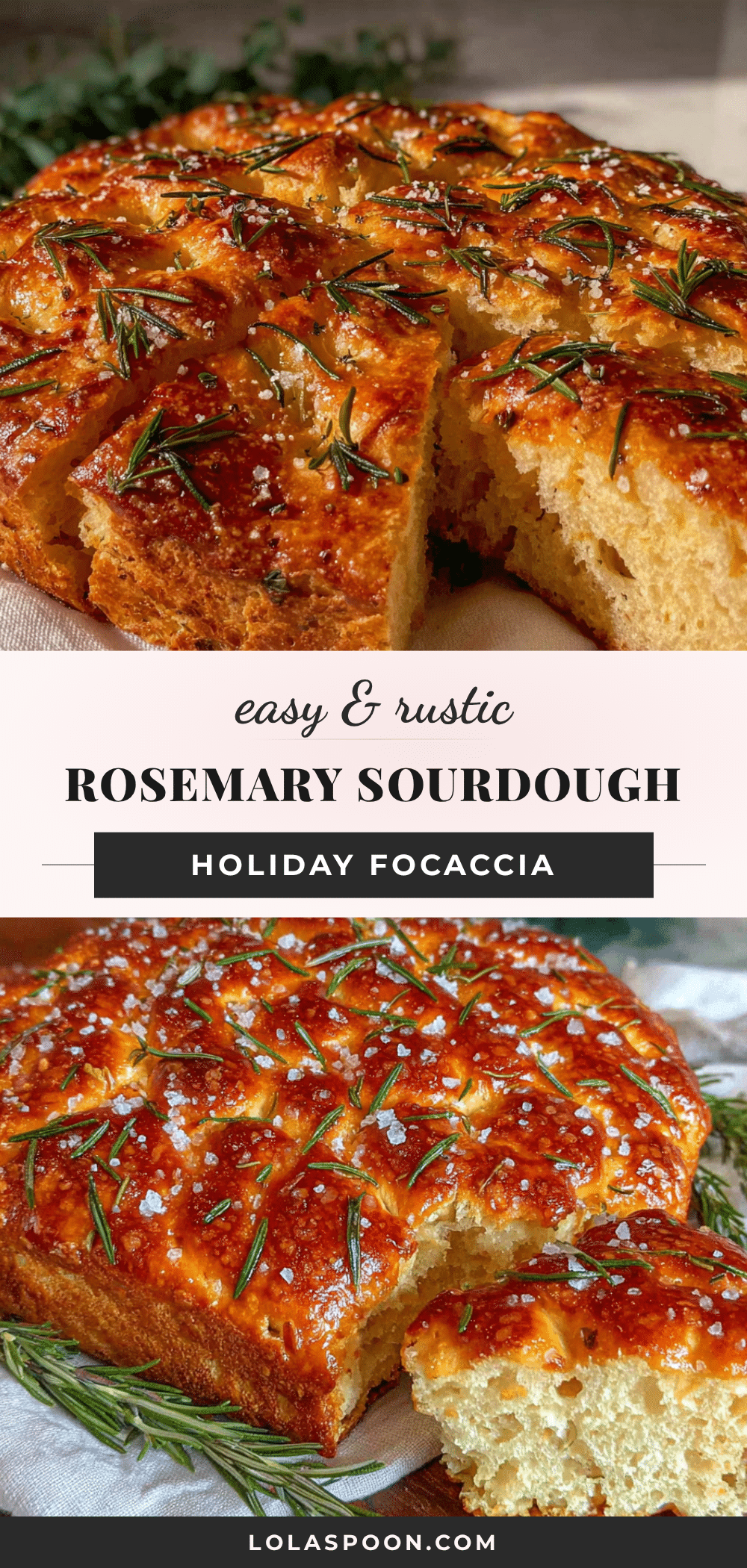
Easy Rosemary Sourdough Focaccia: Best Fast Holiday Bread
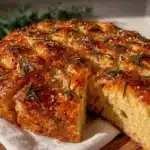
A quick and easy sourdough focaccia with fresh rosemary, crispy edges, and a soft pillowy center. Perfect for holiday tables when time is tight but you still want something that feels special.
- Prep Time: 15 minutes
- Cook Time: 25 minutes
- Total Time: 3 hours
- Yield: 8 servings 1x
- Category: Bread
- Cuisine: Italian
Ingredients
- 3 cups (360g) all-purpose flour
- 1/2 cup (120g) sourdough starter (active or discard, at room temperature)
- 1 cup (240ml) warm water (about 85°F)
- 1/4 cup (60ml) olive oil, plus extra for the pan
- 1 1/2 teaspoons (9g) fine sea salt
- 1 teaspoon (5ml) honey or sugar (optional)
- 2 tablespoons fresh rosemary, chopped
- 1 teaspoon flaky sea salt (e.g., Maldon)
- 2–3 tablespoons extra olive oil for drizzling
Instructions
- Mix the dough: In a large bowl, combine warm water and sourdough starter. Stir until mostly dissolved. Add olive oil, honey, flour, and salt. Mix with a spatula or hand until a shaggy, sticky dough forms. Cover with plastic wrap or a damp towel and let rest for 30 minutes.
- First fold: Wet your hand slightly. Grab one corner of the dough and fold it over itself toward the center. Rotate the bowl 90 degrees and repeat 4 times total. Cover and let rest another 30 minutes.
- Second fold: Repeat the folding process. The dough should feel smoother and more elastic. Cover again.
- Bulk fermentation: Let the dough rise at room temperature until about 50% larger and bubbly on the surface (1.5 to 2 hours).
- Prepare the pan: Pour about 3 tablespoons of olive oil into a 9×13 inch baking pan. Spread evenly across the bottom and slightly up the sides.
- Transfer the dough: Scrape the dough into the oiled pan. Let rest for 10 minutes uncovered.
- Stretch and dimple: Using oiled fingertips, gently stretch the dough to fill the corners of the pan. If it springs back, let rest another 5 minutes. Once evenly spread, press your fingers straight down to the bottom of the pan all over the surface to create dimples.
- Second rise: Cover the pan loosely with plastic wrap and let rise for 45 minutes to 1 hour until puffy and pillowy.
- Preheat and top: Preheat oven to 425°F (220°C). Drizzle remaining olive oil over the surface, letting it pool in the dimples. Sprinkle chopped rosemary and flaky sea salt evenly across the top.
- Bake: Place pan on the middle rack and bake for 20-25 minutes until deep golden brown on top and edges are crispy. Rotate the pan halfway through for even browning.
- Cool: Let cool in the pan for 5 minutes, then transfer to a wire rack. Wait at least 10 minutes before cutting.
Notes
Don’t skip the olive oil—it creates the crispy bottom. Use wet hands to handle sticky dough. Water temperature should be around 85°F; too hot will kill the yeast. Dimple every square inch to prevent large air bubbles and create pockets for oil and salt. Salt is not optional; it controls fermentation and enhances flavor. For a crispier bottom, use a metal pan. If using glass, reduce oven temperature by 25°F.
Nutrition
- Serving Size: 1/8 of recipe
- Calories: 220
- Sugar: 1
- Sodium: 350
- Fat: 9
- Saturated Fat: 1.5
- Carbohydrates: 30
- Fiber: 1.5
- Protein: 5
Keywords: sourdough focaccia, rosemary focaccia, easy focaccia, holiday bread, fast bread, sourdough discard recipe