This was supposed to be a simple roast beef dinner. You know, the kind you throw together on a random Sunday when the weather turns cold and you just want something hearty. I had planned a basic eye of round, some potatoes, maybe a quick gravy from the pan drippings if I was feeling ambitious. But then the butcher handed me the wrong package—a gorgeous, bone-in prime rib that was easily twice the price of what I’d asked for. I was already running late for a dinner party, the oven was preheating, and I had about fifteen minutes to figure out what on earth I was going to do with this massive piece of meat. Honestly, I almost panicked.
I stood there in my kitchen, staring at this beautiful rib roast like it was some kind of culinary test I wasn’t prepared for. The thing was practically glowing under the kitchen lights, all that marbling and that thick cap of fat just waiting to be treated right. I’d never cooked a prime rib before—it always felt like a holiday dish reserved for people who owned fancy roasting pans and knew what “reverse searing” meant without having to Google it. But the clock was ticking, the guests were coming, and I had to make a decision. I seasoned it with what I had, threw it in the oven, and crossed my fingers.
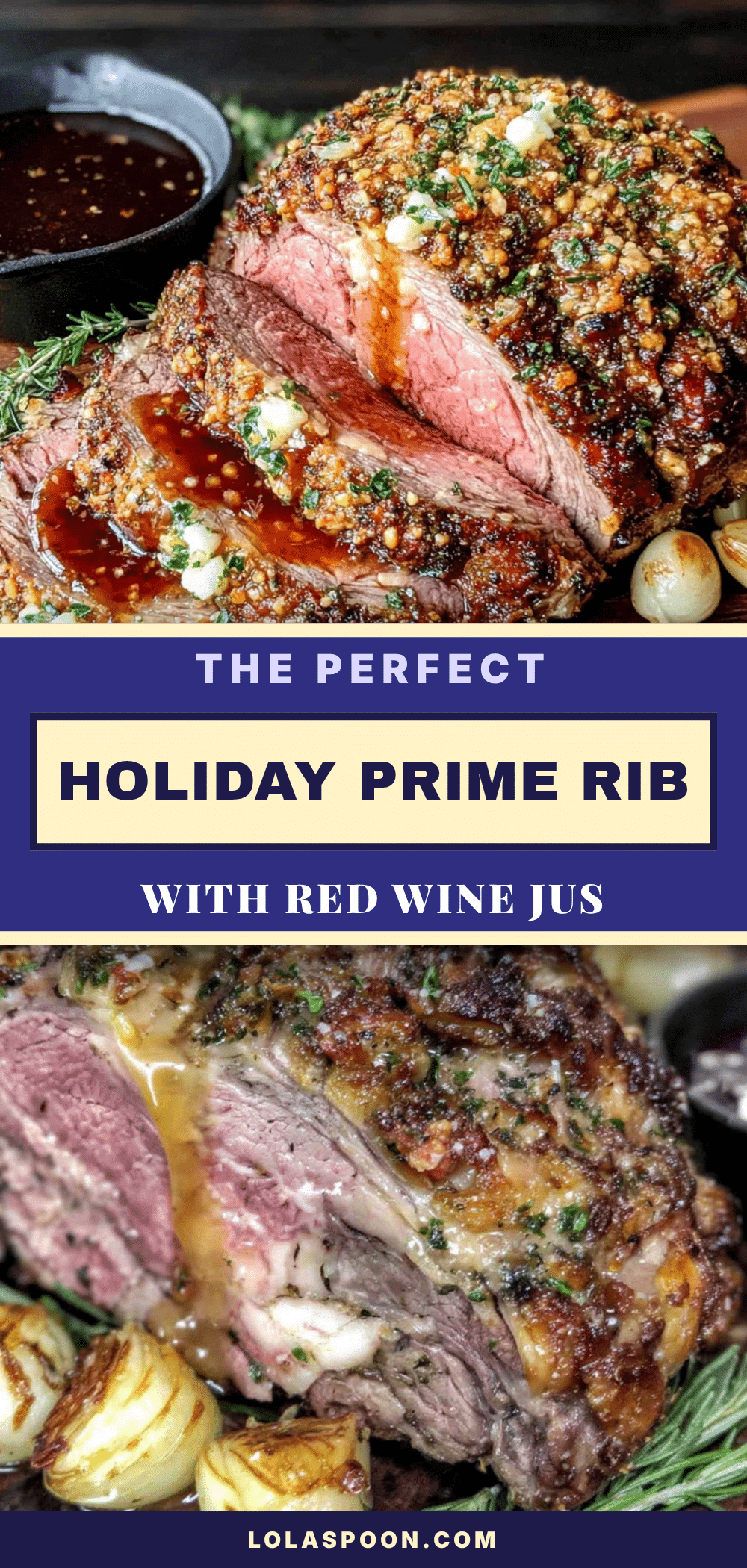
What came out of that oven was nothing like the plan—and better. I mean, way better. The crust was this deep, dark brown, almost mahogany, and the inside was perfectly pink from edge to center. My guests went quiet when I set it on the table. Someone actually asked if I’d hired a caterer. I laughed, but honestly, I was just as surprised as they were. That happy accident turned into the recipe I now make every Christmas, every New Year’s, and any time I want to feel like I’ve got this whole cooking thing figured out. Maybe you’ve been there—the moment when a mistake in the kitchen turns into something you’ll make for the rest of your life. This is that recipe.
Why You’ll Love This Recipe
Look, I know there are about a million prime rib recipes out there. Some of them are complicated, some require special equipment, and some just don’t deliver on that perfect, melt-in-your-mouth texture we’re all chasing. This one is different. Here’s why I keep coming back to it, and why I think you will too:
- Foolproof Method: No fancy techniques or chef-level skills required. If you can season meat and set a timer, you can pull this off. I’ve tested this method at least a dozen times, and it works every single time.
- Simple Ingredients: You don’t need a specialty grocery store or a second mortgage to buy the ingredients. Good prime rib, salt, pepper, garlic, herbs, and red wine—that’s really it.
- Perfect for the Holidays: This is the showstopper for Christmas dinner, New Year’s Eve, or any special occasion where you want to impress without spending all day in the kitchen.
- That Red Wine Jus: The jus is the real star here. It’s rich, deeply flavorful, and takes about ten minutes to make while your meat rests. No flour, no lumps, just pure concentrated flavor.
- Crowd-Pleaser: I’ve served this to everyone from picky eaters to self-proclaimed meat snobs, and it always gets the same reaction—quiet, happy chewing followed by requests for seconds.
This recipe isn’t just good—it’s the kind that makes you close your eyes after the first bite. The kind where the table goes quiet because everyone is too busy enjoying their food to talk. It’s comfort food at its most elegant, and it’s way easier than you think.
What Ingredients You Will Need
This recipe uses simple, high-quality ingredients to build layers of flavor without any fuss. Most of these are pantry staples or easy to find at any grocery store. Here’s what you’ll need:
For the Prime Rib
- 1 bone-in prime rib roast (5-7 pounds) – Look for one with good marbling and at least a 1/2-inch fat cap. I prefer prime grade if you can find it, but choice grade works beautifully too.
- 2 tablespoons kosher salt – I use Diamond Crystal. It’s less salty by volume than Morton’s, so adjust if you’re using a different brand.
- 1 tablespoon freshly ground black pepper – Don’t skip the fresh grind—it makes a real difference.
- 6 cloves garlic, minced – Fresh garlic only here. The jarred stuff won’t give you the same punch.
- 2 tablespoons fresh rosemary, finely chopped – About 3-4 sprigs. Dried rosemary can be too woody and intense.
- 2 tablespoons fresh thyme leaves – Strip them from the stems and chop them fine.
- 3 tablespoons olive oil – A good quality extra virgin works, but regular olive oil is fine too.
For the Red Wine Jus
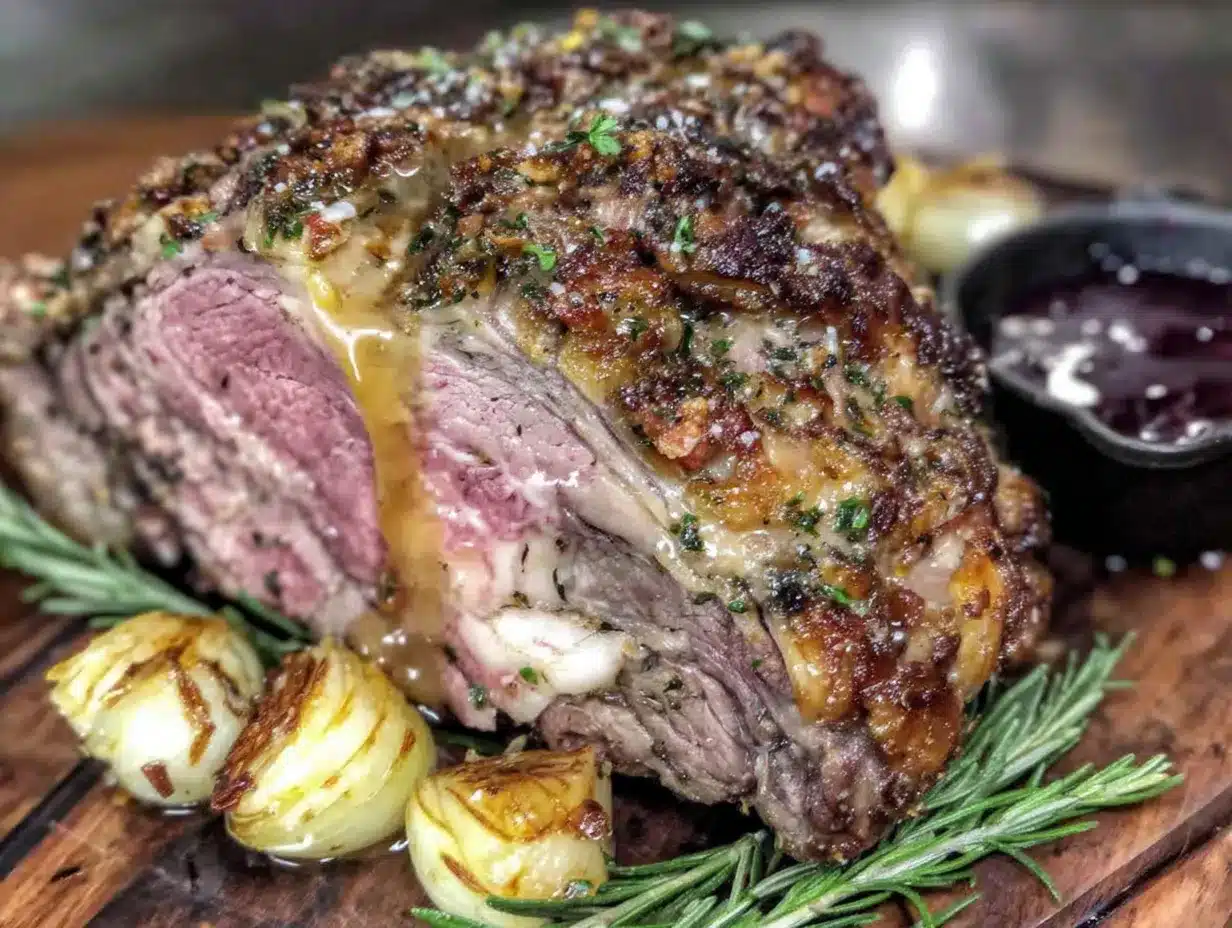
- 1 cup dry red wine – I recommend a Cabernet Sauvignon or Merlot. Something you’d actually drink, not the cooking wine from the grocery store.
- 2 cups beef broth – Low-sodium is best so you can control the salt. I like Better Than Bouillon mixed with water for the richest flavor.
- 2 tablespoons unsalted butter – Adds richness and helps emulsify the sauce.
- 1 shallot, finely diced – About 2 tablespoons. You could substitute a small onion in a pinch.
- 1 sprig fresh rosemary – For infusing the jus while it simmers.
- Salt and pepper to taste – Wait until the end to season—the reduced wine and broth might be salty enough.
Ingredient Tips
For the best results, bring your prime rib to room temperature for about 2 hours before cooking. This ensures even cooking from edge to center. If you’re using a different cut of beef, the cooking time will vary, so stick with a bone-in rib roast for this recipe. For the wine, don’t use anything labeled “cooking wine”—it has added salt and preservatives that will ruin your jus. Use a real wine you’d enjoy drinking.
Equipment Needed
You don’t need a professional kitchen to make this recipe, but a few key tools will make your life a lot easier:
- Roasting pan with a rack – The rack keeps the meat elevated so air circulates evenly. No rack? Roll up some foil snakes and place them under the roast.
- Instant-read meat thermometer – This is non-negotiable. Guessing the doneness of a prime rib is a recipe for disaster. I use a ThermoPro digital thermometer—it’s affordable and accurate.
- Chef’s knife – A sharp 8-inch chef’s knife makes trimming and carving a breeze.
- Cutting board – Preferably one with a groove to catch juices.
- Small saucepan – For making the red wine jus.
- Kitchen twine – Optional but helpful for tying the roast if it’s not already tied by the butcher.
- Aluminum foil – For tenting the roast while it rests.
If you don’t have a roasting rack, don’t run out and buy one just for this recipe. A wire cooling rack set inside a baking sheet works perfectly. I’ve also used halved onions as a makeshift rack in a pinch—they add flavor to the drippings too.
Preparation Method
Let’s get cooking. This method is all about low and slow heat at the start, followed by a high-heat blast to create that gorgeous crust. Trust the process—it works.
- Prep the roast – About 2 hours before you plan to cook, take the prime rib out of the refrigerator and let it come to room temperature. Pat it dry with paper towels—moisture is the enemy of a good crust. In a small bowl, mix the kosher salt, pepper, minced garlic, rosemary, thyme, and olive oil into a paste. Rub this mixture all over the roast, covering every surface. Don’t forget the ends and the spaces between the bones.
- Preheat the oven – Set your oven to 250°F (120°C). Yes, that’s low. We’re going to cook the roast slowly to ensure even doneness from edge to center. Place the seasoned roast on the rack in your roasting pan, bone-side down. The bones act as a natural roasting rack.
- Roast low and slow – Insert your meat thermometer into the thickest part of the meat, avoiding the bone. Roast at 250°F for about 25-30 minutes per pound. For a 6-pound roast, that’s about 2.5 to 3 hours. You’re looking for an internal temperature of 115°F (46°C) for rare, 120°F (49°C) for medium-rare, or 130°F (54°C) for medium. I aim for 120°F because the temperature will rise another 5-10 degrees while it rests.
- Rest the roast – Once the roast hits your target temperature, remove it from the oven. Tent it loosely with aluminum foil and let it rest for 30 minutes. This is critical—the resting period allows the juices to redistribute throughout the meat. Don’t skip it.
- Crank up the heat – While the roast rests, increase your oven temperature to 500°F (260°C). If your oven runs hot, keep an eye on it. After the roast has rested for 30 minutes, remove the foil and place it back in the oven. Roast for 8-12 minutes, until the outside is deeply browned and crusty. Watch it closely—you want a crust, not a char.
- Make the red wine jus – While the roast is getting its final sear, start the jus. Place the roasting pan on the stovetop over medium heat (if it’s not stovetop-safe, scrape the drippings into a saucepan). Add the diced shallot and cook for 1-2 minutes until softened. Pour in the red wine and scrape up any browned bits from the bottom of the pan—that’s pure flavor. Let the wine reduce by half, about 3-4 minutes. Add the beef broth and the rosemary sprig, bring to a simmer, and cook for 8-10 minutes until slightly thickened. Remove the rosemary, whisk in the butter until melted, and season with salt and pepper to taste. Strain through a fine-mesh sieve if you want a silky smooth jus—I usually don’t bother because I like the texture.
- Carve and serve – Remove the roast from the oven and transfer it to a cutting board. Slice against the grain into 1/2-inch to 3/4-inch thick slices. The bones will make this easier—just cut between them to separate the roast into individual ribs, then slice each piece. Arrange on a platter, spoon some of the red wine jus over the top, and serve the remaining jus on the side.
Cooking Tips & Techniques
I’ve made this recipe more times than I can count, and I’ve learned a few things along the way. Here are the tips that make the biggest difference:
- Don’t skip the salting – Seasoning the roast a few hours ahead (or even overnight) allows the salt to penetrate deep into the meat. This isn’t just about flavor—it helps break down proteins for a more tender result.
- Use a thermometer, not a timer – Every oven is different, and every roast is different. A thermometer takes the guesswork out. I’ve forgotten to check the temperature before and ended up with a well-done prime rib that cost me a small fortune. Learn from my mistake.
- The reverse sear is your friend – Cooking low and slow first, then searing at high heat, gives you the most even doneness. If you sear first and then roast, you’ll end up with a gray band of overcooked meat under the crust.
- Let it rest, really rest – That 30-minute rest isn’t optional. I once got impatient and carved after 15 minutes. The juices ran all over the cutting board, and the meat was dry. Don’t be that person.
- Deglaze the pan – Those browned bits stuck to the bottom of the roasting pan are pure umami. Don’t waste them. The red wine jus is only as good as the drippings you start with.
- Keep it warm – If you’re serving a crowd and not everyone eats at the same time, keep the sliced meat warm by placing it on a platter and tenting it with foil. Pour a little extra jus over the top to keep it moist.
Variations & Adaptations
One of the best things about this recipe is how adaptable it is. Here are a few ways to make it your own:
- Herb Crust Variation: Add 2 tablespoons of Dijon mustard to the herb paste for extra tang and a deeper crust. I tried this on a whim one Christmas, and it’s been my go-to ever since.
- Garlic Butter Finish: After the final sear, rub the hot roast with a compound butter made from softened butter, roasted garlic, and parsley. It melts into the crust and adds incredible richness.
- Red Wine Swap: No red wine on hand? Use a dry sherry or even a dark beer like a stout. The flavor will be different but still delicious.
- Low-Carb Friendly: This recipe is naturally low-carb and keto-friendly. Skip any starchy sides and serve with roasted vegetables or a big green salad.
- Smoked Version: If you have a smoker, try smoking the roast at 225°F for 3-4 hours using hickory or oak wood. Finish with the high-heat sear in the oven. The smoky flavor is incredible.
I once made this for a friend who doesn’t eat red meat (I know, I know). I swapped in a bone-in pork rib roast and followed the same method. It was fantastic—different, but fantastic. Don’t be afraid to experiment.
Serving & Storage Suggestions
This prime rib is the centerpiece of a holiday meal, so build your menu around it. Here’s how I like to serve it:
- Serving Temperature: Serve the meat warm, not hot. The jus should be piping hot. Arrange the sliced meat on a warmed platter and pour a little jus over the top just before serving.
- What to Serve With It: Creamy mashed potatoes, roasted asparagus or Brussels sprouts, a simple arugula salad with lemon vinaigrette, and crusty bread for soaking up the jus. Yorkshire pudding is also a classic pairing.
- Wine Pairing: Pour the same wine you used in the jus. A bold Cabernet Sauvignon or a rich Merlot complements the beef beautifully.
- Storing Leftovers: Store leftover prime rib in an airtight container in the refrigerator for up to 4 days. The jus can be stored separately or poured over the meat to keep it moist.
- Reheating: The best way to reheat is low and slow. Place slices in a baking dish with a little beef broth or jus, cover with foil, and warm in a 300°F oven for 10-15 minutes. Avoid the microwave—it will toughen the meat.
- Freezing: You can freeze cooked prime rib for up to 3 months. Wrap it tightly in plastic wrap and then foil. Thaw in the refrigerator overnight before reheating.
The flavors actually deepen after a day or two in the fridge. Leftover prime rib makes incredible sandwiches—thinly sliced on a crusty roll with horseradish cream and arugula. Trust me on this one.
Nutritional Information & Benefits
Prime rib is an indulgence, but it also offers some nutritional benefits when enjoyed in moderation. Here’s a rough breakdown per 6-ounce serving (without the jus):
- Calories: Approximately 450-500
- Protein: 45-50 grams
- Fat: 30-35 grams
- Carbohydrates: 0 grams
- Iron: 20% of the Daily Value
- Vitamin B12: 80% of the Daily Value
- Zinc: 35% of the Daily Value
Beef is one of the best sources of heme iron, which is more easily absorbed by the body than the iron found in plants. It’s also rich in B vitamins, particularly B12, which supports nerve function and energy production. That said, this is a rich dish—pair it with lighter sides and keep portions reasonable. I like to think of it as a special-occasion meal that’s worth every bite.
Conclusion
This prime rib with red wine jus started as a mistake, but it’s become the dish I’m most proud of. It’s the one I make when I want to show the people I love how much they mean to me. There’s something about setting a beautifully carved roast on the table, watching everyone’s eyes light up, and knowing you made that moment happen. It’s not just about the food—it’s about the feeling it creates.
I hope you give this recipe a try, whether it’s for Christmas dinner, a New Year’s celebration, or just a Tuesday night when you’re feeling ambitious. Don’t be afraid to make it your own—swap the herbs, try a different wine, or experiment with the cooking time. The best recipes are the ones that evolve with you.
When you make it, I’d love to hear how it turned out. Drop a comment below, share a photo, or tell me about your own happy accident in the kitchen. And if you’re looking for more holiday inspiration, check out my crispy garlic chicken for a lighter option or my classic beef stew for a cozy winter meal. Happy cooking, friends!
Frequently Asked Questions
How do I know when my prime rib is done without a thermometer?
I really don’t recommend guessing. A meat thermometer is the only reliable way to ensure perfect doneness. If you absolutely have to go without, use the “hand test” as a rough guide: press the fleshy part of your palm below your thumb—that’s what rare feels like. But honestly, just get a thermometer. They’re cheap and save you from ruining an expensive roast.
Can I use a boneless prime rib for this recipe?
Yes, but the cooking time will be slightly shorter because boneless roasts cook faster. Start checking the temperature about 15-20 minutes earlier than the recipe suggests. The bones add flavor and help insulate the meat, so you might miss that a little, but it will still be delicious.
What if I don’t have red wine for the jus?
You can substitute with additional beef broth and a splash of balsamic vinegar or red wine vinegar for acidity. It won’t be exactly the same, but it will still be tasty. Another option is to use a dry sherry or even a dark beer like a stout.
Can I prepare the prime rib ahead of time?
You can season the roast up to 24 hours in advance and keep it uncovered in the refrigerator. This actually improves the flavor and helps dry out the surface for a better crust. Just take it out 2 hours before cooking to come to room temperature.
How do I get a good crust without overcooking the meat?
The reverse sear method is your answer. By cooking low and slow first, then blasting it at high heat at the end, you get a beautiful crust without overcooking the interior. Just watch it closely during the final sear—it can go from perfect to burnt in under a minute.
Pin This Recipe!
Perfect Holiday Prime Rib with Red Wine Jus
A foolproof prime rib recipe that started as a happy accident and became a holiday showstopper. Slow-roasted to perfection with a garlic-herb crust and served with a rich red wine jus, this dish is easier than you think and guaranteed to impress.
- Prep Time: 15 minutes
- Cook Time: 2 hours 45 minutes
- Total Time: 3 hours 30 minutes
- Yield: 8 servings 1x
- Category: Main Course
- Cuisine: American
Ingredients
- 1 bone-in prime rib roast (5–7 pounds)
- 2 tablespoons kosher salt
- 1 tablespoon freshly ground black pepper
- 6 cloves garlic, minced
- 2 tablespoons fresh rosemary, finely chopped
- 2 tablespoons fresh thyme leaves
- 3 tablespoons olive oil
- 1 cup dry red wine (Cabernet Sauvignon or Merlot)
- 2 cups low-sodium beef broth
- 2 tablespoons unsalted butter
- 1 shallot, finely diced
- 1 sprig fresh rosemary
- Salt and pepper to taste
Instructions
- About 2 hours before cooking, remove the prime rib from the refrigerator and let it come to room temperature. Pat it dry with paper towels.
- In a small bowl, mix kosher salt, black pepper, minced garlic, chopped rosemary, thyme leaves, and olive oil into a paste. Rub this mixture all over the roast, covering every surface including the ends and between the bones.
- Preheat the oven to 250°F (120°C). Place the seasoned roast on a rack in a roasting pan, bone-side down.
- Insert a meat thermometer into the thickest part of the meat, avoiding the bone. Roast at 250°F for about 25-30 minutes per pound (about 2.5 to 3 hours for a 6-pound roast), until the internal temperature reaches 115°F (46°C) for rare, 120°F (49°C) for medium-rare, or 130°F (54°C) for medium.
- Remove the roast from the oven, tent it loosely with aluminum foil, and let it rest for 30 minutes. The temperature will rise another 5-10 degrees during resting.
- While the roast rests, increase the oven temperature to 500°F (260°C). After 30 minutes, remove the foil and return the roast to the oven. Roast for 8-12 minutes until the outside is deeply browned and crusty.
- While the roast is getting its final sear, make the red wine jus. Place the roasting pan on the stovetop over medium heat (or scrape drippings into a saucepan). Add the diced shallot and cook for 1-2 minutes until softened.
- Pour in the red wine and scrape up any browned bits from the bottom of the pan. Let the wine reduce by half, about 3-4 minutes.
- Add the beef broth and rosemary sprig, bring to a simmer, and cook for 8-10 minutes until slightly thickened. Remove the rosemary, whisk in the butter until melted, and season with salt and pepper to taste. Strain if desired.
- Remove the roast from the oven and transfer to a cutting board. Slice against the grain into 1/2-inch to 3/4-inch thick slices. Arrange on a platter, spoon some jus over the top, and serve the remaining jus on the side.
Notes
Bring the prime rib to room temperature for about 2 hours before cooking for even doneness. Use a meat thermometer for best results—don’t rely on time alone. The reverse sear method (low heat first, then high heat) ensures a perfect crust without overcooking. Let the roast rest for a full 30 minutes before carving to keep juices inside. For the jus, use a real wine you’d drink, not cooking wine. Leftovers make excellent sandwiches.
Nutrition
- Serving Size: 6 ounces
- Calories: 475
- Sugar: 1
- Sodium: 680
- Fat: 32
- Saturated Fat: 12
- Carbohydrates: 2
- Protein: 47
Keywords: prime rib, holiday roast, red wine jus, Christmas dinner, New Year's Eve, beef roast, reverse sear, special occasion