There used to be a tiny, hole-in-the-wall restaurant tucked away on a side street in Portland called The Little Fish that made this honey-glazed salmon that I still dream about. When they closed their doors three years ago—literally overnight, with a handwritten sign taped to the window—I felt like I’d lost a friend. I mean, I’d drag anyone who’d visit me there, ordering the same thing every single time: that sticky, golden salmon with a side of charred asparagus that somehow tasted like it had been kissed by fire and honey at the same time.
After seventeen tries—and I am not exaggerating, my husband can confirm the freezer was full of salmon fillets for months—I finally got it. The secret, honestly, was simpler than I thought. It wasn’t some fancy technique or rare ingredient. It was about getting the glaze just right and letting the oven do all the hard work. I finally cracked the code on a Tuesday night when I was too tired to stand over a stove, and I just threw everything on one pan out of pure desperation. Let me tell you, that night was a victory.
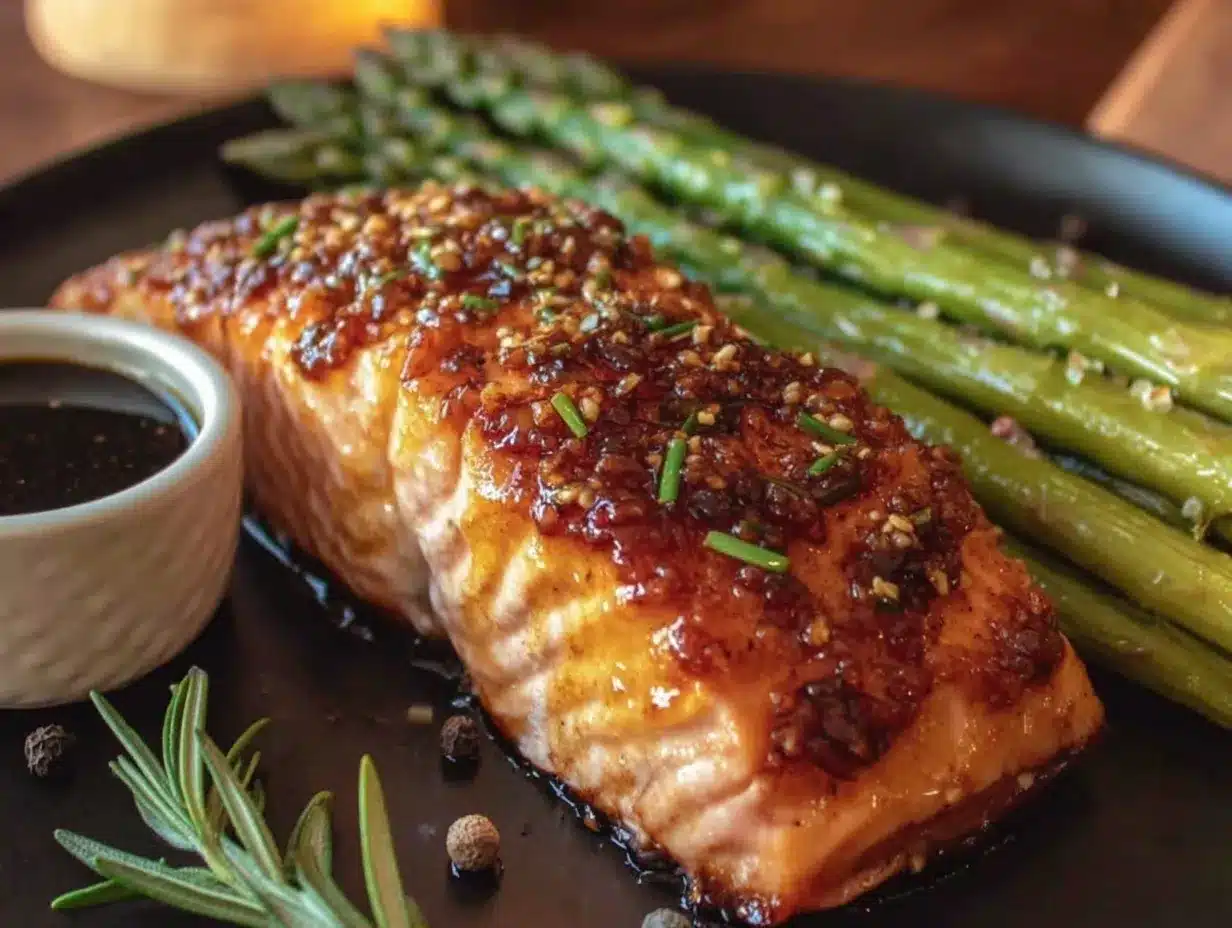
This quick honey garlic salmon and asparagus sheet pan dinner is my love letter to that little restaurant that disappeared. It’s got that same sweet-savory punch, the same perfectly flaky fish, and those tender-crisp asparagus spears that soak up every bit of garlicky goodness. Maybe you’ve been there—chasing a flavor from a place that no longer exists. If you have, you know exactly why I had to get this right. And now, I’m sharing it with you so you don’t have to go through seventeen attempts.
Why You’ll Love This Recipe
Let’s be real for a second. Weeknight dinners can feel like a chore, especially when you’re tired and the last thing you want is a sink full of dishes. This recipe is the answer to that exact problem. It’s designed for busy people who still want a meal that feels special without spending an hour in the kitchen.
- Quick & Easy: From fridge to table in under 30 minutes. Seriously. The active prep time is about 10 minutes, and the oven handles the rest. Perfect for those nights when you walk in the door at 6 PM and need to eat by 6:30.
- Simple Ingredients: You probably have most of these in your pantry right now. Honey, soy sauce, garlic, olive oil—these are staples, not specialty items. No fancy grocery store trips required.
- Minimal Cleanup: One sheet pan. That’s it. No piles of pots and pans. Just line your pan with parchment paper for an even easier cleanup situation.
- Balanced Meal in One: Protein and vegetables all on one pan. You don’t need to think about side dishes. It’s a complete meal that looks impressive but takes almost no effort.
- Crowd-Pleaser: My kids devour this, and so do the adults at dinner parties. The honey garlic flavor is universally loved—sweet, savory, and just a little bit sticky in the best way.
What makes this different from other sheet pan salmon recipes? It’s the balance of the glaze. Most recipes either make it too sweet or too salty. I spent weeks tweaking the honey-to-soy-sauce ratio until it hit that perfect middle ground. The garlic isn’t just an afterthought either—it’s front and center, infusing every bite. And the timing? That’s the real magic. The salmon comes out perfectly flaky, and the asparagus is tender but still has a little bite. It’s not just another version of sheet pan salmon. It’s the version you’ll come back to again and again.
What Ingredients You Will Need
This recipe uses simple, wholesome ingredients to deliver that bold, sticky-sweet flavor without any fuss. Most of these are pantry staples, which makes this perfect for those last-minute dinner decisions.
For the Salmon and Asparagus
- 4 salmon fillets (about 6 ounces each, skin-on or skinless—I prefer skin-on for extra crispiness)
- 1 bunch asparagus (about 1 pound, woody ends trimmed—just snap them off where they naturally break)
- 2 tablespoons olive oil (use a good quality one for drizzling)
- Salt and black pepper (to taste, and don’t be shy with the salt)
- Optional: lemon wedges (for serving, adds a bright finish)
For the Honey Garlic Glaze
- 1/4 cup honey (use a runny, liquid honey for easy mixing—I like local wildflower honey for its flavor)
- 3 tablespoons low-sodium soy sauce (or tamari for a gluten-free option, coconut aminos also work great)
- 4 cloves garlic (minced finely—fresh is non-negotiable here, don’t use the jarred stuff)
- 1 tablespoon rice vinegar (adds a subtle tang that balances the sweetness)
- 1 teaspoon sesame oil (optional but highly recommended, gives that nutty depth)
- 1/2 teaspoon red pepper flakes (optional, for a little heat—adjust to your tolerance)
For Garnish (Optional but Recommended)
- 1 tablespoon sesame seeds (toasted or regular, adds a nice crunch)
- 2 green onions (sliced thinly, for a fresh pop of color and mild onion flavor)
- Fresh cilantro or parsley (chopped, if you’re a herb person)
When it comes to the salmon, I recommend looking for wild-caught if your budget allows—it has a firmer texture and richer flavor. But honestly, good-quality farmed salmon works beautifully here too. For the asparagus, look for spears that are bright green with firm tips. Thicker spears hold up better to roasting and won’t get mushy. If you only have thin asparagus, just reduce the roasting time by a couple of minutes.
One ingredient tip I learned the hard way: don’t skip the rice vinegar. I tried making this without it once because I was out, and the glaze was flat and one-dimensional. That little bit of acidity makes everything pop. Trust me on this one.
Equipment Needed
One of the best things about this recipe is how little equipment you need. Here’s what you’ll need to pull this together:
- Large sheet pan (half-sheet size, about 18×13 inches—make sure it’s rimmed to catch all the glaze)
- Parchment paper or aluminum foil (for easy cleanup—I prefer parchment because the salmon doesn’t stick)
- Small mixing bowl (for whisking the glaze together)
- Whisk or fork (to combine the glaze ingredients)
- Chef’s knife and cutting board (for mincing garlic and trimming asparagus)
- Measuring spoons (for accurate glaze measurements)
- Basting brush (optional but helpful for spreading the glaze evenly on the salmon)
- Tongs (for flipping the asparagus halfway through, if you’re feeling ambitious)
If you don’t have a basting brush, don’t worry. You can just use a spoon to drizzle the glaze over the salmon. And if your sheet pan is smaller than recommended, just use two pans or cook in batches. Overcrowding the pan will steam everything instead of roasting it, and you won’t get that beautiful caramelization.
Preparation Method
This comes together faster than you’d think. Here’s how to make it happen without any stress.
- Preheat your oven to 400°F (200°C). Position the rack in the middle of the oven. While it’s heating up, line your sheet pan with parchment paper or foil. This step alone will save you from scrubbing later—trust me.
- Make the honey garlic glaze. In your small bowl, whisk together the honey, low-sodium soy sauce, minced garlic, rice vinegar, sesame oil (if using), and red pepper flakes (if using). Set it aside. Give it a taste—it should be sweet, salty, and a little tangy. Adjust the honey or soy sauce to your preference now before it goes on the fish.
- Prep the asparagus. Rinse your asparagus and pat it dry. Snap off the woody ends—they’ll naturally break where the tender part begins. If you want to be precise, you can cut about an inch off the bottom. Place the asparagus on one side of your prepared sheet pan. Drizzle with 1 tablespoon of olive oil, then season with salt and pepper. Toss gently to coat, then spread them in a single layer.
- Prep the salmon. Pat your salmon fillets dry with paper towels. This is crucial—dry fish gets crispy, wet fish steams. Place the fillets skin-side down (if they have skin) on the other side of the sheet pan, leaving a little space between each piece. Drizzle with the remaining 1 tablespoon of olive oil and season with salt and pepper.
- Brush the glaze on the salmon. Using your basting brush or a spoon, generously coat the top and sides of each salmon fillet with about half of the honey garlic glaze. Reserve the remaining half for later. Don’t pour it all on now—you’ll want that extra glaze to brush on at the end for maximum flavor.
- Roast everything together. Place the sheet pan in the preheated oven. Roast for 12 to 15 minutes, depending on the thickness of your salmon fillets. For medium-rare salmon (my preference), aim for 12 minutes. For well-done, go closer to 15 minutes. The asparagus should be tender and slightly charred at the tips.
- Apply the final glaze. About 2 minutes before the salmon is done, carefully remove the pan from the oven. Brush or spoon the remaining glaze over the salmon fillets. Return the pan to the oven to finish cooking. This double-glaze technique gives you that sticky, caramelized top that tastes like it came from a restaurant kitchen.
- Check for doneness. The salmon should flake easily with a fork when it’s done. If you have an instant-read thermometer, it should read 125°F to 130°F (52°C to 54°C) for medium, or 135°F (57°C) for well-done. The asparagus should be fork-tender but still hold its shape.
- Garnish and serve. Remove the pan from the oven. Sprinkle with sesame seeds and sliced green onions. Squeeze a lemon wedge over everything if you like that bright, fresh finish. Serve immediately, right from the sheet pan if you want to keep things rustic and easy.
One thing I learned from my failed attempts: don’t open the oven door too often. Every time you open it, heat escapes and your cooking time gets thrown off. Trust the timer and peek through the window instead.
Cooking Tips & Techniques
After making this dozens of times, I’ve picked up a few tricks that make a real difference. Let me share them so you can skip the learning curve.
The biggest mistake I made early on was overcrowding the pan. I wanted to throw everything on one sheet pan and be done, but when the salmon and asparagus are too close together, they steam instead of roast. You want that beautiful caramelization on the salmon and those charred edges on the asparagus. Give them room to breathe. If your fillets are large, use two pans or cook in batches.
Patting the salmon dry is non-negotiable. I know it seems like an extra step, but moisture is the enemy of a good sear. Even though we’re roasting, not pan-searing, dry salmon gets that lovely golden exterior. Wet salmon turns out pale and sad. I learned this the hard way when I was rushing one night and skipped this step. Never again.
Timing is everything with asparagus. If your asparagus spears are on the thicker side, give them a head start. You can put the asparagus in the oven for 3 to 4 minutes before adding the salmon. For thin asparagus, they’ll cook perfectly in the same 12 to 15 minutes as the salmon. I usually just match the thickness to the salmon fillets and it works out.
Here’s a multitasking strategy that saves me every time: While the oven is preheating, I make the glaze and prep the asparagus. By the time the oven is ready, everything is ready to go on the pan. Then, while it’s roasting, I set the table, make a quick salad if I want one, or honestly—just sit down for five minutes. That’s the beauty of sheet pan dinners.
For consistent results, buy salmon fillets that are similar in thickness. If one fillet is twice as thick as another, the thin one will overcook while you’re waiting for the thick one to finish. Ask your fishmonger to cut them evenly, or just pick fillets that look similar at the store.
Variations & Adaptations
This recipe is wonderfully flexible. Here are some ways to make it your own, depending on what you have on hand or what you’re in the mood for.
Dietary Variations:
- Gluten-Free: Swap the soy sauce for tamari or coconut aminos. Both work beautifully and the flavor is almost identical. Just check that your rice vinegar is gluten-free (most are, but it’s worth a glance at the label).
- Low-Carb/Keto: Reduce the honey to 2 tablespoons or swap it for a sugar-free honey alternative. The glaze won’t be as sticky, but the flavor will still be fantastic. Serve with extra asparagus or a side of roasted broccoli.
- Dairy-Free: This recipe is naturally dairy-free, so you’re all set. Just double-check your ingredients if you’re avoiding all dairy.
Vegetable Swaps:
- Broccoli or Broccolini: Cut into florets and roast alongside the salmon. Broccoli takes about the same time as thicker asparagus.
- Green Beans: Trim the ends and toss with olive oil. They’ll be tender in about 12 minutes.
- Brussels Sprouts: Halve them and toss with olive oil. They need a few extra minutes, so start them 5 minutes before adding the salmon.
- Bell Peppers and Zucchini: Cut into chunks and roast. These cook quickly and add color to the pan.
Flavor Twists:
- Spicy Honey Garlic: Double the red pepper flakes or add a teaspoon of sriracha to the glaze. The heat pairs so well with the sweet honey.
- Ginger Honey Garlic: Add 1 teaspoon of freshly grated ginger to the glaze. It adds a warm, zesty note that’s absolutely lovely.
- Lemon Herb: Add the zest of one lemon and a teaspoon of dried thyme or rosemary to the glaze. Finish with fresh lemon juice at the end.
- Maple Dijon: Swap the honey for maple syrup and add a tablespoon of Dijon mustard. It’s a completely different flavor profile but just as delicious.
Protein Swaps: This glaze works beautifully on chicken thighs or shrimp too. For chicken, increase the cooking time to 20 to 25 minutes. For shrimp, reduce it to 8 to 10 minutes. Just keep an eye on things and adjust as needed.
I once made this with a mix of salmon and shrimp because I had both in the freezer. I added the shrimp halfway through the cooking time so they wouldn’t overcook. It was a happy accident that turned into a regular thing in my house.
Serving & Storage Suggestions
Serving: This is best served straight from the oven while the salmon is still flaky and the glaze is sticky. I like to serve it over a bed of steamed rice or quinoa to soak up all that extra glaze from the pan. For a low-carb option, serve it on a bed of greens or cauliflower rice. A simple side salad with a lemon vinaigrette is also a great companion—it cuts through the richness of the honey glaze beautifully.
For presentation, I’ll transfer everything to a platter and sprinkle with sesame seeds, green onions, and maybe some fresh cilantro. But honestly, on busy weeknights, we eat it right off the sheet pan. No judgment here. It’s rustic and cozy and means fewer dishes.
Storage: Leftovers keep well in an airtight container in the refrigerator for up to 3 days. The asparagus will soften a bit, but the flavor is still fantastic. I wouldn’t recommend freezing this dish—the texture of both the salmon and asparagus changes too much after thawing.
Reheating: The best way to reheat this is in the oven or an air fryer. Preheat to 350°F (175°C) and warm for about 5 to 8 minutes. The microwave works in a pinch, but it will overcook the salmon and make the asparagus mushy. If you’re using the microwave, go in 30-second bursts and stop as soon as it’s warm.
Make-Ahead Note: You can prep the glaze up to 3 days in advance and store it in the fridge. You can also trim the asparagus and pat the salmon dry ahead of time. When you’re ready to cook, just assemble and roast. This makes weeknight dinner prep almost embarrassingly easy.
One thing I’ve noticed: the flavors actually meld together even more overnight. Cold leftovers straight from the fridge make a surprisingly good lunch the next day. The chilled salmon has a different texture, almost like a cured fish, and it’s delicious flaked over a salad.
Nutritional Information & Benefits
Here’s an approximate nutritional breakdown for one serving (one salmon fillet plus asparagus, without rice or additional sides):
| Nutrient | Amount Per Serving |
|---|---|
| Calories | 380-420 |
| Protein | 35-40g |
| Fat | 18-22g |
| Saturated Fat | 3-4g |
| Carbohydrates | 22-26g |
| Fiber | 3-4g |
| Sugar | 18-20g |
| Sodium | 600-700mg |
This dish is packed with nutritional benefits. Salmon is rich in omega-3 fatty acids, which are fantastic for heart and brain health. It’s also an excellent source of high-quality protein and vitamin D. Asparagus is a powerhouse too—it’s loaded with fiber, folate, and vitamins A, C, and K. The combination makes for a balanced, nutrient-dense meal that keeps you full and satisfied.
From a dietary perspective, this recipe is naturally gluten-free (with the tamari swap), dairy-free, and can be made low-carb or keto-friendly with a few small adjustments. The main source of sugar is the honey, which also provides antioxidants and has a lower glycemic impact than refined sugar. If you’re watching your sodium, use low-sodium soy sauce and go easy on the added salt.
Honestly, I love that this meal feels indulgent—that sticky, sweet glaze tricks my brain into thinking I’m eating something decadent—but it’s actually really good for you. It’s the kind of meal that makes you feel energized afterward, not sluggish.
Conclusion
This quick honey garlic salmon and asparagus sheet pan dinner is the recipe I turn to when I want something that feels special but takes almost no effort. It’s the answer to those tired weeknight questions: “What’s for dinner?” and “How fast can we eat?” The honey garlic glaze is that perfect balance of sweet and savory, the salmon comes out flaky and tender, and the asparagus roasts to perfection right alongside it. All on one pan, in under 30 minutes.
I really hope you give this a try, whether you’re chasing a memory of a restaurant that’s no longer there or just trying to get dinner on the table without losing your mind. Play around with the variations—make it spicy, swap the vegetables, try it with chicken. This recipe is forgiving and adaptable, which is exactly what weeknight cooking should be.
When you make it, I’d love to hear how it turned out. Drop a comment below and let me know if you added your own twist, or share a photo of your sheet pan masterpiece. And if you loved it, share this recipe with a friend who could use an easy, delicious dinner in their life. Happy cooking, friend—you’ve got this.
Frequently Asked Questions
Can I use frozen salmon for this recipe?
Yes, you can use frozen salmon, but you’ll need to thaw it completely first. Pat it very dry before adding the glaze, because frozen salmon tends to release more water as it thaws. The cooking time might increase by a couple of minutes as well. For best results, thaw the salmon in the refrigerator overnight.
How do I know when the salmon is fully cooked?
The easiest way is to check with a fork. Gently press into the thickest part of the fillet—if it flakes easily and looks opaque all the way through, it’s done. If you have an instant-read thermometer, 125°F to 130°F (52°C to 54°C) is perfect for medium, and 135°F (57°C) for well-done. The salmon will continue to cook a little after you take it out of the oven, so pull it just before it reaches your desired temperature.
Can I make this recipe in an air fryer?
Absolutely! Preheat your air fryer to 375°F (190°C). Place the salmon and asparagus in the basket in a single layer (you may need to work in batches). Cook for 8 to 10 minutes, brushing with the reserved glaze halfway through. The air fryer gives the salmon an even crispier exterior, which is pretty fantastic.
What can I use instead of honey?
Maple syrup is the best substitute—it has a similar consistency and sweetness, with its own lovely flavor. Agave nectar also works well. For a sugar-free option, use a sugar-free honey substitute or a monk fruit-based syrup. Just keep in mind that different sweeteners will change the flavor profile slightly, but they’ll all work beautifully.
How do I prevent the asparagus from getting soggy?
The key is not overcrowding the pan and making sure the asparagus is dry before you add the oil. Spread the spears in a single layer with a little space between them. If your asparagus is very thin, check it a few minutes early. And don’t skip the high oven temperature—400°F is hot enough to roast them quickly without steaming.
Pin This Recipe!
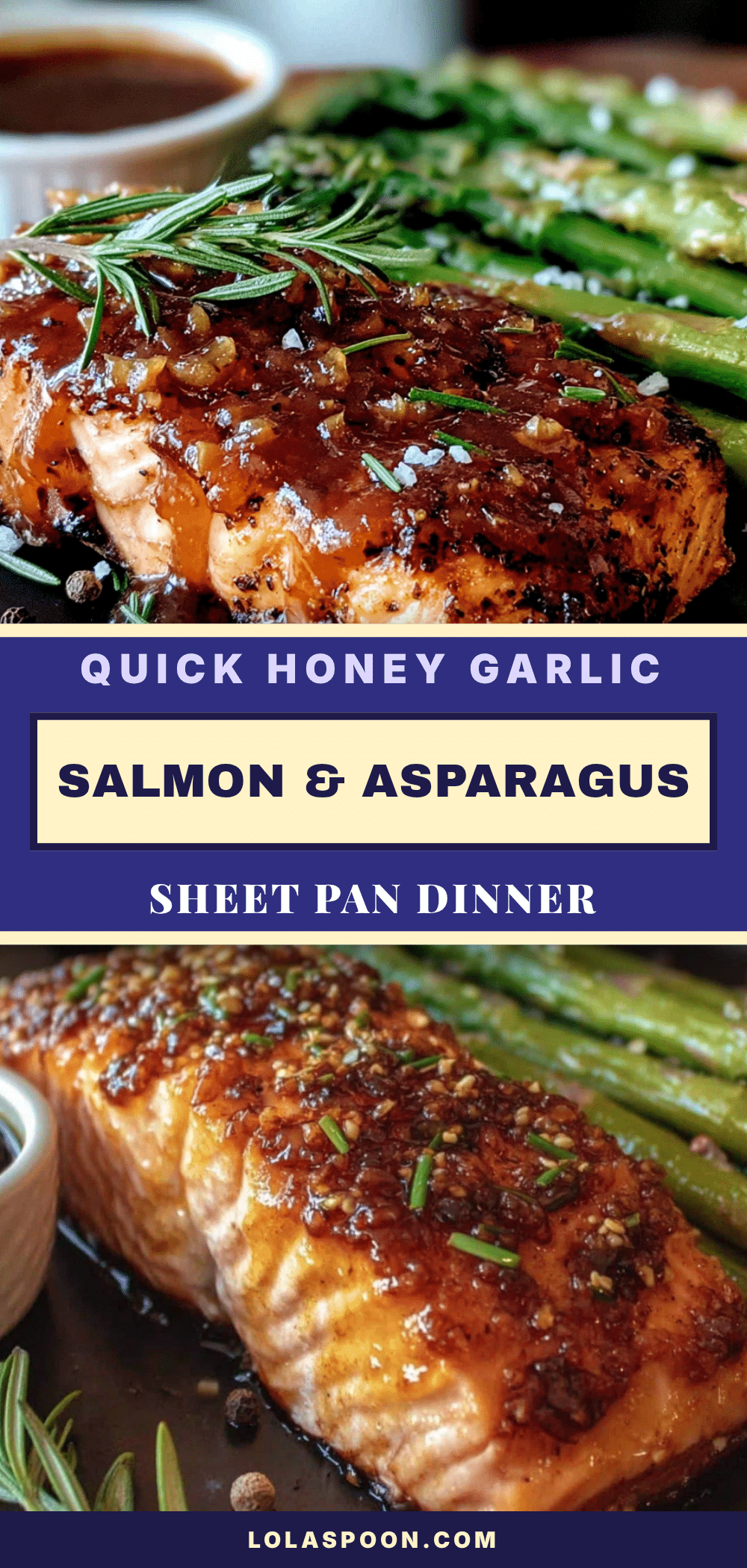
Quick Honey Garlic Salmon Sheet Pan Dinner with Asparagus
A quick and easy sheet pan dinner featuring honey garlic glazed salmon and roasted asparagus, all cooked on one pan in under 30 minutes. Perfect for busy weeknights with minimal cleanup.
- Prep Time: 10 minutes
- Cook Time: 15 minutes
- Total Time: 25 minutes
- Yield: 4 servings 1x
- Category: Main Course
- Cuisine: American
Ingredients
- 4 salmon fillets (about 6 ounces each, skin-on or skinless)
- 1 bunch asparagus (about 1 pound, woody ends trimmed)
- 2 tablespoons olive oil
- Salt and black pepper to taste
- Optional: lemon wedges for serving
- 1/4 cup honey
- 3 tablespoons low-sodium soy sauce (or tamari for gluten-free)
- 4 cloves garlic, minced
- 1 tablespoon rice vinegar
- 1 teaspoon sesame oil (optional)
- 1/2 teaspoon red pepper flakes (optional)
- 1 tablespoon sesame seeds (for garnish)
- 2 green onions, sliced thinly (for garnish)
- Fresh cilantro or parsley, chopped (for garnish)
Instructions
- Preheat your oven to 400°F (200°C). Position the rack in the middle of the oven. Line a large sheet pan with parchment paper or aluminum foil.
- In a small bowl, whisk together the honey, low-sodium soy sauce, minced garlic, rice vinegar, sesame oil (if using), and red pepper flakes (if using). Set aside.
- Rinse the asparagus and pat dry. Snap off the woody ends. Place the asparagus on one side of the prepared sheet pan. Drizzle with 1 tablespoon of olive oil, season with salt and pepper, and toss to coat. Spread in a single layer.
- Pat the salmon fillets dry with paper towels. Place them skin-side down on the other side of the sheet pan, leaving space between each piece. Drizzle with the remaining 1 tablespoon of olive oil and season with salt and pepper.
- Brush or spoon about half of the honey garlic glaze over the top and sides of each salmon fillet. Reserve the remaining half for later.
- Roast for 12 to 15 minutes, depending on the thickness of the salmon. For medium-rare, aim for 12 minutes; for well-done, go closer to 15 minutes.
- About 2 minutes before the salmon is done, remove the pan from the oven. Brush or spoon the remaining glaze over the salmon fillets. Return to the oven to finish cooking.
- Check for doneness: the salmon should flake easily with a fork (internal temperature of 125°F to 130°F for medium, or 135°F for well-done). The asparagus should be fork-tender but still hold its shape.
- Remove from the oven. Sprinkle with sesame seeds and sliced green onions. Squeeze lemon wedges over everything if desired. Serve immediately.
Notes
For best results, pat salmon dry before glazing. Avoid overcrowding the pan to ensure proper roasting. If using thick asparagus, give it a 3-4 minute head start before adding salmon. The double-glaze technique creates a sticky, caramelized top. Leftovers keep in the refrigerator for up to 3 days; reheat in the oven or air fryer for best texture.
Nutrition
- Serving Size: 1 salmon fillet with
- Calories: 400
- Sugar: 19
- Sodium: 650
- Fat: 20
- Saturated Fat: 3.5
- Carbohydrates: 24
- Fiber: 3.5
- Protein: 37
Keywords: honey garlic salmon, sheet pan dinner, salmon with asparagus, quick salmon recipe, easy weeknight dinner, one pan salmon