This was supposed to be a simple stuffed pepper situation. I had the ground turkey, the bell peppers, the rice—the whole plan laid out in my head while I was at the grocery store on a frantic Wednesday afternoon. But then I saw them. These gorgeous, ridged, deep-green acorn squashes sitting in a bin, looking at me like they knew they were about to steal the show. I grabbed one without thinking, tossed it in the cart, and completely abandoned my original plan. The turkey went back in the freezer. The peppers stayed at the store. And I stood in my kitchen an hour later, staring at this acorn squash like, “Okay, now what?” I had no recipe. No backup plan. Honestly, I had a half-empty bottle of apple cider and some leftover wild rice from a takeout container in the fridge. Desperation cooking at its finest.
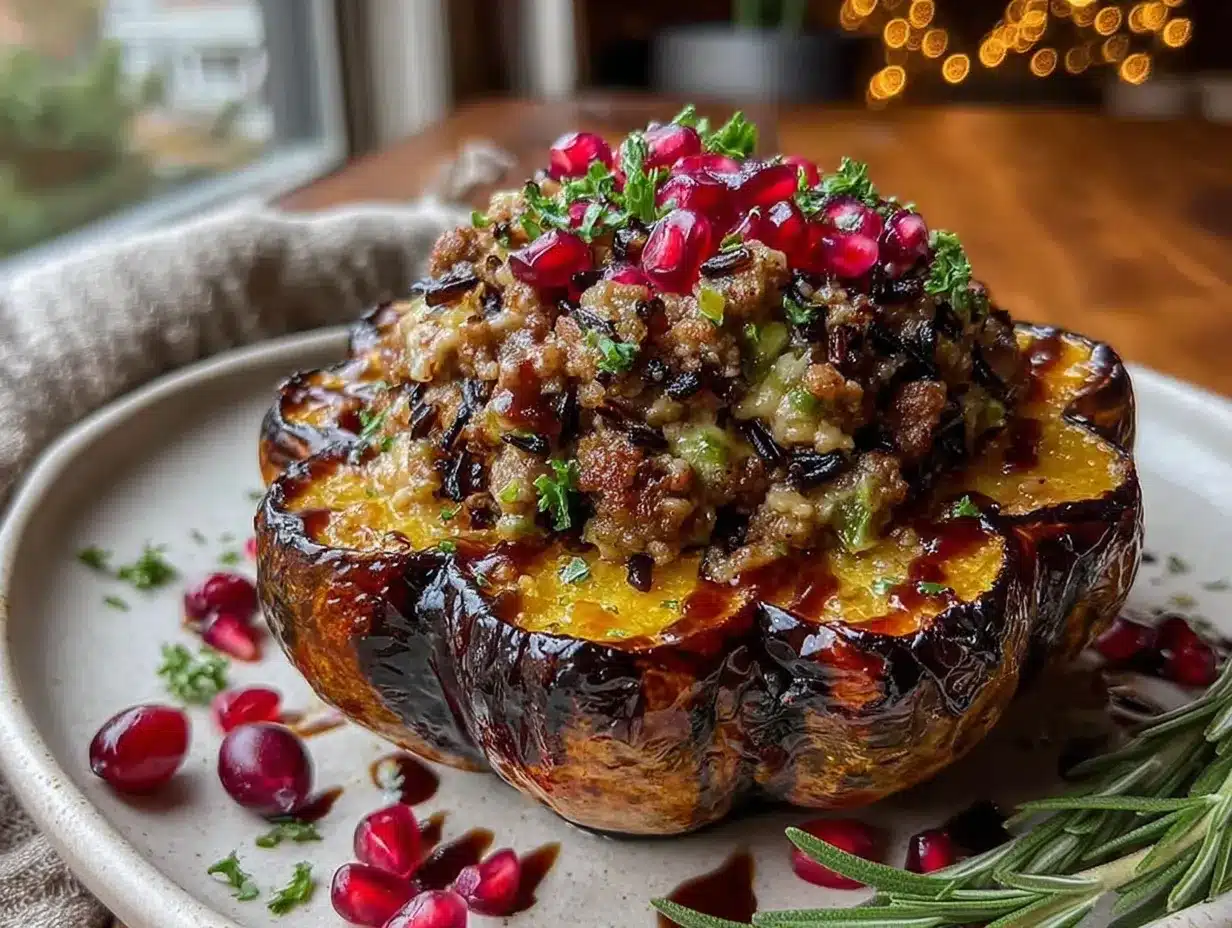
I roasted the squash first, because that seemed like the safe move. Then I started rummaging through the pantry and found a package of sweet Italian sausage I had forgotten about. That was the moment things got interesting. I browned the sausage, threw in some onion and celery, mixed in the wild rice, and stuffed it all into those golden, tender squash halves. When I pulled it out of the oven, I just stood there for a second. It looked like something you’d see on a restaurant menu. I mean, it looked ridiculous. I called my neighbor Carol over to try it, and she took one bite and said, “You need to make this for Thanksgiving.” And honestly, she was right. That happy accident—the one where I had no plan and zero expectations—turned into a recipe I’ve now made for two holiday dinners, three dinner parties, and one very memorable potluck where it disappeared in ten minutes. You know that feeling when something goes wrong and then goes incredibly right? That’s this recipe.
Why You’ll Love This Recipe
Let me tell you why this stuffed acorn squash has earned a permanent spot in my hosting rotation. It’s not just another side dish pretending to be a main course—it’s the real deal. The kind of dish that makes people stop mid-conversation and ask, “Who made this?”
- Looks Like a Million Bucks, Costs Pennies : Let’s be honest—presentation is half the battle when you’re hosting. These little squash boats look incredibly elegant on a platter, but the ingredients are affordable and easy to find. Your guests will think you slaved all day.
- Make-Ahead Friendly : You can prep the filling and roast the squash a day ahead. When your guests arrive, you just stuff and bake. No last-minute scrambling while trying to look calm and put-together.
- Naturally Gluten-Free & Grain-Friendly : No one will miss the breadcrumbs or flour here. The wild rice and sausage create a hearty, satisfying filling that works for almost any dietary restriction.
- Perfect for Fall Gatherings : This recipe screams autumn. The sweetness of the roasted squash paired with savory sausage and nutty wild rice is basically the flavor of October in a bowl.
- Scales Beautifully : Need to feed eight instead of four? Just double the filling and grab a few more squashes. It’s one of those forgiving recipes that doesn’t punish you for improvising.
What makes this version different from every other stuffed squash recipe out there? Two things. First, I roast the squash cut-side down for the first half of cooking. This creates a perfectly caramelized surface that adds a depth of flavor you just can’t get otherwise. Second, I deglaze the sausage pan with a splash of apple cider before mixing in the rice. That little bit of acidity cuts through the richness and ties everything together. Trust me on this one.
This recipe isn’t just good—it’s the kind that makes you close your eyes after the first bite. It’s comfort food that looks fancy enough for company, but comes together without the stress. Perfect for impressing guests without spending your entire afternoon in the kitchen.
What Ingredients You Will Need
This recipe uses simple, wholesome ingredients that work together to create something truly special. Most of these are pantry staples or easy to find at any grocery store. Here’s what you’ll need:
For the Squash
- 2 medium acorn squashes (about 1.5 pounds each) — Look for ones that feel heavy for their size and have firm, unblemished skin. A deep green color with orange patches means they’re perfectly ripe.
- 2 tablespoons olive oil — Use a good-quality extra virgin olive oil for roasting. It adds flavor and helps the squash caramelize beautifully.
- ½ teaspoon salt — I prefer kosher salt for roasting because it distributes evenly and doesn’t clump.
- ¼ teaspoon black pepper — Freshly ground is always better, but pre-ground works in a pinch.
For the Filling
- 1 pound sweet Italian sausage (casings removed) — I recommend Johnsonville or your local butcher’s house-made sausage. The fennel and garlic in sweet Italian sausage are what make this filling sing. You can use hot Italian sausage if you want some heat.
- 1 cup uncooked wild rice — Not a blend, but actual wild rice. It has a chewier texture and nuttier flavor than the blends. Lundberg Family Farms makes a great one.
- 1 small yellow onion, diced (about 1 cup) — Yellow onions have the right balance of sweetness and bite for this recipe.
- 2 celery stalks, diced (about ½ cup) — Celery adds that subtle bitterness that balances the sweetness of the squash.
- 3 cloves garlic, minced — Fresh garlic is non-negotiable here. The jarred stuff just doesn’t hit the same.
- ⅓ cup apple cider — This is my secret ingredient. It deglazes the pan and adds a touch of acidity that brightens the whole dish. Use unsweetened if you can find it.
- ⅓ cup dried cranberries — These little bursts of sweetness are like finding treasure in every bite. Craisins work perfectly.
- ¼ cup chopped fresh parsley — Flat-leaf or curly, both work. Parsley adds freshness and color.
- ½ teaspoon dried sage — Sage and squash are a classic pairing for good reason. It adds an earthy, almost piney note.
- ½ teaspoon dried thyme — Thyme is subtle but essential. It rounds out the other herbs without overpowering anything.
- Salt and pepper to taste
For the Topping (Optional but Recommended)
- ¼ cup grated Parmesan cheese — Adds a salty, nutty crust on top. Use real Parmesan, not the stuff in the green can.
- 2 tablespoons chopped pecans — For a little crunch. Toast them lightly in a dry pan first for maximum flavor.
Substitution Notes: If you need a dairy-free option, skip the Parmesan or use a vegan alternative. For a vegetarian version, swap the sausage for 1½ cups of cooked lentils or a plant-based sausage crumble. You can also use regular long-grain brown rice if you don’t have wild rice, but the cooking time will be shorter—about 35-40 minutes instead of 50.
Equipment Needed
You don’t need a fancy kitchen to pull this off. Here’s what I use every time I make this recipe:
- Large baking sheet — A rimmed baking sheet works best to catch any juices that escape during roasting. I use a half-sheet pan (18×13 inches).
- Parchment paper or aluminum foil — For easy cleanup. Trust me, you’ll thank yourself later.
- Medium saucepan — For cooking the wild rice. A 2-quart pot is perfect.
- Large skillet — A 12-inch skillet gives you enough room to brown the sausage and cook the vegetables without crowding.
- Sharp chef’s knife — Acorn squash has a tough skin, so a sharp knife is essential for cutting it safely. I use my 8-inch Wusthof.
- Cutting board — A sturdy wooden or plastic board that won’t slide around.
- Mixing bowl — For combining the filling ingredients.
- Measuring cups and spoons — Accuracy matters, especially with the rice-to-liquid ratio.
- Wooden spoon or spatula — For stirring and breaking up the sausage.
Budget-Friendly Tip: Don’t have a rimmed baking sheet? A regular baking sheet with the edges folded up slightly will work. And if you don’t have parchment paper, just grease the pan well with oil.
Preparation Method
Let’s walk through this step by step. I’ve made this recipe about a dozen times now, so I’ve figured out all the little tricks that make it go smoothly.
Step 1: Cook the Wild Rice (40-50 minutes)
Rinse 1 cup of wild rice under cold water in a fine-mesh strainer. This removes excess starch and helps the rice cook up fluffy instead of gummy. In a medium saucepan, combine the rinsed rice with 3 cups of water and a pinch of salt. Bring to a boil over high heat, then reduce the heat to low, cover, and simmer for 40-50 minutes, until the rice is tender and the grains have split open slightly. Drain any excess water and set aside. Pro tip: Cook the rice a day ahead and store it in the fridge. It actually works better when it’s slightly dried out.
Step 2: Prep and Roast the Squash (30 minutes)
Preheat your oven to 400°F (200°C). Line a baking sheet with parchment paper. Carefully cut each acorn squash in half from stem to tip using a sharp chef’s knife. Be really careful here—acorn squash can be tough and the knife can slip. Scoop out the seeds and stringy pulp with a spoon. I use a grapefruit spoon with serrated edges, but a regular spoon works fine. Brush the cut sides and cavities with olive oil, then season with salt and pepper. Place the squash halves cut-side down on the prepared baking sheet. Roast for 20 minutes, then flip them over and roast for another 10 minutes. They should be fork-tender but still holding their shape. Remove from the oven and let them cool slightly while you make the filling.
Step 3: Brown the Sausage (8-10 minutes)
While the squash is roasting, heat a large skillet over medium-high heat. Add the sausage, breaking it up with a wooden spoon as it cooks. Cook for 6-8 minutes, until it’s nicely browned and cooked through. Don’t rush this step—browning equals flavor. Use a slotted spoon to transfer the cooked sausage to a plate, leaving about 2 tablespoons of rendered fat in the pan. If your sausage is lean and doesn’t leave much fat, add a drizzle of olive oil.
Step 4: Cook the Vegetables (5-6 minutes)
Reduce the heat to medium. Add the diced onion and celery to the same skillet with the rendered fat. Cook for 4-5 minutes, stirring occasionally, until the onion is translucent and the celery has softened. Add the minced garlic and cook for another 30 seconds until fragrant. Don’t let the garlic burn—it turns bitter fast.
Step 5: Deglaze and Combine (2 minutes)
Pour the apple cider into the skillet with the vegetables. Use your wooden spoon to scrape up any browned bits from the bottom of the pan—that’s where all the flavor lives. Let the cider bubble and reduce for about a minute. Then add the cooked sausage back to the pan, along with the cooked wild rice, dried cranberries, fresh parsley, dried sage, and dried thyme. Stir everything together until well combined. Taste and adjust seasoning with salt and pepper. The filling should be savory with a hint of sweetness from the cranberries and a subtle herbal note from the sage and thyme.
Step 6: Stuff and Bake (15-20 minutes)
Preheat your oven to 375°F (190°C). Spoon the filling into each squash half, mounding it slightly. Don’t be shy—really pack it in there. If you have extra filling, just pile it on top. Sprinkle the tops with grated Parmesan cheese and chopped pecans if using. Return the stuffed squash to the oven and bake for 15-20 minutes, until the filling is heated through and the cheese is melted and golden. If you want an extra-crispy top, switch the oven to broil for the last 2 minutes. Watch it closely—broilers are unpredictable and things can go from golden to black in seconds.
Step 7: Rest and Serve (5 minutes)
Let the stuffed squash rest on the baking sheet for 5 minutes before serving. This allows the filling to set slightly and makes the squash easier to handle. Transfer to a platter, garnish with a little extra fresh parsley, and watch your guests light up.
Cooking Tips & Techniques
I’ve learned a few things the hard way so you don’t have to. Here are my best tips for nailing this recipe every time.
Don’t Overcook the Squash. The first time I made this, I roasted the squash for 35 minutes instead of 30, and it was so soft it practically collapsed when I tried to stuff it. You want the squash to be tender enough to pierce with a fork, but firm enough to hold its shape. Start checking at 20 minutes.
Toast the Pecans. I know it’s an extra step, but toasting pecans in a dry skillet over medium heat for 2-3 minutes transforms them from bland to incredible. They get fragrant and the natural oils come to the surface. Just keep them moving so they don’t burn.
Use a Cookie Scoop for Stuffing. This is one of those little tricks that makes life easier. A medium cookie scoop (about 2 tablespoons) lets you portion the filling evenly and quickly without making a mess. Plus, it looks neater on the plate.
Make Extra Filling. I always make about 25% more filling than I think I’ll need. You can serve the extra on the side for seconds, or save it for lunch the next day. It’s amazing stuffed into a baked potato or spooned over greens.
Watch Your Oven Temperature. Ovens run differently. My old oven ran 25 degrees hot, and I burned the first batch of Parmesan topping before I figured it out. If your oven runs hot, check the squash 5 minutes early. If it runs cool, give it an extra 5 minutes.
One Mistake I Made: I once tried to skip the step where you scrape up the browned bits from the pan. I was in a hurry and figured it wouldn’t matter. It mattered. That deglazing step adds so much depth to the filling. Don’t skip it, even if you’re short on time. It takes literally one minute.
Variations & Adaptations
This recipe is incredibly versatile. Here are some ways to make it your own:
Vegetarian Version
Swap the sausage for 1½ cups of cooked green lentils or your favorite plant-based sausage crumbles. I’ve tried both, and the lentils give a earthier, more rustic texture while the plant-based sausage mimics the original more closely. Add an extra tablespoon of olive oil when cooking the vegetables since you won’t have the rendered sausage fat.
Spicy Kick
Use hot Italian sausage instead of sweet, and add ½ teaspoon of red pepper flakes along with the garlic. For extra heat, drizzle the finished squash with a little hot honey before serving. My friend Jenna tried this and now refuses to make it any other way.
Maple-Bourbon Twist
Replace the apple cider with ¼ cup bourbon and 2 tablespoons maple syrup. Cook the bourbon for an extra minute to burn off the alcohol before adding the other ingredients. This version is dangerously good for holiday dinners.
Nut-Free Option
Skip the pecans entirely, or substitute with toasted pumpkin seeds (pepitas) for crunch without the allergens. Sunflower seeds also work, but toast them separately since they burn easily.
Make It a Meal Prep Star
Cook the rice and roast the squash on Sunday. Store the squash halves and filling separately in the fridge. When you’re ready to eat, stuff and bake for 20 minutes. This is my go-to strategy for busy weeknights when I want something that feels special.
Serving & Storage Suggestions
This dish is a showstopper on any table, but how you serve it matters. Here’s what I’ve learned:
Serving Temperature: Serve the stuffed squash warm, not piping hot. Letting it rest for 5 minutes after baking allows the flavors to meld and makes the squash easier to handle. If you’re serving a crowd, you can keep it warm in a 200°F oven for up to 30 minutes.
Presentation Tips for Hosting: Arrange the squash halves on a large wooden board or white platter. Sprinkle with extra parsley and a few whole dried cranberries for color. If you’re feeling fancy, drizzle a little balsamic glaze around the plate. The contrast of dark green squash, golden filling, and dark balsamic is stunning.
What to Serve Alongside: This dish is hearty enough to stand alone, but it pairs beautifully with a simple arugula salad dressed with lemon vinaigrette. The peppery arugula cuts through the richness of the sausage and squash. For a bigger spread, serve it alongside roasted Brussels sprouts or a crusty loaf of sourdough bread. A dry Riesling or a light Pinot Noir is my wine pick.
Storage: Leftover stuffed squash keeps in the refrigerator for up to 4 days in an airtight container. The flavors actually get better as they meld overnight. To reheat, place the squash halves on a baking sheet and warm in a 350°F oven for 10-15 minutes. The microwave works in a pinch, but the squash gets a bit soggy.
Freezer Instructions: You can freeze the unbaked stuffed squash for up to 3 months. Assemble the squash completely, then wrap each half tightly in plastic wrap and place in a freezer bag. To bake from frozen, unwrap and place on a baking sheet. Bake at 375°F for 30-35 minutes, adding the Parmesan and pecans for the last 10 minutes. No need to thaw first.
How Flavors Develop: I honestly think this dish is even better the next day. The squash absorbs some of the savory juices from the filling, and the herbs have time to meld together. If you can resist eating it all the first night, the leftovers are a treat.
Nutritional Information & Benefits
This recipe is surprisingly balanced for something that tastes so indulgent. Here’s a rough breakdown per serving (one squash half):
- Calories: Approximately 420-450
- Protein: 22g
- Fat: 18g (mostly from the sausage and olive oil)
- Carbohydrates: 48g
- Fiber: 7g
- Sugar: 12g (naturally occurring from the squash and cranberries)
Health Highlights: Acorn squash is packed with vitamin A (great for eye health), vitamin C (immune support), and potassium. Wild rice is a whole grain with more protein and fiber than white rice, and it contains antioxidants called anthocyanins (the same ones found in blueberries). The sausage provides iron and B vitamins, while the olive oil offers heart-healthy monounsaturated fats.
Dietary Considerations: This recipe is naturally gluten-free and nut-free if you skip the pecans. It’s also relatively low in added sugar—most of the sweetness comes from the squash and cranberries. If you’re watching your sodium, use low-sodium sausage and go easy on the added salt.
My Personal Take: I love that this dish feels like a treat but doesn’t leave me feeling heavy or sluggish afterward. It’s the kind of meal that satisfies deeply without the post-dinner food coma.
Conclusion
This stuffed acorn squash started as a complete accident—a moment of distraction that turned into something I now make on purpose, over and over again. It’s proof that sometimes the best recipes come from letting go of the plan and trusting your instincts. Or, you know, from grabbing the wrong vegetable at the grocery store.
What I love most about this recipe is how adaptable it is. You can swap the sausage for lentils, add more spice, or load it up with extra herbs. It’s forgiving enough for a weeknight but fancy enough for your holiday table. And when you set that platter down in front of your guests, watching their faces light up? That’s the good stuff.
I’d love to hear how yours turns out. Did you add your own twist? Burn the pecans like I did that one time? Drop a comment below and let me know—I read every single one. And if you loved this recipe, share it with a friend who needs a show-stopping dish for their next gathering. Happy cooking, friends!
Frequently Asked Questions
Can I use a different type of squash?
Absolutely! Butternut squash works well—just cut it in half lengthwise and scoop out the seeds. You might need to adjust the roasting time since butternut is denser. Kabocha squash is another great option with a similar texture to acorn.
Do I have to use wild rice?
Not at all. Brown rice, farro, quinoa, or even cooked barley would all work beautifully. Just make sure whatever grain you use is fully cooked before mixing it into the filling. Leftover cooked grains are perfect here.
Can I make this dairy-free?
Yes, easily. Simply omit the Parmesan cheese or use a dairy-free alternative. The nutritional yeast-based Parmesan substitutes work surprisingly well. The dish is still delicious without any cheese at all.
How do I prevent the squash from being watery?
This can happen if the squash releases too much moisture during roasting. To avoid it, make sure you roast the squash cut-side down first, which allows steam to escape. Also, don’t overfill the squash—leave a little room for the filling to breathe.
Can I prepare this entirely ahead of time?
Yes, and I do it all the time. Roast the squash and cook the filling up to 2 days ahead. Store them separately in the fridge. When you’re ready to serve, stuff the squash and bake at 375°F for 20-25 minutes. Add the cheese and pecans for the last 5 minutes.
Pin This Recipe!
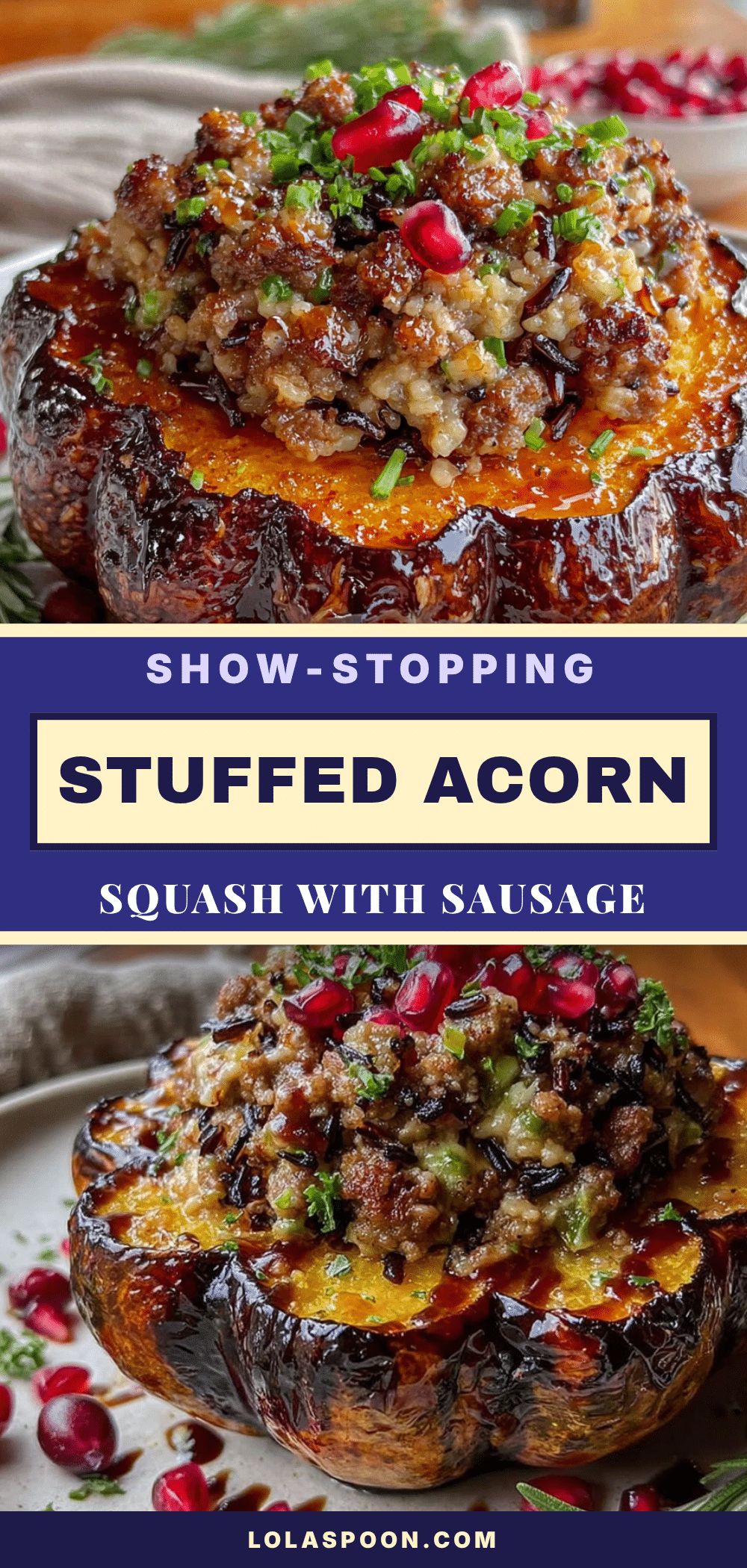
Show-Stopping Stuffed Acorn Squash: Easy Sausage & Wild Rice
A hearty and elegant stuffed acorn squash recipe featuring sweet Italian sausage, wild rice, dried cranberries, and a touch of apple cider. Perfect for fall gatherings, this gluten-free dish is make-ahead friendly and sure to impress.
- Prep Time: 20 minutes
- Cook Time: 1 hour 10 minutes
- Total Time: 1 hour 30 minutes
- Yield: 4 servings 1x
- Category: Main Course
- Cuisine: American
Ingredients
- 2 medium acorn squashes (about 1.5 pounds each)
- 2 tablespoons olive oil
- ½ teaspoon salt
- ¼ teaspoon black pepper
- 1 pound sweet Italian sausage (casings removed)
- 1 cup uncooked wild rice
- 1 small yellow onion, diced (about 1 cup)
- 2 celery stalks, diced (about ½ cup)
- 3 cloves garlic, minced
- ⅓ cup apple cider
- ⅓ cup dried cranberries
- ¼ cup chopped fresh parsley
- ½ teaspoon dried sage
- ½ teaspoon dried thyme
- Salt and pepper to taste
- ¼ cup grated Parmesan cheese (optional)
- 2 tablespoons chopped pecans (optional)
Instructions
- Rinse 1 cup of wild rice under cold water. In a medium saucepan, combine the rinsed rice with 3 cups of water and a pinch of salt. Bring to a boil over high heat, then reduce heat to low, cover, and simmer for 40-50 minutes until tender. Drain any excess water and set aside.
- Preheat oven to 400°F (200°C). Line a baking sheet with parchment paper. Cut each acorn squash in half from stem to tip. Scoop out seeds and stringy pulp. Brush cut sides and cavities with olive oil, season with salt and pepper. Place cut-side down on the baking sheet. Roast for 20 minutes, then flip and roast for another 10 minutes until fork-tender. Remove and let cool slightly.
- While squash roasts, heat a large skillet over medium-high heat. Add the sausage, breaking it up with a wooden spoon. Cook for 6-8 minutes until browned and cooked through. Use a slotted spoon to transfer sausage to a plate, leaving about 2 tablespoons of rendered fat in the pan.
- Reduce heat to medium. Add diced onion and celery to the same skillet. Cook for 4-5 minutes until onion is translucent and celery has softened. Add minced garlic and cook for 30 seconds until fragrant.
- Pour apple cider into the skillet. Scrape up any browned bits from the bottom of the pan. Let the cider bubble and reduce for about 1 minute. Add the cooked sausage, wild rice, dried cranberries, fresh parsley, dried sage, and dried thyme. Stir to combine. Season with salt and pepper to taste.
- Preheat oven to 375°F (190°C). Spoon the filling into each squash half, mounding it slightly. Sprinkle tops with grated Parmesan cheese and chopped pecans if using. Return to the oven and bake for 15-20 minutes until heated through and cheese is melted and golden. For an extra-crispy top, broil for the last 2 minutes.
- Let the stuffed squash rest on the baking sheet for 5 minutes before serving. Transfer to a platter, garnish with extra fresh parsley, and serve warm.
Notes
Roast squash cut-side down first for caramelization. Deglaze the pan with apple cider for added depth. Make filling and roast squash a day ahead for easy assembly. For a vegetarian version, swap sausage for 1½ cups cooked lentils or plant-based sausage. For a dairy-free option, omit Parmesan or use a vegan alternative.
Nutrition
- Serving Size: 1 squash half
- Calories: 435
- Sugar: 12
- Sodium: 680
- Fat: 18
- Saturated Fat: 5
- Carbohydrates: 48
- Fiber: 7
- Protein: 22
Keywords: stuffed acorn squash, sausage and wild rice, fall recipe, gluten-free dinner, holiday side dish, stuffed squash, acorn squash recipe