There used to be a tiny Italian restaurant tucked behind a bookstore in Portland—the kind of place with mismatched chairs and a chalkboard menu that changed daily. They made a butternut squash lasagna with sage brown butter that I still dream about. When they closed suddenly one winter (the landlord tripled the rent, classic story), I honestly went through a weird little mourning period. I mean, I actually called my sister to complain about it. Pathetic, right?
After twelve tries—twelve, let me tell you—I finally got it. The first few attempts were disasters. Too watery. Too sweet. One version had noodles that turned into complete mush, and I sat there eating it anyway, just staring at the wall, wondering what I was doing wrong. But this version? This is the one. The browned butter gets all nutty and deep, the squash caramelizes just right, and the whole thing feels like a warm hug on a cold night.
I kept going back to that memory of the restaurant—the way the candle flickered on the table, the old guy playing jazz piano in the corner—and I knew I needed to capture that feeling. Not just the taste, but the coziness of it all. Maybe you’ve been there with a dish that just stuck with you. The kind you can’t let go of. Well, this is that recipe for me, and I’m pretty sure it’s about to become that for you too.
Why You’ll Love This Recipe
Let me be honest with you—I’ve tested this recipe more times than I care to admit. My family has eaten lasagna for dinner, lunch, and honestly, breakfast the next morning. And you know what? Nobody complained. Not once. That’s when I knew this one was special.
- Surprisingly Simple: Don’t let the fancy name fool you. This comes together in about an hour of active time, and most of that is just layering. No complicated techniques here.
- Wholesome Ingredients: We’re using real food—fresh butternut squash, good cheese, pantry staples. No weird shortcuts or processed stuff.
- Perfect for Cozy Nights: This is the dish you make when you want to impress without stress. Great for Sunday dinners, holiday gatherings, or just a Tuesday that needs some warming up.
- Crowd-Pleaser: I’ve served this to kids who swear they hate squash, to picky eaters, to my cousin who only eats beige food. They all went back for seconds.
- Next-Level Comfort: The sage brown butter takes this from “good lasagna” to “close-your-eyes-after-the-first-bite” territory. It’s that good.
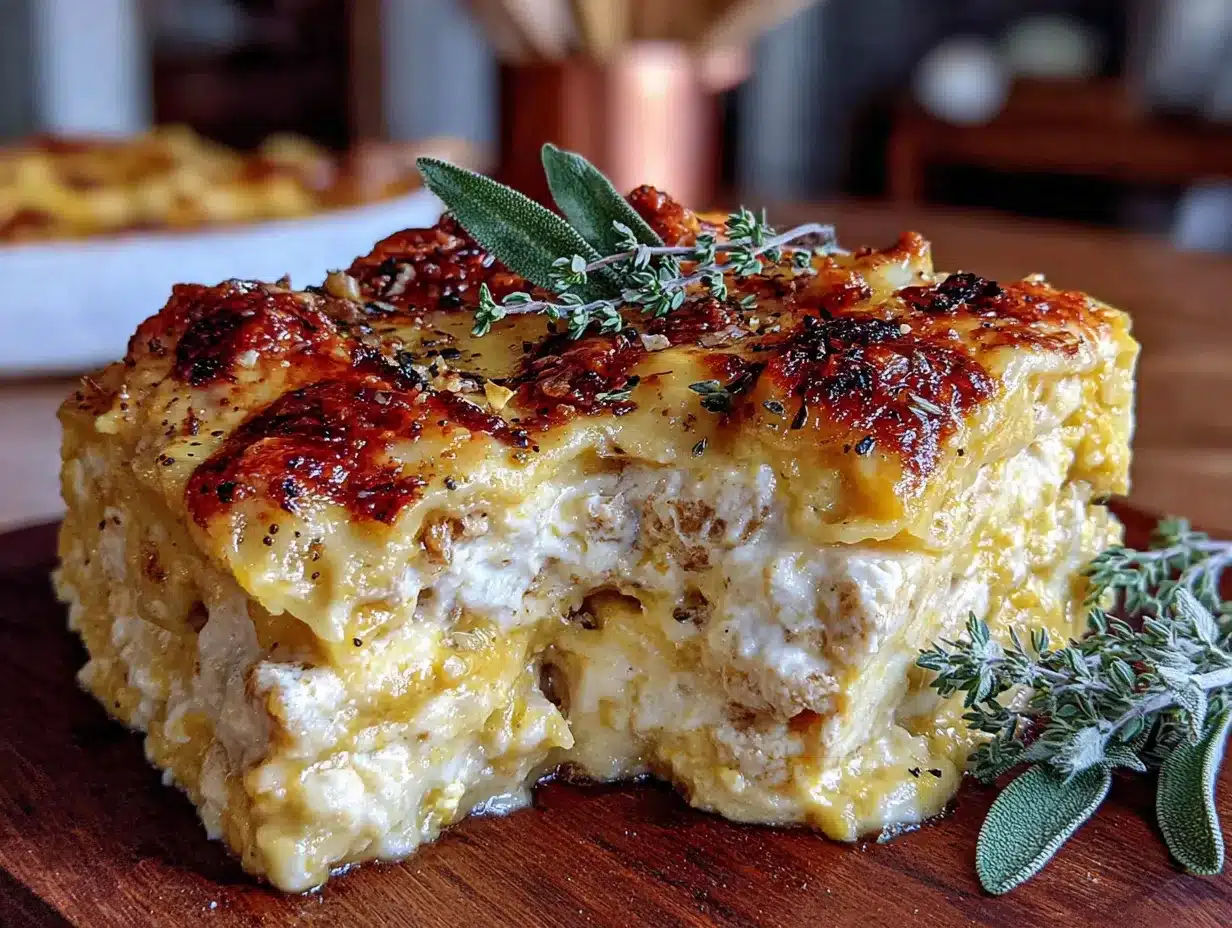
What makes this different from every other butternut squash lasagna out there? Two things. First, we roast the squash instead of boiling it—this concentrates the flavor and keeps it from getting watery. Second, that sage brown butter gets drizzled between every layer, not just on top. Trust me on this one.
This is the kind of recipe that makes you feel like you’re eating something truly special, but without spending all day in the kitchen. It’s comfort food that actually delivers on its promise.
What Ingredients You Will Need
This recipe uses simple, wholesome ingredients that work together to create something truly magical. Most of these are pantry staples, and the fresh ones are easy to find at any grocery store. Here’s what you’ll need:
For the Roasted Butternut Squash
- 1 medium butternut squash (about 2-2.5 pounds), peeled, seeded, and cut into ½-inch cubes
- 2 tablespoons olive oil
- ½ teaspoon salt
- ¼ teaspoon black pepper
- ¼ teaspoon nutmeg, freshly grated if possible (it really makes a difference)
For the Sage Brown Butter
- ½ cup unsalted butter (1 stick)
- 12-15 fresh sage leaves, plus more for garnish
- Pinch of salt
For the Cheese Mixture
- 2 cups whole milk ricotta cheese (I prefer Galbani or a good local brand)
- 1 large egg, lightly beaten
- ½ cup grated Parmesan cheese, divided
- ¼ teaspoon salt
- ⅛ teaspoon black pepper
- Pinch of nutmeg
For the Lasagna Assembly
- 12 no-boil lasagna noodles (I use Barilla—they hold up perfectly)
- 3 cups shredded mozzarella cheese
- ½ cup grated Parmesan cheese for topping
- Fresh sage leaves for garnish
A few notes on ingredients. For the butternut squash, look for one that feels heavy for its size with firm, unblemished skin. If you’re short on time, you can buy pre-cut squash, but honestly, cutting it yourself gives you better control over the size. For the sage, fresh is non-negotiable here—dried sage just won’t give you that same aromatic punch. And please, please use good butter. Since this recipe highlights the butter flavor, you want something that tastes delicious on its own.
If you need substitutions, here are a few that work well. Use gluten-free lasagna noodles for a GF version. Swap the ricotta with dairy-free cashew ricotta if needed. And for a lower-fat option, you can use part-skim mozzarella—just know the texture will be slightly less creamy.
Equipment Needed
You don’t need a fancy kitchen to make this lasagna, but a few key tools will make your life easier:
- 9×13-inch baking dish: This is non-negotiable. It’s the perfect size for 3 layers of lasagna goodness.
- Large rimmed baking sheet: For roasting the squash. A rimmed sheet keeps any juices from spilling.
- Medium saucepan: For making the sage brown butter. Light-colored metal is best so you can see the butter change color.
- Sharp chef’s knife: Butternut squash is tough. A good knife makes all the difference.
- Vegetable peeler: For peeling the squash. A Y-shaped peeler works best.
- Large mixing bowl: For the cheese mixture.
- Measuring cups and spoons: Precision matters, especially with the butter.
- Aluminum foil: For covering the lasagna while it bakes.
If you don’t have a 9×13 dish, you can use two 8×8 dishes and adjust the layering. And if you’re really in a pinch, a disposable aluminum pan works fine—just be careful when cutting and serving.
Preparation Method
Let me walk you through this step by step. I’ve made this so many times that I’ve got the rhythm down, and I’ll share all the little tricks I’ve learned along the way.
- Preheat your oven to 400°F (200°C). This is important because we need it hot for roasting the squash. Line a large baking sheet with parchment paper for easy cleanup.
- Prepare the butternut squash. Cut off both ends of the squash, then peel it with a vegetable peeler. Cut it in half lengthwise and scoop out the seeds with a spoon. Cut the flesh into ½-inch cubes. Try to keep them uniform in size so they roast evenly. This takes about 10 minutes, but it gets faster with practice.
- Roast the squash. Toss the cubed squash with olive oil, salt, pepper, and nutmeg. Spread it in a single layer on the baking sheet. Roast for 25-30 minutes, flipping halfway through, until the squash is tender and lightly browned on the edges. The pieces should be fork-tender but not mushy. Set aside to cool slightly.
- Make the sage brown butter. While the squash roasts, melt the butter in a medium saucepan over medium heat. Add the sage leaves. Cook, stirring occasionally, until the butter turns a deep golden brown and smells nutty—about 5-7 minutes. Watch carefully here. The butter can go from perfect to burnt in seconds. You’re looking for amber-colored specks at the bottom of the pan. Remove from heat and set aside. The sage leaves will get crispy—don’t throw them away!
- Prepare the cheese mixture. In a large bowl, combine the ricotta, beaten egg, ¼ cup of the Parmesan, salt, pepper, and a pinch of nutmeg. Mix until smooth. Taste it—it should be creamy and slightly salty. Adjust seasoning if needed.
- Lower the oven temperature to 375°F (190°C). We need it a bit cooler for the lasagna to bake evenly.
- Start layering. Spread a thin layer of the sage brown butter (about 2 tablespoons) on the bottom of your 9×13 baking dish. This prevents sticking and adds flavor right from the start. Place 4 no-boil lasagna noodles on the bottom, slightly overlapping if needed.
- First layer: Spread ⅓ of the ricotta mixture over the noodles. Top with ⅓ of the roasted squash. Drizzle with 2 tablespoons of the sage brown butter. Sprinkle with ¾ cup of mozzarella and 2 tablespoons of Parmesan.
- Second layer: Repeat with 4 more noodles, another ⅓ of the ricotta, another ⅓ of the squash, 2 tablespoons brown butter, and the remaining mozzarella and Parmesan. Do this again for the third layer.
- Top layer: Place the final 4 noodles on top. Spread any remaining ricotta mixture (there shouldn’t be much). Pour any remaining sage brown butter over the top. Sprinkle with the remaining mozzarella and Parmesan. Arrange the crispy sage leaves from the brown butter on top for garnish.
- Bake covered. Cover the dish tightly with aluminum foil. Bake for 30 minutes. The foil traps steam and helps the noodles cook through without drying out.
- Bake uncovered. Remove the foil and bake for another 15-20 minutes, until the top is golden and bubbly. The edges should be slightly browned and the cheese should be melted throughout.
- Rest before serving. This is crucial. Let the lasagna rest for at least 15 minutes before cutting. I know it’s hard to wait, but this allows the layers to set so you get clean slices instead of a soupy mess. Trust me, I learned this the hard way.
One thing I always do: after the lasagna rests, I drizzle a tiny bit of extra brown butter on top. It’s not necessary, but it adds that final touch of richness that makes this dish unforgettable.
Cooking Tips & Techniques
After making this lasagna more times than I can count, I’ve picked up a few things that make a real difference. Here are my best tips:
Don’t skip roasting the squash. I tried boiling it once to save time, and the result was a watery, flavorless mess. Roasting concentrates the natural sugars and gives you those gorgeous caramelized edges. It’s worth the extra 10 minutes.
Watch that brown butter like a hawk. I’m not kidding. The first time I made this, I got distracted by my phone and ended up with burnt butter that tasted bitter and sad. Stand there, watch it, and the moment it turns amber, pull it off the heat. The residual heat will continue cooking it slightly.
Let the lasagna rest. I mentioned this in the instructions, but it bears repeating. If you cut into it too soon, you’ll get a beautiful slice that immediately collapses into a puddle. Give it those 15 minutes. Go set the table, pour some wine, take a deep breath. Your patience will be rewarded.
Use room temperature ingredients. Take the ricotta and egg out of the fridge about 30 minutes before you start. Cold ingredients don’t blend as smoothly, and you’ll end up with lumpy cheese mixture.
Don’t overfill the layers. It’s tempting to pile on the squash and cheese, but too much filling makes the lasagna unstable. Keep each layer even and moderate. You want every bite to have a balance of noodles, squash, cheese, and that glorious brown butter.
Make extra brown butter. Seriously. Double the recipe if you can. You’ll want extra for drizzling on top before serving, and it’s amazing on roasted vegetables, pasta, or even popcorn. Yes, popcorn. Try it.
Variations & Adaptations
One of the best things about this recipe is how flexible it is. Here are some variations I’ve tried and loved:
Vegetarian Version: This recipe is already vegetarian, but if you want to add some greens, try layering in some sautéed spinach or kale between the squash layers. It adds color and nutrients without overpowering the flavor.
Gluten-Free Option: Use gluten-free lasagna noodles. I’ve tried several brands, and the brown rice-based ones work best. Just follow the package instructions—some need to be boiled first even if they say no-boil.
Dairy-Free Adaptation: This one takes some work, but it’s possible. Use dairy-free ricotta (cashew-based works great), vegan mozzarella shreds, and a good plant-based butter for the brown butter. The texture won’t be exactly the same, but the flavor is still amazing.
Add Protein: For a heartier version, add a layer of cooked Italian sausage or shredded rotisserie chicken. Brown the sausage with some sage before adding it to the layers.
Change the Squash: No butternut squash? No problem. Try roasted delicata squash (no peeling needed!), pumpkin, or even sweet potatoes. Each will give a slightly different flavor and texture.
Make It Spicy: Add a pinch of red pepper flakes to the brown butter for a subtle kick. It pairs beautifully with the sweetness of the squash.
My personal favorite variation? I add a layer of caramelized onions between the squash and cheese. It adds this incredible depth of flavor that makes the dish even more luxurious. Just slice two onions thinly, cook them low and slow for about 30 minutes until golden, and layer them in.
Serving & Storage Suggestions
This lasagna is a showstopper, so serve it with pride. Let it rest, then cut it into clean squares using a sharp knife. Wipe the knife between cuts for the neatest slices.
What to Serve With It: A simple green salad with a lemon vinaigrette cuts through the richness perfectly. I also love serving it with crusty bread to soak up any extra brown butter on the plate. For wine, a crisp Pinot Grigio or a light Chianti works beautifully.
Storage: Leftovers keep beautifully. Store them in an airtight container in the refrigerator for up to 4 days. The flavors actually get better as they meld together overnight. I sometimes think this lasagna tastes even better the next day.
Freezing: This lasagna freezes like a dream. Assemble it completely but don’t bake it. Wrap the dish tightly in plastic wrap, then foil, and freeze for up to 3 months. When you’re ready to bake, thaw it in the refrigerator overnight, then bake as directed, adding about 10 minutes to the covered baking time.
Reheating: The best way to reheat individual portions is in a 350°F oven for about 15 minutes, covered with foil to prevent drying out. The microwave works in a pinch, but the texture won’t be as good. If you’re reheating a whole lasagna, cover it with foil and bake at 350°F for 25-30 minutes.
One thing I’ve noticed: the brown butter flavor becomes more subtle after refrigeration, so I like to drizzle a little fresh brown butter on leftovers before reheating. It brings back that initial magic.
Nutritional Information & Benefits
While this is definitely an indulgent dish, it does have some redeeming qualities. Here’s the approximate nutritional breakdown per serving (based on 8 servings):
| Nutrient | Amount per Serving |
|---|---|
| Calories | 485 |
| Total Fat | 28g |
| Saturated Fat | 16g |
| Cholesterol | 95mg |
| Sodium | 720mg |
| Total Carbohydrates | 42g |
| Dietary Fiber | 4g |
| Sugars | 6g |
| Protein | 22g |
| Vitamin A | 180% DV |
| Vitamin C | 25% DV |
| Calcium | 35% DV |
| Iron | 15% DV |
The butternut squash is the star here nutritionally—it’s packed with vitamin A for eye health, vitamin C for immunity, and fiber for digestion. The sage isn’t just for flavor either; it’s known for its anti-inflammatory properties. And while this isn’t a low-calorie dish, it’s made with real, whole ingredients that nourish your body while satisfying your soul.
For those watching their intake, one serving is plenty satisfying. Pair it with a big salad and you’ve got a balanced meal that feels indulgent but keeps you feeling good.
Conclusion
Look, I know this recipe takes a little effort. But honestly? That’s part of what makes it special. Every time I make this lasagna, I think about that little restaurant in Portland and the way that first bite made me feel. And now, every time I pull a golden, bubbling dish out of my own oven, I get that same feeling all over again.
This isn’t just a recipe—it’s a little piece of comfort you can create in your own kitchen. Whether you’re making it for a holiday dinner, a cozy Sunday supper, or just because you need something warm and wonderful, this lasagna delivers. It’s the kind of dish that makes people close their eyes and sigh with contentment. And honestly, isn’t that what cooking is all about?
I’d love to hear how yours turns out. Did you add any twists? Did your family love it as much as mine does? Drop a comment below and let me know. And if you share it on social media, tag me—I want to see your beautiful creation!
Now go make some magic in your kitchen. You’ve got this.
Frequently Asked Questions
Can I use pre-cut butternut squash from the store?
Absolutely! It saves time and works perfectly. Just make sure the pieces are cut to about ½-inch cubes so they roast evenly. Pre-cut squash is usually a bit more expensive, but the convenience is worth it on busy days.
Do I really need to use no-boil noodles?
You can use regular lasagna noodles if you prefer, but you’ll need to boil them first according to the package directions. No-boil noodles are designed to absorb moisture from the sauce and cheese as they bake, which works perfectly with this recipe since we don’t have a traditional tomato sauce.
Can I make this lasagna ahead of time?
Yes! You can assemble the entire lasagna up to 24 hours in advance. Just cover it tightly and refrigerate. When you’re ready to bake, add about 10 minutes to the covered baking time since you’re starting from cold. This actually makes the flavors meld together even more.
My brown butter burned. What did I do wrong?
Don’t worry, it happens to everyone. The key is to watch the butter constantly once it starts foaming. Use a light-colored pan so you can see the color change clearly. The moment you see golden brown specks forming at the bottom and smell that nutty aroma, pull it off the heat immediately. The residual heat will continue cooking it.
Can I freeze the leftovers?
Definitely! Freeze individual portions in airtight containers for up to 3 months. Thaw overnight in the refrigerator and reheat in the oven at 350°F for about 15 minutes. The texture holds up surprisingly well, though the top won’t be quite as crispy as fresh.
Pin This Recipe!
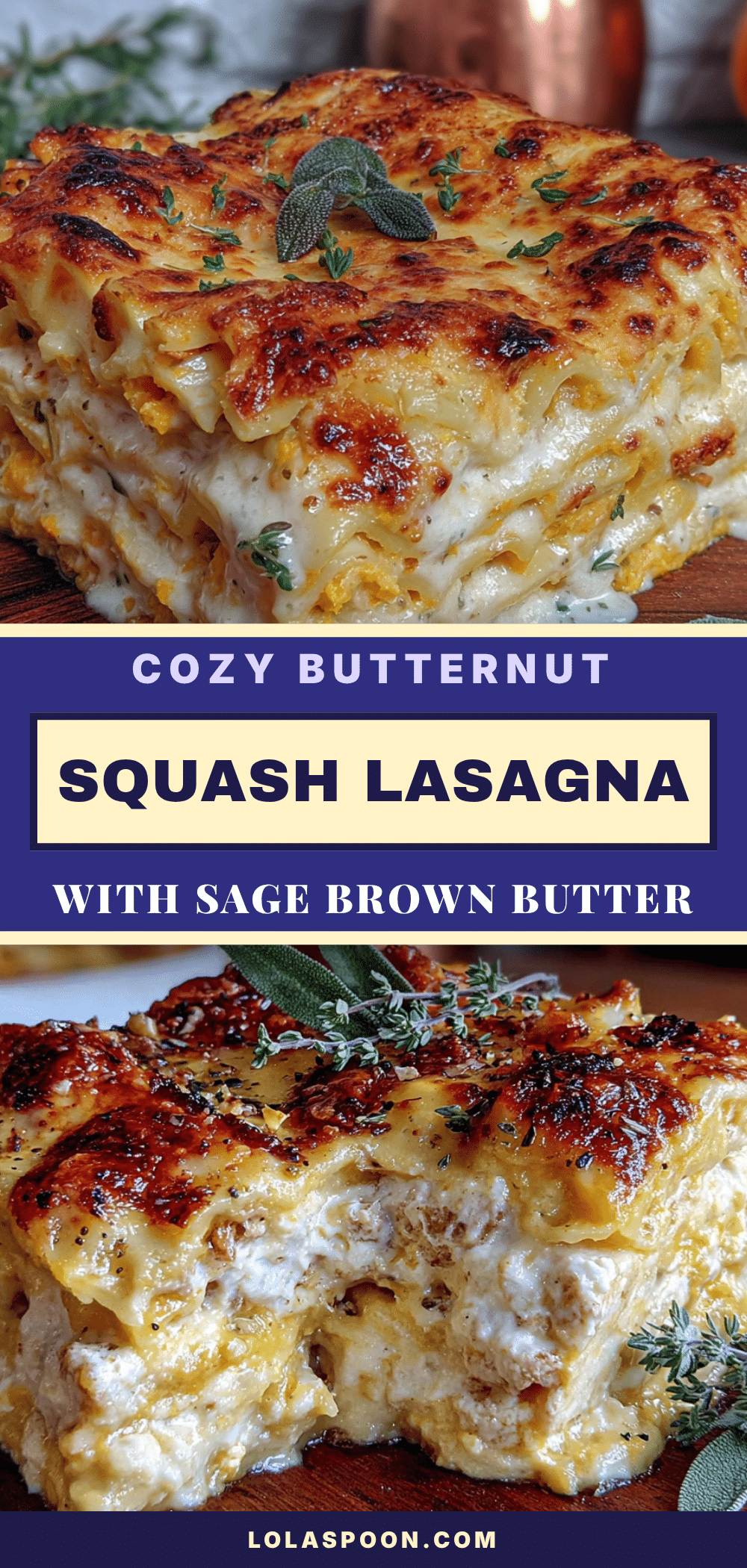
Cozy Butternut Squash Lasagna with Sage Brown Butter

A comforting, layered lasagna featuring roasted butternut squash, creamy ricotta, and nutty sage brown butter. This recipe captures the cozy magic of a beloved Portland restaurant dish, perfect for cold nights and special gatherings.
- Prep Time: 1 hour
- Cook Time: 45 minutes
- Total Time: 1 hour 45 minutes
- Yield: 8 servings 1x
- Category: Main Course
- Cuisine: Italian-American
Ingredients
- 1 medium butternut squash (about 2–2.5 pounds), peeled, seeded, and cut into ½-inch cubes
- 2 tablespoons olive oil
- ½ teaspoon salt
- ¼ teaspoon black pepper
- ¼ teaspoon nutmeg, freshly grated if possible
- ½ cup unsalted butter (1 stick)
- 12–15 fresh sage leaves, plus more for garnish
- Pinch of salt
- 2 cups whole milk ricotta cheese
- 1 large egg, lightly beaten
- ½ cup grated Parmesan cheese, divided
- ¼ teaspoon salt
- ⅛ teaspoon black pepper
- Pinch of nutmeg
- 12 no-boil lasagna noodles
- 3 cups shredded mozzarella cheese
- ½ cup grated Parmesan cheese for topping
- Fresh sage leaves for garnish
Instructions
- Preheat your oven to 400°F (200°C). Line a large baking sheet with parchment paper.
- Prepare the butternut squash: Cut off both ends, peel with a vegetable peeler, cut in half lengthwise, scoop out seeds, and cut flesh into ½-inch cubes.
- Roast the squash: Toss cubed squash with olive oil, salt, pepper, and nutmeg. Spread in a single layer on the baking sheet. Roast for 25-30 minutes, flipping halfway, until tender and lightly browned. Set aside to cool slightly.
- Make the sage brown butter: While squash roasts, melt butter in a medium saucepan over medium heat. Add sage leaves. Cook, stirring occasionally, until butter turns deep golden brown and smells nutty (about 5-7 minutes). Remove from heat and set aside.
- Prepare the cheese mixture: In a large bowl, combine ricotta, beaten egg, ¼ cup Parmesan, salt, pepper, and a pinch of nutmeg. Mix until smooth.
- Lower oven temperature to 375°F (190°C).
- Start layering: Spread about 2 tablespoons of sage brown butter on the bottom of a 9×13-inch baking dish. Place 4 no-boil lasagna noodles on the bottom, slightly overlapping if needed.
- First layer: Spread ⅓ of the ricotta mixture over noodles. Top with ⅓ of the roasted squash. Drizzle with 2 tablespoons sage brown butter. Sprinkle with ¾ cup mozzarella and 2 tablespoons Parmesan.
- Second layer: Repeat with 4 more noodles, another ⅓ of ricotta, another ⅓ of squash, 2 tablespoons brown butter, and remaining mozzarella and Parmesan.
- Third layer: Repeat with remaining noodles, ricotta, squash, and brown butter.
- Top layer: Place final 4 noodles on top. Spread any remaining ricotta mixture. Pour any remaining sage brown butter over top. Sprinkle with remaining mozzarella and Parmesan. Arrange crispy sage leaves from brown butter on top.
- Bake covered: Cover dish tightly with aluminum foil. Bake for 30 minutes.
- Bake uncovered: Remove foil and bake for another 15-20 minutes, until top is golden and bubbly.
- Rest before serving: Let lasagna rest for at least 15 minutes before cutting.
Notes
Don’t skip roasting the squash—it concentrates flavor and prevents sogginess. Watch the brown butter carefully; it can burn quickly. Let the lasagna rest for at least 15 minutes before cutting to allow layers to set. For best results, use room temperature ricotta and egg. Make extra brown butter for drizzling on top before serving.
Nutrition
- Serving Size: 1 slice (1/8 of lasa
- Calories: 485
- Sugar: 6
- Sodium: 720
- Fat: 28
- Saturated Fat: 16
- Carbohydrates: 42
- Fiber: 4
- Protein: 22
Keywords: butternut squash lasagna, sage brown butter, vegetarian lasagna, fall recipe, comfort food, holiday dinner, roasted squash lasagna